World Bee Day 20 May – We all depend on the survival of bees

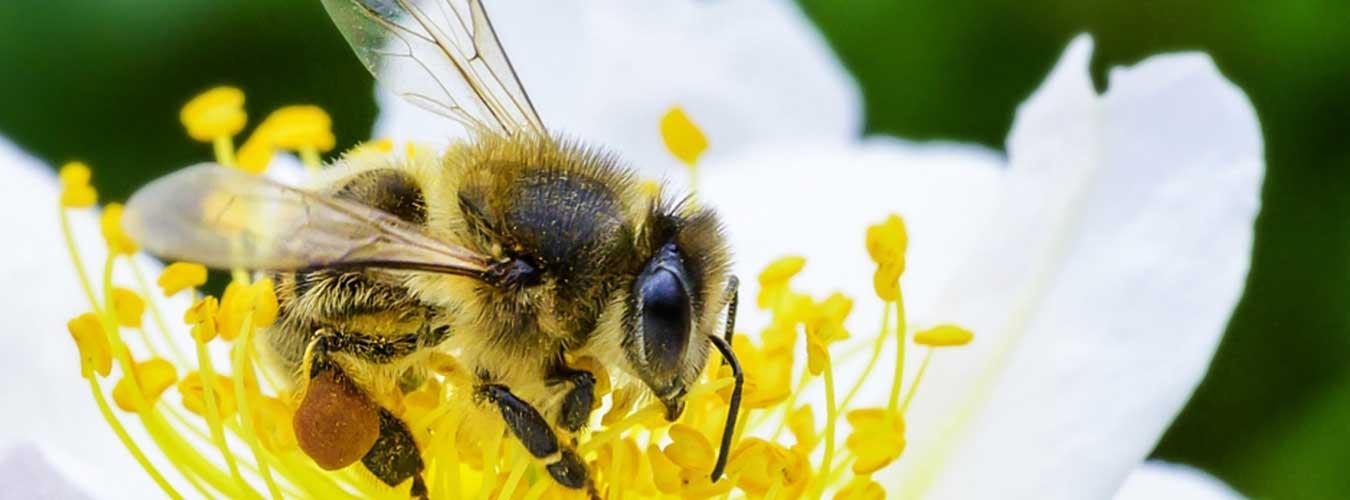
A bee drinks nectar of a flower

Three out of four crops across the globe producing fruits, or seeds for use as human food depend, at least in part, on bees and other pollinators. PHOTO:Photo FAO/Greg Beals

UN.org

Bees and other pollinators, such as butterflies, bats and hummingbirds, are increasingly under threat from human activities.

Pollination is, however, a fundamental process for the survival of our ecosystems. Nearly 90% of the world’s wild flowering plant species depend, entirely, or at least in part, on animal pollination, along with more than 75% of the world’s food crops and 35% of global agricultural land. Not only do pollinators contribute directly to food security, but they are key to conserving biodiversity.

To raise awareness of the importance of pollinators, the threats they face and their contribution to sustainable development, the UN designated 20 May as World Bee Day.

The goal is to strengthen measures aimed at protecting bees and other pollinators, which would significantly contribute to solving problems related to the global food supply and eliminate hunger in developing countries.

We all depend on pollinators and it is, therefore, crucial to monitor their decline and halt the loss of biodiversity.

Bee engaged: Celebrating the diversity of bees and beekeeping  systems

20 May 2022, 13:00–14:45 CEST
Agenda Register | Webcast

Tiếp tục đọc “World Bee Day 20 May – We all depend on the survival of bees”

Climate change triggering global collapse in insect numbers: stressed farmland shows 63% decline

theconversation.com

Speed read

  • The world may be facing a devastating “hidden” collapse in insect species due to the twin threats of climate change and habitat loss.
  • UCL’s Centre for Biodiversity & Environment Research has carried out one of the largest-ever assessments of insect declines around the world – assessing three-quarters of a million samples from around 6,000 sites.
  • The new study, published in Nature, finds that climate-stressed farmland possesses only half the number of insects, on average, and 25% fewer insect species than areas of natural habitat.
  • Insect declines are greatest in high-intensity farmland areas within tropical countries – where the combined effects of climate change and habitat loss are experienced most profoundly.
  • The majority of the world’s estimated 5.5 million species are thought to live in these regions – meaning the planet’s greatest abundances of insect life may be suffering collapses without us even realising.
  • Lowering the intensity of farming by using fewer chemicals, having a greater diversity of crops and preserving some natural habitat can mitigate the negative effects of habitat loss and climate change on insects.
  • Considering the choices we make as consumers – such as buying shade-grown coffee or cocoa – could also help protect insects and other creatures in the world’s most climate-vulnerable regions.

Long read

Tiếp tục đọc “Climate change triggering global collapse in insect numbers: stressed farmland shows 63% decline”

IARC Monographs evaluate DDT, lindane, and 2,4-D

IARC.WHO-Logo-High-Res
PRESS RELEASE
N° 236 23

June 2015

IARC Monographs evaluate DDT, lindane (666), and 2,4-D Lyon, France, 23 June 2015 – The International Agency for Research on Cancer (IARC), the specialized cancer agency of the World Health Organization, has evaluated the carcinogenicity of the insecticides gamma-hexachlorocyclohexane (lindane) and dichlorodiphenyltrichloroethane (DDT) and the herbicide 2,4-dichlorophenoxyacetic acid (2,4-D).

Tiếp tục đọc “IARC Monographs evaluate DDT, lindane, and 2,4-D”