Australia’s Strategic Priorities and Challenges with Southeast Asia

lowyinstitute.org By Susannah Patton 6 November 2025

On this page

Listen to this journal article

Introduction

Going into the 2022 election, improving relations with Southeast Asia was at the top of the foreign policy to-do list for the Australian Labor Party, led by now prime minister Anthony Albanese. While the outgoing Liberal-National coalition government had notched up some achievements in its engagement with the region, there was also a sense of drift. The Pacific Step Up policy had focused on boosting ties with one of Australia’s two near regions, but Southeast Asia had not received the same level of diplomatic focus. Among the Labor Party’s pledges were appointing a special envoy for Southeast Asia, providing A$470 million in new aid to the region, and creating an office for Southeast Asia within the Department of Foreign Affairs and Trade. [1] For the most part, the Albanese government has followed through on its commitment to strengthen ties with Southeast Asia through more active diplomatic outreach, an economic strategy to boost two-way trade and investment, and a more nuanced approach to managing sensitive issues in Australia’s relations with the region, especially China-related issues and Middle East policy.

During the new term of government beginning in 2025, it is likely that the Albanese government will maintain Southeast Asia, along with the Pacific Islands, as a region of high priority. Albanese’s July 2025 John Curtin Oration articulated what he called Labor’s “constructive and creative role” and gave high billing to efforts to intensify economic engagement with Southeast Asia and deepen security cooperation with Indonesia. [2] While other global relationships may fluctuate according to events, the central importance of Southeast Asia within this distinctively Labor worldview suggests that engagement with this region, especially Indonesia, will remain high on Australia’s agenda for the next three years.

This essay analyzes the achievements of the Albanese government in its relations with Southeast Asia. It also assesses the continued challenges Australia faces both in deepening economic relations with the region and in continuing to balance regional ties with the U.S. alliance, especially given a less predictable and more demanding administration in Washington.

Tiếp tục đọc “Australia’s Strategic Priorities and Challenges with Southeast Asia”

China’s shipyard dominance leads to geoeconomic risks

japantimes.co.jp 2025.07.02

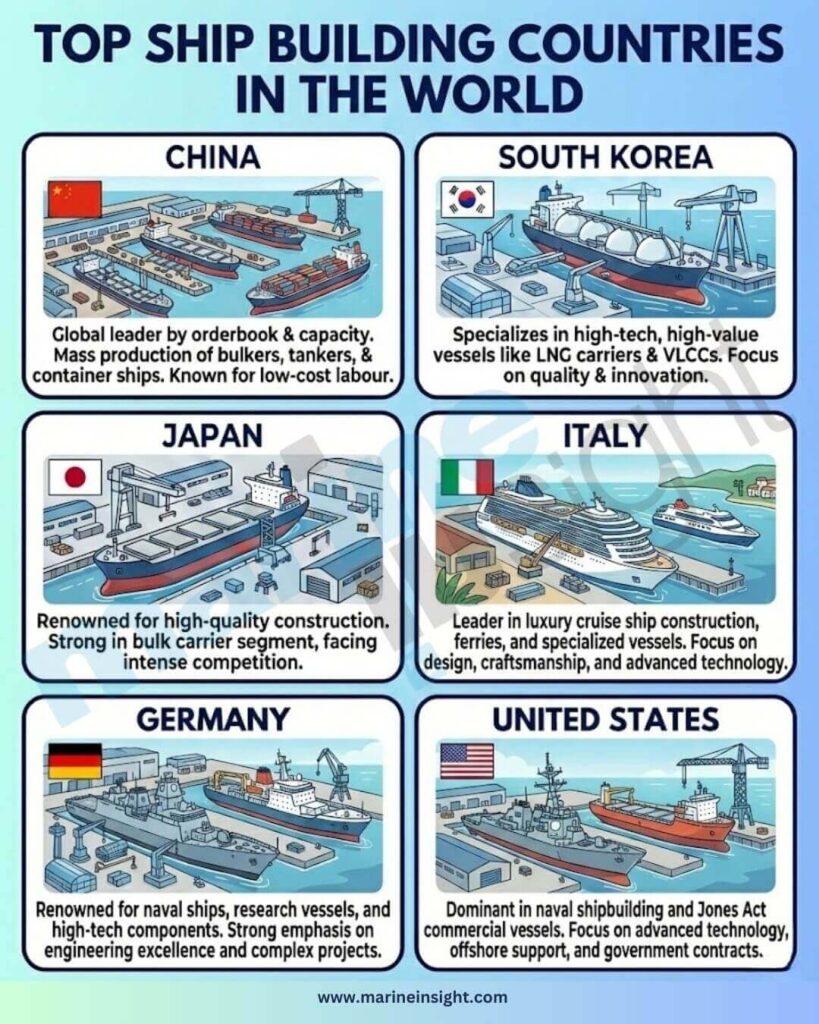
China’s unparalleled shipbuilding capacity has the U.S., Japan and its allies — both military and economic — rightly concerned about maritime threats to trade and security.
Without a concerted effort and international cooperation to challenge Beijing’s commanding lead in the global shipbuilding industry, those threats will materialize furthering China’s alarming dominance.

According to 2024 data from the Chinese government, the country ranks first worldwide in ship completions, new orders and order backlogs — claiming global shares of 55.7%, 74.1% and 63.1%, respectively. China is also expanding its capabilities in high value-added vessels, surpassing South Korea and Japan, while consolidating its role as a “shipbuilding superpower.”

Shipbuilding is not merely an economic activity — it underpins both global trade and national defense. Civilian shipbuilding provides the foundation for training engineers and skilled workers essential to naval production. As such, the growth of China’s shipbuilding sector carries profound implications, not only for maritime commerce but also for the international security architecture.

Tiếp tục đọc “China’s shipyard dominance leads to geoeconomic risks”

When literature became propaganda

Six books you didn’t know were propaganda

economist.com

Governments influence a surprising amount of literature. Some of it pretty good

Omar Sharif in a scene from the film Dr Zhivago in 1965
Image: Landmark Media

Nov 3rd 2023|8 min readListen to this story

AI Narrated

“ALL ART is propaganda”, wrote George Orwell in 1940, “but not all propaganda is art.” Few people would argue with the second part of that aphorism. There is nothing artistic about the dreadful ramblings of “Mein Kampf”. But the first seems true only if you are using a broad definition of propaganda. These days great works of art rarely set out to serve the purposes of a government. They may promote causes, but that is not normally why people esteem them. The books on this list, however, partially vindicate the first part of Orwell’s assertion. Governments or ideological groups either encouraged their authors to write them or promoted their writings for political ends. During the cold war Western intelligence agencies subsidised authors, sometimes very good ones. The CIA set up literary magazines in France, Japan and Africa. One purpose was to counter censorship by autocrats. Another was to make global culture friendlier to Western aims. British intelligence services commissioned works of fiction that supported empire. Some writers consciously offered their pens to the state; others did not realise that governments or groups would promote their work. Here are six books, all by authors of merit, that are works of propaganda in one way or another.

Tiếp tục đọc “When literature became propaganda”

Watch The British-Soviet Invasion of Iran (1941)

briliantmap.com

The Anglo-Soviet invasion of Iran (Operation Countenance) occurred in August 1941, during World War II.

The invasion was carried out jointly by the United Kingdom and the Soviet Union, aiming primarily to secure Iranian territory against Axis influence and protect critical supply routes.

Here’s a comprehensive overview:

Lead-Up and Reasons

Strategic Importance:

  • Iran had a strategically critical position, particularly as a transportation corridor between the Allies and the Soviet Union.
  • Iranian infrastructure, notably the Trans-Iranian Railway, offered a route for delivering vital supplies from the Allies (mostly Britain and the U.S.) to the USSR following Germany’s invasion (Operation Barbarossa) in June 1941.

Iranian Position and Axis Influence:

  • Although officially neutral, the Iranian ruler Reza Shah Pahlavi sympathized with Germany, partially due to historical rivalry with Britain and Russia.
  • Germany had established substantial diplomatic and commercial influence in Iran, with many German nationals working in strategic industries, raising fears of espionage and sabotage among the Allies.

Diplomatic Tensions:

  • Britain and the Soviet Union demanded Iran expel German nationals perceived as threats; Iran hesitated or refused, increasing Allied suspicions and tension.

Invasion: Operation Countenance

Date and Execution:

Began on August 25, 1941, when British forces advanced from the south and west, while Soviet forces attacked from the north.

Rapid military operations overwhelmed Iran’s defenses, which were relatively weak and poorly equipped compared to the invading powers.

Key Events:

  • British forces captured key oil fields in Khuzestan (Abadan), securing critical petroleum resources.
  • Soviet troops quickly took control of northern provinces, including major cities such as Tabriz and Mashhad.
  • Air and naval superiority allowed quick suppression of Iranian resistance.

Iranian Response: The Iranian army, despite fighting briefly in several locations, was rapidly overwhelmed, with significant casualties but limited overall resistance.

Tehran quickly realized the futility of resistance and began negotiations.

Tiếp tục đọc “Watch The British-Soviet Invasion of Iran (1941)”

More than a third of this country’s population has applied to relocate

By Angus Watson, CNN Updated 4:50 AM EDT, Fri June 27, 2025

People swim in the lagoon in Funafuti, Tuvalu, on November 28, 2019.

People swim in the lagoon in Funafuti, Tuvalu, on November 28, 2019. Mario Tama/Getty ImagesSydney, AustraliaCNN — 

More than a third of the population of Tuvalu has applied to move to Australia, under a landmark visa scheme designed to help people escape rising sea levels.

The island nation – roughly halfway between Hawaii and Australia – is home to about 10,000 people, according to the latest government statistics, living across a clutch of tiny islets and atolls in the South Pacific.

With no part of its territory above six meters, it is one of the most at-risk places in the world to rising seas caused by climate change.

On June 16, Australia opened a roughly one-month application window for what it says is a one-of-a-kind visa offering necessitated by climate change. Under the new scheme, Australia will accept 280 visa winners from a random ballot between July and January 2026. The Tuvaluans will get permanent residency on arrival in Australia, with the right to work and access public healthcare and education.

More than 4,000 people have applied under the scheme, according to official figures seen by CNN.

“The opening of the Falepili Mobility Pathway delivers on our shared vision for mobility with dignity, by providing Tuvaluans the opportunity to live, study and work in Australia as climate impacts worsen,” Australian Foreign Minister Penny Wong said in a statement.

CNN has reached out to the Tuvalu government.

According to Tuvalu’s Prime Minister Feleti Teo, more than half of Tuvalu will be regularly inundated by tidal surges by 2050. By 2100, 90% of his nation will be regularly under water, he says.

Fongafale, the nation’s capital, is the largest and most populated islet in Tuvalu’s main atoll, Funafuti. It has a runway-like strip of land just 65 feet (20 meters) wide in some places.

“You can put yourself in my situation, as the prime minister of Tuvalu, contemplating development, contemplating services for the basic needs of our people, and at the same time being presented with a very confronting and disturbing forecast,” Teo told the United Nations Oceans Conference this month in Nice, France.

Tiếp tục đọc “More than a third of this country’s population has applied to relocate”

Ocean Vuong Was Ready to Kill. Then a Moment of Grace Changed His Life.

The Interview By David Marchese May 3, 2025

Seen in a soft light, Ocean Vuong’s life looks like a modern American fairy tale. In 1990, he and his mother came to this country as refugees from Vietnam. They landed in small-town Connecticut and began muddling their way through an existence limited by low-paying work and cultural and personal alienation. Vuong seemed destined to stay stuck on society’s margins. Until, that is, he discovered literature and his own enormous gift for writing.

Now Vuong is one of the country’s most esteemed poets, winner of a prestigious MacArthur Fellowship (a.k.a. a “genius grant”) and a tenured professor in the creative-writing department at New York University. His bittersweet debut novel, “On Earth We’re Briefly Gorgeous,” a marvel of emotional and narrative compression published in 2019, became a best seller and, over time, a bona fide millennial classic. All this, and he’s only 36.

But there’s another side to Vuong’s narrative, one that doesn’t resolve so neatly. It’s that side of his history that informs his new novel, “The Emperor of Gladness,” which will be published on May 13.

At 400-plus pages, with a large cast of characters and comedic set pieces and touching on fast-food jobs, elder care and the static nature of most American lives, “Emperor” is a bigger book in every way than Vuong’s first. It also provided the occasion for what turned out to be one of the most emotionally intense interviews I’ve ever done.

Listen to the Conversation With Ocean Vuong

Tiếp tục đọc “Ocean Vuong Was Ready to Kill. Then a Moment of Grace Changed His Life.”

It didn’t start on October 7: A historical timeline of Israel’s brutality towards Palestinians

The narrative around October 7 often overlooks the deep-rooted history of the Israel-Palestine conflict. This timeline reveals key events dating back to 1897, when the First Zionist Congress was held, through the Nakba in 1948, and decades of subsequent violence. The focus on a single day obscures a much longer story of displacement and systemic injustice that continues to affect Palestinians today.

Book excerpt: “Freedom: Memoirs 1954-2021” by Angela Merkel

freedom-cover-st-martins-press-1280.jpg
St. Martin’s Press

CBS.com

In “Freedom: Memoirs 1954-2021” (published by St. Martin’s Press), former German Chancellor Angela Merkel writes about two lives: her early years growing up under a Communist-controlled police state in East Germany, and her years as leader of a nation reunited following the fall of the Berlin Wall.

Read an excerpt below

Prologue

This book tells a story that will not happen again, because the state I lived in for thirty-five years ceased to exist in 1990. If it had been offered to a publishing house as a work of fiction, it would have been turned down, someone said to me early in 2022, a few weeks after I stepped down from the office of federal chancellor. He was familiar with such issues, and was glad that I had decided to write this book, precisely because of its story. A story that is as unlikely as it is real. It became clear to me: telling this story, drawing out its lines, finding the thread running through it, identifying leitmotifs, could also be important for the future.

For a long time I couldn’t imagine writing such a book. That first changed in 2015, at least a little. Back then, in the night between September 4 and 5, I had decided not to turn away the refugees coming from Hungary at the German-Austrian border. I experienced that decision, and above all its consequences, as a caesura in my chancellorship. There was a before and an after. That was when I undertook to describe, one day when I was no longer chancellor, the sequence of events, the reasons for my decision, my understanding of Europe and globalization bound up with it, in a form that only a book would make possible. I didn’t want to leave the further description and interpretation just to other people.

Tiếp tục đọc “Book excerpt: “Freedom: Memoirs 1954-2021” by Angela Merkel”

Number of internally displaced people tops 80 million for first time

“Internal displacement refers to the forced movement of people within the country they live in.” 

Internal-displacement.org

     –  83.4 million people were living in internal displacement at the end of 2024, more than twice as many as only six years ago (2018).

     –  90 per cent had fled conflict and violence. In Sudan, conflict led to 11.6 million internally displaced people (IDPs), the most ever for one country. Nearly the entire population of the Gaza Strip remained displaced at the end of the year.

     –  Disasters triggered nearly twice as many movements in 2024 as the annual average over the past decade. The 11 million disaster displacements in the United States were the most ever recorded for a single country. 

GENEVA, Switzerland – The number of internally displaced people (IDPs) reached 83.4 million at the end of 2024, the highest figure ever recorded, according to the Global Report on Internal Displacement 2025 published today by the Internal Displacement Monitoring Centre (IDMC). This is equivalent to the population of Germany, and more than double the number from just six years ago.  

“Internal displacement is where conflict, poverty and climate collide, hitting the most vulnerable the hardest,” said Alexandra Bilak, IDMC director“These latest numbers prove that internal displacement is not just a humanitarian crisis; it’s a clear development and political challenge that requires far more attention than it currently receives.”

Tiếp tục đọc “Number of internally displaced people tops 80 million for first time”

From Swampland to Heartland: The History of Bến Thành Market

Saigoneer.com Wednesday, 01 March 2023. Written by Hiếu Y. Graphic by Mai Khanh

The intricate histories and niche experiences that we love about Saigon can make it difficult to explore. If you enjoy reading about Saigoneer’s favorite destinations, Urbanist Travel can help create a tailor-made itinerary based on your requests.
More Informatio

Read this article in Vietnamese at Sài·gòn·eer.From the very first discussions in 1868 regarding a new marketplace for Saigon, it was not until 1914, that Bến Thành Market became a reality. The birth of the market was like a dream come true, one that came together after nearly five decades of debate in search of solutions for the city’s infrastructure woes.

The five-decade quest to seek a “worthy” marketplace

In her research conducted on the vendors of Bến Thành, anthropologist Ann Marie Leshkowich recounts the lengthy discussions of then Saigon’s colonial administration regarding the establishment of a new commercial center, one that, according to them, must become a place “worthy” of the metropolis they were helping to create.

In 1868, the French had only spent about one decade trying to install a colonial network in Vietnam. Members of the Municipal Council (Conseil Municipal) had the thought of building a new marketplace from metal, replacing traditional thatch markets. In 1869, a budget of 110.000 francs was greenlit, but by 1870, the estimated expenditure had ballooned threefold, causing them to reconsider the planned building methods and amount of materials.

Tiếp tục đọc “From Swampland to Heartland: The History of Bến Thành Market”

Vietnam artist in race to ensure ‘heroic mothers’ not forgotten

Hoạ sĩ Đặng Ái Việt Hành trình khắc hoạ hơn 3000 chân dung Mẹ Việt Nam Anh Hùng

Reuters.com By Minh Nguyen March 29, 2023 4:39 PM GMT+7

CAO LANH CITY, Vietnam, March 29 (Reuters) – On her trusty motorcycle, Vietnamese artist Dang Ai Viet travels around the Southeast Asian country in a quest to ensure that the thousands of women who suffered the loss of two or more loved ones during the Vietnam War are not forgotten.

The 75-year-old has painted the portraits of 2,765 of the women, who are part of a group known in Vietnam as “heroic mothers”, in recognition of their sacrifice during the war that ended in 1975.

The Reuters Tariff Watch newsletter is your daily guide to the latest global trade and tariff news. Sign up here.

Tiếp tục đọc “Vietnam artist in race to ensure ‘heroic mothers’ not forgotten”

From Gaza to Vietnam, what is the value of a photo?

Two maimed children, two iconic images – and no end to barbarity in sight.

Mahmoud Ajjour, nine (left), who was injured during an Israeli attack on Gaza City in March 2024, finds refuge and medical help in Doha, Qatar, on June 28, 2024 [Samar Abu Elouf, for The New York Times] Kim Phuc, nine (right) is seen running down Route 1 near Trang Bang after a South Vietnamese plane accidentally dropped its flaming napalm on its own troops and civilians, on June 8, 1972. The terrified girl ripped off her burning clothes while fleeing [Nick Ut/AP]

This month, Palestinian photographer Samar Abu Elouf won the 2025 World Press Photo of the Year award for her image titled Mahmoud Ajjour, Aged Nine, taken last year for The New York Times.

Ajjour had both of his arms blown off by an Israeli strike on the Gaza Strip, where Israel’s ongoing genocide has now killed at least 52,365 Palestinians since October 2023. In the award-winning photograph, the boy’s head and armless torso are cast in partial shadow, his gaze nevertheless intense in its emptiness.

Tiếp tục đọc “From Gaza to Vietnam, what is the value of a photo?”

Viet Thanh Nguyen on 50 Years After Vietnam War

We mark 50 years since the end of the U.S. war on Vietnam with the acclaimed Vietnamese American writer Viet Thanh Nguyen. On April 30, 1975, North Vietnamese troops took control of the South Vietnamese capital of Saigon as video of U.S. personnel being airlifted out of the city were broadcast around the world. Some 3 million Vietnamese people were killed in the U.S. war, along with about 58,000 U.S. soldiers. Hundreds of thousands of Lao, Hmong and Cambodians also died, and the impact of the war is still being felt in Vietnam and the region.

Nguyen says while the Vietnam War was deeply divisive in the United States during the 1960s and ’70s, American interference in Southeast Asia goes back to President Woodrow Wilson in 1919, when he rejected Vietnamese demands for independence from France. “And from that mistake, we’ve had a series of mistakes over the past century, mostly revolving around the fact that the United States did not recognize Vietnamese self-determination,” says Nguyen.

We Are Here Because You Are There”: Viet Thanh Nguyen on How U.S. Foreign Policy Creates Refugees

Pulitzer Prize-winning Vietnamese American writer Viet Thanh Nguyen discusses why he chooses to use the term “refugee” in his books, and speaks about his own experience as a refugee. His new novel tells the story of a man who arrives in France as a refugee from Vietnam, and explores the main character’s questioning of ideology and different visions of liberation. Titled “The Committed,” the book is a sequel to “The Sympathizer,” which won the Pulitzer Prize for Fiction in 2016. Nguyen says his protagonist is “a man of two faces and two minds” whose ability to see beyond Cold War divisions makes him the perfect figure to satirize the facile stories people tell themselves about the world. “He’s always going beyond the surface binaries to look underneath.” Nguyen is the chair of English and professor of English and American studies and ethnicity at the University of Southern California. His other books include “The Refugees” and the edited collection “The Displaced: Refugee Writers on Refugee Lives.”

Viet Thanh Nguyen Interview: The Vietnam War Refugee Experience Behind The Sympathizer

Pulitzer Prize-winning author Viet Thanh Nguyen reflects on his childhood as a refugee in America, his writing career, and family: from the trauma of displacement to the healing found in fatherhood and literature. Nguyen shares how these experiences have shaped his life and work, from his novel The Sympathizer to his commentary on war, cultural identity, and American life.

00:00 Introduction to Viet Thanh Nguyen and The Sympathizer

00:49 Refugee journey, family separation, and overcoming trauma

03:43 Humor, cultural expectations, and Vietnamese Catholic roots 05:29 Cultural identity, rebellion, and hidden writing career

07:14 Family relationships, cultural silence, and lessons in parenting 09:35 Impact of fatherhood, learning from children, and rediscovering play

12:13 Art, personal identity, and American cultural values 14:49 Vietnamese American identity, racism, and vision for the future

17:27 Teaching about war, challenges of digital information overload

20:31 Apocalypse Now, self identity struggles, and power of storytelling

24:41 Vietnam War legacy, draft-era resistance vs. modern volunteer military

26:47 Family history, generational trauma, and refugee story from Vietnam

29:48 Writing, fatherhood, and healing

Atomic Bomb Survivors Win Nobel Peace Prize, Say Gaza Today Is Like Japan 80 Years Ago

Nobel Peace Prize Winner Toshiyuki Mimaki: “I thought the prize would go to those working hard in Gaza. In Gaza, bleeding children are being held by their parents. It’s like Japan 80 years ago.” 36,000 tons of explosives were dropped on Hiroshima/Nagasaki 82,000 tons have been dropped on Gaza

A Japanese group of atomic bomb survivors, Nihon Hidankyo, has won the Nobel Peace Prize as fears grow of a new nuclear arms race. The head of the group has compared Gaza today to Japan 80 years ago when the U.S. bombed Hiroshima and Nagasaki. We feature a Democracy Now! interview with Setsuko Thurlow, a survivor of the U.S. atomic bombing of Hiroshima and an anti-nuclear activist, and get response from Joseph Gerson, president of the Campaign for Peace, Disarmament and Common Security, a U.S. nuclear disarmament activist who has spent decades working closely with the group.

First they came…- Martin Niemöller

Friedrich Gustav Emil Martin Niemöller (14 January 1892 – 6 March 1984) was a German theologian and Lutheran pastor. He is best known for his opposition to the Nazi regime during the late 1930s and for his widely quoted 1946 “First they came …

In Germany they first came for the Communists,
and I didn’t speak up because I wasn’t a Communist.
Then they came for the Jews,
and I didn’t speak up because I wasn’t a Jew.
Then they came for the trade unionists,
and I didn’t speak up because I wasn’t a trade unionist.
Then they came for the Catholics,
and I didn’t speak up because I was a Protestant.
Then they came for me
and by that time no one was left to speak up.

Visitors stand in front of the quotation from Martin Niemöller that is on display in the Permanent Exhibition of the United States ... [LCID: img4857]

Museum visitors in front of the Martin Niemöller quotation

Visitors stand in front of the quotation from Martin Niemöller that is on display in the Permanent Exhibition of the United States Holocaust Memorial Museum. Niemöller was a Lutheran minister and early Nazi supporter who was later imprisoned for opposing Hitler’s regime.