A Decade After the Paris Agreement, Climate Promises Still Leave the Poor Behind

time.com

Thousands of people take part in the so-called "Great People's March" in the sidelines of the COP30 UN Climate Change Conference in Belem, Para State, Brazil on November 15, 2025.

Thousands of people march in the sidelines of the COP30 UN Climate Change Conference in Belém, Brazil on Nov. 15, 2025.Pablo Porciuncula—AFP via Getty Image

by Brian Mukhaya Brian Mukhaya is the Africa Program Manager at Clean Air Task Force.

Ten years after the landmark Paris Agreement, the world is still trying to solve two crises as if they were separate: climate change and economic development. That’s a dangerous illusion. Climate progress cannot succeed if billions of people remain in poverty, without electricity, stable food systems, or the means to build better lives. And development, if it ignores climate risk, is little more than a short-term fix that will collapse under the weight of future disasters.

I saw this tension firsthand at COP30 in Belém, Brazil, the annual UN climate summit. The energy there was unmistakable—a mixture of urgency and frustration. Delegates from across Africa reminded the world that promises made in Paris have not been kept. Wealthy nations pledged to support developing countries as they cut emissions and adapted to rising temperatures. Yet, a decade later, those commitments remain largely unfulfilled.

At COP29 in Baku last year, developed countries agreed to mobilize at least $300 billion annually by 2035 for developing countries’ climate action, part of a broader aspirational target of $1.3 trillion per year. While this represents a tripling of the previous $100 billion goal, representatives from developing countries remain skeptical. More fundamentally, the $300 billion commitment falls far short of actual needs. The Independent High-Level Expert Group on Climate Finance estimates that developing countries (excluding China) need approximately $2.7 trillion annually by 2030 to meet climate and nature-related goals. The gap between promise and reality remains vast—and widening

But money is only part of the problem. Even when funding arrives, it often misses the mark. A new analysis by the Clean Air Task Force looked at 52 African countries’ climate and development plans. It found that the two rarely intersect. Climate strategies focus on emissions and energy transitions, while national development plans emphasize job creation and economic growth—but without embedding climate targets. The result is a patchwork of policies that fail to deliver either lasting prosperity or real emissions cuts.

As Bill Gates noted in a recent memo, global climate policy increasingly risks sidelining development altogether. Today, more than 600 million Africans lack access to electricity, while 900 million do not have clean cooking technologies—conditions that undermine productivity, constrain public services, and contribute to preventable deaths. 

Crucially, this should not be understood as an either/or dilemma. Wealthy nations already recognize that decarbonization must go hand in hand with economic growth to be politically viable at home. The same is true globally. Emerging and developing economies cannot be expected to choose between climate progress and economic progress. Insisting on a tradeoff between the two as a trade-off is both unrealistic and unjust.

When climate and development are treated as separate silos, everyone loses. Fragmented planning leads to inefficient allocation of scarce resources, missed opportunities for infrastructure investments with broad benefits, and policies that fail to produce either meaningful emissions reductions or durable socio-economic progress. Importantly, this is not a challenge restricted to Africa but a blind spot in international climate governance.  Even wealthy countries are discovering that climate action divorced from economic realities is politically unsustainable. When climate action appears to threaten economic growth, job creation, or living standards, political support erodes quickly. 

As negotiations in Belém draw to a close, one truth should be clear: climate and development are not competing agendas—they are the same story. Sustainable development is the foundation of lasting climate progress. And climate resilience is the only path to enduring prosperity. Any strategy that treats them separately is doomed to fail.

Development without climate action is a short-term fix. And climate action without development is an empty promise.
Deforestation can raise local temperatures by up to 4.5°C – and heat untouched areas 6km away

theconversation.com Published: November 15, 2021 7.10pm GMT

Forests directly cool the planet, like natural evaporative air conditioners. So what happens when you cut them down?

In tropical countries such as Indonesia, Brazil and the Congo, rapid deforestation may have accounted for up to 75% of the observed surface warming between 1950 and 2010. Our new research took a closer look at this phenomenon.

Using satellite data over Indonesia, Malaysia and Papua New Guinea, we found deforestation can heat a local area by as much as 4.5°C, and can even raise temperatures in undisturbed forests up to 6km away.

More than 40% of the world’s population live in the tropics and, under climate change, rising heat and humidity could push them into lethal conditions. Keeping forests intact is vital to protect those who live in and around them as the planet warms.

Tiếp tục đọc “Deforestation can raise local temperatures by up to 4.5°C – and heat untouched areas 6km away”

“Cool” years are now hotter than the “warm” years of the past: tracking global temperatures through El Niño and La Niña

oneworldata.org

The world is warming despite natural fluctuations from the El Niño cycle.

In 2024, the world was around 1.5°C warmer than it was in pre-industrial times.1 You can see this in the chart below, which shows average warming relative to average temperatures from 1861 to 1890.2

Temperatures, as defined by “climate”, are based on temperatures over longer periods of time — typically 20-to-30-year averages — rather than single-year data points. But even when based on longer-term averages, the world has still warmed by around 1.3°C.3

But you’ll also notice, in the chart, that temperatures haven’t increased linearly. There are spikes and dips along the long-run trend.

Many of these short-term fluctuations are caused by “ENSO” — the El Niño-Southern Oscillation — a natural climate cycle caused by changes in wind patterns and sea surface temperatures in the Pacific Ocean.

While it’s caused by patterns in the Pacific Ocean and most strongly affects countries in the tropics, it also impacts global temperatures and climate.

There are two key phases of this cycle: the La Niña phase, which tends to cause cooler global temperatures, and the El Niño phase, which brings hotter conditions. The world cycles between El Niño and La Niña phases every two to seven years.4 There are also “neutral” periods between these phases where the world is not in either extreme.

The zig-zag trend of global temperatures becomes understandable when you are taking the phases of the ENSO cycles into account. In the chart below, we see the data on global temperatures5, but the line is now colored by the ENSO phase at that time.6

The El Niño (warm phase) is shown in orange and red, and the La Niña (cold phase) is shown in blue.

You can see that temperatures often reach a short-term peak during warm El Niño years before falling back slightly as the world moves into La Niña years, shown in blue.

Full article https://ourworldindata.org/global-temperatures-el-nino-la-nina?utm_source=OWID+Newsletter&utm_campaign=df01bb5c85-biweekly-digest-2025-03-07&utm_medium=email&utm_term=0_-0c7f305164-537125314

Dengue will ‘take off’ in southern Europe, US, Africa this decade, WHO scientist says

By Jennifer Rigby October 6, 2023

LONDON, Oct 6 (Reuters) – Dengue fever will become a major threat in the southern United States, southern Europe and new parts of Africa this decade, the WHO’s chief scientist said, as warmer temperatures create the conditions for the mosquitoes carrying the infection to spread.

The illness has long been a scourge in much of Asia and Latin America, causing an estimated 20,000 deaths each year. Rates of the disease have already risen eight-fold globally since 2000, driven largely by climate change as well as the increased movement of people and urbanization.

Many cases go unrecorded, but in 2022 4.2 million cases were reported worldwide and public health officials have warned that near-record levels of transmission are expected this year. Bangladesh is currently experiencing its worst-ever outbreak, with more than 1,000 deaths.

Tiếp tục đọc “Dengue will ‘take off’ in southern Europe, US, Africa this decade, WHO scientist says”

6 reasons why global temperatures are spiking right now

conversation.com

The world is very warm right now. We’re not only seeing record temperatures, but the records are being broken by record-wide margins.

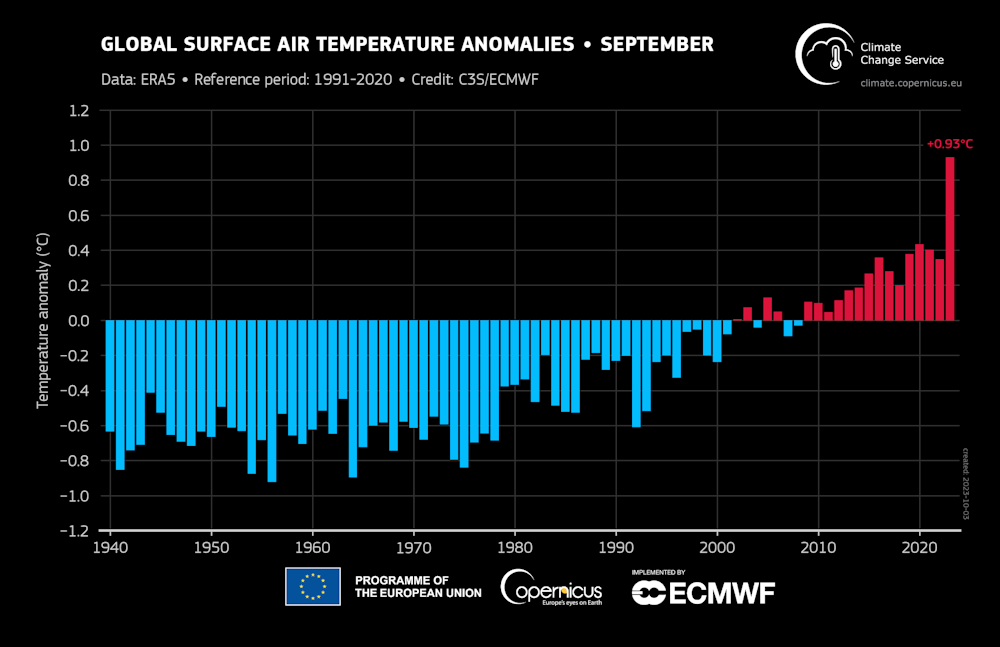
Take the preliminary September global-average temperature anomaly of 1.7°C above pre-industrial levels, for example. It’s an incredible 0.5°C above the previous record.

A chart showing global temperature anomalies, with September 2023 a clear standout
The preliminary September global temperature is well above every previous value in the instrumental record. Copernicus

So why is the world so incredibly hot right now? And what does it mean for keeping our Paris Agreement targets?

Here are six contributing factors – with climate change the main reason temperatures are so high.

1. El Niño

One reason for the exceptional heat is we are in a significant El Niño that is still strengthening. During El Niño we see warming of the surface ocean over much of the tropical Pacific. This warming, and the effects of El Niño in other parts of the world, raises global average temperatures by about 0.1 to 0.2°C.

Tiếp tục đọc “6 reasons why global temperatures are spiking right now”

Antarctica warming much faster than models predicted in ‘deeply concerning’ sign for sea levels

theguardian.com Graham Readfearn @readfearnThu 7 Sep 2023 16.00 BST

Study finds ‘direct evidence’ of polar amplification on continent as scientists warn of implications of ice loss

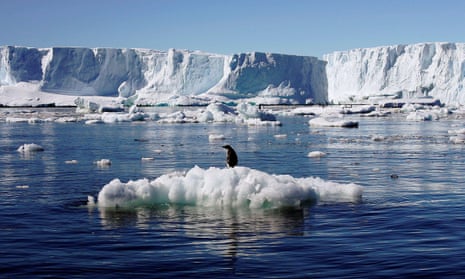
An Adelie penguin in Antarctica.
An Adelie penguin in Antarctica. The icy continent is heating faster than climate models had predicted, a study has found. Photograph: Reuters/Alamy

Antarctica is likely warming at almost twice the rate of the rest of the world and faster than climate change models are predicting, with potentially far-reaching implications for global sea level rise, according to a scientific study.

Scientists analysed 78 Antarctic ice cores to recreate temperatures going back 1,000 years and found the warming across the continent was outside what could be expected from natural swings.

In West Antarctica, a region considered particularly vulnerable to warming with an ice sheet that could push up global sea levels by several metres if it collapsed, the study found warming at twice the rate suggested by climate models.

Tiếp tục đọc “Antarctica warming much faster than models predicted in ‘deeply concerning’ sign for sea levels”

Mosquito-borne dengue grows deadlier in South Asia as planet warms

context.news

A grandmother keeps her vigil at the side of her sick grandchild at the dengue wards at the Mugda Medical College and Hospital, Dhaka, ‎August ‎30, ‎2023

A grandmother keeps her vigil at the side of her sick grandchild at the dengue wards at the Mugda Medical College and Hospital, Dhaka, ‎August ‎30, ‎2023, Thomson Reuters Foundation/Mosabber Hossain

What’s the context?

Virus is posing an ever-greater threat in Bangladesh and Nepal where rise and spread of cases are linked to climate change impacts

  • Dengue on the rise and spreading in Bangladesh, Nepal
  • Heat and longer monsoon linked to worsening outbreaks
  • Authorities struggle to respond but aid groups helping

DHAKA/KATHMANDU – Mosquito-borne dengue fever is taking a heavy toll on South Asian nations this year as Bangladesh grapples with record deaths and Nepal faces cases in new areas, with disease experts linking worsening outbreaks to the impacts of climate change.

Authorities in the two countries are scrambling to contain and treat the disease – which is also known as “breakbone fever” for the severe muscle and joint pains it induces. Entomologists and epidemiologists say rising temperatures and longer monsoon seasons are providing ideal breeding conditions for mosquitoes.

The threat is not restricted to South Asia as dengue rates are rising globally with 4.2 million cases reported in 2022 – up eight-fold from 2000 – the World Health Organization (WHO) says.

Tiếp tục đọc “Mosquito-borne dengue grows deadlier in South Asia as planet warms”

Cop28 will be the first to dedicate a day to health and climate

thebulletin.org

By Fiona Harvey | May 4, 2023

masked women working at a food stall Photo by Jérémy Stenuit on Unsplash

Editor’s note: This story was originally published by The Guardian. It appears here as part of the Climate Desk collaboration.

The next UN climate summit will be the first to consider health issues in depth, with a meeting of global health ministers to highlight the consequences of the climate crisis for wellbeing.

Sultan Al Jaber, the president of Cop28, which will take place in Dubai this November, said on Tuesday: “We will be the first Cop to dedicate a day to health and the first to host a health and climate ministerial. And we need to broaden our definition of adaptation to enable global climate resilience, transform food systems and enhance forestry land use and water management.”

Tiếp tục đọc “Cop28 will be the first to dedicate a day to health and climate”

Asia’s prolonged April heatwave concerns scientists

ft.com

‘Exceptional’ conditions raise fears about a hotter 2023

Scatterplot chart showing high temperature records for countries in continental Asia

Countries across Asia suffered soaring April temperatures, prompting warnings from scientists that 2023 could set new heat records as climatic patterns change and global warming accelerates. Temperatures climbed to highs of 45C in Myanmar, 44.5C in India and 41.9C in China, according to the climatologist and weather historian Maximiliano Herrera, with Thailand and Laos breaking all-time high records.

At least 13 people were reported to have died from heat stroke in Mumbai, India, while parts of Bangladesh endured power cuts as electricity demand surged in the unusual conditions. More than 100 weather stations in China recorded all-time high temperatures for April.

Tiếp tục đọc “Asia’s prolonged April heatwave concerns scientists”

Perilous Pathogens: How Climate Change Is Increasing the Threat of Diseases

Climate change is creating many pathways for zoonotic diseases to reach people. Four cases show how the climate crisis is altering disease threats and how the world can respond.

cfr.org

Article by Claire Klobucista and Lindsay Maizland November 4, 2022 4:12 pm (EST)

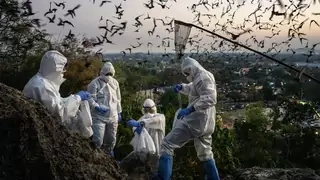
THAILAND: Infectious-disease researchers catch bats to study. Adam Dean/New York Times/Redux

The world is already witnessing the consequences of human-caused climate change, including hotter temperatures, rising sea levels, and more frequent and severe storms. What’s harder to see are climate change’s effects on the spread of disease: on the mosquito that carries a virus, or the pathogenic bacteria on a piece of fruit.

Tiếp tục đọc “Perilous Pathogens: How Climate Change Is Increasing the Threat of Diseases”

For 110 years, climate change has been in the news. Are we finally ready to listen?

theconversation.com

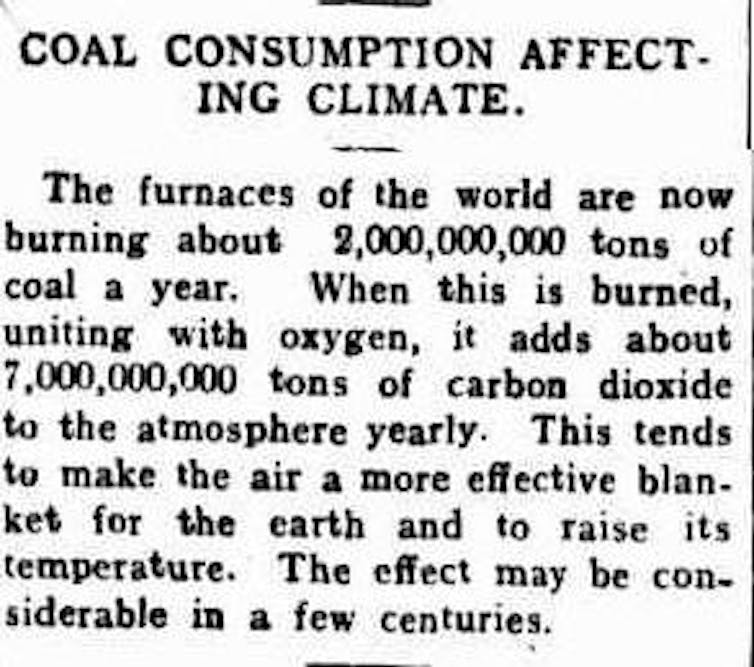
On August 14 1912, a small New Zealand newspaper published a short article announcing global coal usage was affecting our planet’s temperature.

This piece from 110 years ago is now famous, shared across the internet this time every year as one of the first pieces of climate science in the media (even though it was actually a reprint of a piece published in a New South Wales mining journal a month earlier).

So how did it come about? And why has it taken so long for the warnings in the article to be heard – and acted on?

Short newspaper article with the headline
This short 1912 article made the direct link between burning coal and global temperature changes. The Braidwood Dispatch and Mining Journal, National Library of Australia

The fundamental science has been understood for a long time

American scientist and women’s rights campaigner Eunice Foote is now widely credited as being the first person to demonstrate the greenhouse effect back in 1856, several years before United Kingdom researcher John Tyndall published similar results.

Her rudimentary experiments showed carbon dioxide and water vapour can absorb heat, which, scaled up, can affect the temperature of the earth. We’ve therefore known about the relationship between greenhouse gases and Earth’s temperature for at least 150 years.

Tiếp tục đọc “For 110 years, climate change has been in the news. Are we finally ready to listen?”

Arctic is warming nearly four times faster than the rest of the world

theconversation.com

The Earth is approximately 1.1℃ warmer than it was at the start of the industrial revolution. That warming has not been uniform, with some regions warming at a far greater pace. One such region is the Arctic.

new study shows that the Arctic has warmed nearly four times faster than the rest of the world over the past 43 years. This means the Arctic is on average around 3℃ warmer than it was in 1980.

This is alarming, because the Arctic contains sensitive and delicately balanced climate components that, if pushed too hard, will respond with global consequences.

Why is the Arctic warming so much faster?

A large part of the explanation relates to sea ice. This is a thin layer (typically one metre to five metres thick) of sea water that freezes in winter and partially melts in the summer.

The sea ice is covered in a bright layer of snow which reflects around 85% of incoming solar radiation back out to space. The opposite occurs in the open ocean. As the darkest natural surface on the planet, the ocean absorbs 90% of solar radiation.

When covered with sea ice, the Arctic Ocean acts like a large reflective blanket, reducing the absorption of solar radiation. As the sea ice melts, absorption rates increase, resulting in a positive feedback loop where the rapid pace of ocean warming further amplifies sea ice melt, contributing to even faster ocean warming.

Tiếp tục đọc Arctic is warming nearly four times faster than the rest of the world

58% of human infectious diseases can be worsened by climate change – we scoured 77,000 studies to map the pathways

theconversation.com

Published: August 8, 2022 4.00pm BST

Climate change can exacerbate a full 58% of the infectious diseases that humans come in contact with worldwide, from common waterborne viruses to deadly diseases like plague, our new research shows

Our team of environment and health scientists reviewed decades of scientific papers on all known pathogenic disease pathogens to create a map of the human risks aggravated by climate-related hazards.

The numbers were jarring. Of 375 human diseases, we found that 218 of them, well over half, can be affected by climate change.

Flooding, for example, can spread hepatitis. Rising temperatures can expand the life of mosquitoes carrying malaria. Droughts can bring rodents infected with hantavirus into communities as they search for food.

With climate change influencing more than 1,000 transmission pathways like those and climate hazards increasingly globally, we concluded that expecting societies to successfully adapt to all of them isn’t a realistic option. The world will need to reduce the greenhouse gas emissions that are driving climate change to reduce these risks.

Top Takeaways from the UN World Leaders Summit at COP26

Dawn over Glasgow COP26

CommentaryTopic Climate

WRI.org

The first two days of the UN Climate Conference (COP26) featured over 100 high-level announcements and speeches during the “World Leaders Summit,” helping set the tone for the two-week long conference. The gathering of world leaders was immediately preceded by the G20 Summit held in Rome.

While several important announcements were made that will help to move the needle on global climate action, negotiators will still have their work cut out for them as they try to pave the way for more progress in the coming days.

Here’s a look at the developments so far.

Limited Progress at G20 Summit in Rome

In a final communique, G20 nations recognized the importance of strengthening national climate action this decade, and committed to revisit and further enhance their 2030 emission reduction targets where necessary. This should pave the way for negotiators at COP26 to agree that major emitters will further strengthen their 2030 targets within the next couple of years to keep the Paris Agreement’s 1.5 degrees C (2.7 degrees F) temperature goal within reach.  

Tiếp tục đọc “Top Takeaways from the UN World Leaders Summit at COP26”