UNCTAD releases Handbook of Statistics 2023

UNCTAD.org

14 December 2023

The annual handbook provides key data and indicators on how the economy has evolved across regions, countries and sectors.
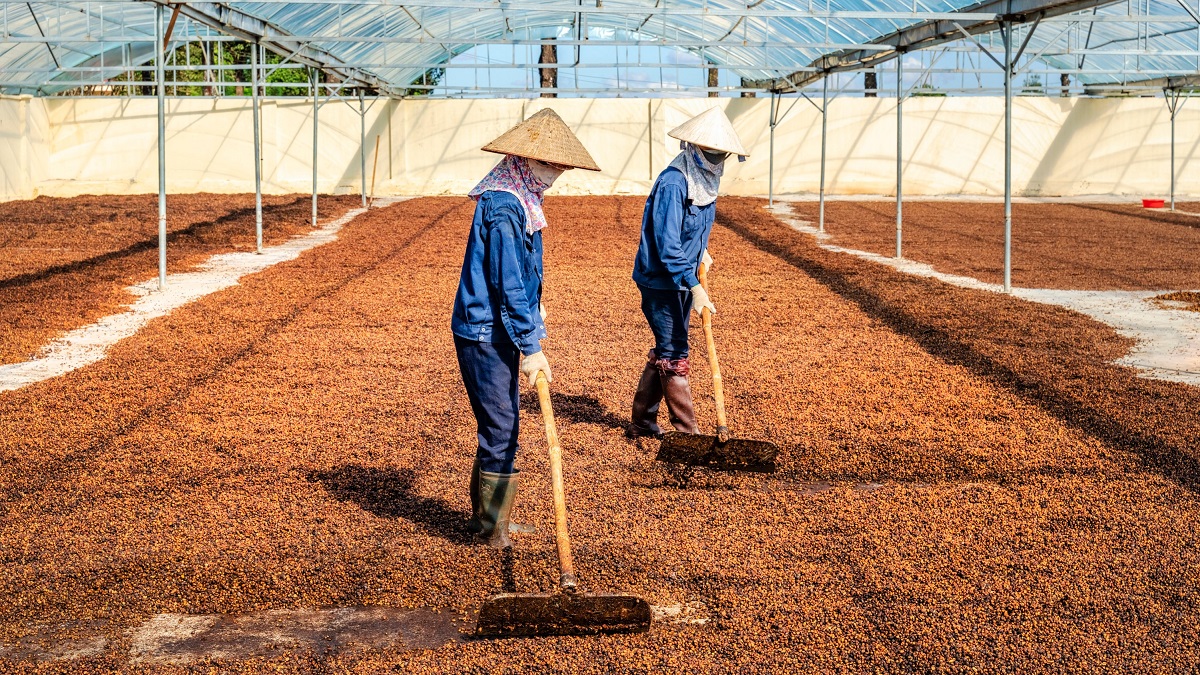
© Shutterstock/Nguyen Quang Ngoc Tonkin | Workers dry coffee beans in Gia Lai, Viet Nam.

UNCTAD released on 14 December its Handbook of Statistics 2023 – the global reference for trade and development trends published each year.

It provides official statistics on how the global economy has evolved across regions, countries and sectors. An online version allows people to interact with the data, charts and graphs.

By using “nowcasts”, the handbook provides data-driven real-time estimates of current developments. These can assist governments in anticipating shifts in trade and the economy before final official statistics are available.

“Timely and quality data are critical now more than ever in an era of multiple global crises,” says Anu Peltola, head of UNCTAD Statistics. “These statistics will help countries take evidence-based decisions to tackle today’s challenges rather than yesterday’s.”

Below are some of the key trends for 2022 and 2023 highlighted in the report.

International trade dynamics

  • Trade in goods falls: Following a strong recovery from COVID-19 in 2021, goods exports increased by 11.4% in 2022, reaching $29 trillion. But statistics show a 4.6% decrease in merchandise trade in the first half of 2023, and UNCTAD nowcasts a continued year-on-year decline for the third and fourth quarters.
  • Trade in services continues to rise: Trade in services rebounded by 14.8% in 2022, surpassing pre-pandemic levels. Services trade grew more in developing countries, which in 2022 reached their highest global market share to date at 30%. Globally, UNCTAD nowcasts around 7% growth for trade in services in 2023.
  • Tiếp tục đọc “UNCTAD releases Handbook of Statistics 2023”

Which countries are most exposed to the EU’s proposed carbon tariffs?

resourcetrade.earth Chris Kardish, Mattia Mäder, Mary Hellmich, and Maia Hall, 20 August 2021

The European Union (EU) is moving ahead with the world’s first border tax on the carbon content of imported goods which aims to strengthen its increasingly ambitious climate targets and policies, but is attracting criticism. How would it work and which trading partners are most vulnerable to its impacts?

Steel mill in Novokuznetsk, Russia. (Sergei Bobylev\TASS via Getty Images)

Contents

The EU is accelerating its climate ambition over the coming decade to support its 2050 long-term strategy of reaching net-zero greenhouse gas (GHG) emissions. Key aspects of this acceleration include raising its emissions reduction target from 40 per cent to at least 55 per cent below 1990 levels by 2030 and implementing a sweeping set of policy changes – especially to its flagship emissions trading system (ETS) which puts a price on pollution by requiring companies to purchase allowances for their emissions.

The costs of the allowances have skyrocketed recently and now hovers around record levels of €50 per tonne of carbon dioxide equivalent or above. This is due – at least in part – to those participating in the market expecting a tighter supply of allowances as the EU increases its climate targets. Prices are expected to continue rising over the coming decade as the EU implements its ambitious climate agenda.

Tiếp tục đọc “Which countries are most exposed to the EU’s proposed carbon tariffs?”

Foreign bribery rages unchecked in over half of global trade

There are many losers and few winners when companies bribe foreign public officials to win lucrative overseas contracts. In prioritising profits over principles, governments in most major exporting countries fail to prosecute companies flouting laws criminalising foreign bribery.

What is missing is active enforcement. Transparency International’s new report, Exporting Corruption, finds that only 11 major exporting countries – accounting for about a third of world exports – have active or moderate law enforcement against companies bribing abroad in order to gain mining rights, contracts for major construction projects, purchases of planes and other deals.
Tiếp tục đọc “Foreign bribery rages unchecked in over half of global trade”