For nearly 60 days, no food, fuel, medicine or other item has entered the Gaza Strip, blocked by Israel. Aid groups are running out of food to distribute. Markets are nearly bare. Palestinian families are left struggling to feed their children. We discussed that with out guest Arwa Damon, founder of the International Network for Aid, Relief and Assistance (INARA)
The World Food Programme runs out of food in Gaza as Israeli blockade continues
The World Food Programme has run out of food 54 days after Israel imposed a complete blockade on the Gaza Strip. NBC News’ Matt Bradley reports on what families in Gaza are facing as Israel’s blockade continues.
WFP runs out of food stocks in Gaza, warns of famine
That is an average of 30 children killed every day over the past 535 days.
Since October 7, 2023, Israel has killed at least 17,400 children, including 15,600 who have been identified. Many more remain buried under the rubble, most presumed dead.
Many of the surviving children have endured the trauma of multiple wars, and all of them have spent their lives under the oppressive shadow of an Israeli blockade, affecting every aspect of their existence from birth.
What is left of Gaza’s children?
About half of Gaza’s 2.3 million residents are children.
Over the past 17 months, Israeli attacks have left their homes in ruins, destroyed their schools, and overwhelmed their healthcare facilities.
To put this in perspective, if you had a room of 100 children:
2 have been killed
2 are missing, presumed dead
3 have been wounded, many critically
5 have been orphaned or separated from their parents
5 require treatment for acute malnutrition
The rest of the children bear the invisible scars of war, trauma that affects their mental health, safety and future.
(Al Jazeera)
Who were these children Israel killed?
They were the sons and daughters of Gaza, each with a life that should have been filled with innocence and the joy of childhood.
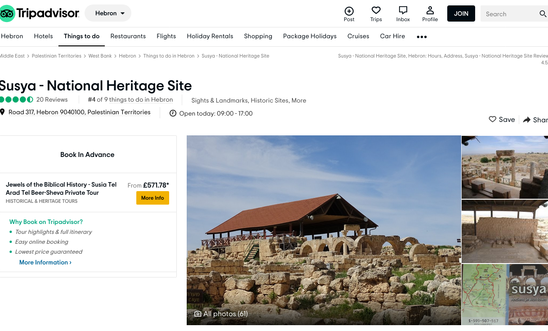
TripAdvisor listing of settler-managed historical sight on Palestinian land
The image above is a TripAdvisor listing of a heritage site managed by settlers in the village of Susiya – on Palestinian land. The UN has released a list of over 100 other companies that also have business interests in Israeli settlements built on Palestinian land.
But why is this a problem?
Illegal Settlements
In 1967, Israel began the process of building settlements on occupied Palestinian territory.
Firstly, what is a settlement?
It is Israel’s building of villages, towns and cities on occupied Palestinian territory.
What makes them illegal?
The transfer of Israeli civilians to these settlements is illegal under international law. In fact it is a war crime according to the Rome Statute of the International Criminal Court.
Hundreds of thousands Displaced
Since 1948, hundreds of thousands of Palestinians had to flee their homes to escape violence or were forcibly removed. Not just their they lost their land and businesses too. Many are remain in refugee camps till this day. Here they have become parents and even grand parents.
Suffocating laws
Some Palestinians stayed behind and refused to give up their land. Their lives have been made impossible as consecutive governments have introduced discriminatory laws and policies, in the hope they will eventually leave. But as the settlements continue to expand some are still standing their ground.
What TripAdvisor doesn’t show you
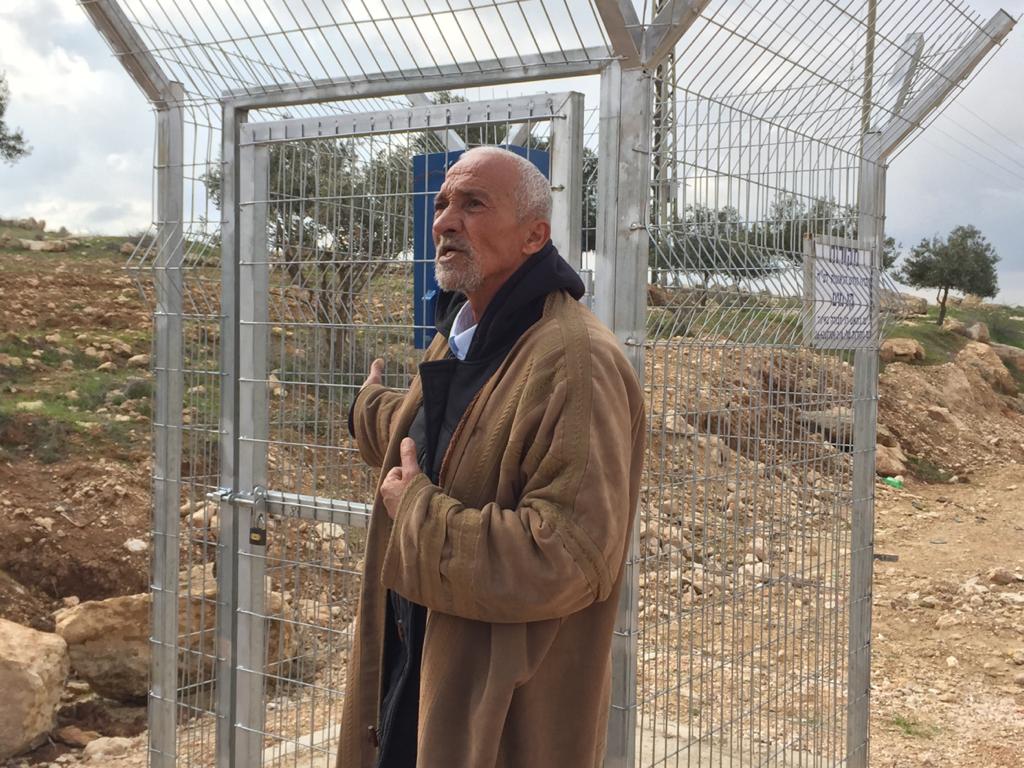
(A resident of Susiya shows us a water system installed on his land for the sole benefite of the nearby settlement)
The Palestinian village of Susiya, in the occupied West Bank is home to around 300 Palestinians. The village has a few tents and shacks, a couple of water cisterns and some sheep. There is no access to electricity or running water.
Sitting on my tiny rooftop garden, how much I cherish the early morning tea with the sweet sounds of a bird family, who has graciously made my roof their home since the day I settled here.
How thankful I am for this precious gift of sound, offered by my birdy friends despite the city noise that they have to compete with. How unbearable it would be, imagine one day, I find no birdy singing on my roof nor in any other corner of this Earth.
In the quiet corners of our world, where nature once thrived and rang its melody, Rachel Carson’s “Silent Spring” warned us about a future where the symphony of Nature would be no bird chirping, no insect buzzing, not even leaf rustling, but replaced by creepy hush, only. And that scary destructive silence was caused by the pesticide and herbicide.
These days, we find ourselves in a different strike of silence, one that haunts the holiday season in Gaza, Palestine – a Silent Christmas, where the laughters of children and the voices of joyous carols are muted by the horrors of war and genocide.
This is not a Christmas story from a distant land; this haunting silence deeply matters to our conscience. For this silence echoes the death of humanity. For this silence is the death of the voice in our heart.


 CVD
CVD 