
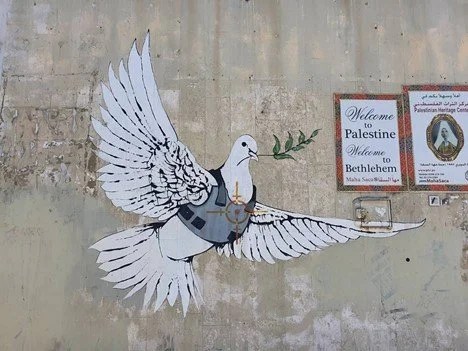
By Sheridan Gunderson
It has many names. In Hebrew: “separation wall.” In Arabic: “wall of Apartheid.” In the media: “West Bank barrier,” “security fence,” “Apartheid wall,” or simply, “The Wall.” Whatever you call it, upon completion, it will encircle the West Bank stretching 708 kilometers (440 miles).[1]
Grey concrete slabs eight meters high and three meters thick snake around the landscape, annexing Palestinians from their farmland, communities, and places of work. About 80 percent of Palestinians separated from their land by the wall have not received permits from Israeli authorities to cultivate their fields.[2]
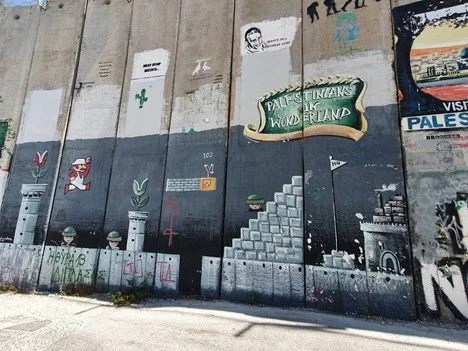
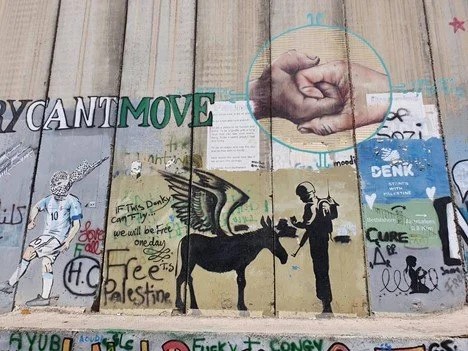
In 2007, the section of the wall in the Palestinian town of Bethlehem attracted the attention of the England-based street artist and political activist known as “Banksy.” He and other graffiti artists transplanted an annual, London-based pop-up art display known as “Santa’s Ghetto” to Bethlehem where Banksy painted four stencils on the wall. Some of the art born out of this project can still be seen today. While other pieces have been painted over, the site remains what could be the world’s largest fluid art installation. Over the course of just a few months in 2021, new art constantly appeared.
Tiếp tục đọc “Writing on the Wall: Resistance Art in Palestine”
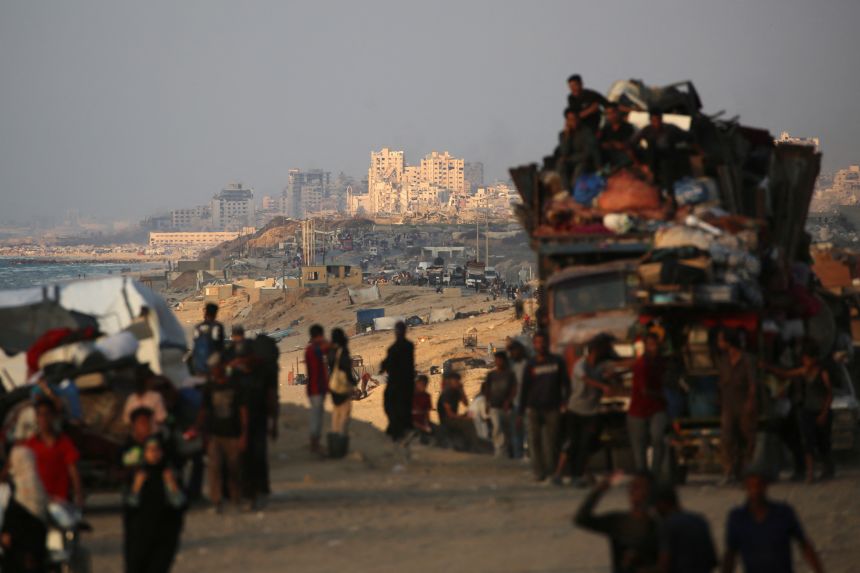
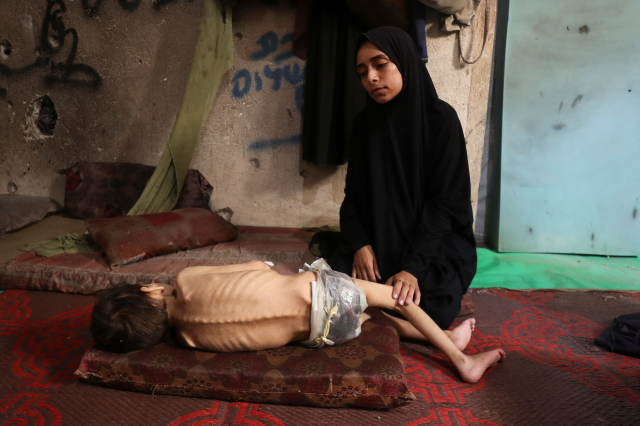 A Palestinian mother sits next to her malnourished son, at a school where they shelter amid a hunger crisis, in Gaza City, July 24, 2025. REUTERS/Mahmoud Issa


 CVD
CVD 