High-resolution maps show that rubber causes substantial deforestation (in Southeast Asia)

SEI.org

Researchers used this data and cloud computing to generate powerful, high-resolution maps of rubber and its associated deforestation in Southeast Asia, where over 90% of global rubber is produced…The mapping showed that forest loss associated with rubber production is more than two to three times greater than indicated by previous research has suggested

A multi-partner team of researchers, led by the Royal Botanic Garden Edinburgh, have used new Earth observation satellite data and advanced computer modelling to show that rubber-related deforestation is far higher than previous estimates have suggested

Almost all tropical deforestation is related to the production of global commodities, but mapping this deforestation through satellite imagery is rare (oil palm and soy are the notable exceptions). Natural rubber ranks among these global commodities but its deforestation impact has proved difficult to measure: globally, 85% of natural rubber is produced by smallholders on scattered plantations which have proved difficult to detect through traditional satellite imaging due to their small size. Moreover, these plantations also have a very similar visual appearance to forest when viewed from space. Previous calculations of rubber deforestation have therefore used model-based data.

Due to recent improvements in the visual quality of Earth observation data, in this paper the authors were able to capture the smallholder plantations in their mapping and address the deforestation knowledge gap. Researchers used this data and cloud computing to generate powerful, high-resolution maps of rubber and its associated deforestation in Southeast Asia, where over 90% of global rubber is produced.

Rubber tapping on a plantation in Thailand.Photo: Pavel Muravev / iStock / Getty Images Plus
Tiếp tục đọc “High-resolution maps show that rubber causes substantial deforestation (in Southeast Asia)”

How using tree rings to look into the past can teach us about the climate changes we face in the future

theconversation.com

“The longer you can look back, the farther you can look forward,” Winston Churchill proclaimed to the Royal College of Physicians in 1944, invoking a much older idea known as “uniformitarianism”.

Coined by geologists James Hutton and Charles Lyell, this is the idea that past processes (like erosion or climate change) that have altered the Earth over time remain similar, so we can analyse them to understand the consequences of future processes – such as how climate change might shape our planet in the years to come.

This principle of looking to the past to see the future still guides the science of palaeoclimatology, or the study of past climates.

For example, the geological record tells us there were palm trees in Antarctica many millions of years ago, when CO₂ was at 1,000 parts per million in our planet’s atmosphere.

Our mission is to share knowledge and inform decisions.

About us

Looking back to this period, when our planet was experiencing naturally high CO₂ levels, helps us study what life on Earth might look like if our attempts to reach net zero emissions fail and greenhouse gas emission rates continue to rise.

Tiếp tục đọc “How using tree rings to look into the past can teach us about the climate changes we face in the future”

Muốn bán tín chỉ carbon, trước tiên phải có uy tín về bảo vệ rừng

laodong.vn

Quảng Nam vừa được Chính phủ đồng ý thí điểm kinh doanh tín chỉ carbon (CO2). Đây là tín hiệu vui cả cho sự phát triển kinh tế lẫn công tác bảo vệ môi trường, bảo vệ rừng.

Muốn bán tín chỉ carbon, trước tiên phải có uy tín về bảo vệ rừng
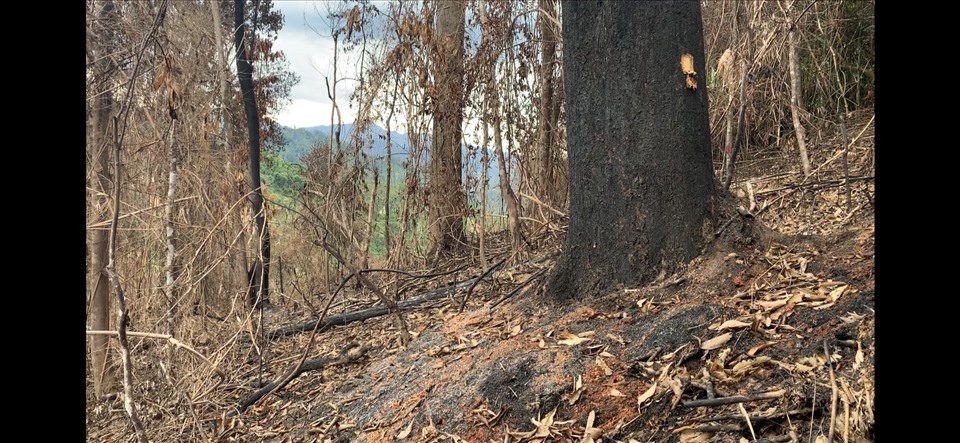
Một vụ đốt rừng để trồng rừng vừa xảy ra giữa tháng 5.2021 tại huyện Phước Sơn, Quảng Nam. Ảnh: Huy Kha

UBND Quảng Nam cho biết, Văn phòng Chính phủ vừa có Công văn gửi cho Bộ NN&PTNT và chính quyền tỉnh này về việc đồng ý cho phép Quảng Nam lập đề án thí điểm kinh doanh tín chỉ carbon.

Theo Bộ NN&PTNT, mỗi năm Việt Nam có thể bán ra thị trường thế giới 57 triệu tín chỉ carbon. Nếu được giá bán 5 USD/tín chỉ, thì mỗi năm Việt Nam có thể thu về hàng trăm triệu USD.

Trong đó, Quảng Nam với 628.000 ha rừng tự nhiên, mỗi năm có khả năng bán được 1 triệu tín chỉ carbon ra thị trường thế giới. Nếu thành công với đề án này thì bình quân mỗi năm tỉnh này sẽ thu được từ 5 triệu đến 10 triệu USD.

Tiếp tục đọc “Muốn bán tín chỉ carbon, trước tiên phải có uy tín về bảo vệ rừng”

Phantom Forests: Why Ambitious Tree Planting Projects Are Failing

e360.yale.edu

High-profile initiatives to plant millions of trees are being touted by governments around the world as major contributions to fighting climate change. But scientists say many of these projects are ill-conceived and poorly managed and often fail to grow any forests at all.

BY FRED PEARCE • OCTOBER 6, 2022

It was perhaps the most spectacular failed tree planting project ever. Certainly the fastest. On March 8, 2012, teams of village volunteers in Camarines Sur province on the Filipino island of Luzon sunk over a million mangrove seedlings into coastal mud in just an hour of frenzied activity. The governor declared it a resounding success for his continuing efforts to green the province. At a hasty ceremony on dry land, an official adjudicator from Guinness World Records declared that nobody had ever planted so many trees in such a short time and handed the governor a certificate proclaiming the world record. Plenty of headlines followed.

But look today at the coastline where most of the trees were planted. There is no sign of the mangroves that, after a decade of growth, should be close to maturity. An on-the-ground study published in 2020 by British mangrove restoration researcher Dominic Wodehouse, then of Bangor University in Wales, found that fewer than 2 percent of them had survived. The other 98 percent had died or were washed away.

Tiếp tục đọc “Phantom Forests: Why Ambitious Tree Planting Projects Are Failing”

Supporting Sustainable Forest Plantations in Vietnam

PRESS RELEASE

Supporting Sustainable Forest Plantations in Vietnam

March 27, 2015

More than 43,000 households in Vietnam received access to low-interest loans and technical support to establish 76,500 hectares of forest plantation under the Forest Sector Development Project supported by the World Bank.

A World Bank-supported project has brought strong social, environmental and economic benefits to local communities

HUE, March 27, 2015 – More than 43,000 households in central Vietnam have received access to micro finance and technical support to establish over 76,500 hectares of forest under a World Bank-supported project. Tiếp tục đọc “Supporting Sustainable Forest Plantations in Vietnam”