(TN) Trong năm 2025, Báo Thanh Niên đã xuất bản hàng trăm ngàn bức ảnh, ghi lại các sự kiện thời sự quan trọng của đất nước, những khoảnh khắc báo chí, cùng hàng ngàn nhân vật và câu chuyện đời sống xã hội trên khắp mọi miền Tổ quốc. Những khung hình với mong muốn phác họa bức tranh toàn cảnh về Việt Nam năm 2025 trong giai đoạn chuyển mình mạnh mẽ sau cuộc cách mạng sắp xếp lại đơn vị hành chính.
Cô bé Lò Thị Chang đã sống ở chỗ cao nhất trên mái nhà sàn của một gia đình Thái đen gồm 5 người suốt ba ngày đêm. Nước lũ ngập vào bản em từ hôm ấy đến tối nay chỉ rút được chút ít, rồi như trêu ngươi, làm lộ rõ hơn các mái nhà sàn và các ngọn cây cao đang chơi vơi tô điểm cho những xác trâu bò, gà lợn nổi lềnh phềnh – tựa cuộc “trình diễn” chưa bao giờ có của bản em giữa đất trời xám xịt…
Last year, Pakistan faced the most devastating floods in the history of the country, which is notable because the country lies on a geographical floodplain. The Indus is an ancient and powerful river. The floodplain of the river covers nearly half of Pakistan, where most of the country’s population resides. When the Indus breathes, as rivers do, the lives and livelihoods on the floodplains are quietly absorbed by the water.
Kinhtedothi – Miền Trung đang ở hình thế kinh điển (điển hình) của mùa mưa, rất giống với hình thái thời tiết từng gây ra trận lũ lụt lịch sử vào tháng 11/1999. Liệu một trận đại hồng thuỷ có lặp lại sau gần 25 năm?
Đợt lũ lụt xảy ra tại miền Trung vào tháng 11/1999 (hay còn được biết đến với tên gọi là đại hồng thủy 1999) được xem là một trong những trận lũ lụt lớn nhất từng xảy ra. Nguyên nhân của trận lũ lụt lịch sử là do tác động của không khí lạnh mạnh kết hợp với dải áp thấp xích đạo, các nhiễu động trên cao và cuối cùng là áp thấp nhiệt đới.
Các tỉnh miền Trung nước ta đã phải hứng chịu những trận mưa rất lớn từ ngày 1 – 6/11/1999, gây ra lũ lụt nghiêm trọng, nhấn chìm nhiều huyện, thị xã, làm thiệt hại tài sản lên đến gần 3.800 tỷ đồng (giá thời điểm năm 1999, tương đương 21.203 tỷ đồng ở năm 2023).
Heavy rains have continuously drenched the Central region of Vietnam, unleashed floods and landslides, marooned vast areas, cut off roads and shut down schools.
This afternoon, the Department of Education and Training of Da Nang City announced that students should not go to school because many roads in the city were flooded due to heavy rains.
After the Steering Committee for Natural Disaster Prevention and Control, Search and Rescue and Civil Defense of Da Nang City announced heavy rain will pummel the city from 9 a.m. to 4 p.m. today, the Department of Education and Training of Da Nang City requested heads of schools to let students stay at home for their safety as some roads are deeply flooded.
Residents of Myanmar’s flood-hit Bago city navigate the city’s submerged streets, salvaging food and belongings from their waterlogged homes, after record rainfall triggered floods that authorities said have displaced 14,000 people. “My house is flooded. This is the first time my house has been flooded in my life,” says Phwar Than Hme, a 101-year-old resident of Bago.
Extreme heat and flooding could erase $65bn in apparel export earnings from four Asian countries by 2030 as it jeopardises the health of the workers, new research has revealed.
The slow growth from extreme climate conditions will also result in one million fewer jobs being created, found the study by Cornell University and Schroders.
The research mapped out the climate vulnerability of 32 apparel production hubs of six global brands in Bangladesh, Cambodia, Pakistan and Vietnam. It found flooding and heat pose material risks to entire fashion industry, leading to a 22 per cent decline in export earnings.
These projections are expected to rise significantly by 2050, representing about 69 per cent in foregone export earnings and 8.64 million fewer jobs, warned the researchers.
But brands, investors or regulators are not prioritising in planning for these risks in the countries that collectively represent 18 per cent of global apparel export due to the industry’s focus on mitigation rather than adaptation measures, said the study.
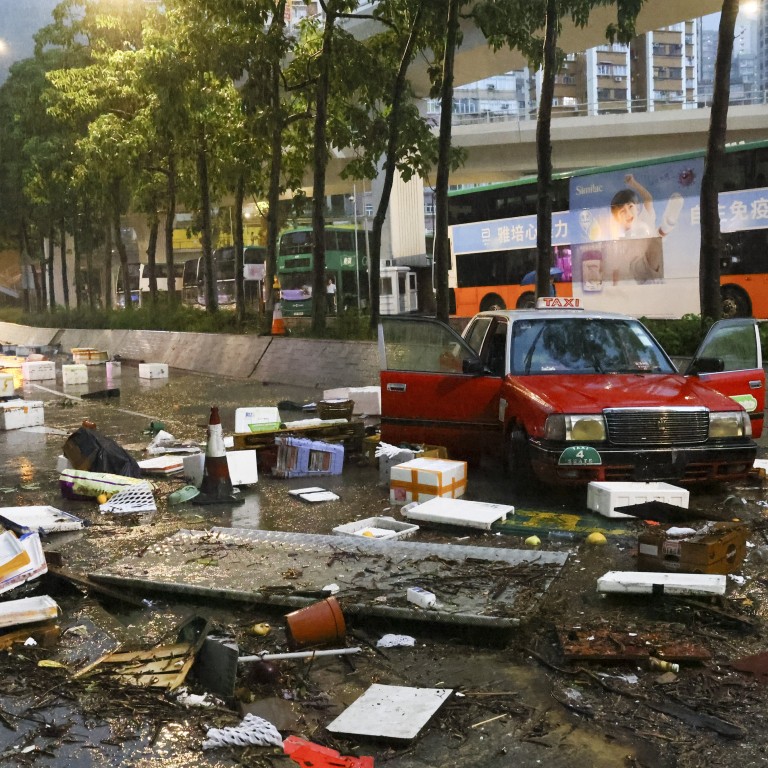
A Hong Kong road is strewn with debris, rubbish and an abandoned taxi as floodwaters recede. Photo: Dickson Lee
Hong Kong officials met the press at 2.30pm on Friday to provide details on efforts in handling the aftermath of the city’s worst downpour in more than a century amid mounting questions over a perceived lack of preparedness.
By Nadeen Ebrahim and Laura Paddison, CNN Updated 12:08 PM EDT, Fri September 15, 2023
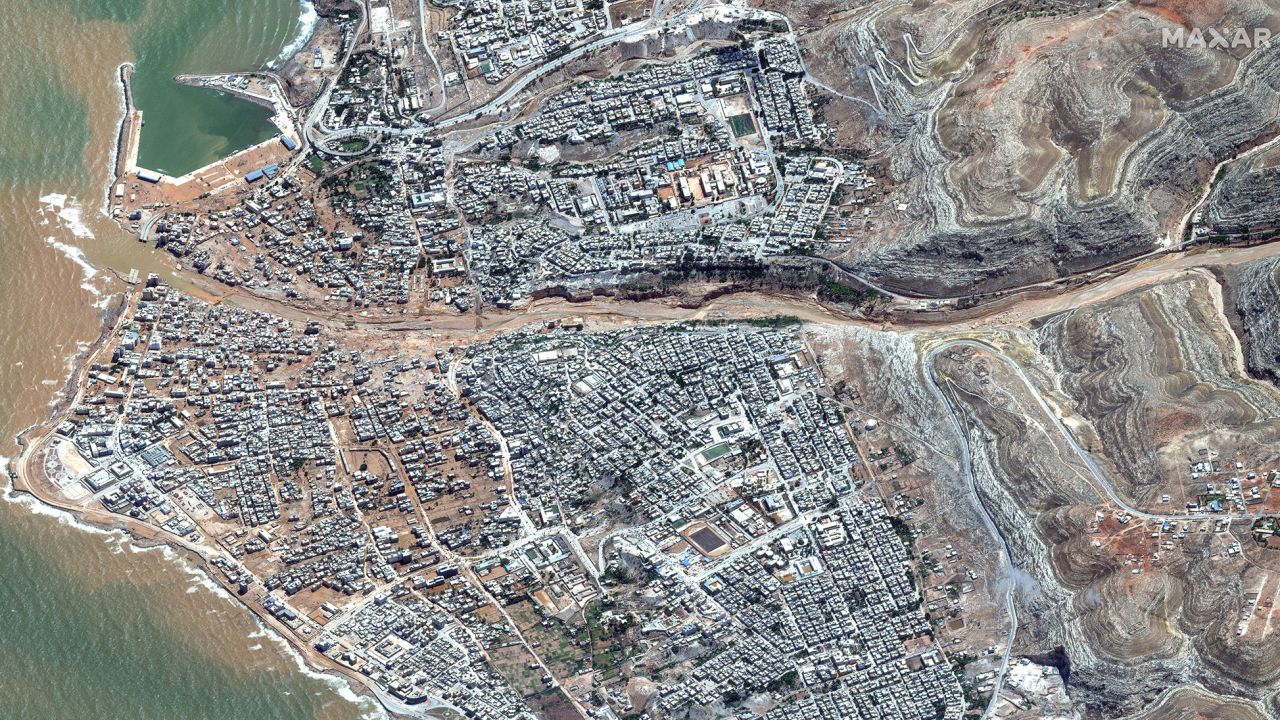
A satellite image shows the town of Derna in the aftermath of the floods in eastern Libya on Wednesday.Maxar Technologies/ReutersCNN —
It started with a bang at 3 a.m. Monday as the residents of Derna were sleeping. One dam burst, then a second, sending a huge wave of water gushing down through the mountains towards the coastal Libyan city, killing thousands as entire neighborhoods were swept into the sea.
More than 5,000 people are believed to have been killed with thousands more missing, though estimates from different Libyan officials and aid groups have varied and the toll is expected to rise.
The eastern Libyan city of Derna, the epicenter of the disaster, had a population of around 100,000 before the tragedy. Authorities say that at least 10,000 remain missing. CNN could not independently verify the figures.
Buildings, homes and infrastructure were “wiped out” when a 7-meter (23-foot) wave hit the city, according to the International Committee of the Red Cross (ICRC), which said Thursday that dead bodies were now washing back up on shore.
But with thousands killed and many more still missing, there are questions as to why the storm that also hit Greece and other countries caused so much more devastation in Libya.
Experts say that apart from the strong storm itself, Libya’s catastrophe was greatly exacerbated by a lethal confluence of factors including aging, crumbling infrastructure, inadequate warnings and the impacts of the accelerating climate crisis.
Lũ đã làm chết nhiều gia súc của nông dân xã Hòa Thành, TX Đông Hòa, Phú Yên. Ảnh: PU
Cả lãnh đạo các nhà máy thủy điện bậc thang trên dòng sông Ba lẫn lãnh đạo các tỉnh Gia Lai, Phú Yên đều bất đồng quan điểm về nguyên nhân lũ chồng lũ, nhấn chìm Nam Trung Bộ. Tranh cãi trái chiều đang gay gắt, chưa hồi kết…
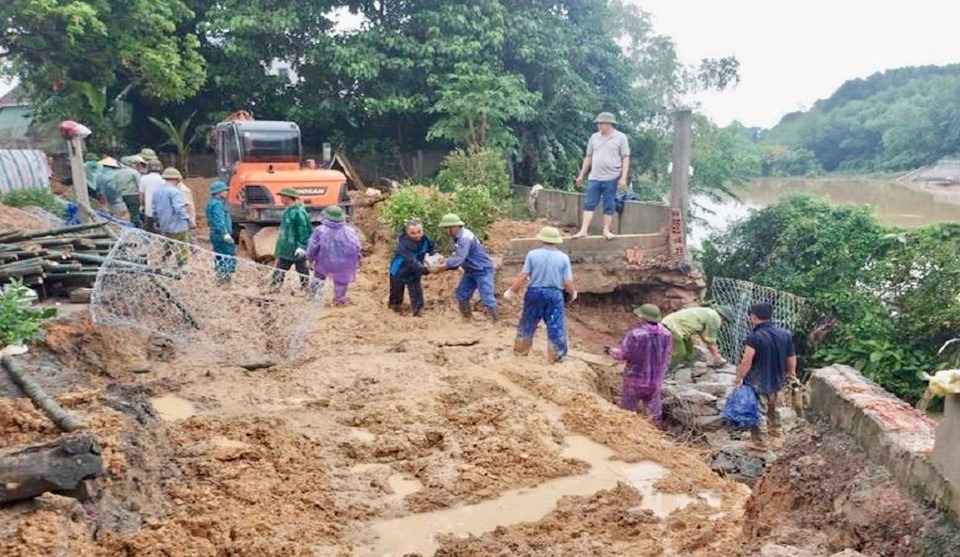
Đợt mưa lũ kéo dài từ tối 28.11- 1.12, gây thiệt hại nặng nề cho các tỉnh Nam Trung bộ và Tây Nguyên. Nhất là Phú Yên, lũ đã vượt đỉnh lịch sử (1993), làm ba người chết, sáu người mất tích, hơn 50.000 căn nhà bị ngập, hơn 18.500 người khác phải sơ tán…
Lãnh đạo Phú Yên cho rằng, một trong những nguyên nhân lũ lụt đỉnh điểm là do các thủy điện ở Tây Nguyên đồng loạt xả lũ, gây áp lực cho thủy điện hạ lưu sông Ba. Nhưng lãnh đạo các sở ngành ở Gia Lai thì phủ nhận.
Để sống chung với lũ, chống chọi với thiên tai, người dân Quảng Bình đã có nhiều sáng kiến, sáng chế hay đáo để…
Ông Nguyễn Mậu Sơn (xã Duy Ninh, huyện Quảng Ninh, Quảng Bình) bảo tôi: “Con thuyền này chi phí không vượt quá 2 triệu đồng, nhưng chở được 8 người lớn và đặc biệt là không bao giờ chìm. Tôi cũng muốn phổ biến cách làm thuyền này cho bà con vùng lũ để có phương tiện tốt, rẻ mà sử dụng…”.
Con thuyền ống nhựa được ông Sơn thiết kế với chi phí thấp. Ảnh: M.S.
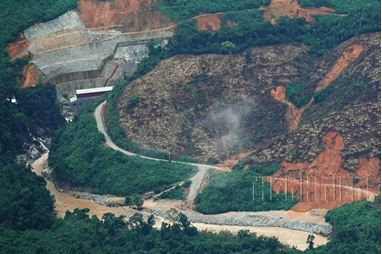
Thủy điện Rào Trăng 3, nhìn từ máy bay trực thăng. Ảnh: internet
Cứ “Đến hẹn lại lên”, trong hơn thập kỷ qua, cứ đến mùa mưa bão thì miền Trung lại phải chịu ngập lũ tang thương, năm sau cao hơn năm trước, như một định mệnh. Những khổ nạn ấy, người ta thường đổ cho “thiên tai” như biến đổi khí hậu chẳng hạn. Điều đó tuy không sai, nhưng ngoài nguyên nhân khách quan do thiên tai đó, còn có nguyên nhân chủ quan là “nhân tai” (nhân họa) do con người gây ra. Sở dĩ người ta né tránh nói đến nhân tai là để giấu dốt, chối bỏ trách nhiệm.
Thế giới tư nhiên vận động có quy luật tương đối ổn định. Do con người tác động vào khiến cho nó biến đổi theo tỷ lệ thuận – tác động nhiều nó biến đổi nhiều và ngược lại.
Thủy điện Rào Trăng 3 trên thượng nguồn sông Bồ nhìn từ máy bay trực thăng
Không biết cây rừng – một loại sinh vật không biết nói, không biết than không biết khóc – ngoài cách phản ứng gián tiếp với con người bằng mặc kệ lũ lụt hoành hành, còn có cách nào nữa không, nhưng cầm chắc là có biết đi nữa chúng nó cũng không lường nổi “cái mốc đổi đời 1945” lại đưa cả bà con họ hàng chúng đến chỗ tuyệt diệt như hôm nay. Trong vài thập kỷ lại đây chúng đã chịu một cuộc “Cải cách rừng núi” long trời lở đất gấp vạn lần CCRĐ, mà hình như đến giờ này cũng đâu đã kết thúc.




 CVD
CVD 