
Delays in rescuing people at sea aren’t a European policy failure. They are a deliberate, cruel strategy.
- Aljazeera.com
- Maurice StierlResearcher at the Institute for Migration Research and Intercultural Studies at Osnabrück University, Germany
Published On 17 May 202317 May 2023
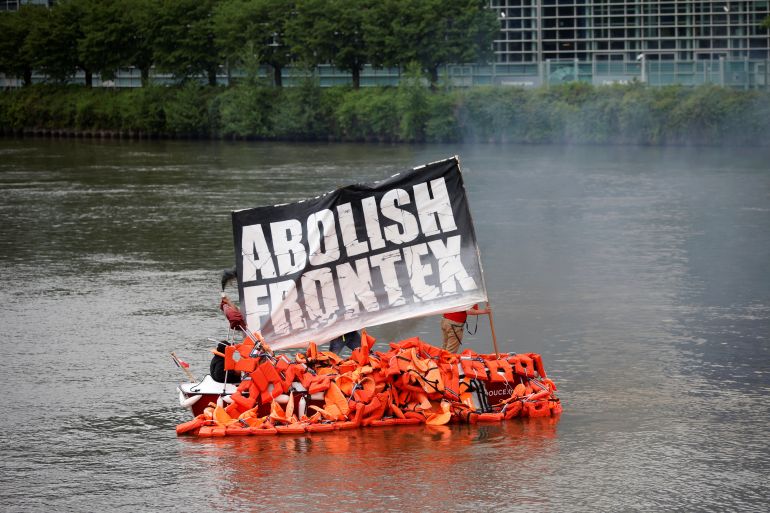
When boats with refugees are at risk of capsizing in the Mediterranean Sea, the speed of rescue operations is essential. Any delay in the emergency response can lead to serious bodily harm or the loss of life.
Still, offering a speedy response in such situations is not one of Europe’s priorities. In a study recently published in the journal Security Dialogue, I argue that time has become increasingly “weaponised” in Mediterranean migration governance.
KEEP READING
list of 4 itemslist 1 of 4
EU’s slow move to common asylum policy ‘fails to prevent deaths’
list 2 of 4
Fighting for a life: The Afghan refugees finding hope in MMA
list 3 of 4
Greek coastguard faces tough questions over refugee boat tragedy
list 4 of 4
Last refugee held on Nauru arrives in Australia
end of list
Over the last decade, and in order to prevent arrivals, European Union authorities have sought out ways to slow down rescue engagement while accelerating interceptions to Libya.
The end of Italy’s humanitarian-military operation Mare Nostrum in 2014 marked a turning point. As a response to a devastating shipwreck on October 3, 2013 near Lampedusa, this operation sped up rescue activities off the Libyan coast, leading to the rescue of about 150,000 people. However, it was denounced by critics as a “pull-factor” that would incentivise the arrival of refugees. Mare Nostrum ended and gave way to successive European operations that experimented with delays in emergency responses.
Tiếp tục đọc “The EU’s secret weapon against refugees — time”

 CVD
CVD 