Asian cities face perfect storm of environmental hazards

phys.org

by Marlowe Hood

Across the globe, more than 400 large cities with a total population of 1.5 billion are at high or extreme risk

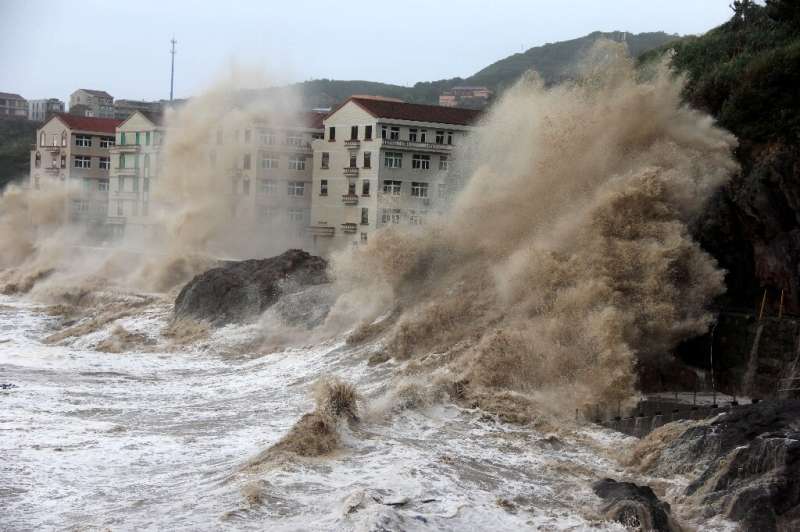
Of the 100 cities worldwide most vulnerable to environmental hazards all but one are in Asia, and most are in India or China, according to a risk assessment published Thursday.

Tiếp tục đọc “Asian cities face perfect storm of environmental hazards”

China companies worst in Asia for environmental sustainability, Hong Kong firms fare best—report

eco-business.com 

The failure of China’s largest corporations to meet waste management and emissions reductions targets have given them the lowest score in a ranking of how companies report their environmental impact. Singapore companies also fare poorly while Hong Kong firms top the list.

Tiếp tục đọc “China companies worst in Asia for environmental sustainability, Hong Kong firms fare best—report”

Plastic and paper scrap imports choke Vietnamese ports

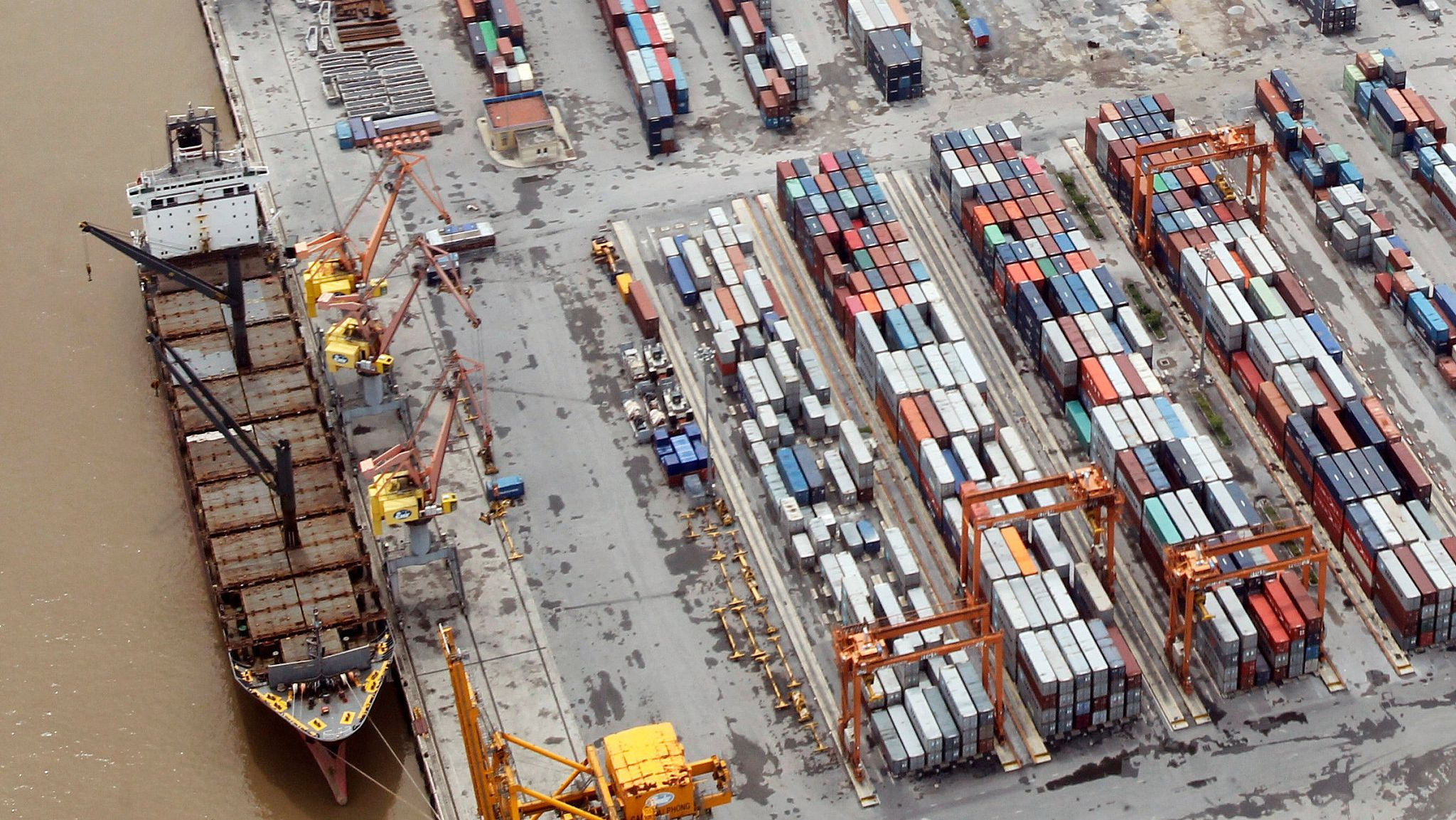
Large-scale waste dumping has reportedly choked Vietnamese ports, with hundreds of containers loaded with plastic and paper scraps lying unclaimed, forcing authorities to impose a temporary ban on waste imports.

Tan Cang – Cai Mep International Co., Ltd (TCIT), a terminal services company, in a letter to shipping lines and customers, said it would suspend imports of plastic and paper scrap as a similar decision earlier by another operator, Saigon Newport Corporation (SNC), had led to overcapacity at TCIT terminals.

“From 25th of June to 15th of October, TCIT will stop receiving all imports laden containers of plastic waste,” a letter signed by general director Chang Fa Wei said. Ngo Minh Tuan, deputy head of SNC, in an official communication, claimed previously that about 5,200 containers of plastic and paper waste have been stored for 90 days or longer at its port.

TCIT Port authorities are alarmed that more than 1,132 containers with plastic and paper waste have been stacked up at the port for last few months.

“Customers are not coming forward to claim the scraps. It’s a complicated situation,” Nguyen Thai Thuong, a senior employee of TCIT, told CGTN over the phone.

“The Chinese ban on waste import is the main reason behind the surge of plastic and paper waste imports, undoubtedly.

The Chinese ban has meant a diversion to Vietnam of the now unwelcome cargo.

Tiếp tục đọc “Plastic and paper scrap imports choke Vietnamese ports”

We calculated how much money trees save for your city

theconversation

Megacities are on the rise. There are currently 47 such areas around the globe, each housing more than 10 million residents.

More than half the global population now lives in urban areas, comprising about 3 percent of the Earth. The ecological footprint of this growth is vast and there’s far more that can be done to improve life for urban residents around the world. Tiếp tục đọc “We calculated how much money trees save for your city”

Forty per cent of global e-waste comes from Asia

Forty per cent of global e-waste comes from Asia

Copyright: Panos

Speed read

  • E-waste generated in 2016 equivalent to 4,500 Eiffel Towers
  • Asian countries account for 40 per cent of the discarded goods
  • Developing countries still lack formal e-waste recycling systems

scidev.net_[NEW DELHI] Humans generated a staggering 44.7 million metric tonnes of electronic waste (e-waste) in 2016 — the equivalent of 4,500 Eiffel Towers, and five per cent more than the electrical and electronic goods discarded just two years earlier, says a new study.

The trend is set to continue, with volumes of e-waste expected to rise to 52.2 million metric tonnes by 2021. Tiếp tục đọc “Forty per cent of global e-waste comes from Asia”

Ocean plastic pollution – what role can social science play?

29 November 2017

IDS is partnering with the EU, UN, Chatham House and other organisations to host a high level side event on circular economy solutions to tackling ocean plastic pollution, during this year’s United Nations Environment Assembly in Nairobi (4-6 December). The event will showcase specific examples of collaborative action and policies that aim to reduce plastic waste, address unsustainable consumption and production patterns and redirect investment for a clean, efficient and circular economy. Ahead of the event, I want to highlight the importance of a universal development approach and transformative social science research, as solutions to the ocean plastics problem.

A large sculpture of a shark made out of plastic waste found in the ocean.

Ocean plastics pollution – not just an environmental issue

Plastics pollution of oceans has emerged as a major global environmental crisis. Between 4.8 and 12.7 million tonnes of plastics enter the ocean each year. It is devastating for marine ecosystems and the accumulation of microplastics in food chains pose a risk to human health. And the issue is becoming more serious.  By 2050, plastics production is expected to increase to over 2000 tonnes per year, up from 311 million tonnes in 2014.

Plastics end up in the ocean as the result of chains of human activities in different parts of the world. We are all contributing to it. China, Indonesia and the Philippines have been identified as the top three sources of ocean plastics pollution by the Ocean Conservancy. While litter found on the sea floor around the UK has risen 150% in the last year and UK plastic waste drifts to the artic where is has a very damaging impact on one of the most vulnerable ecosystems in the world.

Tiếp tục đọc “Ocean plastic pollution – what role can social science play?”