Main South Africa Power Union Calls to Suspend Climate Finance Pact

bloomberg.com

  • Transition to renewable energy generation must be ‘just’
  • As many as 51,000 jobs could be affected, union says
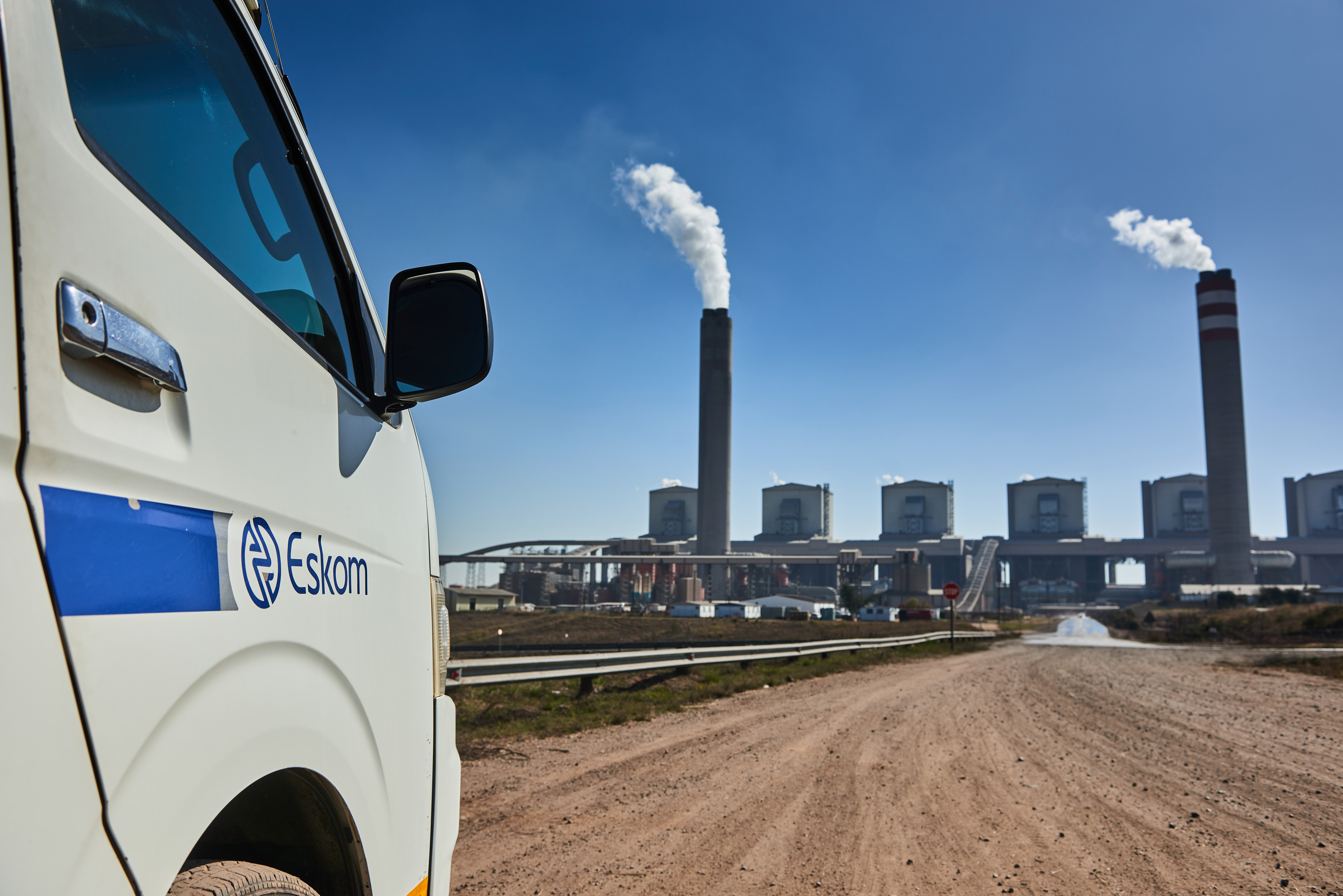
The National Union of Mineworkers wants more talks on plans to split Eskom into generation, transmission and distribution units.
The National Union of Mineworkers wants more talks on plans to split Eskom into generation, transmission and distribution units.Photographer: Waldo Swiegers/Bloomberg

The main labor union at South Africa’s state power utility called for the suspension of an $8.5 billion climate finance pact with some of the world’s richest nations as well as plans to break up Eskom Holdings SOC Ltd. into separate units.

Under the Just Energy Transition Partnership, South Africa agreed to begin moving away from generating electricity from coal, the dirtiest fossil fuel, to producing more renewable energy using financing from Germany, France, the UK, the US and the European Union. As part of a broader transition plan, which didn’t use funding from the so-called JETP, Eskom last year shuttered its Komati coal-fired power plant, with more closures slated to follow.

Tiếp tục đọc “Main South Africa Power Union Calls to Suspend Climate Finance Pact”

Net Zero Roadmap: A Global Pathway to Keep the 1.5 °C Goal in Reach

The path to limiting global warming to 1.5 °C has narrowed, but clean energy growth is keeping it open

IEA full report

Some key takeaways:

  • Record growth in solar power capacity and electric car sales are in line with a pathway towards net zero emissions globally by mid-century, as are industry plans for the roll-out of new manufacturing capacity for them. This is significant, since those two technologies alone deliver one-third of the emissions reductions between today and 2030 in the pathway.
  • Clean energy innovation has also been delivering more options and lowering technology costs. In the IEA’s original Roadmap in 2021, technologies not yet available on the market delivered nearly half of the emissions reductions needed for net zero in 2050. That number has now fallen to around 35% in this year’s update.
  • Tiếp tục đọc “Net Zero Roadmap: A Global Pathway to Keep the 1.5 °C Goal in Reach”

UN chief hails SE Asia for vital role ‘building bridges of understanding’

news.un.org

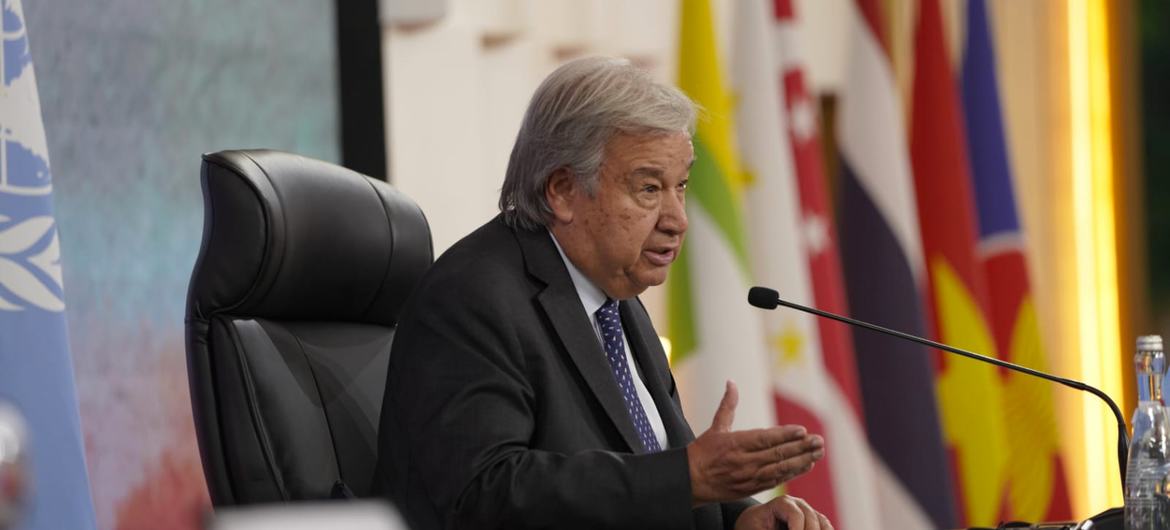
UN Secretary-General António Guterres adresses the media at the Association of Southeast Asian Nations (ASEAN) Summit in Jakarta, Indonesia.

UN Indonesia/Lufty Ferdiansyah

UN Secretary-General António Guterres adresses the media at the Association of Southeast Asian Nations (ASEAN) Summit in Jakarta, Indonesia.

Peace and Security

Amid rising geopolitical tension, Southeast Asia is fulfilling a “vital role in building bridges of understanding” worldwide said the UN chief on Thursday.

António Guterres was speaking in Jakarta, Indonesia, at the opening of the ASEAN-United Nations Summit, addressing Member States of the Association of Southeast Asian Nations and declaring “our partnership is more important than ever.”

Tests ‘as far as eye can see’

Tiếp tục đọc “UN chief hails SE Asia for vital role ‘building bridges of understanding’”

Indonesia climate deal in $20bn gridlock as Vietnam, India on hold

asia.nikkei.com

‘Breakthrough’ funded by G7+ investors misses deadline; Hanoi’s $15.5bn plan delayed

Leaders of ASEAN and G20 nations gather this month with climate change, and how to finance tackling it, looming large after one of the hottest summers on record. Illustration by Hiroko Oshima

SAYUMI TAKE and ERWIDA MAULIA, Nikkei staff writersSEPTEMBER 5, 2023 06:00 JST

TOKYO/JAKARTA — Last November, G20 leaders in Bali hailed what they said was a transformational climate change finance deal to help wean Indonesia off coal. Nine months on, not a single dollar of the $20 billion package has been spent on actively closing down fossil fuel projects.

As the Northern Hemisphere sweats out one of the planet’s hottest-ever summers, and G20 leaders prepare to gather again in India this month, the project that was supposed to provide a breakthrough model in paving the way for the developed world to assist emerging countries to reduce carbon while their economies grow remains mired in meetings on operational details.

Tiếp tục đọc “Indonesia climate deal in $20bn gridlock as Vietnam, India on hold”

Energy transition calls for faster investment treaty reforms

UNCTAD.org 30 August 2023

UNCTAD presents a new toolbox to make international investment agreements actively support the shift from fossil fuels to renewable energy sources.

News

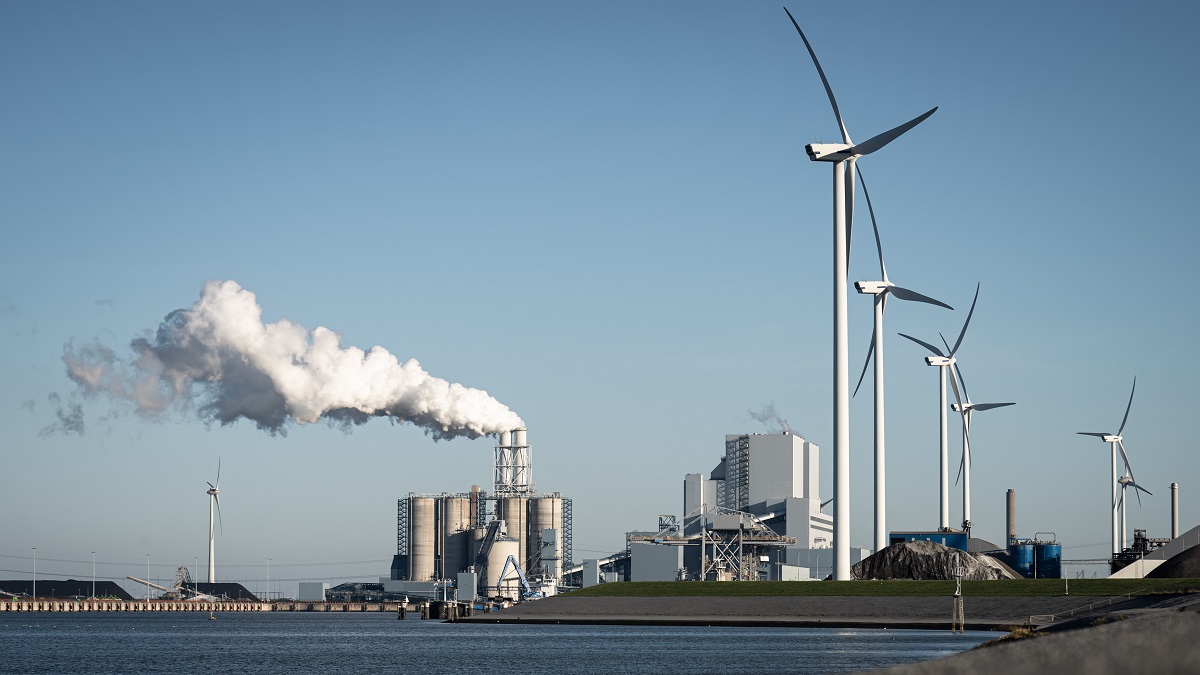
© Shutterstock/Sander van der Werf | Wind turbines and a coal power plant in Eemshaven port in the Netherlands.

Sweltering heatwaves each year underline the need for a faster energy transition and speedier reform of international investment agreements (IIAs) to support the shift away from fossil fuels.

To reach net zero emissions by 2050, annual clean energy investment worldwide needs to more than triple to $4 trillion by 2030.

But many investment treaties, especially older ones, can hinder the transition. As countries try to cut ties with fossil fuels, oil and gas firms might use these treaties to challenge policy changes. An example is a coal phase-out claim against the Netherlands.

Tiếp tục đọc “Energy transition calls for faster investment treaty reforms”

Andrew Steer: We must de-risk the energy transition for developing nations

ft.com

In 2020, Amazon founder Jeff Bezos committed $10bn to create the Bezos Earth Fund, to help address the pressing issues of climate change. And, since then, the fund’s chief executive, Andrew Steer — who joined from the World Resources Institute, following a stint as the World Bank’s special envoy for climate change — has focused its efforts on funding energy transition.

At the COP 27 conference in Egypt, last November, Steer, alongside John Kerry, the US special presidential envoy for climate, and the philanthropic Rockefeller Foundation, announced plans for an Energy Transition Accelerator (ETA) programme, to bring private capital to clean energy transition projects in emerging and developing economies. It’s aim was to do this by verifying the greenhouse gas emission reductions from transition projects, which participating jurisdictions would be able to issue as marketable carbon credits. Under the still to be developed proposal, these credits might then be purchased by companies to achieve their net zero emission targets, creating a predictable finance stream to de-risk costly transition investment.

In March, Steer joined the FT’s climate editor, Emiliya Mychasuk, at the FT Climate Capital Live event, to give an update on the ETA’s progress.

Tiếp tục đọc “Andrew Steer: We must de-risk the energy transition for developing nations”

What is just energy transition? And why is it important?

UNDP

November 3, 2022
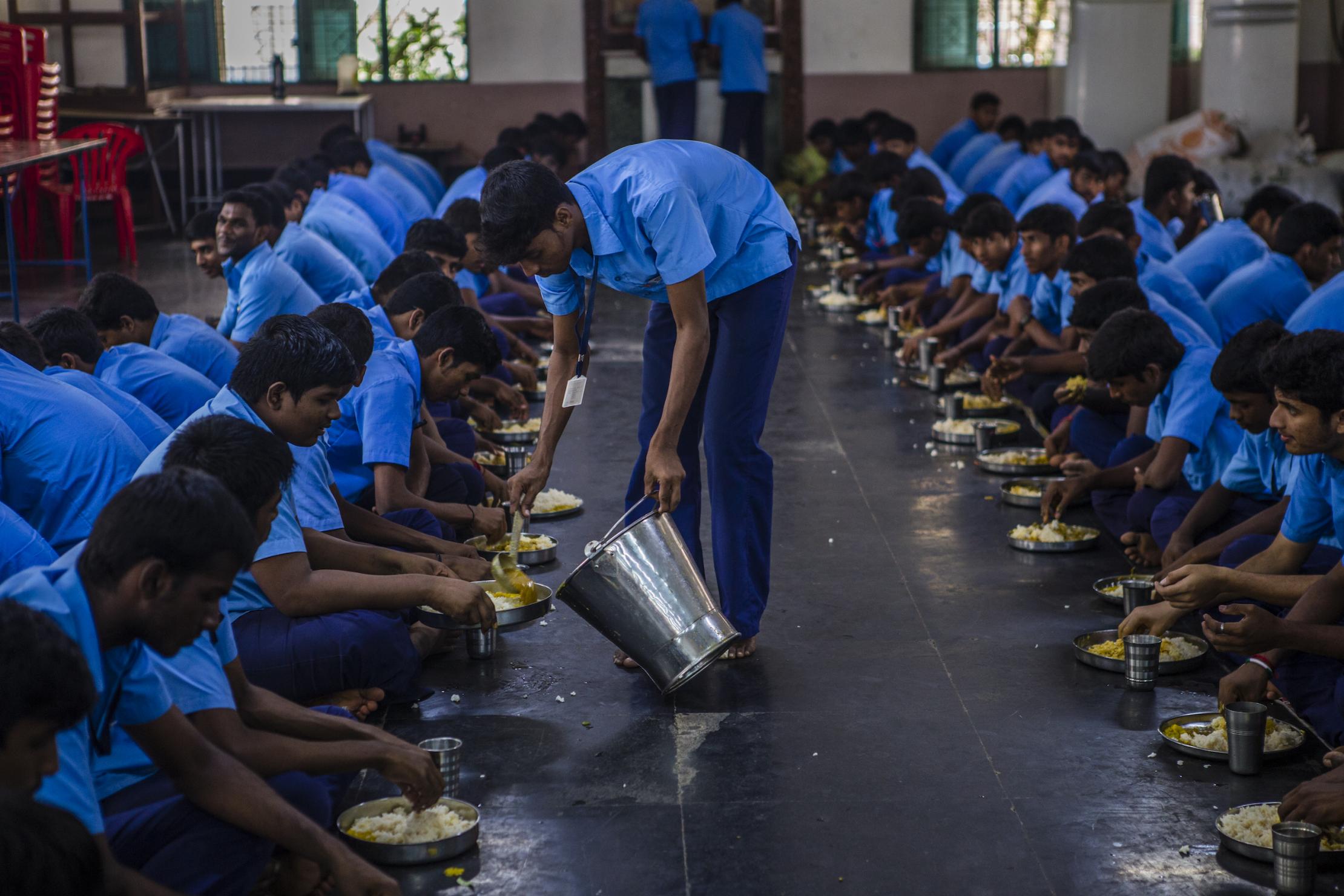
Students from India eat lunch cooked with the steam generated from a solar energy-based steam generator

Photo: Prashanth Vishwanathan/UNDP India

Since the industrial revolution, fossil fuels have powered extraordinary growth and development, albeit with huge costs to our climate. As a direct result, we are today in a climate emergency.

To avert catastrophe, we must now radically switch to a sustainable, net-zero future. This transition needs to happen fast, but it also has to happen in a fair and inclusive way.

If done right, the transition offers immense opportunities: a systems change in which all communities, workers, and countries are lifted up.

Promisingly, momentum around “just transition” is gathering pace. We are seeing it emerge in the global dialogue around decarbonization and net zero. More countries are referencing it in their short and long-term climate plans. Partners are coming together, and coalitions are forming.

So what’s it all about?

What is “just transition”?

The concept of “just transition” has been around since the 1980s, when it was used in a movement by US trade unions to protect workers affected by new water and air pollution regulations. 

In recent years, the concept has gained traction with reference to meeting climate goals by ensuring the whole of society – all communities, all workers, all social groups – are brought along in the pivot to a net-zero future.

Tiếp tục đọc “What is just energy transition? And why is it important?”

Political declaration on establishing the Just Energy Transition Partnership with Viet Nam

GOV.UK

Published 14 December 2022

  1. The Governments of the Socialist Republic of Viet Nam, together with the International Partners Group, consisting of the European Union, the United Kingdom of Great Britain and Northern Ireland, the United States of America, Japan, the Federal Republic of Germany, the Republic of France, the Italian Republic, Canada, the Kingdom of Denmark and the Kingdom of Norway;
  2. Recognising the need to accelerate action towards the objectives and long-term goals of the United Nations Framework Convention on Climate Change (UNFCCC) and the Paris Agreement, including through the implementation of the Glasgow Climate Pact, to minimise the worst adverse impacts of climate change for countries, people and the environment;
  3. Noting that limiting global warming to 1.5°C to mitigate the worst adverse impacts of climate change requires rapid, deep and sustained reductions in global greenhouse gas emissions, including reducing global carbon dioxide emissions by 45% by 2030 relative to the 2010 level and to net zero around mid-century as well as deep reductions in other greenhouse gas emissions, emphasising climate change adaptation and achieving net zero emissions as an opportunity for sustainable development;
  4. Recognising that for Viet Nam, as an independent, sovereign and fast developing lower middle income country heavily affected by the impacts of climate change, it will be key to embrace the opportunities brought about by the fast decreasing cost of renewable energies as an opportunity for sustainable development and to tackle related challenges such as poverty, inequality and unemployment, which are exacerbated by the impact of the COVID-19 pandemic and climate change, and that vulnerable groups and some important economic sectors may be impacted by the energy transition, including thermal electricity generation, coal mining, heavy industry and transport;
  5. Recognising the need for new, predictable, long-term and sustainable support from partner countries, multilateral organisations and investors in finance, technology and capacity building for Viet Nam to exploit fully the opportunities of the transition in accordance with the national framework of public debt and external debt management to contribute significantly to the implementation of the NDC of Viet Nam, its commitment to reach to net zero greenhouse gas emissions by 2050 and its development orientation to become a high-income developed country by 2045;
  6. Tiếp tục đọc “Political declaration on establishing the Just Energy Transition Partnership with Viet Nam”

The Reality of Vietnam’s Energy Transition

The country has emerged as a regional leader in renewables, but some thorny challenges lie ahead.

thediplomat.com

By Kathryn Neville November 25, 2022

The Reality of Vietnam’s Energy Transition
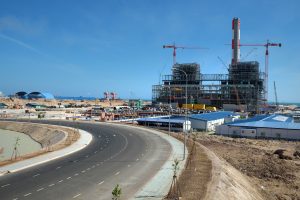
The Vinh Tan thermal power plant in Binh Thuan province, Vietnam.Credit: Depositphotos

ADVERTISEMENT

Earlier this fall, U.S. climate envoy John Kerry shone a spotlight on Vietnam, urging the Southeast Asian nation to “do what is sensible” and refocus its energy sector by investing in renewables and retiring fossil fuels. His remarks coincided with a deal between the European Union and the United Kingdom that made headway last week, which will see the two powers invest at least $11 billion in Vietnam’s green transition. The Just Energy Transition Partnership (JETP) seeks to cancel projects for new coal plants and build out 60GW of renewable energy capacity by 2030. Expected to be finalized at an Association of Southeast Asian Nations (ASEAN) meeting next month, the ambitious package will include public and private financing, technology transfers, and technical assistance.

JETP is not the first deal of its kind. The last decade has seen investors show a growing interest in expanding renewable technology in Southeast Asia. But for Vietnam’s government, the green energy transition is less about a passion for saving the planet and more about driving economic growth by any means possible. Vietnam cares about decarbonization – and renewables do have the potential to become the lowest-cost available energy option. But many political, regulatory, and financing challenges still stand in the way of this goal. Vietnam will ultimately act in its own best interest when deciding its energy future, but it must be wary of not getting overly ambitious with its commitments to the green transition by taking on debt and accepting capital for projects that are premature, imprudent, or ill-advised. An “energy transition” can be dangerous to any developing country that does not have the same risk tolerance as wealthier nations, and Vietnam is susceptible to falling into this trap.

Steps to Aid US Fossil Fuel Workers in the Clean Energy Transition

WRI.org

The economic fallout from COVID-19 took a serious toll on U.S. fossil fuel workers and communities. But well before the coronavirus pandemic arrived, the U.S. fossil fuel industry was under significant pressure as the country moves toward cleaner forms of energy.
Tiếp tục đọc “Steps to Aid US Fossil Fuel Workers in the Clean Energy Transition”

Governments and Philanthropies Announce South East Asia Energy Transition Partnership

Bloomberg.org

Today the Government of Canada’s Department of Environment and Climate Change, the French Development Agency (AFD), Germany’s Federal Ministry for the Environment, Nature Conservation and Nuclear Safety (BMU), the United Kingdom’s Department for Business, Energy and Industrial Strategy (BEIS), and global philanthropies announced the beginning of a new collaboration at the One Planet Summit in New York to accelerate the energy transition in partnership with countries in South East Asia.

South East Asian countries can ensure continued economic growth and prosperity, keep pace with the related growth in energy demand, and meet their Nationally Determined Contributions (NDCs) toward the Paris Agreement. The fall in the cost of renewable energy, the untapped renewable energy potential in South East Asia, and the lessons learned from increasing renewable energy penetration globally presents an opportunity for South East Asian countries to accelerate the energy transition and meet their Paris commitments. Tiếp tục đọc “Governments and Philanthropies Announce South East Asia Energy Transition Partnership”