Vietnam feels impact of Russia-Ukraine war in energy prices, defence industry

channelnewsasia.com

Vietnam’s state utility EVN says it could run out of cash by May unless it raises electricity prices.
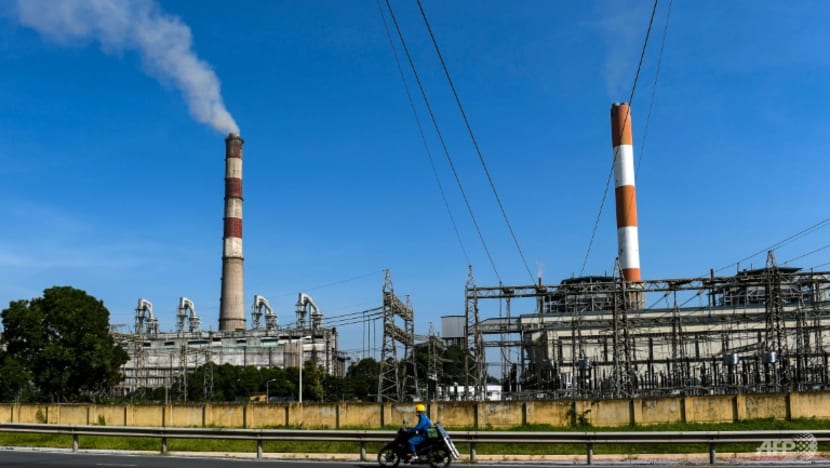
Vietnam feels impact of Russia-Ukraine war in energy prices, defence industry
After China and India, Vietnam has the world’s third-largest pipeline of new coal power projects (Photo: AFP/STR)

HANOI: Vietnam may be thousands of kilometres away from the Russia-Ukraine war, but it is feeling the effects of the conflict, particularly in energy prices and its defence industry.

The Southeast Asian country is seeking to hike electricity prices for the first time since 2019 amid the ongoing global energy crisis, following record losses by its state utility.

Vietnam produces around 40 million tonnes of coal each year and imports another 29 million tonnes or so, with most of the coal going towards fuelling the country’s power plants.

However, the cost of doing so has increased exponentially.

“Because of the conflict between Russia and Ukraine, the price of coal in the global market in 2022 has increased by sixfold since 2020, and by 2.6-fold since 2021,”  said chairman of Vietnam Valuation Association Nguyen Tien Thoa. 

Vietnam’s state utility EVN has forecast it could run out of cash by May this year unless it raises electricity prices. This comes as the firm expects combined losses of nearly US$4 billion for 2022 and this year.

Tiếp tục đọc “Vietnam feels impact of Russia-Ukraine war in energy prices, defence industry”
Gas: a history of Energy Security in the EU. And what’s next post-Russia?

February 14, 2023 by James Kneebone

energypost.eu

The security of supply of gas has been the hottest topic of the last 12 months since Russia invaded Ukraine. James Kneebone at the Florence School of Regulation (FSR) has written an explainer that lays out the EU’s history of dealing with energy security, going back to the 1990s. Because the EU has a single market for natural gas and widely shared value chains (pipelines, LNG terminals, storage, etc.), impacts are felt across the bloc. But that interconnectedness is also a strength and the basis for ensuring security across the region. Kneebone also details the updated regulations that are behind the drive to build in new capacity and obligations for solidarity between Member States. It means that today, the coordination and cooperation for allocating resources and delivering better energy security are stronger than ever.

What is security of supply?  

The European Environment Agency (EEA) define security of energy supply as “…the availability of energy at all times in various forms, in sufficient quantities, and at reasonable and/or affordable prices.” In the context of gas security of supply specifically, the concept refers to the provision of gaseous energy, namely ‘natural gas’[1].

What does a security of supply risk look like?  

Tiếp tục đọc “Gas: a history of Energy Security in the EU. And what’s next post-Russia?”

The Global Energy Crisis 2021-2023 and Political Upheaval: Could It Get Worse?

energytracker.com

What started as a sharp post-pandemic rise in energy prices in mid-2020 has turned into a full-blown global energy crisis. How is this affecting the political stability of countries?

17 January 2023 – by Heba Hashem

Last updated on 24 January 2023

The world is going through a global energy crisis. Fuel costs affect many parts of daily life, including energy for heating and lighting, individual travel and commodities transportation.

The world is now facing a cost-of-living catastrophe. Millions of households are struggling to cover basic needs after energy prices spiked to levels not seen in decades.

Is There a Global Energy Crisis Today in 2023?

Actually, there is a global energy crisis. From Indonesia to the UK and Peru, people across the globe have taken their anger to the streets. As many as 92 countries witnessed protests against high fuel prices between January and September 2022. These include developed European countries like France, Spain and the UK.

Tiếp tục đọc “The Global Energy Crisis 2021-2023 and Political Upheaval: Could It Get Worse?”

Vietnam priorities energy security: Party official

VNA PRINT

Vietnamplus.vn

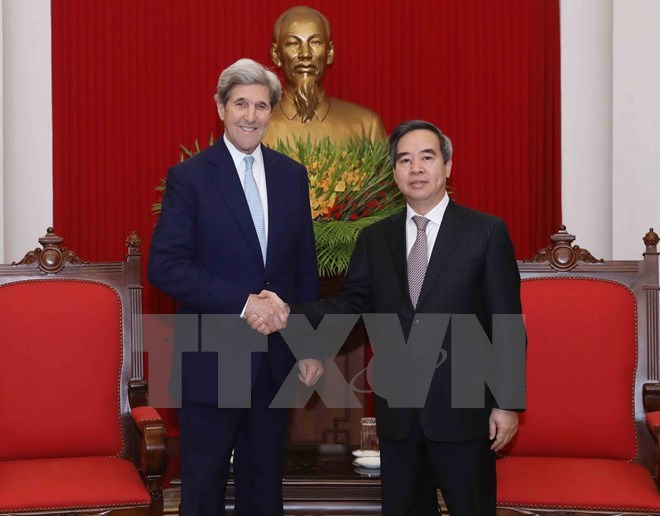
Head of the Communist Party of Vietnam Central Committee’s Commission for Economic Affairs (R) welcomes former US Secretary of State John Kerry.(Photo: VNA)

Hanoi (VNA) – Vietnam always attaches importance to energy security, considering it a top priority in the country’s energy development policy and strategy, said Nguyen Van Binh, head of the Communist Party of Vietnam Central Committee’s Commission for Economic Affairs.

At a reception for former US Secretary of State John Kerry in Hanoi on January 10, he said Vietnam wants to promote renewable energy development for power generation, contributing to energy security, climate change mitigation, environmental protection and sustainable development. Tiếp tục đọc “Vietnam priorities energy security: Party official”

ASEAN needs to double power capacity in less than 20 years

Meeting demand will take $500 billion worth of new generation facilities

MASAYUKI YUDA, Nikkei staff writer

asia.nikkei_will remain the main source of power generation in ASEAN in the coming decades, says Wood Mackenzie analyst Edi Saputra. © Reuters

TOKYO — ASEAN needs to more than double its power capacity in less than 20 years to meet burgeoning demand. British energy research and consultancy group Wood Mackenzie reported last week that the region requires $500 billion worth of investment to achieve such a goal.

ASEAN, whose current combined GDP is around $2.8 trillion, needs to construct an additional 270 gigawatts of generating capacity by 2035. Current capacity is 209GW. Tiếp tục đọc “ASEAN needs to double power capacity in less than 20 years”

Vietnam needs clean energy strategy

Update: May, 14/2016 – 09:00
Việt Nam needs a strategy on renewable energy development to ensure energy safety in the context of the country’s rapid economic growth and global climate change, said energy experts. – Photo nhandan.com.vn

vietnamnews – HÀ NỘI – Việt Nam needs a strategy on renewable energy development to ensure energy safety in the context of the country’s rapid economic growth and global climate change, said energy experts.

The economic growth rate, high demand of energy consumption, and world hike in the price of fuel have all caused challenges to the country’s energy security.

In fact, Việt Nam has a great potential for developing clean energy sources but the current investment in the field has still been modest.

According to the Energy General Department, Viet Nam was endowed with excellent renewable energy resources throughout the country.

The country has about 2,000-2,500 sunny hours a year, equivalent to 43.9 million tonnes of oil, while the geographic orientation with approximately 3,400km of coastline, provides abundant wind energy at an estimated potential of 800-1,400kW per sq.m. per year.
Tiếp tục đọc “Vietnam needs clean energy strategy”

William J. Perry on nuclear war and nuclear terrorism

thebulletin – On June 26, 1950, North Korea invaded South Korea, beginning an ugly war that resulted in more than a million casualties, and demonstrated to even the most optimistic that a Cold War was seriously underway. That was just two weeks after I got my master’s degree from Stanford, so it is no exaggeration to say that I am a child of the Cold War.

Indeed, throughout my career I always perceived a dark nuclear cloud hanging over my head, threatening no less than the extinction of civilization.

During the Cold War we had a half dozen nuclear crises, of which the Cuban Missile Crisis was the most dangerous, and I was close enough to these crises that they made a deep personal impression on me. I believed then, and I believe to this day, that we got through these crises and avoided a nuclear catastrophe as much by good luck as by good management. Tiếp tục đọc “William J. Perry on nuclear war and nuclear terrorism”

New Energy, New Geopolitics: Balancing Stability and Leverage

An assessment of how shale gas and tight oil in the United States is impacting energy, geopolitical and national security dynamics around the world.

CSIS – In early 2013, the CSIS Energy and National Security Program and the Harold Brown Chair in Defense Policy Studies assembled a broad multi-functional team to explore how shale gas and tight oil in the United States is impacting energy, geopolitical and national security dynamics around the world, with the intention of providing policymakers with a structured way to consider the potential risks and rewards of the new shale gas and tight oil resources.

The result was the report, “New Energy, New Geopolitics: Balancing Stability and Leverage” which concludes:

  • Shale gas and tight oil have had important impacts on the global energy sector. It has changed energy trade flows, altered the investment outlook for energy projects, reordered the climate change debate, and has helped change the energy posture of the United States, to name a few.
  • To date, the broader geopolitical impacts have remained limited. The uncertain trajectory of U.S. production, and even more uncertain, the potential for global production, make anticipating future impacts difficult.
  • So far, perception leads reality when it comes to geopolitical and national security impacts. Many countries are acting on early interpretations of the shale gas and tight oil trend.
  • A U.S. strategy for how to incorporate shale gas and tight oil developments into its current energy and national security strategies is still evolving. Going forward, U.S. policymakers face a choice between two strategic paths for managing shale gas and tight oil resources: “energy stability” or “energy leverage.”
  • This report concludes that “energy stability” is the most prudent and robust approach against a range of potential energy futures and recommends that the United States pursue policies that hew more closely to an “energy-stability” approach.

In addition to the summary for policymakers and report, CSIS will publish three contributing reports- one on energy, one on geopolitics and national security, and one of scenarios, strategies and pathways. These contributing reports will offer greater detail to the analysis provided in “New Energy, New Geopolitics: Balancing Stability and Leverage.” Tiếp tục đọc “New Energy, New Geopolitics: Balancing Stability and Leverage”

Germany Could Make $2 Billion By Exporting Electricity

November 10th, 2015 by

cleantecnica – The Fraunhofer Institute has found that Germany made about €1.7 billion, or $1.93 billion, in 2014 by selling surplus electricity. In 2015, that amount could reach €2 billion or $2.2 billion. Germany may also achieve a record export surplus of 40 TWh of electricity in 2015. “Over the past years, Germany was able to secure higher prices for its electricity exports than it paid for electricity imports,” explained Fraunhofer professor, Bruno Burger.

germancliffsRenewables added 118 TWh of energy production capacity in Germany from the period beginning in 2010 through 2014. What are some of Germany’s other exports? According to one source, Germany exported about $2.6 billion in pharmaceuticals to Japan in 2014. In 2007, cheese exports were about €2.7 billion. Tiếp tục đọc “Germany Could Make $2 Billion By Exporting Electricity”

What Will the U.S. Energy Industry Look Like Over the Next Five Years?

Experts discuss shale’s impact on prices, where OPEC is headed, and other topics

The U.S. shale-oil boom and OPEC’s actions will factor into energy prices and renewables.
The U.S. shale-oil boom and OPEC’s actions will factor into energy prices and renewables. Photo: Lucy Nicholson/Reuters

WSJ – Low fuel prices and new climate policies are rapidly transforming the American energy sector, while escalating wars in the Middle East and a nuclear deal with Iran are clouding the global oil picture.

To get a sense of what the energy future may hold, The Wall Street Journal reached out to three experts in energy and geopolitics: Amy Myers Jaffe, executive director of energy and sustainability at the University of California, Davis; Sarah Emerson, principal at ESAI Energy and president of Energy Security Analysis Inc.; and Meghan O’Sullivan, the Jeane Kirkpatrick professor of the practice of international affairs and director of the Geopolitics of Energy Project at Harvard University’s Kennedy School of Government. Here are edited excerpts.

One-year outlook

WSJ: What will the U.S. energy industry look like a year from now if low oil and gas prices persist? Tiếp tục đọc “What Will the U.S. Energy Industry Look Like Over the Next Five Years?”

India’s Energy Crisis