China is Southeast Asia’s biggest public funder of clean energy with US$2.7bn in investment

eco-business.com

Indonesia received the most funding from China over the last decade, according to a new report by Zero Carbon Analytics. But uncertainties caused by US-driven tariff plans could see Southeast Asian countries retract green investments, said an analyst.

Cirata floating solar Indonesia
China’s PowerChina Huadong Engineering Corporation Limited constructed the Cirata floating solar plant in West Java, Indonesia. Image: PLN Nusantara

By Hannah Alcoseba Fernande June 4, 2025

China is the leading source of public clean energy investments in Southeast Asia over the last decade, channeling over US$ 2.7 billion into projects across the region, according to a report by international research organisation Zero Carbon Analytics.

Tiếp tục đọc “China is Southeast Asia’s biggest public funder of clean energy with US$2.7bn in investment”

What the blackout in Spain, Portugal says about renewables

DW.com Holly Young 05/20/2025May 20, 2025

The recent power outage in Spain and Portugal has raised questions about the stability of solar and wind power. It also reignited the debate around the phasing out of nuclear energy.

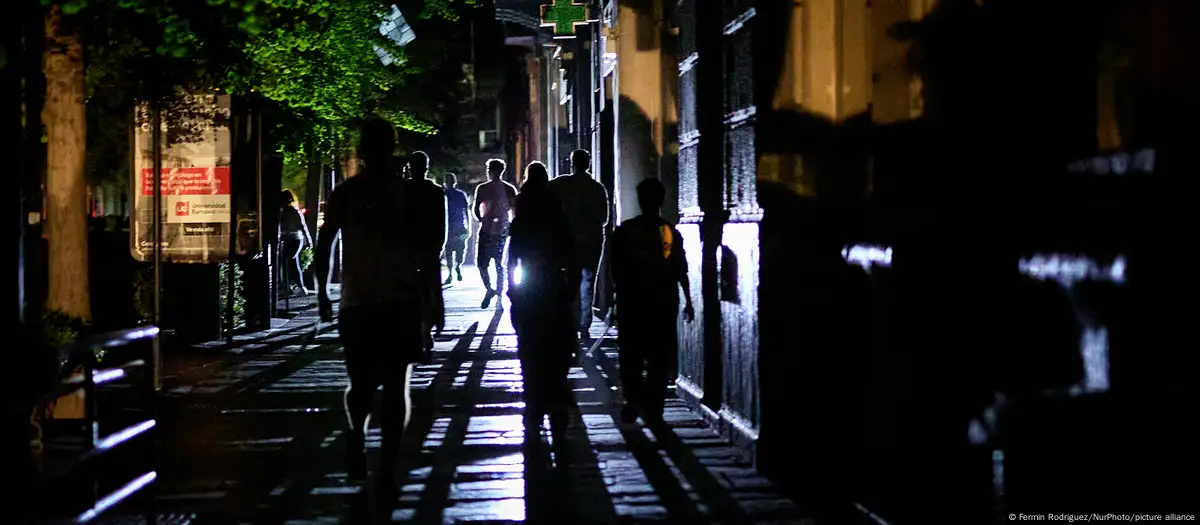
People walk down the street between flashlights and light reflections during the power outage that affects Spain on April 28, 2025

At 12:33 p.m. on April 28, swathes of Spain and parts of Portugal were plunged into darkness: trains were stranded, phone and internet coverage faltered, and ATMs stopped working.

The electricity blackout across the Iberian Peninsula is believed to be one of the worst in Europe’s history.

While most power was restored by the next morning, weeks later the investigation into the blackout is ongoing.

Last week, Spain’s energy minister Sara Aagesen said so far it was clear an abrupt loss of power at a substation in Granada, followed by failures in Badajoz and Seville, led to a loss of 2.2 gigawatts of electricity, but that the precise cause was unknown.

In the wait for answers, some have pointed the finger at Spain’s high reliance on renewables and reignited debates over plans to phase out nuclear power by 2035.

Are renewables to blame for the blackout?

Tiếp tục đọc “What the blackout in Spain, Portugal says about renewables”

Vietnam’s power blackouts hit multinationals’ manufacturing hubs

reuters.com

By Khanh Vu  and Francesco Guarascio

June 5, 2023 – 4:33 PM GMT+7
Vietnam's power blackouts hit multinationals' manufacturing hubs

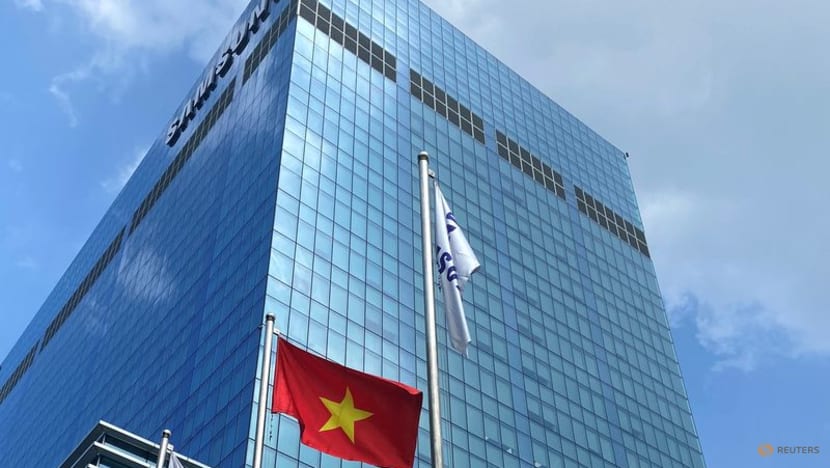
FILE PHOTO: Samsung centre building is seen in Hanoi Vietnam May 29, 2023. REUTERS/Francesco Guarascio

HANOI, June 5 (Reuters) – Vietnam’s rolling power cuts have hit industrial parks in the country’s northern provinces where top global manufacturers such as Foxconn and Samsung have factories, officials said on Monday, as a surge in consumption amid a heatwave stretched the power supply system.

The frequent and often unannounced power cuts prompted EuroCham, which represents European companies in the country, to send a letter on Monday to the industry and trade ministry urging quick measures to address the emergency.

Some industrial parks in the northern provinces of Bac Ninh and Bac Giang have been facing blackouts, said two local investment officials, declining to be named as they were not authorised to speak to media.

“We are working with EVN later today to discuss the situation and possible measures to limit the impacts,” one of the officials said, referring to the country’s state utility Electricity of Vietnam.

The provinces house production facilities of Samsung Electronics , Foxconn, Canon Inc and Luxshare, among others.

Tiếp tục đọc “Vietnam’s power blackouts hit multinationals’ manufacturing hubs”

China plans super-grid for clean power in Asia

Financial times

As hydropower hits problems, China plans renewable energy for region

The Belt and Road Initiative (BRI), China’s ambitious outbound investment strategy which links at least 65 countries along terrestrial and maritime trade corridors, will open massive new opportunities for trade and investment in frontier markets. Energy infrastructure investments are a backbone of BRI, so aligning these investments with sustainable development goals is necessary for China to navigate regional patchworks of social, environmental and economic priorities. Tiếp tục đọc “China plans super-grid for clean power in Asia”

The History of Electrification

Edison Tech Center

The power grid started with long distance transmission and soon led to interconnected systems, these are some of the landmark early power generation sites.
Background
List of important early power sites
Sites by geography (interactive maps)

The power grid as we know it began with isolated power generation systems across the world starting in the 1870s. The growth and unification of the systems into an interconnected AC power ‘grid’ helped raise the quality of life of people from all classes.

Direct Current Beginnings:

DC power systems dominated in the 1870’s and 1880s. “Small” systems were sold to factories around the world, both in urban areas, and remote undeveloped areas for industrial/mining use. Thomas Edison, Charles Brush, and Werner von Siemenslead the industry in DC systems. DC systems powered factories and small downtown areas but did not reach 95% of residents. Electric lighting was a luxury found only in hotels and other businesses as well as in the mansions of people like George Westinghouse and J.P. Morgan. Tiếp tục đọc “The History of Electrification”

Harmonizing the Benefits of Distributed Energy Resources for the Benefit of the Grid

We need to set the right framework for DER integration, argues Stephanie Wang.

by Stephanie Wang, November 13, 2015
{title}

greentechmedia – California is rethinking how to incentivize consumers to manage their energy use. In September, the California Public Utilities Commission (CPUC) said it would seek to create an integration framework to make choosing and integrating distributed energy resources easier for consumers.

The CPUC found that “harmonization” of consumer benefits and “system” (grid and societal) benefits is necessary for integrating more distributed energy resources (DERs). How can we harmonize these benefits with simple, scalable solutions that work for consumers and communities?
Equalize or align benefits

Let’s start with a fundamental question on the definition of harmonization. Does that mean equalization of benefits — ensuring that benefits to consumers and the system are roughly equal? Tiếp tục đọc “Harmonizing the Benefits of Distributed Energy Resources for the Benefit of the Grid”