Imagine the escalating conflict between the US, Israel and Iran unfolding in a world powered mostly by wind, solar and batteries rather than oil and gas.
In today’s fossil-fuelled economy, markets react to Iran’s attacks on oil and gas facilities in the Gulf and the threat to close the strait of Hormuz. Oil prices jump. Governments brace for inflation. Around a fifth of the world’s traded oil passes through the narrow corridor, linking the Gulf states to the wider world. When tensions rise there, energy markets react instantly.
But in a world where most energy is generated domestically from renewables, would the same threat trigger the same global shock? Would instability in the Gulf still lead to more expensive food and fuel across the world? Or would the economic aftershocks look very different?
To understand what’s at stake, we need to first look at how today’s energy system is structured.
The strait of Hormuz is the narrow point between the Persian Gulf and the open ocean. AustralianCamera / shutterstock
A system built on chokepoints
For about a century, the global economy has depended on fossil fuels produced by a few producers in the Middle East. Chokepoints like the strait of Hormuz carry enormous strategic weight.
“Steady and pragmatic decarbonisation, rapid clean-energy expansion combined with cautious emission targets, continued coal use to protect energy security and industrial growth.”
China’s leadership has published a draft of its 15th five-year plan setting the strategic direction for the nation out to 2030, including support for clean energy and energy security.
The plan sets a target to cut China’s “carbon intensity” by 17% over the five years from 2026-30, but also changes the basis for calculating this key climate metric.
BloombergNEF’s Energy Transition Investment Trends reviews annual investment figures in the global energy transition, including spending to deploy clean technologies, investment in the clean energy supply chain, equity investment in climate-tech companies, and debt issuance for energy transition purposes.
All four of these indicators moved upward in a year marked by trade disruptions and geopolitical tension, showcasing the energy transition’s resilience.
Walmart, the biggest single buyer of goods in the world, has lowered its emissions intensity and sent emissions-reducing ripples throughout its global supply chain. Joe Raedle/Getty Images
The Trump administration has given corporations plenty of convenient excuses to retreat from their climate commitments, with its moves to withdraw from the Paris Agreement, roll back emissions regulations, and scale back clean-energy incentives.
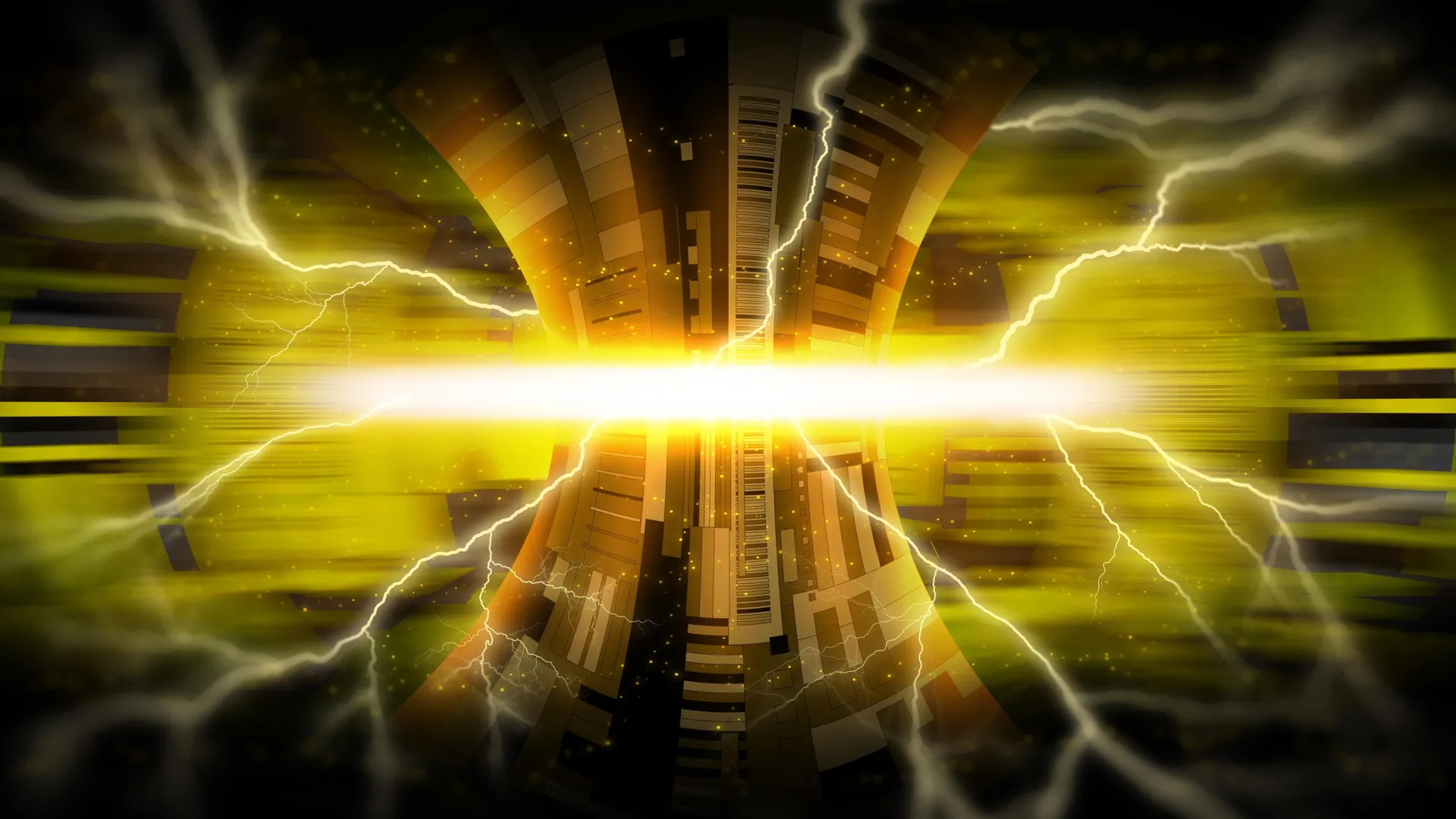
Summary: Researchers using China’s “artificial sun” fusion reactor have broken through a long-standing density barrier in fusion plasma. The experiment confirmed that plasma can remain stable even at extreme densities if its interaction with the reactor walls is carefully controlled. This finding removes a major obstacle that has slowed progress toward fusion ignition. The advance could help future fusion reactors produce more power
China’s “artificial sun” fusion reactor has crossed a critical plasma density threshold that scientists once thought was unreachable. The result brings fusion ignition closer than ever. Credit: Shutterstock
Scientists working with China’s fully superconducting Experimental Advanced Superconducting Tokamak (EAST) have successfully reached a long-theorized “density-free regime” in fusion plasma experiments. In this state, the plasma remains stable even when its density rises far beyond traditional limits. The results, published in Science Advances on January 1, shed new light on how one of fusion energy’s most stubborn physical barriers might finally be overcome on the road to ignition.
As the name suggests, liquefied natural gas (LNG) involves turning gas into liquid form — a process known as liquefaction. Liquefaction does not alter the chemical makeup of gas, which is comprised of mostly methane plus varying amounts of different impurities, but it does make it denser. This enables ships and other carriers to move more gas over oceans between locations that lack direct pipeline connectivity.
In the early 2010s, the coal industry attracted a large wave of investment, banking on surging coal imports from China and India.
When this growth didn’t materialise, coal oversupply and depressed prices sent major companies bankrupt with significant value destruction for shareholders.
The LNG industry risks repeating the coal industry’s mistakes, as investment levels outstrip future demand, with potentially more severe consequences for the capital-intensive industry.
Peddling a ‘supercycle’ for coal in the 2010s
In the early 2010s, the coal industry was on the rise. Global trade had tripled between 1990 and 2011, with the 2000s experiencing “the largest growth in coal demand in history – greater than the previous four decades combined”. This growth was expected to accelerate after China and India entered the global coal import market (Figure 1). Between 2011 and 2012, global coal imports increased by 13% and coal prices doubled (Figure 2).
On Oct. 13 of this year, the PRC state media outlet CPNN, reported that China is pulling ahead in advanced nuclear power technology development with the launch of the large-scale production “Hualong One” (also known as HPR1000). As it develops, China not only aims to tackle the transmission bottleneck in the south, but also to export to countries like Pakistan as the PRC’s “business card” to the world.
China’s dual goals of localization and export orientation have long defined its nuclear strategy. Led by state-owned giants such as the China National Nuclear Corporation (CNNC), Beijing has invested heavily in domestic innovation while aggressively expanding into overseas markets. Beijing has sought to expand its reactor sales to markets such as Argentina and the United Kingdom, while also securing control over upstream uranium resources. CNNC’s 2019 acquisition of Namibia’s Rössing Uranium Mine, one of the world’s largest open-pit uranium operations, underscored China’s growing dominance across the nuclear value.
Beijing’s policy support for state-owned enterprises has enabled it to build a vertically integrated nuclear industry, driving rapid advances in small modular reactors (SMRs), fourth-generation technologies, and nuclear fusion research (the Artificial Sun). Furthermore, intensifying US–China competition is reshaping global nuclear exports and deepening the geopolitical risks of dependence on Chinese nuclear systems.
Four years after it first approved Bitcoin mining projects powered by surplus hydropower, Laos is beginning to rethink whether the energy-hungry industry — now linked to massive transnational cryptocurrency scams — is worth keeping alive
High-rise buildings stand in the Boten Special Economic Zone in northern Laos, near the border with China. The area is suspected to be a hotspot for scam operations, including schemes that store fraudulent money in crypto for later laundering. PHOTO: Thanh Hue
Houaphanh Province, LAOS — Bitcoin is a world far away from 19-year-old Chai, an ethnic Hmong and a college student who has never owned a computer.
But its shadow has already crept into his mountainous village, where power outages are common—often a side effect of the vast energy demands elsewhere, including cryptocurrency mining.
Despite the national grid being connected to his remote community seven years ago, he and his classmate studied by candlelight, oil lamp, or mobile flashlight at night to prepare for university entrance exams. The blackout worsens during the dry seasons when hydropower drops.
Almost exactly 10 years ago, a remarkable thing happened in a conference hall on the outskirts of Paris: After years of bitter negotiations, the leaders of nearly every country agreed to try to slow down global warming in an effort to head off its most devastating effects.
The core idea was that countries would set their own targets to reduce their climate pollution in ways that made sense for them. Rich, industrialized nations were expected to go fastest and to help lower-income countries pay for the changes they needed to cope with climate hazards.
So, has anything changed over those 10 years? Actually, yes. Quite a bit, for the better and the worse. For one thing, every country remains committed to the Paris Agreement, except one. That’s the United States.
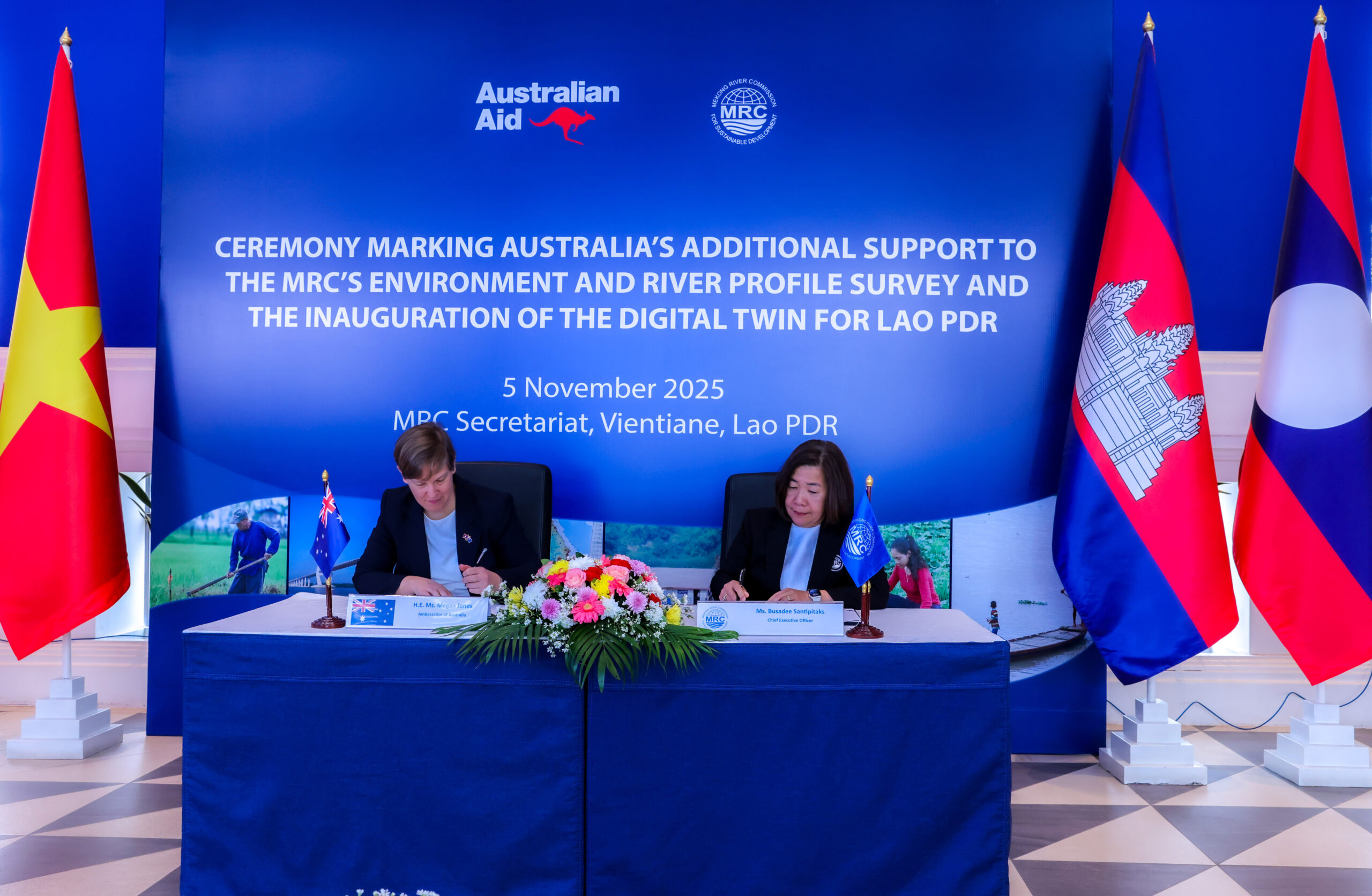
Vientiane, Lao PDR, 6 November 2025 – The Mekong River Commission (MRC) and the Government of Australia have reinforced their long-standing partnership through additional Australian support and the use of new digital innovations to enhance water monitoring and management in the Mekong region.
At a ceremony held today at the MRC Secretariat in Vientiane, Australia formalised an additional USD 1.71 million to support the MRC’s Environment and River Profile Survey, a key program that helps the MRC to enhance monitoring of river conditions, improve forecast changes, and better assess the health of the basin. This ensures the MRC can continue gathering and analysing data effectively that inform decisions on the river’s management and protection.
Australia’s support for the Environment and River Profile Survey builds on its core support to the MRC under the Mekong-Australia Partnership, which seeks to strengthen water security, economic resilience and sustainable growth in the sub-region. “Australia is proud to support this project as it will benefit the MRC, its member countries, and the river’s communities, economy, and environment” said H.E. Ms Megan Jones, Australian Ambassador to Lao PDR.
Joining the event was His Excellency Dr Linkham Douangsavanh, Minister of Agriculture and Environment of Lao PDR. Together with the MRC and Australia, he witnessed the formal launch of a new “Digital Twin” platform, a real-time modelling tool that integrates hydrological, meteorological and spatial data to help visualise how changes in rainfall, flow or land-use could affect communities and ecosystems.
“With this Digital Twin platform, we are giving our communities and partners a window into the river’s future,” said Dr Douangsavanh. “When we see what may come, we can plan better, respond faster and protect the peoples and their livelihoods and nature that depend so much on the Mekong.”
“Today we harness new digital capabilities and advanced capabilities so that we can ensure shared benefits for the sustainable development of the Mekong River Basin. The MRC is grateful for this timely support from Australia that has allowed this to happen,” said H.E. Ms Busadee Santipitaks, Chief Executive Officer of the MRC Secretariat.
About the Mekong River Commission
The MRC is an intergovernmental organisation established in 1995 to boost regional dialogue and cooperation in the Lower Mekong River Basin. Based on the Mekong Agreement among Cambodia, Lao PDR, Thailand, and Viet Nam, the MRC serves as both a regional platform for water diplomacy and a knowledge hub – to manage water resources and support sustainable development of the region.
The Nuclear Waste Management Organization of Japan recently backed the further survey of two potential disposal sites for high-level radioactive waste in Hokkaidō. The government has struggled to convince municipalities to participate in review procedures, with a growing list of stakeholders calling for a new approach to the selection process.
A Three-Step Process
The Japanese government and nuclear power plant operators have long grappled with how to dispose of spent fuel and other high-level radioactive waste. Authorities finally settled on the approach of burying waste deep underground at facilities 300 or more meters below the surface. In 2002, NUMO, the Nuclear Waste Management Organization of Japan, began hunting for a storage location by inviting municipalities to put themselves forward as candidate sites. To date, this “volunteer” policy has netted only three participants, the towns of Suttsu and Kamoenai in Hokkaidō and Genkai in Saga.
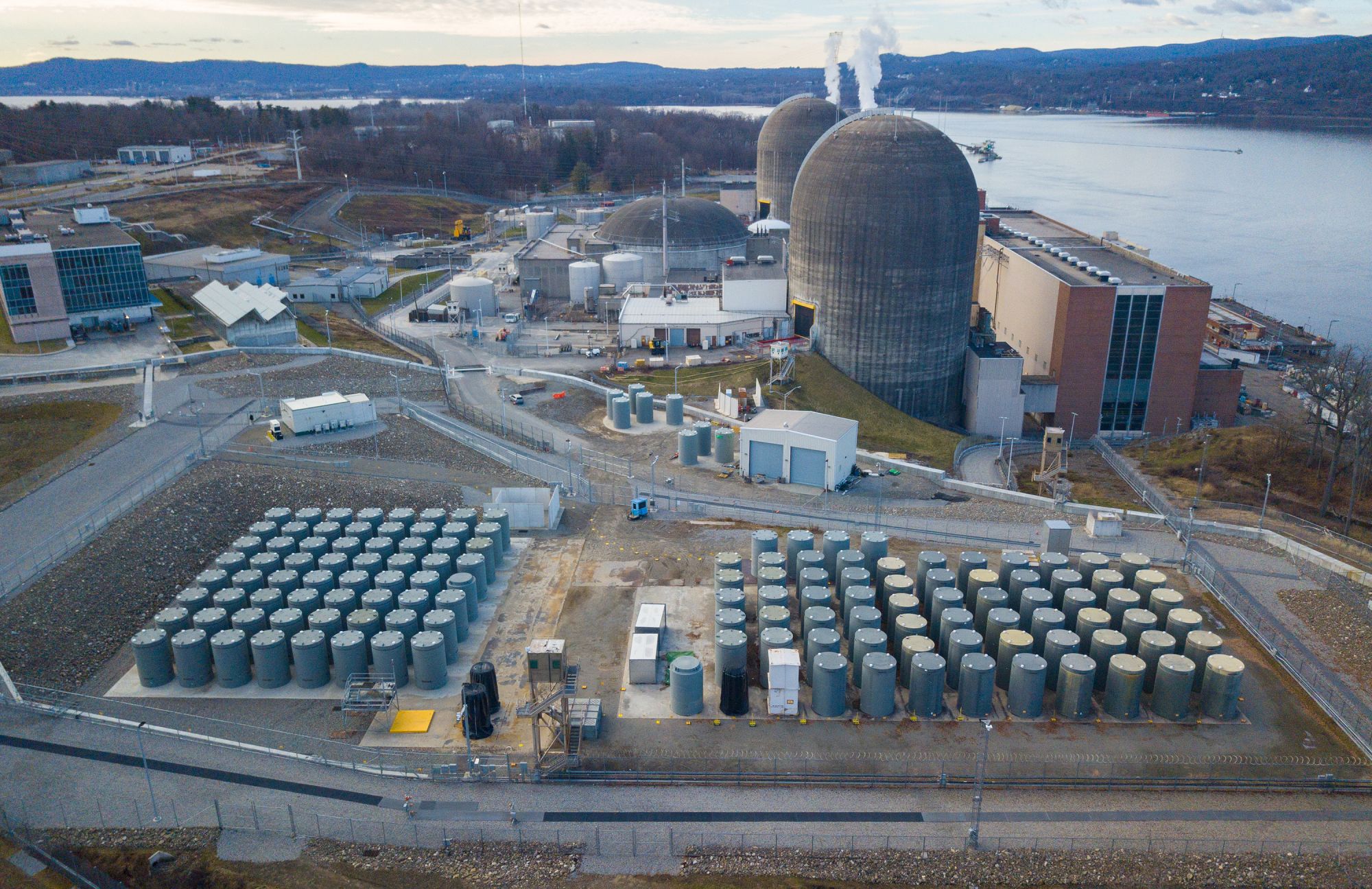
An array of containers storing nuclear waste sit at the decommissioned Indian Point nuclear power plant in Buchanan, New York. Brian Vangor/HoltecBUCHANAN, New YorkCNN —
The Indian Point nuclear power plant was an energy juggernaut for 50 years, generating a quarter of the electricity that powered New York City’s iconic, glowing skyline.
It is well into its decommissioning process after shutting down in 2021: The remaining waste of the radioactive fuel that once generated all of that power has been sealed inside more than 120 hulking metal and concrete canisters.
As global supply chains pivot towards low-emissions production, Australia will need to lead, or risk being left behind. The country’s challenge is not a lack of technology, capital, or ambition. It’s a gap in policy architecture. Without bankable demand, Australia’s most promising clean commodity projects – green iron, sustainable aviation fuel, and clean ammonia – remain stuck at the starting line.
To meet that challenge, we propose a new demand-side policy model: the Clean Commodities Trading Initiative (CCTI) – a flagship example of green energy statecraft. At its heart is a new tool for national transformation: Clean Commodity Credits that reward innovation and emissions savings.
A market-friendly mechanism to kickstart large-scale clean production.
Green energy statecraft is a strategic approach to governance that uses the clean energy transition to simultaneously advance a nation’s economic, environmental, social, and geostrategic goals. Unlike conventional industry policy, which focuses on domestic market corrections, statecraft treats clean energy as key to national security and prosperity – used to build alliances, secure supply chains, boost productivity, and shape global rules.
The European Union, China, Japan, and South Korea are all pursuing variations of green energy statecraft. Australia must do the same – on its own terms, with tools suited to its advantages, institutions, and budget.






 CVD
CVD 