Trước diễn biến khó lường của thiên tai, VN hoàn toàn có thể đối mặt với nguy cơ động đất. Để chủ động ứng phó, Nhà nước cần thường xuyên cập nhật số liệu và đánh giá chi tiết rủi ro động đất theo từng vùng. Đồng thời, cần siết chặt quản lý trong lĩnh vực xây dựng, yêu cầu các chủ công trình tuân thủ đầy đủ tiêu chuẩn kháng chấn. Bên cạnh đó, việc phổ biến kiến thức và kỹ năng phòng tránh động đất cho người dân cũng rất cần thiết, nhằm giảm thiểu rủi ro và đảm bảo an toàn ở mức cao nhất.
(Dân trí) – Dù cách tâm chấn hơn 1.000km, người dân tại Hà Nội và TP.HCM vẫn cảm nhận rõ rung lắc từ trận động đất ở Myanmar. Câu hỏi đặt ra: Việt Nam đã thực sự sẵn sàng ứng phó với nguy cơ động đất?
Những trận động đất vẫn diễn ra bất thình lình, không kể ngày đêm uy hiếp tinh thần, tính mạng của người dân huyện Kon Plông (Kon Tum) nói riêng các tỉnh lân cận nói chung. Sự hoang mang, lo lắng của người dân ngày một dày thêm khi chưa có một lời giải thích thỏa đáng về nguyên nhân gây ra động đất.
Khi đi vào vùng được xác định là tâm chấn động đất, ám ảnh nhất với chúng tôi là những đôi mắt thâm quầng trên gương mặt của người dân sau nhiều đêm mất ngủ. Cuộc sống khó khăn, lại thêm những cơn địa chấn bất thình lình luôn rình rập khiến nơi đây càng thêm bức bí.
An expert said earthquakes in Kon Tum are expected to continue and affect densely populated areas and key infrastructure, especially near the epicentre.
A view of Kon Plong District in the central highland province of Kon Tum. A total of 82 earthquakes occurred in the district in July. VNA/VNS Photo Dư Toán
KON TUM – A total of 83 earthquakes occurred in July, with 82 reported in Kon Plong District, Kon Tum Province, the Institute of Geophysics under the Việt Nam Academy of Science and Technology announced on Thursday.
Only one earthquake was recorded in Ngọc Lạc District in Thanh Hoá Province. Most of the earthquakes ranged in magnitude from 2.5 to 5.0.
A 6.3-magnitude earthquake was recorded early morning on Wednesday near Herat province, according to the US Geological Survey.
The epicentre of the quake was about 28km outside Herat city – the capital of Herat province – at a depth of 10km.
No information was immediately available about damage from Wednesday’s earthquake.
The epicentre of Saturday’s deadly quake was also about 40km northwest of the provincial capital and several aftershocks were recorded.
Taliban officials said more than 2,400 people had died across Herat after the earlier quakes that laid entire villages to waste with many people trapped in rubble.
With little to no international help and resources, Afghans have been struggling to dig through the rubble even after days. The city of Herat just has one hospital, as survivors struggled to get medical care with many left homeless ahead of a harsh winter.
In Naib Rafi, a village that previously had about 2,500 residents, the Associated Press reported that “almost no one was still alive” besides men who were working outside when the quake struck. Survivors worked all day with excavators to dig long trenches for mass burials.
“It is very difficult to find a family member from a destroyed house and a few minutes to later bury him or her in a nearby grave, again under the ground,” Mir Agha, a resident from the city of Herat who had joined hundreds of volunteers to help the locals, told the news agency.
Nearly 2,000 houses in 20 villages were destroyed, the Taliban have said. The area hit by the quake has just one government-run hospital.
According to a WHO report, an estimated 12,110 people (1,730 families) in five districts Zindajan, Injil, Gulran, Injil and Khosan in Herat province have been impacted by the earthquake.
Ngày 16/5, Trung tâm Báo tin động đất và cảnh báo sóng thần – Viện Vật lý Địa cầu, Viện Hàn lâm Khoa học và Công nghệ Việt Nam phát đi thông báo về các trận động đất xảy ra vào sáng cùng ngày tại khu vực huyện Kon Plông, tỉnh Kon Tum.
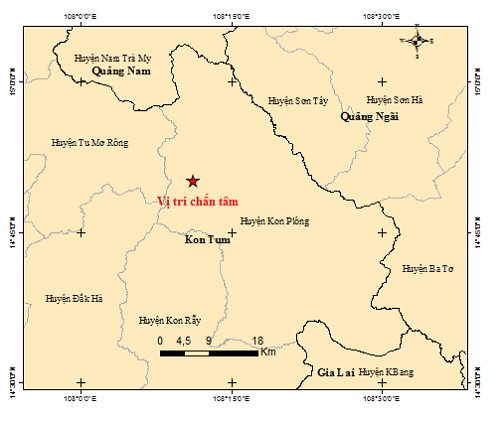
Vị trí tâm chấn trận động đất 3.7 độ ở Kon Tum trưa ngày 16/5.
Theo đó, trận động đất mới nhất xảy ra lúc 12 giờ 21 phút 21 giây, có độ lớn 2.6 độ richter, độ sâu chấn tiêu khoảng 8km.
Trung tâm Báo tin động đất và cảnh báo sóng thần – Viện Vật lý Địa cầu vẫn đang tiếp tục theo dõi trận động đất này.
Cũng trong sáng ngày 16/5, vào hồi 00 giờ 52 phút 51 giây (giờ GMT) ngày 16 tháng 5 năm 2023 tức 07 giờ 52 phút 51 giây (giờ Hà Nội) ngày 16 tháng 5 năm 2023 một trận động đất có độ lớn 3.0 xảy ra tại vị trí có tọa độ (14.902 độ vĩ Bắc, 108.303 độ kinh Đông), độ sâu chấn tiêu khoảng 8 km. Động đất xảy ra tại khu vực huyện Kon plong, tỉnh Kon Tum. Cấp độ rủi ro thiên tai cấp 0.
Như vậy trong 5 ngày qua, trên địa bàn huyện Kon Plông (tỉnh Kon Tum) liên tiếp diễn ra 10 trận động đất. Trong đó, trận động đất lớn nhất có độ lớn 3.7 vừa xảy ra là trận có cường độ lớn nhất từ đầu năm đến nay. Trước đó, chỉ trong 4 ngày từ 12/5 – 15/5, trên địa bàn huyện này cũng liên tiếp xảy ra 9 trận động đất có độ lớn từ 2.6 đến 3.2 độ Richter. Trong đó riêng 2 ngày đã xảy ra 6 trận, tuy nhiên các trận động đất trên đều không gây thiệt hại về người.
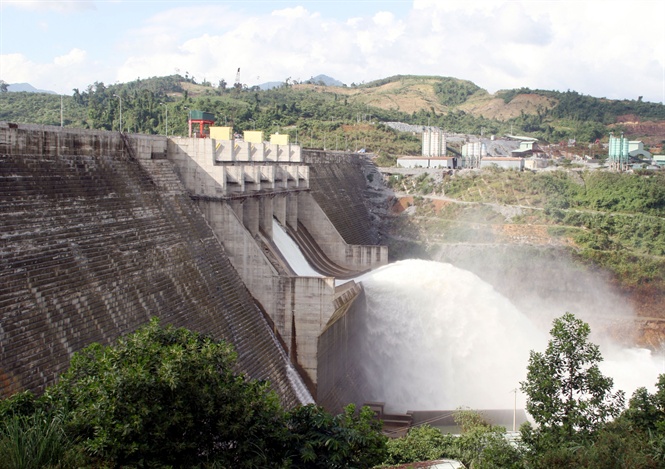
Theo thống kê từ Viện Vật lý địa cầu, từ đầu năm đến nay trên địa bàn huyện Kon Plông đã xảy ra khoảng 100 trận động đất. Trận mạnh nhất có độ lớn 3,9 độ Richter. Các trận động đất thường xảy ra xung quanh khu vực Thuỷ điện Thượng Kon Tum và Thuỷ điện Đắk Đrinh. Trước tình trạng động đất xảy ra liên tục, UBND tỉnh Kon Tum đã yêu cầu chủ đầu tư các công trình thủy điện lắp đặt ngay thêm 5 trạm quan sát động đất theo kiến nghị của đoàn kiểm tra thuộc Viện vật lý địa cầu.
Động đất tại Kon Plông, Kon Tum được Viện Vật lý Địa cầu nhận định là động đất kích thích, xảy ra do hồ chứa thủy điện tích nước gây áp lực lên hệ thống đứt gãy hoạt động bên dưới, khiến động đất xảy ra sớm hơn so với quy luật tự nhiên.
Động đất kích thích ở Kon Plông, Kon Tum xảy ra từ tháng 4/2021, đến nay với ghi nhận hàng trăm trận. Trong đó, trận động đất mạnh nhất có độ lớn 4.7, gây rung chấn cho nhiều tỉnh miền Trung. Các chuyên gia nhận định, động đất tại khu vực này có thể tiếp diễn trong thời gian tới, liên quan chặt chẽ đến chu trình tích nước hồ chứa thủy điện. Tuy nhiên, động đất cực đại ở khu vực này ít khả năng vượt quá độ lớn 5.0.
The death toll from the earthquake in Turkey and Syria is likely to “more than double”, according to a United Nations emergency relief coordinator.
Martin Griffiths, speaking to Sky News on Saturday, said he expected tens of thousands more deaths.
At least 24,596 people have been confirmed dead after the 7.8 magnitude earthquake struck southern Turkey and north-western Syria on Monday, with multiple aftershocks.
Griffiths said: “I think it is difficult to estimate precisely as we need to get under the rubble, but I’m sure it will double or more,” said Griffiths.
“That’s terrifying. This is nature striking back in a really harsh way.
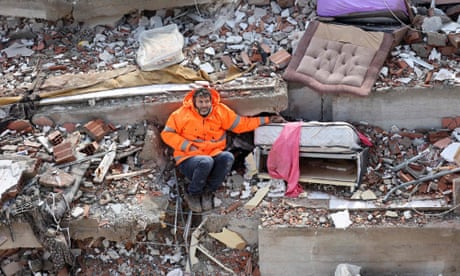
“It’s deeply shocking … the idea that these mountains of rubble still hold people, some of them still alive.
“We haven’t really begun to count the number of dead.”
He said that a 72-hour period after a disaster was usually the “golden period” for rescues, which had now expired, but that survivors were still being pulled out of the rubble.
“It must be incredibly difficult to decide when to stop this rescue phase,” he said.
Griffiths said he was launching a three-month operation for Turkey and Syria to help pay for the costs of operations there.
Griffiths also told Reuters he hoped in Syria aid would go to both government and opposition-held areas, but that things with this regard were “not clear yet”.
Earlier on Saturday, Stéphane Dujarric, the spokesperson for the UN secretary-general, António Guterres, told BBC Radio 4’s Today programme that negotiations were continuing to gain access to more areas in Syria and called for “solidarity” in the relief effort.
He said: “Our message is clear, it’s time to put all politics aside. Just focus on the men, women and children who desperately need help in Syria and in southern Turkey.
“Wherever we work, we have to work with the authorities in charge. That’s just the way that UN humanitarian aid is structured. So in the rebel-held territories, we work with the authorities there; in the government-held areas, we work with the government.”
Responding to criticism of the UN’s response to the urgent need in Syria after the earthquake, he added:
“I think if I was standing in the middle of devastation and my community had been hit, I would be unhappy and I would be critical because aid never comes quickly enough. But I can tell you that the UN stands with the people of Syria, whether they live in rebel territories, whether they live in government-held territories.”
Why is earthquake aid to Syria so slow? | Start Here
Al Jazeera English – 10 thg 2, 2023
The earthquakes in southern Turkey and northern Syria have left millions of people in desperate need of help. But getting aid to people in Syria is particularly complicated. #AJStartHere explains why.
1. Syria longs for international aid amid earthquake devastation
Al Jazeera English – 8 thg 2, 2023
The scale of the destruction in the aftermath of the earthquake that hit swaths of Turkey and Syria on Monday has been unprecedented, even for residents of the war-torn country.
On the Syrian side, the area affected by the 7.8-magnitude quake and its aftershocks is divided between government-controlled territory and the country’s last opposition-held pocket of land, encircled by Russian-backed government forces.
The UN says damaged roads, a lack of equipment and tough winter conditions are hampering efforts to find survivors in Syria.
A map shows the location of an earthquake epicenter in Kon Tum Province (red star), April 18, 2022. Photo courtesy of the Institute of GeophysicsRecent earthquakes in the Central Highlands are a cause for concern, says the Institute of Geophysics, calling for extensive studies and research to ascertain causes and draw up response plans.
In a report released Wednesday, it said that the earthquakes that occurred from March 2021 to April 2022, with magnitudes of 1.6 to 4.5 on the Richter scale in Kon Plong District, Kon Tum Province and other nearby areas were not “severe” but there was a need to evaluate risks and dangers.
“To ascertain the causes of the earthquakes and to have a foundation for predicting seismic trends and earthquakes’ intensity in the future so that the risk of damage to residential structures and hydropower plants can be evaluated, there needs to be surveys and research on Kon Tum and neighboring areas’ geological characteristics,” the Voice of Vietnam cited the report as saying.
Roman amphitheaters are among the most ancient human constructions on Earth. These structures are remarkably well preserved in various places across the ancient Roman empire.
That’s especially remarkable because much of this territory is seismically active: it sits on the tectonic boundary between the Eurasian and African plates and has experienced numerous earthquakes that have destroyed other types of buildings. So just how these amphitheaters have survived for 2,000 years is something of a puzzle.
Today we get a potential answer thanks to the work of Stéphane Brûlé and colleagues at Aix-Marseille University in southern France. These guys have studied the way that certain structures buried in the ground, or sitting on top of it, can modify the way seismic waves travel through the Earth. In particular, they have studied “seismic invisibility cloaks” that can steer seismic waves around specific regions and thereby protect them.
Tỉnh Quảng Nam có 42 dự án thủy điện bậc thang trên sông Vu Gia – Thu Bồn, hiện có 17 nhà máy đã phát điện. Đây là những công trình mang lại nguồn năng lượng rất to lớn, tuy nhiên cũng chính thủy điện đã để lại nhiều hậu quả cho người dân nơi đây. Chưa kể, động đất không dừng lại ở huyện Bắc Trà My, mà đã lan sang Phước Sơn, Tây Giang.
Đập thủy điện Sông Tranh 2 đưa vào hoạt động, hết rò rỉ nước, lại liên tục động đất
VE – Nếu bạn đang ở trong các tòa nhà cao tầng khi xảy ra động đất lớn, việc trước tiên là chui xuống gầm bàn chắc chắn, chứ không phải tìm cách chạy ra ngoài.
Một nạn nhân sống sót trong trận động đất ở Tứ Xuyên, Trung Quốc tháng 5/2008. Ảnh Xinhua.
Sau trận động đất sáng nay ở ngoài khơi bờ biển Phan Thiết, làm rung nhẹ nhiều tòa nhà ở Vũng Tàu, TP HCM và các tỉnh lân cận sáng nay, nhiều bạn đọc bày tỏ lo ngại về cách giữ an toàn khi động đất xảy ra.





 CVD
CVD 