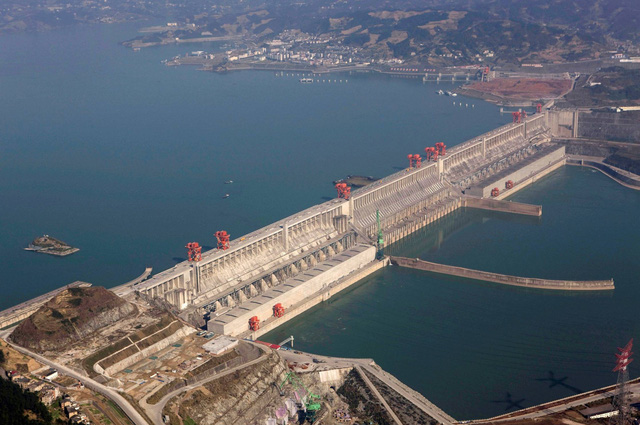
Mekong Dam Monitor Weekly Update

February 24 – March 2, 2025 Stimson Mekong Monitor

Spotlight

Significant releases from China’s large dams push river to higher-than-normal levels.

Sustained large releases from China’s Xiaowan and Nuozhadu Dams are causing the river to run at levels 1-2 meters higher than normal along the Thai-Lao border. The two graphs illustrate  the sudden spike in river level occurring during the last days of February, corresponding to about 900 million cubic meters of water releases from China’s dams. Under normal dry season conditions, the river level does not spike in a manner seen on the graphs. At this time of year, the river level should gradually decrease over the next six weeks. Sudden spikes in river level, particularly those which run for sustained periods at higher levels, can be devastating for the river’s ecological processes and for the communities who depend on the river.

What Happened Last Week?

    • Where’s the Water: Last week, dams throughout the basin released a significant cumulative total of 1.6 billion cubic meters of water. Significant releases came from Xiaowan (PRC, 749 million cubic meters), Nuozhadu (PRC, 164 million cubic meters), and Thuen Hinboun Expansion (LAO, 199 million cubic meters). Dry season water releases generate hydropower but also artificially raise the level of the river. Where is the water?
    • River Levels: River levels throughout the basin are now about one meter higher than normal. See how this looks.
    • Wetness and Weather: While the headwaters of the Mekong in China are excessively wet (blue), most of the lower Mekong region is experiencing intensifying drought (red). Dry season irrigation activities in the Mekong Delta are creating slightly above average wetness anomalies in Vietnam’s delta. Temperatures in the Mekong basin were about average overall, with slightly above-average temperatures in the northern portion of the basin and slightly below average temperatures in the lower basin. See the maps.

Tiếp tục đọc “Mekong Dam Monitor Weekly Update”

As work begins on the largest US dam removal project, tribes look to a future of growth

FILE - The Iron Gate Dam powerhouse and spillway are seen on the lower Klamath River near Hornbrook, Calif., on March 2, 2020. This dam, along with three others on the Klamath River, are scheduled to be removed by the end of 2024. Crews will work to restore the river and surrounding land. (AP Photo/Gillian Flaccus, File)

1 of 4 | 

FILE – The Iron Gate Dam powerhouse and spillway are seen on the lower Klamath River near Hornbrook, Calif., on March 2, 2020. This dam, along with three others on the Klamath River, are scheduled to be removed by the end of 2024. Crews will work to restore the river and surrounding land. (AP Photo/Gillian Flaccus, File)

FILE - The Klamath River winds runs along state Highway 96 on June 7, 2021, near Happy Camp, Calif. Work has begun on removing four dams along the Klamath River, the largest dam removal project in history. All the dams are scheduled to come down by the end of 2024. (AP Photo/Nathan Howard, File)

2 of 4 | 

FILE – The Klamath River winds runs along state Highway 96 on June 7, 2021, near Happy Camp, Calif. Work has begun on removing four dams along the Klamath River, the largest dam removal project in history. All the dams are scheduled to come down by the end of 2024. (AP Photo/Nathan Howard, File)

FILE - Demian Ebert, the Klamath program manager for PacifiCorp, looks at a tank holding juvenile chinook salmon being raised at the Iron Gate Hatchery at the base of the Iron Gate Dam on March 3, 2020, near Hornbrook, Calif. The Iron Gate Dam is one of four dams along the Klamath River scheduled to be removed by the end of 2024. Once the dams are gone, crews will work to restore the river and surrounding land. (AP Photo/Gillian Flaccus, File)

3 of 4 | 

FILE – Demian Ebert, the Klamath program manager for PacifiCorp, looks at a tank holding juvenile chinook salmon being raised at the Iron Gate Hatchery at the base of the Iron Gate Dam on March 3, 2020, near Hornbrook, Calif. The Iron Gate Dam is one of four dams along the Klamath River scheduled to be removed by the end of 2024. Once the dams are gone, crews will work to restore the river and surrounding land. (AP Photo/Gillian Flaccus, File)

FILE - Jamie Holt, lead fisheries technician for the Yurok Tribe, right, and Gilbert Myers count dead chinook salmon pulled from a trap in the lower Klamath River on June 8, 2021, in Weitchpec, Calif. Work has begun on the largest dam removal project in history along the Klamath River. Four dams will be removed by the end of 2024. (AP Photo/Nathan Howard, File)

4 of 4 | 

FILE – Jamie Holt, lead fisheries technician for the Yurok Tribe, right, and Gilbert Myers count dead chinook salmon pulled from a trap in the lower Klamath River on June 8, 2021, in Weitchpec, Calif. Work has begun on the largest dam removal project in history along the Klamath River. Four dams will be removed by the end of 2024. (AP Photo/Nathan Howard, File)

BY ADAM BEAMUpdated 11:05 AM GMT+7, July 31, 2023Share

Tiếp tục đọc “As work begins on the largest US dam removal project, tribes look to a future of growth”

Will hydro-power plants cause more floods in Vietnam?

FEATUREFace BookTwitterBình luậnTin nóng

21/10/2020    15:00 GMT+7 vietnamnet

If there were no hydroelectric dams, floods would still occur, even at a higher level. In many cases, without hydropower reservoirs, floods would be more serious.

VietNamNet introduces an article by Assoc. Prof. Dr. Vu Thanh Ca, lecturer at the Hanoi University of Natural Resources and Environment, and former Director of the Institute for Marine and Island Studies under the Vietnam Administration of Sea and Islands.

Thủy điện có gây thêm lũ?
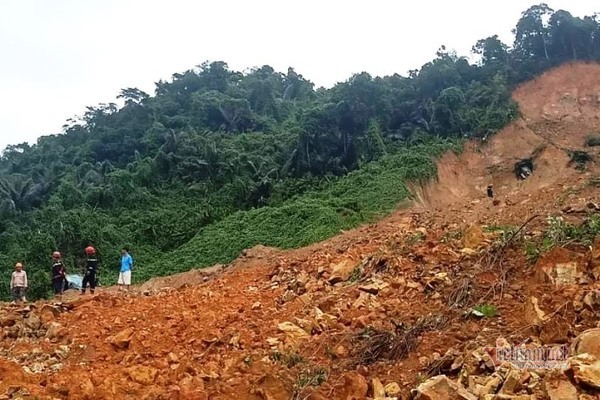
Half of a landslide hill buries the operating office of Rao Trang 3 hydropower plant in the central province of Thua Thien – Hue.


I taught river environmental engineering at Saitama University in Japan for six years. In 1995, Mr. Phan Van Khai (Deputy Prime Minister at that time) visited Japan and he was impressed by anti-landslide works in Japan.

Tiếp tục đọc “Will hydro-power plants cause more floods in Vietnam?”

Trung Quốc cho xây đập thủy điện cao đến 239m (trên sông Dương Tử)

15/01/2019 20:11 GMT+7
TTO – Đó là đập thủy điện thuộc hàng cao nhất Trung Quốc hiện nay, với hồ chứa nước có diện tích phủ kín gần 31km2 đất rừng và đất nông nghiệp.

Trung Quốc cho xây đập thủy điện cao đến 239m - Ảnh 1.

Hiện trên sông Dương Tử và các nhánh của nó có đến 24.100 đập thủy điện lớn nhỏ, tính đến cuối năm ngoái – Ảnh: REUTERS

Theo Hãng tin Reuters, Ủy ban Phát triển và cải cách quốc gia Trung Quốc thông báo chính phủ nước này đã thông qua dự án xây dựng đập Lawa.

Đây là một trong những đập thủy điện cao nhất của Trung Quốc, dự kiến nằm ở thượng nguồn sông Dương Tử – con sông dài nhất Trung Quốc.

Theo kế hoạch, đập Lawa với chiều cao 239m sẽ được xây dựng cùng với một hồ chứa nước có diện tích phủ kín gần 31km2 đất rừng và đất nông nghiệp tại nhánh Jinsha của sông Dương Tử, nằm giữa tỉnh Tứ Xuyên và vùng Tây Tạng.

Tiếp tục đọc “Trung Quốc cho xây đập thủy điện cao đến 239m (trên sông Dương Tử)”

Living in a state of suspense near water reservoirs

Last update 09:33 | 20/09/2017
VietNamNet Bridge – Though thousands of water reservoirs have been found unsafe, it is impossible to upgrade all of them because of a lack of funds.

The Ministry of Agriculture and Rural Development (MARD) reported that 1,150 out of 6,648 water reservoirs are in bad condition and need to be repaired in 2016-2022. Tiếp tục đọc “Living in a state of suspense near water reservoirs”