Aging dams and missed warnings: A lethal mix of factors caused Africa’s deadliest flood disaster in Libya

cnn.com

By Nadeen Ebrahim and Laura Paddison, CNN Updated 12:08 PM EDT, Fri September 15, 2023
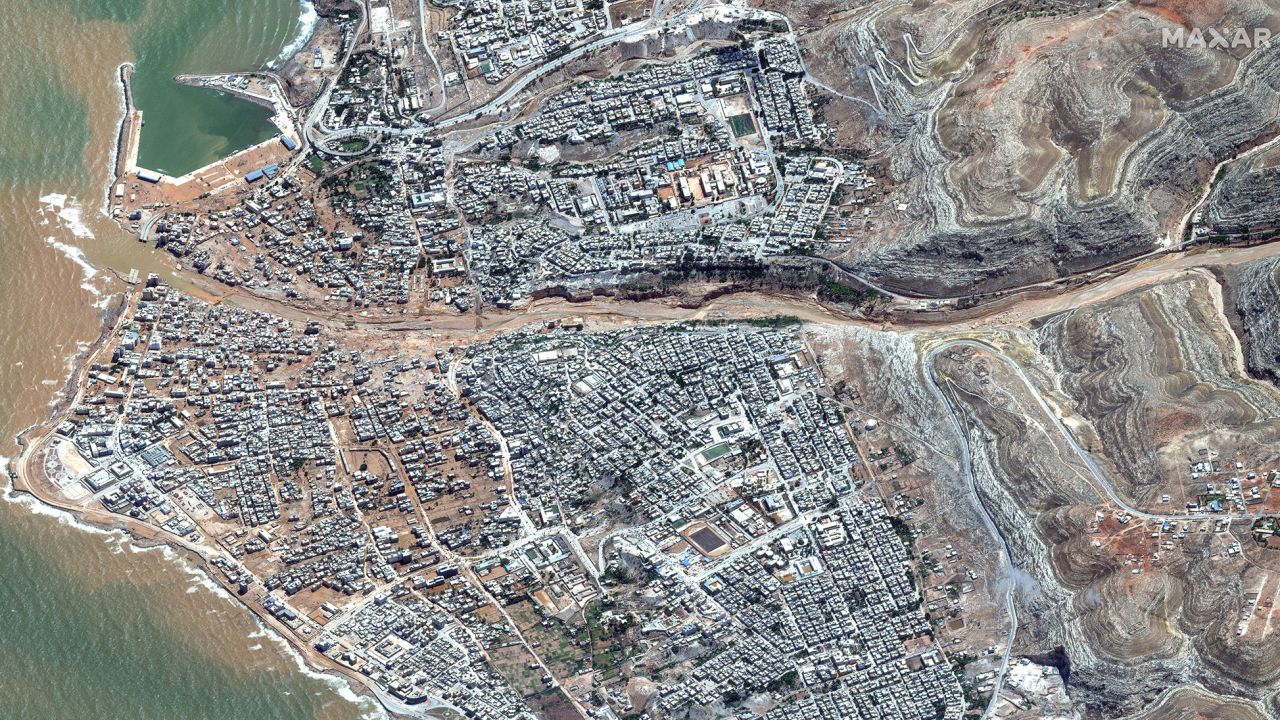
A satellite image shows the town of Derna in the aftermath of the floods in eastern Libya on Wednesday.

A satellite image shows the town of Derna in the aftermath of the floods in eastern Libya on Wednesday.Maxar Technologies/ReutersCNN — 

It started with a bang at 3 a.m. Monday as the residents of Derna were sleeping. One dam burst, then a second, sending a huge wave of water gushing down through the mountains towards the coastal Libyan city, killing thousands as entire neighborhoods were swept into the sea.

More than 5,000 people are believed to have been killed with thousands more missing, though estimates from different Libyan officials and aid groups have varied and the toll is expected to rise.

The eastern Libyan city of Derna, the epicenter of the disaster, had a population of around 100,000 before the tragedy. Authorities say that at least 10,000 remain missing. CNN could not independently verify the figures.

Buildings, homes and infrastructure were “wiped out” when a 7-meter (23-foot) wave hit the city, according to the International Committee of the Red Cross (ICRC), which said Thursday that dead bodies were now washing back up on shore.

But with thousands killed and many more still missing, there are questions as to why the storm that also hit Greece and other countries caused so much more devastation in Libya.

Experts say that apart from the strong storm itself, Libya’s catastrophe was greatly exacerbated by a lethal confluence of factors including aging, crumbling infrastructure, inadequate warnings and the impacts of the accelerating climate crisis.

Tiếp tục đọc “Aging dams and missed warnings: A lethal mix of factors caused Africa’s deadliest flood disaster in Libya”

As work begins on the largest US dam removal project, tribes look to a future of growth

FILE - The Iron Gate Dam powerhouse and spillway are seen on the lower Klamath River near Hornbrook, Calif., on March 2, 2020. This dam, along with three others on the Klamath River, are scheduled to be removed by the end of 2024. Crews will work to restore the river and surrounding land. (AP Photo/Gillian Flaccus, File)

1 of 4 | 

FILE – The Iron Gate Dam powerhouse and spillway are seen on the lower Klamath River near Hornbrook, Calif., on March 2, 2020. This dam, along with three others on the Klamath River, are scheduled to be removed by the end of 2024. Crews will work to restore the river and surrounding land. (AP Photo/Gillian Flaccus, File)

FILE - The Klamath River winds runs along state Highway 96 on June 7, 2021, near Happy Camp, Calif. Work has begun on removing four dams along the Klamath River, the largest dam removal project in history. All the dams are scheduled to come down by the end of 2024. (AP Photo/Nathan Howard, File)

2 of 4 | 

FILE – The Klamath River winds runs along state Highway 96 on June 7, 2021, near Happy Camp, Calif. Work has begun on removing four dams along the Klamath River, the largest dam removal project in history. All the dams are scheduled to come down by the end of 2024. (AP Photo/Nathan Howard, File)

FILE - Demian Ebert, the Klamath program manager for PacifiCorp, looks at a tank holding juvenile chinook salmon being raised at the Iron Gate Hatchery at the base of the Iron Gate Dam on March 3, 2020, near Hornbrook, Calif. The Iron Gate Dam is one of four dams along the Klamath River scheduled to be removed by the end of 2024. Once the dams are gone, crews will work to restore the river and surrounding land. (AP Photo/Gillian Flaccus, File)

3 of 4 | 

FILE – Demian Ebert, the Klamath program manager for PacifiCorp, looks at a tank holding juvenile chinook salmon being raised at the Iron Gate Hatchery at the base of the Iron Gate Dam on March 3, 2020, near Hornbrook, Calif. The Iron Gate Dam is one of four dams along the Klamath River scheduled to be removed by the end of 2024. Once the dams are gone, crews will work to restore the river and surrounding land. (AP Photo/Gillian Flaccus, File)

FILE - Jamie Holt, lead fisheries technician for the Yurok Tribe, right, and Gilbert Myers count dead chinook salmon pulled from a trap in the lower Klamath River on June 8, 2021, in Weitchpec, Calif. Work has begun on the largest dam removal project in history along the Klamath River. Four dams will be removed by the end of 2024. (AP Photo/Nathan Howard, File)

4 of 4 | 

FILE – Jamie Holt, lead fisheries technician for the Yurok Tribe, right, and Gilbert Myers count dead chinook salmon pulled from a trap in the lower Klamath River on June 8, 2021, in Weitchpec, Calif. Work has begun on the largest dam removal project in history along the Klamath River. Four dams will be removed by the end of 2024. (AP Photo/Nathan Howard, File)

BY ADAM BEAMUpdated 11:05 AM GMT+7, July 31, 2023Share

Tiếp tục đọc “As work begins on the largest US dam removal project, tribes look to a future of growth”