
|
Thẻ: CSIS

Is There Drinkable Water and Topsoil on Itu Aba?
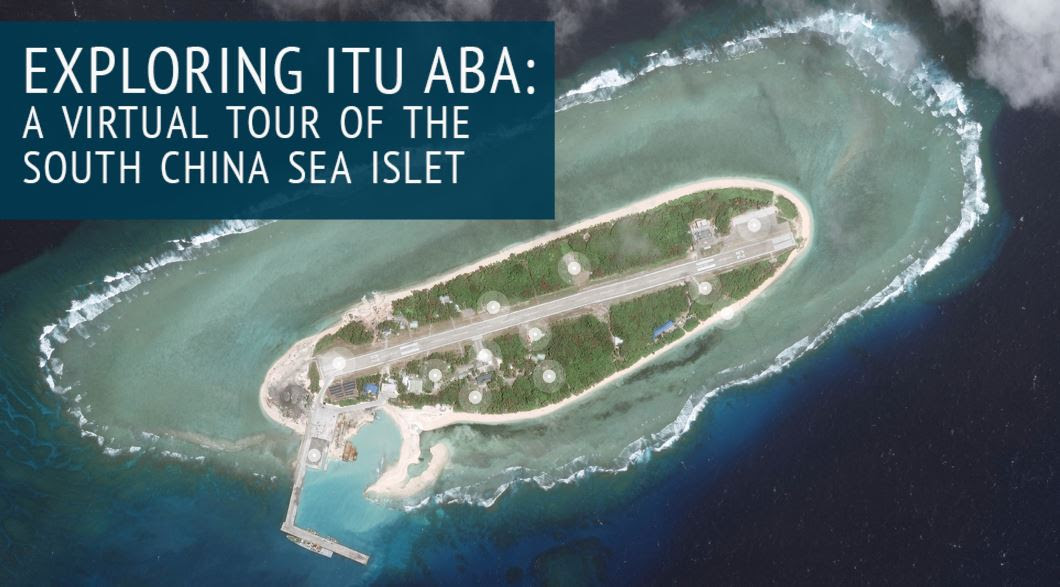

Tiếp tục đọc “Is There Drinkable Water and Topsoil on Itu Aba?”
Will Indonesia, Provoked, Now Choose to Lead on the South China Sea?
A confrontation between Indonesian and Chinese law enforcement vessels in the South China Sea over the weekend could mark a turning point in Indonesian foreign policy under President Joko “Jokowi” Widodo, forcing him to choose between two of his top priorities: attracting foreign investment – particularly Chinese investment – to fund his ambitious infrastructure agenda; and a more assertive defense of Indonesian territorial integrity and sovereignty over its natural resources. That, in turn, could herald a significant shift in diplomacy over the South China Sea. Tiếp tục đọc “Will Indonesia, Provoked, Now Choose to Lead on the South China Sea?”
Japan: How Energy Security Shapes Foreign Policy

thediplomat_Five years after the nuclear meltdown at Fukushima, public debates over nuclear power are still having an impact on Japan’s energy mix — and that, in turn, helps shape Japanese foreign policy. The Diplomat speaks with Jane Nakano, a senior fellow in the Energy and National Security Program at the Center for Strategic and International Studies, about the connection between Japan’s energy security concerns and its foreign policy decision making.
The Diplomat: What effect do you think the indictment and impeding trial of the three former TEPCO executives will have on the public debate in Japan over the future of nuclear energy? What other energy options does Japan have?
Nakano: The current public apprehension over, or opposition to, nuclear power generation in Japan seems to stem from their loss of trust in nuclear safety and governance. It is unclear as to what extent the indictment of TEPCO officials five years later may serve to restore the public confidence in nuclear safety and governance.
Diversification will remain to be the key in enhancing Japan’s sense of energy security. As fossil fuels will remain important in Japan, as in most of the industrialized economies around the world, Japan is focused on using natural gas—which is the cleanest type of fossil fuels—and advancing clean coal technologies while promoting the greater use of wind and solar.
How dependent is Japan on oil imports from the Middle East, and how does this shape Japan’s foreign policy approach to the region? Tiếp tục đọc “Japan: How Energy Security Shapes Foreign Policy”
CSIS: U.S. Shale Gas Sets Sail…Now What?
-
 FEB 25, 2016
On February 24, a tanker carrying liquefied natural gas (LNG) left the Sabine Pass LNG terminal off the coast of Louisiana. The first LNG cargo from Cheniere Energy Inc.’s Sabine Pass LNG Project is a significant milestone for the U.S. energy industry, marking the dawn of shale-based LNG exports by the United States. What other implications does the Sabine Pass export have for the United States? Does the shipment foretell the economic viability of U.S. LNG projects or the competitiveness of U.S. LNG exports? This Critical Question illustrates the significance of the Sabine Pass LNG shipment and considers the opportunities and challenges for the U.S LNG export business in the period of low energy prices. Tiếp tục đọc “CSIS: U.S. Shale Gas Sets Sail…Now What?”
CSIS: Southeast Asia from Scott Circle Jan. 21, 2016
Southeast Asia From Scott Circle – Jan 21: For China, A Race To Retain Appeal In Southeast Asia

For China, A Race To Retain Appeal In Southeast Asia
By Phuong Nguyen (@PNguyen_DC), Associate Fellow, Chair for Southeast Asia Studies (@SoutheastAsiaDC), CSIS
January 21, 2015
The landslide election in Taiwan of pro-independence opposition leader Tsai Ing-wen to be president has led to speculation of a possible recalibration in Chinese foreign policy, at least in the year ahead. Observers believe that stable cross-strait relations over the past eight years have allowed Beijing the bandwidth to explore greener pastures such as the once-dormant South China Sea dispute and expand its footprint across Southeast Asia. Tiếp tục đọc “CSIS: Southeast Asia from Scott Circle Jan. 21, 2016”
CSIS: Asia-Pacific Rebalance 2025
Capabilities, Presence, and Partnerships

Contributor: Ernest Bower, Victor Cha, Heather Conley, Zack Cooper, Ryan Crotty, Melissa Dalton, Bonnie Glaser, Rebecca Hersman, Murray Hiebert, Christopher Johnson, Thomas Karako, Stephanie Sanok Kostro, Gregory Poling, Richard Rossow, John Schaus, Sharon Squassoni, Nicholas Szechenyi, Denise Zheng
JAN 19, 2016
In 2015, Congress tasked the Department of Defense to commission an independent assessment of U.S. military strategy and force posture in the Asia-Pacific, as well as that of U.S. allies and partners, over the next decade. This CSIS study fulfills that congressional requirement. The authors assess U.S. progress to date and recommend initiatives necessary to protect U.S. interests in the Pacific Command area of responsibility through 2025. Four lines of effort are highlighted: (1) Washington needs to continue aligning Asia strategy within the U.S. government and with allies and partners; (2) U.S. leaders should accelerate efforts to strengthen ally and partner capability, capacity, resilience, and interoperability; (3) the United States should sustain and expand U.S. military presence in the Asia-Pacific region; and (4) the United States should accelerate development of innovative capabilities and concepts for U.S. forces.
Publisher CSIS/Rowman & Littlefield
ISBN 978-1-4422-5916-4 (pb); 978-1-4422-5917-1 (eBook)

CSIS Southeast Asia Sit-Rep – Jan 14, 2016
|
||
|
||
|

CSIS Energy Publication | Assessing the Final Clean Power Plan: Emissions Outcomes
FROM THE CSIS ENERGY AND NATIONAL SECURITY PROGRAM
Assessing the Final Clean Power Plan:
Emissions Outcomes
The U.S. Environmental Protection Agency’s (EPA) Clean Power Plan (CPP) is the most significant greenhouse gas (GHG) policy ever undertaken in the United States, and is expected to achieve significant emission reductions by the time it is fully implemented in 2030. However, calculating the ultimate emissions-abatement potential is more difficult than simply adding up the state reduction targets. While the EPA has set a floor on cumulative emissions from existing fossil-fuel-fired power plants, it has not set a ceiling, and projecting the actual emissions outcome on a national level is not straightforward due to the flexibility states have in implementation.
Our analysis deepens the understanding of the potential emissions outcomes of the CPP and what factors could influence that outcome. We start by explaining the primary factor that has the potential to undermine EPA’s emissions floor—leakage—and how EPA is attempting to address this issue. We then turn to a quantitative analysis of two potential pathways for state implementation plans (SIPs) under optimal implementation conditions. Bearing in mind that optimal implementation is unlikely, we also explore key drivers and decisions that could result in emissions that are higher or lower than our initial projections.
To read the full report, click here
By: John Larsen, Director, Rhodium Group, and Non-Resident Senior Associate, Energy and National Security Program, CSIS; Sarah Ladislaw, Director and Senior Fellow, Energy and National Security Program, CSIS; Michelle Melton, Associate Fellow, Energy and National Security Program, CSIS; and Whitney Herndon, Research Analyst, Rhodium Group
RECENT PUBLICATIONS
Adjusting to Low Prices:
Prospects for Fossil Fuel Subsidy Reform
By: Sarah Ladislaw, Director and Senior Fellow, Energy and National Security Program, CSIS and Zachary Cuyler, Research Associate, Energy and National Security Program, CSIS
Is India the Next China? An Energy-Related Comparison
By: Jane Nakano, Senior Fellow, Energy and National Security Program, CSIS and Michelle Melton, Associate Fellow, Energy and National Security Program, CSIS
Renewed Solar Subsidies – A Missed Opportunity
By: Francis O’Sullivan, Director of Research and Analysis, MIT Energy Initiative; Senior Associate, Energy and National Security Program, CSIS
CSIS: NEW PERSPECTIVES IN FOREIGN POLICY | VOLUME 9
|
|||
|
|||
|
|||
|


CSIS: Asia Maritime Transparency Initiatie, Dec. 18, 2015 brief
 |
|
|
The Power of Smallholder Land Rights to Combat Climate Change

Dec 16, 2015
Last weekend the world rejoiced over the historic, long-awaited climate-change agreement reached at the Paris Climate Conference (COP21). While the cooperation of 190 countries around a singular issue, especially one as pressing as climate change, should be applauded, the COP21 pact is missing something major: the role of agriculture.
This year is on target to be the hottest in recorded history. Just in the past few months, we have watched El Nino, which is likely to be one of the strongest on record, create unpredictable and chaotic weather patterns, taking a tremendous toll on harvests and pushing millions into extreme poverty and emergency levels of food insecurity. Ethiopia is experiencing its worst drought in decades, with predictions of at least 15 million people requiring emergency food assistance by early 2016. As climate change continues to threaten global stability, it pressures the international community to enact creative solutions. One solution that hasn’t received enough attention is increasing land rights for smallholder farmers, particularly for women in the developing world. Tiếp tục đọc “The Power of Smallholder Land Rights to Combat Climate Change”
CSIS: Southeast Asia from Scott Circle – Dec 3, 2015
|

CSIS: Southeast Asia SIT-REP – Dec 10, 2015
|

CSIS: AMTI Brief – November 2, 2015
|
 CVD
CVD 