The mathematics of starvation: how Israel caused a famine in Gaza

theguardian.com

Israel controls the flow of food into Gaza. It has calculated how many calories Palestinians need to stay alive. Its data shows only a fraction has been allowed in

Emma Graham-Harrison Chief Middle East correspondentThu 31 Jul 2025 15.49 BSTShare

The mathematics of famine are simple in Gaza. Palestinians cannot leave, war has ended farming and Israel has banned fishing, so practically every calorie its population eats must be brought in from outside.

Israel knows how much food is needed. It has been calibrating hunger in Gaza for decades, initially calculating shipments to exert pressure while avoiding starvation.
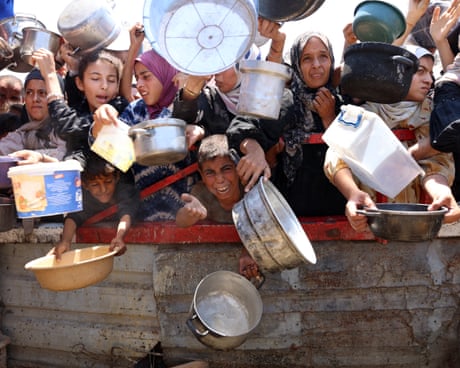
Palestinians crowd at a lentil soup distribution point in Gaza City, among them children and women holding pot and pans

“The idea is to put the Palestinians on a diet, but not to make them die of hunger,” a senior adviser to the then prime minister, Ehud Olmert, said in 2006. An Israeli court ordered the release of documents showing the details of those macabre sums two years later.

Cogat, the Israeli agency that still controls aid shipments to Gaza, calculated then that Palestinians needed an average minimum 2,279 calories per person per day, which could be provided through 1.836kg of food.

Today, humanitarian organisations are asking for an even smaller minimum ration: 62,000 metric tonnes of dry and canned food to meet basic needs for 2.1 million people each month, or around 1kg of food per person per day.

Tiếp tục đọc “The mathematics of starvation: how Israel caused a famine in Gaza”

A controversial article praises colonialism. But colonialism’s real legacy was ugly.

washingtonpost.com September 19, 2017 at 6:00 a.m. EDT

Women and children prepare to flee with their belongings near the Central African Republic town of Grimari on May 7, 2014. (Siegfried Modola/Reuters)

How many of today’s problems in the Global South are a direct legacy of colonialism? A recent journal article by Bruce Gilley,  “The Case for Colonialism,” kicked up great controversy by arguing that the “orthodoxy” that Western colonialism was universally harmful to colonized peoples and countries is overstated. Colonialism, Gilley writes, was “both objectively beneficial and subjectively legitimate” in many places.

Gilley, a political scientist at Portland State University, studies Chinese politics and recently made waves for resigning his membership in the American Political Science Association over its alleged lack of political diversity. His article in Third World Quarterlyhowever, ignores many existing studies that answer these questions with better data and more rigorous analysis, and which come to a resounding conclusion of “no.”

Tiếp tục đọc “A controversial article praises colonialism. But colonialism’s real legacy was ugly.”

What Is Colonialism and How Did It Arise?

CFR.org Last Updated February 14, 2023

Explore how colonialism enriched empires and fundamentally reshaped countries such as India.

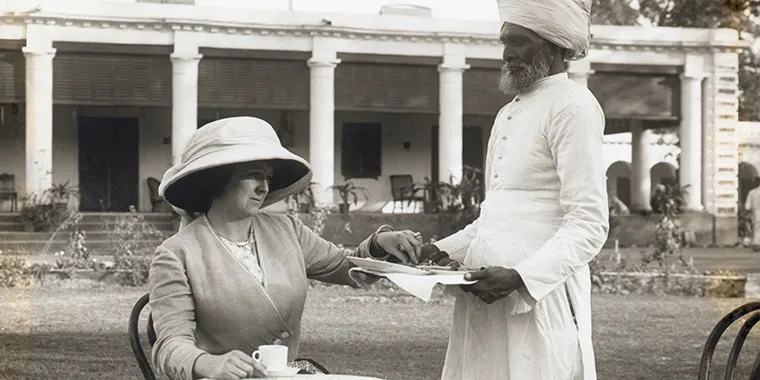
A Hindu servant serves tea to a European colonial woman in this undated photograph.

A Hindu servant serves tea to a European colonial woman in this undated photograph. Source: George Rinhart/Corbis via Getty ImagesSHARE

In the late seventeenth century, the Mughal Empire controlled almost all of the Indian subcontinent.

European visitors marveled at the empire’s wealth and grandeur. Antonio Monserrate, a Portuguese Jesuit missionary, called its cities “second to none either in Asia or in Europe with regards either to size, population, or wealth.”

For centuries, merchants around the world had traveled to India, eager to trade for coveted silk, spices, and textiles. And in 1700, India’s economy was larger than all of Western Europe’s put together, making up nearly 25 percent of the global economy. By 1973, however, that number had dropped to just 3 percent. 

How did this happen?

The full story is long, winding, complex, and contentious. It involves centuries of war, technological innovation, and global trade that sent some economies soaring and brought others crashing down. But central to this story for India—and for so many countries around the world—is the history of colonialism, the practice of controlling another country or area and exploiting its people and resources.

Tiếp tục đọc “What Is Colonialism and How Did It Arise?”

What is the French Colonial Tax?

afritechnews – by Angeline Mbogo

July 7, 2020

French Colonial Tax

The fact that several African countries have been under the influence of the French for about 75 years now is stunning. Unable to let its colonies go, France continues to exploit African countries with unfair obligations, one of which has raised a raging debate over the years.

Dubbed the colonial tax, the infamous obligation on CFA Franc Zone members requires them to “keep 50 percent of their foreign exchange reserves in an operations account held at the French Treasury.”

Tiếp tục đọc “What is the French Colonial Tax?”

‘Looty’ project launches digital art heists to reclaim African artifacts

Previous

'Looty' project launches digital art heists to reclaim African artifacts
View of a computer-rendered image, with an added design to a looted artwork from Nigeria, that now resides in a British museum, with project’s aim to give part of its non-fungible token (NFT) sale proceeds to fund young African artists, in this handout obtained May 23, 2022. Looty Art/Handout via REUTERS
'Looty' project launches digital art heists to reclaim African artifacts
Screenshot of the design process on an image of a looted artwork from Nigeria, that now resides in a British museum, with project’s aim to give part of its non-fungible token (NFT) sale proceeds to fund young African artists, in this handout obtained May 23, 2022. Looty Art/Handout via REUTERS

Tiếp tục đọc “‘Looty’ project launches digital art heists to reclaim African artifacts”

How Haiti became the poorest country in the Americas

May 22, 2022

Good morning. The Times reveals how Haiti became the poorest country in the Americas.


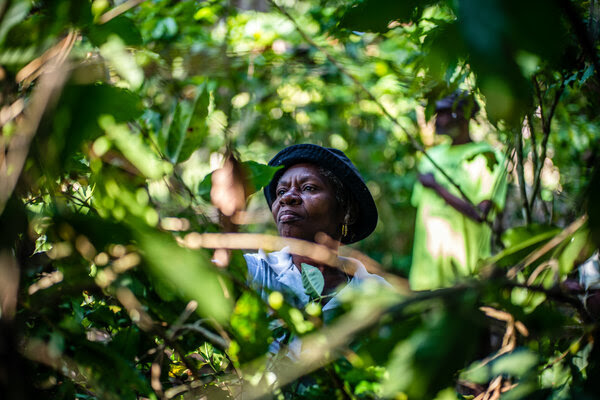
Adrienne Present harvesting coffee beans in Haiti.Federico Rios for The New York Times

Catherine Porter, New Yorl Times newsletter

Haiti is one of the poorest countries in the world, and a new Times investigative series explores why. One stunning detail: France demanded reparations from Haitians it once enslaved. That debt hamstrung Haiti’s economy for decades — and kept it from building even basic social services, like sewage and electricity.

The series is based on more than a year of reporting, troves of centuries-old documents and an analysis of financial records. I spoke to my colleague Catherine Porter, one of the four reporters who led the project, about what they found.

Why tell Haiti’s story now?

I’ve been covering Haiti since the earthquake in 2010, and returned dozens of times. Any journalist that spends time in Haiti continually confronts the same question: Why are things so bad here?

Tiếp tục đọc “How Haiti became the poorest country in the Americas”