9 Things to Know About National Climate Plans (NDCs)

October 18, 2022 By Taryn FransenRyan O’ConnorNatalia Alayza and Molly Cal

WRI.org

As countries prepare to gather at COP27 in Sharm el-Sheik, Egypt to advance the Paris Agreement on climate change, attention turns once again to its building blocks: countries’ 2030 climate commitments, known as nationally determined contributions (NDCs). 

While the Paris Agreement established three global goals — limit global temperature rise to well below 2 degrees C (3.6 degrees F) and ideally 1.5 degrees C (2.7 degrees F), promote adaptation and resilience, and align financial flows with low-emissions, climate-resilient development — NDCs are the foundation. In its NDC, each of the Paris Agreement’s 194 Parties must lay out its aims to reduce emissions. Many also include plans for adapting to climate impacts and the financial requirements needed for implementation.

Countries must strengthen their NDCs on a regular, five-year cycle. Most submitted their initial commitments in 2015 and updated them by 2021. A new, stronger round of NDCs is due in 2025.

WRI’s Climate Watch platform tracks more than 200 indicators on all NDCs. The new State of NDCs report analyzed this data to draw out key trends and evaluate where the NDCs now stand. The key takeaway? Countries are making incremental progress on strengthening their NDCs, but what we really need to achieve the goals of the Paris Agreement is urgent transformational change.

Here’s what we know and what countries should keep in mind as they formulate new NDCs by 2025:

Tiếp tục đọc “9 Things to Know About National Climate Plans (NDCs)”

Indonesia’s giant capital city is sinking. Can the government’s plan save it?

Indonesia has grand plans for Jakarta—a new capital on Borneo, a giant bird-shaped sea wall to protect Jakarta itself—but they don’t solve the underlying problem.

nationalgeographic.com

PUBLISHED JULY 29, 2022

JAKARTAApart from the narrow, unpaved road, the two-meter-high concrete coastal wall is the only thing that separates Suhemi’s small restaurant in North Jakarta from the sea. Her family depends on that wall. Growing up here in the Muara Baru neighborhood in the 80s and 90s, Suhemi used to play on the beach in front of her house. But by the 2000s the beach had disappeared, and the sea frequently inundated the neighborhood.

In 2002, the government built the coastal wall, to give the residents peace of mind and time—a respite from the steady sinking of the land under the city and the steady rising of the sea. But just five years later, in 2007, the wall proved no match for the worst floods in Jakarta’s modern history. Driven by a storm coming off the Java Sea and torrential rains, the floods claimed 80 lives around the city and caused hundreds of millions of dollars of damage

In Muara Baru, the storm surge collapsed the wall, and the sea flooded Suhemi’s house.

Tiếp tục đọc “Indonesia’s giant capital city is sinking. Can the government’s plan save it?”

Phantom Forests: Why Ambitious Tree Planting Projects Are Failing

e360.yale.edu

High-profile initiatives to plant millions of trees are being touted by governments around the world as major contributions to fighting climate change. But scientists say many of these projects are ill-conceived and poorly managed and often fail to grow any forests at all.

BY FRED PEARCE • OCTOBER 6, 2022

It was perhaps the most spectacular failed tree planting project ever. Certainly the fastest. On March 8, 2012, teams of village volunteers in Camarines Sur province on the Filipino island of Luzon sunk over a million mangrove seedlings into coastal mud in just an hour of frenzied activity. The governor declared it a resounding success for his continuing efforts to green the province. At a hasty ceremony on dry land, an official adjudicator from Guinness World Records declared that nobody had ever planted so many trees in such a short time and handed the governor a certificate proclaiming the world record. Plenty of headlines followed.

But look today at the coastline where most of the trees were planted. There is no sign of the mangroves that, after a decade of growth, should be close to maturity. An on-the-ground study published in 2020 by British mangrove restoration researcher Dominic Wodehouse, then of Bangor University in Wales, found that fewer than 2 percent of them had survived. The other 98 percent had died or were washed away.

Tiếp tục đọc “Phantom Forests: Why Ambitious Tree Planting Projects Are Failing”

Đà Nẵng ngập lụt lịch sử, vì sao?

Nhiệt Băng – 16/10/2022 16:17

baodautu.vn

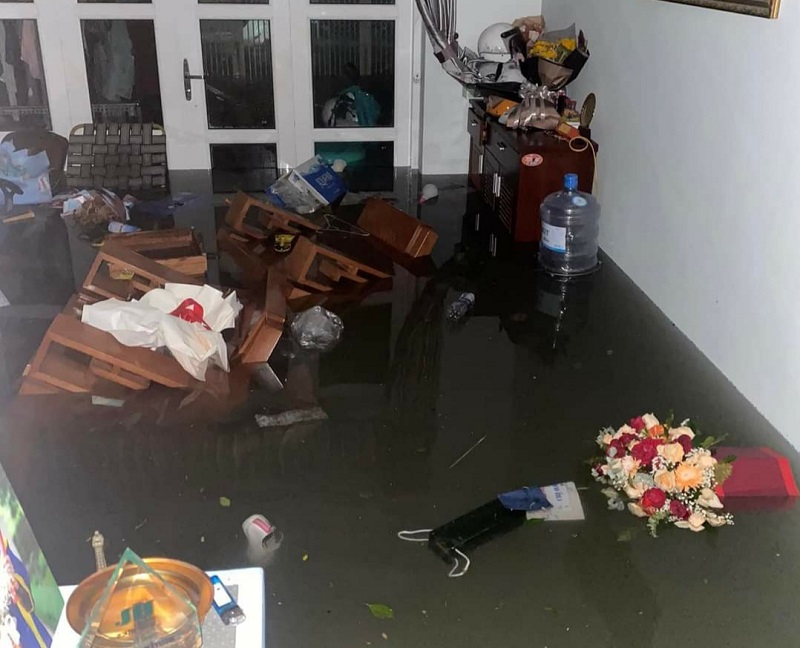
Đà Nẵng vừa trải qua trận lụt lịch sử. Nhiều người dân Thành phố phải thốt lên rằng, đây là trận ngập lụt chưa từng thấy. Vậy, trận ngập lụt kinh hoàng này đến từ những nguyên nhân nào?

TIN LIÊN QUAN

Người dân Đà Nẵng
Đà Nẵng vừa trải qua trận mưa lụt lịch sử, gây thiệt hại không nhỏ về người và tài sản. Ảnh: K.O

Tiếp tục đọc “Đà Nẵng ngập lụt lịch sử, vì sao?”

What Big Oil knew about climate change, in its own words

theconversation.com

Four years ago, I traveled around America, visiting historical archives. I was looking for documents that might reveal the hidden history of climate change – and in particular, when the major coal, oil and gas companies became aware of the problem, and what they knew about it.

I pored over boxes of papers, thousands of pages. I began to recognize typewriter fonts from the 1960s and ‘70s and marveled at the legibility of past penmanship, and got used to squinting when it wasn’t so clear.

What those papers revealed is now changing our understanding of how climate change became a crisis. The industry’s own words, as my research found, show companies knew about the risk long before most of the rest of the world.

Surprising discoveries

At an old gunpowder factory in Delaware – now a museum and archive – I found a transcript of a petroleum conference from 1959 called the “Energy and Man” symposium, held at Columbia University in New York. As I flipped through, I saw a speech from a famous scientist, Edward Teller (who helped invent the hydrogen bomb), warning the industry executives and others assembled of global warming.

Tiếp tục đọc What Big Oil knew about climate change, in its own words

Climate change: how economists underestimated benefits of action for decades

theconversation.com

The costs of doing nothing vastly outweigh the costs of decarbonising a global economy which, since the Industrial Revolution, has been powered by fossil fuels. That may seem self-evident today, when catastrophic fires and floods offer daily reminders of how expensive continued inaction on climate change is. But 15 years ago, that insight was ground-breaking.

The 2006 Stern Review on the Economics of Climate Change, for which I was a senior economist, was the first time a G7 government had used economic analysis to spell out the case for urgently reducing greenhouse gas emissions. A decade and a half on, its conclusions and recommendations are as valid as ever.

Tiếp tục đọc Climate change: how economists underestimated benefits of action for decades

New Data Confirms: Forest Fires Are Getting Worse

WRI.org

New data on forest fires confirms what we’ve long feared: Forest fires are becoming more widespread, burning nearly twice as much tree cover today as they did 20 years ago.

Using data from a new study by researchers at the University of Maryland, we calculated that forest fires now result in 3 million more hectares of tree cover loss per year compared to 2001 — an area roughly the size of Belgium — and accounted for more than a quarter of all tree cover loss over the past 20 years.

World map of tree cover loss from forest fires over time (2001-2021)

Tiếp tục đọc “New Data Confirms: Forest Fires Are Getting Worse”

Extreme Weather Is Brutalizing Asia

foreignpolicy.com

Floods, droughts, tropical storms, and heat waves are severely testing the resilience of a region with a lot of vulnerable people.

Two people on a makeshift raft during flooding in Pakistan

Two people on a makeshift raft during flooding in Pakistan. People make their way along a waterlogged street in a residential area after a heavy monsoon rainfall in Hyderabad, Pakistan, on Aug. 24. AKRAM SHAHID/AFP VIA GETTY IMAGES

AUGUST 24, 2022, 5:07 PM

High temperatures, frequent droughts, torrential rains, and other extreme weather events this summer have throttled Asia, forced industries to shut down, slowed global business, disrupted food supplies, and upended the lives of ordinary people living in some of the world’s most populous countries and densely packed cities. 

For months, countries across the Asia-Pacific have been experiencing a mix of heavier rains and higher temperatures, creating unpredictable weather patterns. When the rains aren’t falling a lot—as in Pakistan, where eight monsoon cycles have left thousands of people homeless—they aren’t falling at all, causing energy shortages as droughts have seriously restricted access to hydroelectric power. Record-breaking temperatures in China, for example, have sparked intense wildfires in the country’s center and dried up rivers that cities bank on to power industries and homes.

Tiếp tục đọc “Extreme Weather Is Brutalizing Asia”

Global Climate Agreements: Successes and Failures

cfr.org

International efforts, such as the Paris Agreement, aim to reduce greenhouse gas emissions. But experts say countries aren’t doing enough to limit dangerous global warming.

Summary

  • Countries have debated how to combat climate change since the early 1990s. These negotiations have produced several important accords, including the Kyoto Protocol and the Paris Agreement.
  • Governments generally agree on the science behind climate change but have diverged on who is most responsible and how to set emissions-reduction goals.
  • Experts say the Paris Agreement is not enough to prevent the global average temperature from rising 1.5°C. When that happens, the world will suffer devastating consequences, such as heat waves and floods.

Introduction

What are the most important climate agreements?

Is there a consensus on the science?

Why is the 1.5°C goal so critical?Which countries are responsible?

Are the commitments made under the Paris Agreement enough?

What are the alternatives to the Paris Agreement?

Recommended Resources

Introduction

Over the last several decades, governments have collectively pledged to slow global warming. But despite intensified diplomacy, the world could soon face devastating consequences of climate change.

Through the Kyoto Protocol and the Paris Agreement, countries agreed to reduce greenhouse gas emissions, but the amount of carbon dioxide in the atmosphere keeps rising, heating the Earth at an alarming rate. Scientists warn that if this warming continues unabated, it could bring environmental catastrophe to much of the world, including staggering sea-level rise, record-breaking droughts and floods, and widespread species loss. 

Dozens of countries made new commitments during a UN climate conference known as COP26 in November 2021. Still, experts, activists, and citizens remain concerned that these pledges are not ambitious enough.

What are the most important international agreements on climate change?

Tiếp tục đọc “Global Climate Agreements: Successes and Failures”

Vietnam to increase coal imports in 2025-2035 period: Ministry

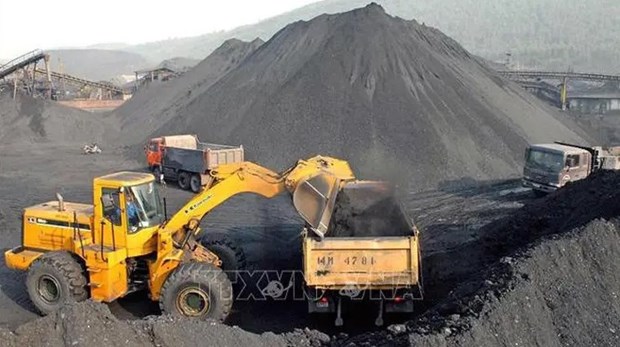
Vietnam’s coal imports are forecast to rise to meet domestic production demand, according to a draft strategy for developing the coal industry in Vietnam recently introduced by the Ministry of Industry and Trade (MoIT).

vietnamplus.vn

Hanoi (VNA) – Vietnam’s coal imports are forecast to rise to meet domestic production demand, according to a draft strategy for developing the coal industry in Vietnam recently introduced by the Ministry of Industry and Trade (MoIT).

Accordingly, Vietnam will import about 50-83 million tonnes of coal per year during the period from 2025 to 2035, with the volume gradually falling to about 32-35 million tonnes by 2045.

The data from the MoIT shows domestic coal consumption increased rapidly from 27.8 million tonnes in 2011 to 38.77 million tonnes in 2015, and about 53.52 million tonnes in 2021.

The volume of coal consumed at present has more than doubled compared to 2011, mainly for electricity production.

The demand for primary energy, including coal, will continue to increase, possibly peaking in the 2030-2035 period, the ministry said.

Vietnam’s coal demand will be around 94-97 million tonnes in 2025, and peak at 125-127 million tonnes in 2030, mainly due to the increase in demand for power generation, and the cement, metallurgy and chemical industries.

The ministry also predicted that the demand for energy after 2040 will decline due to the energy transition process to meet emission reduction targets.

Tiếp tục đọc “Vietnam to increase coal imports in 2025-2035 period: Ministry”

The Role of Nuclear Energy in the Global Energy Transition

The paper provides a wealth of data about the current state of the nuclear industry and the potential for its growth over the next ten to twenty years, while also considering important questions about the geopolitical dimensions which underpin the relationships between the exporters and importers of nuclear technology and the ties, such as financing and provision of services in the nuclear energy value chain, which bind them over multiple decades

See full paper here at Oxford Institute for Energy Studies

What The Ozone Layer Teaches Us About Climate Action

06 APR, 2021

when it comes to the Paris Agreement and climate action; namely that when individuals change their behaviour by consuming differently they can drive industries to change, as those industries are then caught between a ‘greening’ consumer demand and international and governmental policies focusing on climate action. 

UNFCCC

Credit: NOAA / Unsplash

Back in the 1980s, everyone was talking about the hole in the ozone layer, so what happened, and what can the international agreement to ban CFCs teach us about the importance of multilateral cooperation when it comes to climate action?

What exactly is the ozone layer?

The ozone layer is the part of the Earth’s atmosphere that protects the planet from ultraviolet radiation. It’s found in the Stratosphere which is around 10-50km above the surface of the earth. Think of it as a layer of sunscreen that protects us from all manner of harmful rays. Without it, life on Earth would be extremely unpleasant.

So, I’m guessing a hole in it is not a good thing

Exactly right, in fact it’s a very bad thing.

So what caused it?

Tiếp tục đọc “What The Ozone Layer Teaches Us About Climate Action”

Arctic is warming nearly four times faster than the rest of the world

theconversation.com

The Earth is approximately 1.1℃ warmer than it was at the start of the industrial revolution. That warming has not been uniform, with some regions warming at a far greater pace. One such region is the Arctic.

new study shows that the Arctic has warmed nearly four times faster than the rest of the world over the past 43 years. This means the Arctic is on average around 3℃ warmer than it was in 1980.

This is alarming, because the Arctic contains sensitive and delicately balanced climate components that, if pushed too hard, will respond with global consequences.

Why is the Arctic warming so much faster?

A large part of the explanation relates to sea ice. This is a thin layer (typically one metre to five metres thick) of sea water that freezes in winter and partially melts in the summer.

The sea ice is covered in a bright layer of snow which reflects around 85% of incoming solar radiation back out to space. The opposite occurs in the open ocean. As the darkest natural surface on the planet, the ocean absorbs 90% of solar radiation.

When covered with sea ice, the Arctic Ocean acts like a large reflective blanket, reducing the absorption of solar radiation. As the sea ice melts, absorption rates increase, resulting in a positive feedback loop where the rapid pace of ocean warming further amplifies sea ice melt, contributing to even faster ocean warming.

Tiếp tục đọc Arctic is warming nearly four times faster than the rest of the world

58% of human infectious diseases can be worsened by climate change – we scoured 77,000 studies to map the pathways

theconversation.com

Published: August 8, 2022 4.00pm BST

Climate change can exacerbate a full 58% of the infectious diseases that humans come in contact with worldwide, from common waterborne viruses to deadly diseases like plague, our new research shows

Our team of environment and health scientists reviewed decades of scientific papers on all known pathogenic disease pathogens to create a map of the human risks aggravated by climate-related hazards.

The numbers were jarring. Of 375 human diseases, we found that 218 of them, well over half, can be affected by climate change.

Flooding, for example, can spread hepatitis. Rising temperatures can expand the life of mosquitoes carrying malaria. Droughts can bring rodents infected with hantavirus into communities as they search for food.

With climate change influencing more than 1,000 transmission pathways like those and climate hazards increasingly globally, we concluded that expecting societies to successfully adapt to all of them isn’t a realistic option. The world will need to reduce the greenhouse gas emissions that are driving climate change to reduce these risks.

As the World Burns

Jul 25, 2022 RICHARD HAASS Project Syndicate

Even before Russian President Vladimir Putin launched his war against Ukraine and set off a global scramble for fossil fuels, the battle against climate change was being lost. With national leaders and international diplomacy proving ineffective, is there any hope of saving ourselves?

NEW YORK – It is often said that no one wins a war, just that some lose less than others. Russia’s war against Ukraine promises to be no exception. One clear loser is already evident: the planet.

Tiếp tục đọc “As the World Burns”