The plaintiffs, who range in age from 5 to 22, successfully argued that the state’s refusal to consider climate change impacts before supporting fossil fuel development violated their right a clean environment under the Montana state constitution. Their lawsuit was the first to reach trial among several similar cases in the United States and is likely to bolster other actions seeking to use the legal system to force action on curbing emissions.
VHO- Có thể nói, hòn Trống Mái nằm ngay ở ví trí trung tâm của di sản thiên nhiên thế giới vịnh Hạ Long, là biểu tưởng du lịch nổi tiếng trong nước và quốc tế của vùng đất này, nhưng lại đang phải đối mặt với nhiều nguy cơ đổ, trượt nếu chính quyền, cơ quan chức năng sở tại không có ngay giải pháp bảo tồn cấp thiết.
Hòn Trống Mái được giới chuyên gia cảnh báo có nguy cơ cao bị gãy, trượt
Cuộc hội thảo góp ý cho Báo cáo tổng kết và các sản phẩm chính của nhiệm vụ khoa học công nghệ “Nghiên cứu đánh giá hiện trạng và các yếu tố ảnh hưởng làm cơ sở đề xuất các giải pháp bảo tồn hòn Trống Mái, vịnh Hạ Long” diễn ra từ hồi cuối tháng 7 vừa qua, tuy nhiên cho đến nay theo tìm hiểu của chúng tôi, các bên liên quan vẫn chưa có những động thái mạnh mẽ cho vấn đề “cấp cứu” biểu tượng có một không hai của di sản vịnh Hạ Long.
Còn nhớ vào cuối năm ngoái, chúng tôi cùng đoàn chuyên gia thuộc nhiều lĩnh vực khác nhau có chuyến tham quan vịnh Hạ Long, và một trong những điểm đến là hòn Trống Mái. Cơ duyên đưa đến địa điểm này không hề xuất phát từ sự tò mò hay chụp ảnh lưu niệm vì biểu tượng này đã nằm lòng trong sự yêu thích của biết bao du khách, mà trong đoàn có một chuyên gia về địa chất mong muốn mọi người có cái nhìn thực địa ở khoảng cách gần nhất có thể để nhận diện rõ hơn về sự ăn mòn đáng sợ đối với “hai chân” của hòn Trống Mái. Bằng con mắt chuyên môn, vị chuyên gia về địa chất đã cảnh báo rằng, với tốc độ xâm thực và bào mòn của sóng, gió và tác động của con người như hiện nay, chẳng bao lâu nữa độ kết cấu “hai chân” của hòn Trống Mái sẽ bị cưa đứt. Tại thời điểm đó có người nói đùa rằng, hòn Trống Mái đang đứng trên hai “que tăm” bởi trông nó rất chênh vênh, chung chiêng nhất là khi những đợt sóng cao ập vào. Vị chuyên gia còn nói thêm, cũng đã nhiều lần lên tiếng cảnh báo qua mối quan hệ công việc nhưng nhìn chung chưa mấy ai tin, hoặc nhận được câu trả lời đại loại như “trông thế thôi, nó còn vững chãi lắm”.
This report aims to contribute to growing conversations about coal finance mechanisms, particularly as they move from concept to reality. RMI believes that financial mechanisms can be a transformational tool in coal transition efforts—but only if implemented well. Ultimately, the devil will be in the detail as to how financial mechanisms are designed and governed to meet the critical needs of all stakeholders and help deliver a rapid and smooth pathway to a climate-safe future.
RMI’s report, Financing the Coal Transition, shows how financial mechanisms can complement policy and regulation to help achieve a rapid, equitable, and smooth coal transition.
The economics of power generation are shifting rapidly in favor of clean energy, challenging coal’s long history as a mainstay of economic development throughout the world. However, much more work needs to be done to transition the existing coal fleet in line with climate and development goals.
The privileged place coal has occupied in power generation for over a century has entrenched complex barriers—from the way that grids have been built to the incentive structures within electricity systems—that prevent markets from catching up to the economic trend toward clean energy. In the absence of solutions to address these barriers, the costs of uneconomic coal will fall largely on local communities through direct costs and unpriced impacts on local health and the environment.
The global community needs new solutions to address the social and economic complexities of the coal transition while responding to the urgency of the climate challenge. One set of solutions currently under development are the innovative financial mechanisms designed to support the transition from coal to clean energy.
This report helps make sense of the various financial mechanisms proposed to date, and models the impacts of using different financial mechanisms to transition existing coal power plants. While it finds that financial mechanisms have the potential to generate wins for both the climate and communities, it also recognizes the risks of using finance to support the coal transition. To manage these risks, RMI proposes five key principles to guide the design of credible financial mechanisms.
Five key principles to guide the design of financial mechanisms for coal transition
The climate crisis has begun to disrupt human societies by severely affecting the very foundations of human livelihood and social organisation. Climate impacts are not equally distributed across the world: on average, low- and middle-income countries suffer greater impacts than their richer counterparts. At the same time, the climate crisis is also marked by significant inequalities within countries. Recent research reveals a high concentration of global greenhouse gas emissions among a relatively small fraction of the population, living in emerging and rich countries. In addition, vulnerability to numerous climate impacts is strongly linked to income and wealth, not just between countries but also within them.
The aim of this report is twofold. It endeavours first to shed light on these various dimensions of climate inequality in a systematic and detailed analysis, focusing on low- and middle-income countries in particular. It then builds on these insights, together with additional empirical work and interviews with experts, to suggest pathways to development cooperation,and tax and social policies that tackle climate inequalities at their core.
Can progressive carbon taxes help alleviate poverty?
With unsustainable industrial development and unfettered capitalism driving climate change, it is no surprise that income inequality and carbon inequality are intrinsically linked. The latest report from the Intergovernmental Panel on Climate Change (IPCC) highlights the indisputable inequitable human impacts of climate change. Can climate policy interventions like carbon taxes address the complex and interconnected nature of global warming and wealth?
More money, more carbon
Research shows that the richest 1% are responsible for twice as much carbon pollution as the poorest half of humanity. Yet those living in low-income areas and who are already facing the multidimensional burdens of poverty will bear the brunt of the impacts of climate change.
The 2022 World Inequality report further emphasises the notion of “carbon inequality”, finding that global greenhouse-gas (GHG) emissions are concentrated amongst a small percentage of people: the top 10% of emitters are responsible for close to 50% of GHG emissions. As the findings show, this is not necessarily a “rich” vs “poor” country problem, as there are high emitters across all regions. Those high emitters, however, are almost always part of a high-income earning bracket.
If carbon taxes are effectively redistributed, they can fund policies that address both the social and environmental implications of climate change.
Can progressive carbon taxes help tackle carbon and income inequality?
Instruments like carbon taxes are essential to curbing emissions—something The Economist has argued for years. Some believe, however, that these types of policy interventions can be regressive, and end up disproportionately burdening low-income communities and small businesses while allowing richer, high-emitting individuals and corporations to continue to pollute—as long as they can pay. These concerns sparked the now infamous 2018 “yellow vest” protests in Paris.
Fortunately, if carbon taxes are effectively redistributed, they can fund policies that address both the social and environmental implications of climate change. Analysis shows that if every country adopted a uniform global carbon tax and returned revenues to citizens on an equal per-capita basis, it is possible to limit global warming to 2 degrees celsius by 2100 above pre-industrial levels. This type of redistributive carbon tax would also increase wellbeing, reduce inequality and could alleviate poverty across the world.
“Quan điểm là chắc chắn không thể đánh đổi và thực hiện như tỉnh Thái Bình đang làm được. Bởi khu vực này nằm trong nhiều chương trình liên quan đến ứng phó với biển đổi khí hậu theo Nghị quyết 102 của Quốc hội, và được nhiều tổ chức quốc tế đầu tư vào đây”.
Ông Đoàn Hoài Nam – Trưởng phòng Quản lý rừng đặc dụng, phòng hộ (Cục Lâm nghiệp)
TP – Đại diện Cục Lâm nghiệp – Bộ Nông nghiệp và Phát triển Nông thôn cho biết, việc điều chỉnh quy hoạch ở khu vực Bảo tồn thiên nhiên đất ngập nước Tiền Hải cần sự đồng thuận của các bộ, ngành. Tuy nhiên, sau khi gửi văn bản mang tính chất thông báo, UBND tỉnh Thái Bình lại im lặng không phản hồi và tự ra quyết định thay đổi quy hoạch khiến bộ hết sức ngỡ ngàng.
Trao đổi với PV Tiền Phong, ông Đoàn Hoài Nam – Trưởng phòng Quản lý rừng đặc dụng, phòng hộ, Cục Lâm nghiệp – cho biết, khu Bảo tồn thiên nhiên đất ngập nước Tiền Hải, một trong hai vùng lõi của khu Dự trữ sinh quyển châu thổ sông Hồng và được UNESCO công nhận là một trong những vùng lõi quan trọng của khu dự trữ sinh quyển thế giới.
Tiếp tục đọc “Vụ thu hẹp khu bảo tồn thiên nhiên Tiền Hải: ‘Không thể đánh đổi như Thái Bình’”→
The ruling, the first of its kind, is reverberating worldwide, especially among young climate activists. But it still faces hurdles.
Plaintiffs in the landmark Held v. Montana climate change lawsuit arrive at the Lewis and Clark County Courthouse on June 12 in Helena, Mont. (Robin Loznak/AFP/Getty Images)
While farming continues to drive deforestation around the world, 60% of the destruction of Earth’s large, intact forests is caused by other forces. In particular, our research shows that more than one-third of this destruction can be blamed on the production of commodities for export, particularly timber, minerals and oil and gas.
Increasing global demand for these commodities, which are often exported through globe-spanning supply chains, explains much of the ongoing removal, degradation and fragmentation of intact forests in a handful of countries including Brazil, Canada, the Democratic Republic of Congo and Russia.
We define intact forest landscapes (IFLs) as seamless mosaics of forest and related habitats bigger than 500km² where there is no detectable sign of activities such as logging, mining or energy extraction. Although IFLs made up 20% of the world’s remaining tropical forest in 2020, they stored 40% of all the carbon held in these habitats. Since 2000, the global extent of IFLs has shrunk by 7.2%, a loss of 1.5 million km² – more than quadruple the area of Germany.
Escalating construction costs, the rise of solar and wind power, and mounting public opposition have led to a precipitous decrease in massive new hydropower projects. Experts say the world has hit “peak dams,” which conservationists hail as good news for riverine ecosystems.
Numerous recently published reports reflect this planet-altering fact. One study, conducted by scholars at the United Nations University’s Institute for Water, Environment and Health, found that construction of large dams globally fell from a late-1970s peak of about 1,500 a year to around 50 a year in 2020. “There will not be another ‘dam revolution’ to match the scale of the high-intensity dam construction experienced in the early to middle 20th century,” the 2021 study concluded.
Data compiled by the International Renewable Energy Agency (IRENA), an intergovernmental organization that promotes renewable energy, including hydropower, show that in the 21st century, newly installed hydropower capacity peaked in 2013 at 45,000 megawatts a year and then dropped every year but one through 2021, when it reached only 18,900 megawatts. Similarly, investments in new hydropower dropped from a peak of $26 billion in 2017 to an estimated $8 billion in 2022, according to IRENA.
Dam building in China declined sharply around 2015 and has stagnated ever since.
The COP28 Climate Change Conference in Dubai this year is a unique opportunity for the oil and gas industry to show it’s serious about tackling climate change.
At a time when the impacts of climate change are increasingly being felt worldwide, oil and gas producers need to secure a new social license to operate. The world needs to see meaningful changes in the operations of both international and national oil companies, with clear and responsible strategies for bringing down their emissions rapidly.
Debt-for-climate swaps allow countries to reduce their debt obligations in exchange for a commitment to finance domestic climate projects with the freed-up financial resources.
Barbados Prime Minister Mia Amor Mottley spoke passionately to the United Nations General Assembly in September about the mounting debt many developing countries are shouldering and its increasing impact on their ability to thrive.
The average debt for low- and middle-income countries, excluding China, reached 42% of their gross national income in 2020, up from 26% in 2011. For countries in Latin America and the Caribbean, the annual payments just to service that debt averaged 30% of their total exports.
At the same time, these countries are facing a “triple crisis of climate change, of pandemic and indeed now the conflict that is leading to the inflationary pressures that lead regrettably to people taking circumstances into their own hands,” Mottley said.
Rising borrowing costs coupled with high inflation and slow economic growth have left developing countries like hers in a difficult position when it comes to climate change. High debt payments mean countries have fewer resources for mitigating and adapting to climate change. Yet climate change is increasing their vulnerability, and that can raise their sovereign risk, increasing the cost of borrowing. Declining productive capacity and tax base can lead to higher debt risks. It’s a vicious cycle.
Forest elephant extinction would exacerbate climate change. That’s according to a new study in Nature Geoscience which links feeding by elephants with an increase in the amount of carbon that forests are able to store.
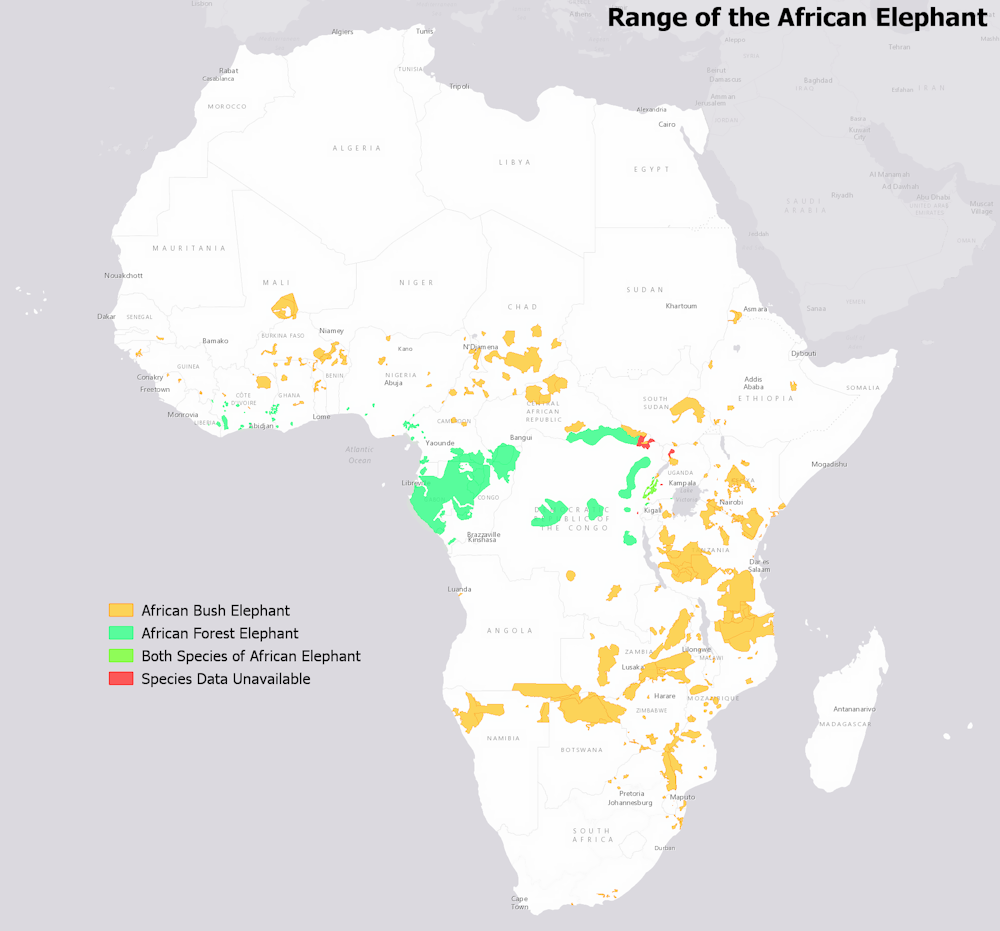
The bad news is that African forest elephants – smaller and more vulnerable relatives of the better known African bush elephant – are fast going extinct. If we allow their ongoing extermination to continue, we will be also worsening climate change. The good news is that if we protect and conserve these elephants, we will simultaneously fight climate change.
Elephants are fascinating animals, and I have studied them for more than 15 years. They are intelligent, sentient, and highly social. But their single most remarkable feature is their size. Evolutionarily, elephants gambled on becoming massive enough to deter predators like lions and tigers.
African forest elephant range is highlighted in light green. The largest surviving population is in Gabon, on the coast of central Africa. IUCN / u/DarreToBe, CC BY-SA
In exchange, they became slaves to their appetite. Elephants need huge amounts of food everyday, something like 5-10% of their body mass. A typical three-tonne female could eat 200 kg of plant material in one day. Her family may need to consume more than a tonne of food per day.
Our mission is to share knowledge and inform decisions.
ZHENGZHOU, China, April 20 (Reuters) – Severe power shortages in China’s southwestern Yunnan province are likely to cut aluminium production in the country’s fourth-largest producing province, analysts and producers said, but weak demand will cap price rises.
Yunnan, which accounts for about 12% of China’s aluminium capacity, has forced electrolytic aluminium producers to reduce their power usage since September last year after unusually low rainfall reduced hydropower generation.
Hydropower generates about 80% of the province’s electricity, and had attracted investment by energy-intensive aluminium smelters keen to lower their emissions.
The output of the metal in Yunnan jumped by 37% in 2022 from the prior year to 4.2 million tonnes.
Now, however, about 2 million tonnes of capacity, or 20% of the provincial total, is offline, Li Jiahui, an analyst at consultancy Shanghai Metals Market, told a conference in Zhengzhou.
Average rainfall in Yunnan during the first quarter of 2023 was 60% lower than the same period in typical years, the provincial government’s emergency management department said.
Nationally Determined Contributions, or NDCs, are countries’ self-defined national climate pledges under the Paris Agreement, detailing what they will do to help meet the global goal to pursue 1.5°C, adapt to climate impacts and ensure sufficient finance to support these efforts.
NDCs represent short- to medium-term plans and are required to be updated every five years with increasingly higher ambition, based on each country’s capabilities and capacities.
Concrete progress is already being made towards achievement of the Paris Agreement, particularly in developing countries. For example, pledges from African countries are more robust than the global average in terms of explaining how targets will be achieved.
NDCs represent politically backed commitments by countries. If used right, they could be our way out of tackling the world’s current crises – not just the climate crisis, but other systemic problems like biodiversity loss and energy security as well.
What are Nationally Determined Contributions and where do they come from?
The legally binding international treaty, which was adopted in 2015 by all 196 Parties to the UN Climate Convention in Paris, established universal global goals endorsed by all countries. Primarily, this includes ensuring global average temperature rise is held well below 2°C above pre-industrial levels and pursuing efforts to limit the increase to 1.5°C. It also includes an aim to increase the ability to adapt to climate impacts, and make finance flows consistent with country needs to achieve these goals.
Global investment in clean energy is on course to rise to USD 1.7 trillion in 2023, with solar set to eclipse oil production for the first time
Investment in clean energy technologies is significantly outpacing spending on fossil fuels as affordability and security concerns triggered by the global energy crisis strengthen the momentum behind more sustainable options, according to a new IEA report.
About USD 2.8 trillion is set to be invested globally in energy in 2023, of which more than USD 1.7 trillion is expected to go to clean technologies – including renewables, electric vehicles, nuclear power, grids, storage, low-emissions fuels, efficiency improvements and heat pumps – according to the IEA’s latest World Energy Investment report. The remainder, slightly more than USD 1 trillion, is going to coal, gas and oil.
Annual clean energy investment is expected to rise by 24% between 2021 and 2023, driven by renewables and electric vehicles, compared with a 15% rise in fossil fuel investment over the same period. But more than 90% of this increase comes from advanced economies and China, presenting a serious risk of new dividing lines in global energy if clean energy transitions don’t pick up elsewhere.




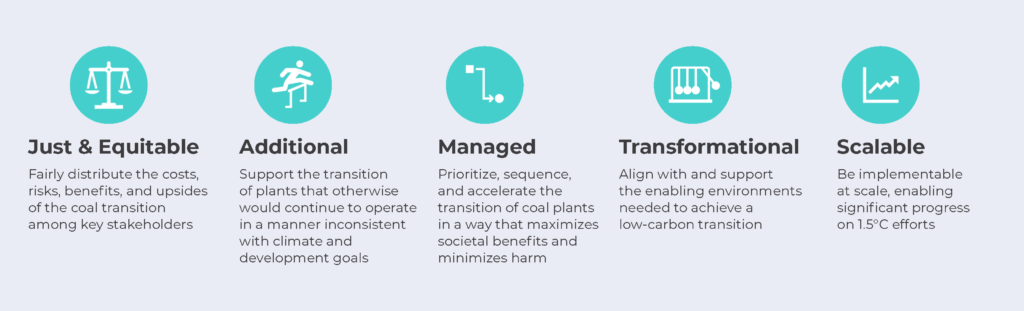 Five key principles to guide the design of financial mechanisms for coal transition


 CVD
CVD 