HANOI, Nov 9 (Reuters) – Vietnam will have a hard time reaching its offshore wind power target for 2030, a top executive at a state-owned energy company said, with foreign investors also warning of multiple regulatory hurdles that would need to be cleared.
The Southeast Asian country has good offshore wind power potential given strong winds and shallow waters near densely populated areas, according to the World Bank, which estimates the sector could add at least $50 billion to Vietnam’s economy.
Offshore wind is also a priority for Group of Seven (G7) members that have promised funds to boost the country’s renewable energy sources and reduce its reliance on coal.
Greenhouse gas emissions can be offset by carbon sinks such as forests, but expanding these areas can put Indigenous communities, reliant on the forests, at risk.
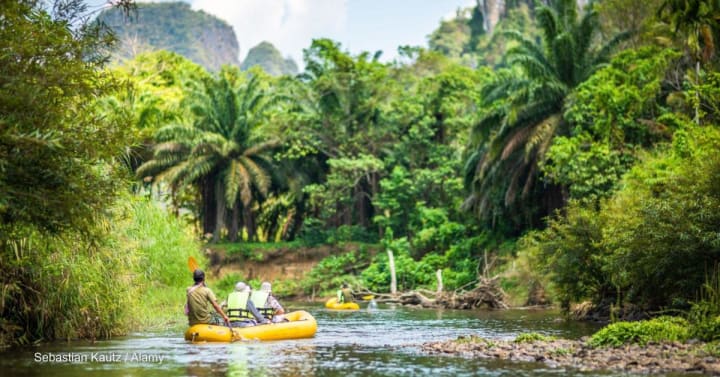
Khao Sok rainforest in Thailand. Photo by: Sebastian Kautz / Alamy
From Khao Sok National Park in the southwest to Phu Chi Fa Forest Park in the north, forests cover around 30% of Thailand’s total area. Approximately 23 million people live near or in these lush green landscapes, depending on them for sustenance and livelihoods. But that’s now at risk, due to both climate change-related threats and the policies implemented to protect the forests.
Warangkana Rattanarat, Thailand country director for The Center for People and Forests, warned that the arrival of El Niño earlier this year has caused long droughts and less rain, damaging crops and other forest resources. This has affected the availability of food, as well as the income local people can derive from forest resources, she added.
The country has also experienced floods and the highest temperatures on record this year, impacting forests and the communities within them. In theGermanWatch Global Climate Risk Index 2021, Thailand ranked at number nine globally for long-term climate risks.
Additionally, there are land and tenure rights issues for Indigenous forest communities to contend with, and national climate commitments that have the potential to negatively impact such communities, said experts.
Last year, Pakistan faced the most devastating floods in the history of the country, which is notable because the country lies on a geographical floodplain. The Indus is an ancient and powerful river. The floodplain of the river covers nearly half of Pakistan, where most of the country’s population resides. When the Indus breathes, as rivers do, the lives and livelihoods on the floodplains are quietly absorbed by the water.
This publication is the latest instalment in the annual series jointly produced by UN Women and UN DESA. The report provides a comprehensive analysis of gender equality progress across all 17 Sustainable Development Goals (SDGs).
Halfway to the end point of the 2030 Agenda for Sustainable Development, the world is failing to achieve gender equality, making it an increasingly distant goal. If current trends continue, more than 340 million women and girls will still live in extreme poverty by 2030, and close to one in four will experience moderate or severe food insecurity. Growing vulnerability brought on by human-induced climate change is likely to worsen this outlook, as many as 236 million more women and girls will be food-insecure under a worst-case climate scenario.
The gender gap in power and leadership positions remains entrenched, and, at the current rate of progress, the next generation of women will still spend on average 2.3 more hours per day on unpaid care and domestic work than men. No country is within reach of eradicating intimate partner violence, and women’s share of workplace management positions will remain below parity even by 2050. Fair progress has been made in girls’ education, but completion rates remain below the universal mark.
With the clock ticking, urgency mounts.
This report advocates for an integrated, holistic approach to advancing gender equality, involving multistakeholder collaboration and sustained financial backing. Neglecting to amplify efforts and invest in gender parity jeopardizes the entire 2030 Agenda for Sustainable Development.
Prime Minister of the UK, Margaret Thatcher studied chemistry at Oxford, and worked briefly as a research chemist before becoming a barrister
Mr President, it gives me great pleasure to return to the Podium of this assembly. When I last spoke here four years ago, on the 40th anniversary of the United Nations, the message that I and others like me gave was one of encouragement to the organisation to play the great role allotted to it.
Of all the challenges faced by the world community in those four years, one has grown clearer than any other in both urgency and importance—I refer to the threat to our global environment. I shall take the opportunity of addressing the general assembly to speak on that subject alone.
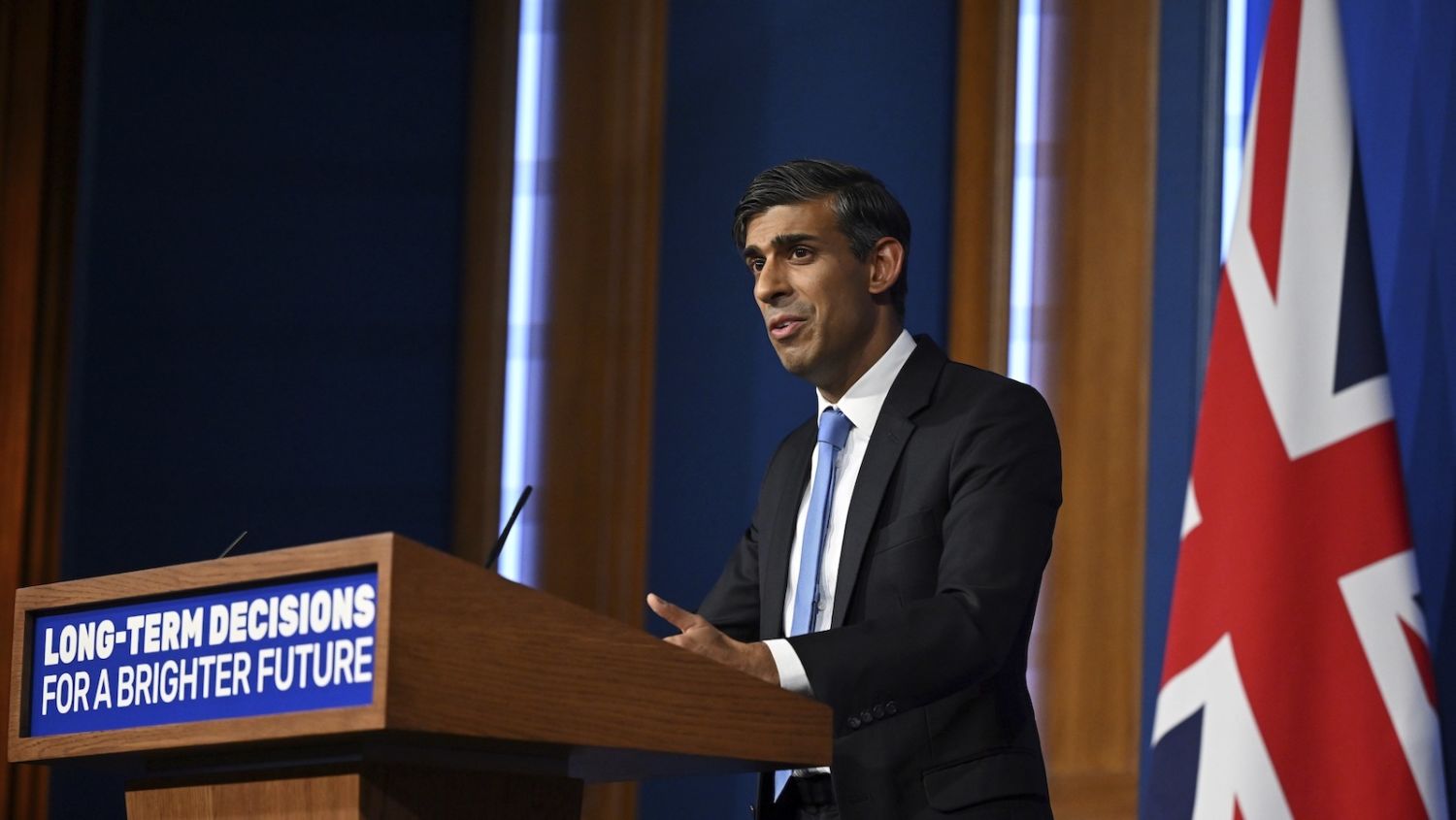
Prime Minister Rishi Sunak announcing last month that the U.K. will delay the phaseout of gasoline and diesel cars. JUSTIN TALLIS / POOL VIA AP
While Britain has long been a leader in cutting emissions, Prime Minister Rishi Sunak is now implementing a stunning reversal of climate-friendly policies, with new plans to “max out” oil production. Business leaders have joined environmentalists in condemning the moves.
In 1988, British Prime Minister Margaret Thatcher became the first world leader to take a stand on fighting climate change. Last month, exactly a quarter-century later, her successor Rishi Sunak tore up a cross-party consensus on the issue that had survived the intervening eight general elections and replaced it with a populist assault on what had been his own government’s environmental policies.
Thatcher, who trained as a chemist before entering politics, took her stand at a packed meeting of the country’s most prestigious science body, the Royal Society, on September 27, 1988. She told the assembly that “we are creating a global heat trap which could lead to climate instability” and promised action to curb global warming and achieve “stable prosperity”.
The Amazon River fell to its lowest level in over a century on Monday at the heart of the Brazilian rainforest as a record drought upends the lives of hundreds of thousands of people and damages the jungle ecosystem.
Brokering for the environment for the G77, the biggest negotiating bloc of low-income countries, comes with both challenges and triumphs, says the Filipino lawyer. He shares what it is like to spend sleepless nights at the climate meetings, ahead of COP28.
Vicente Paolo Yu III, known by his nickname Vice, at COP24 in Katowice, Poland in 2018. Image: Vice Yu
It is 12 midnight on the last Saturday before the conclusion of the world’s biggest climate summit.
The Conference of the Parties (COP) to the United Nations Framework Convention on Climate Change (UNFCCC) are two-week gatherings that have been held yearly for almost three decades in a bid to make major resolutions to combat worsening impacts of global warming.
The crowd of delegates from nearly 200 countries, dozens of world leaders and hundreds of the biggest companies and nonprofits has dissipated. At the venue, negotiators, however, are huddling in a room to grapple with the final wording of text that could potentially shift the discourse on climate change for the long term. Most of them have not eaten a proper meal, and are surviving on energy bars and the water served for free at the venue.
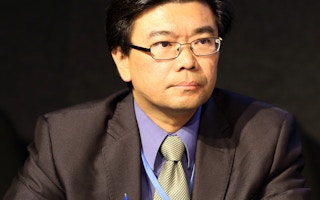
This is a typical scene into the last hours at the COPs, said Vicente Paolo Yu III, coordinator for the biggest negotiating bloc of low-income countries at the conference, the Group of 77 (G77) and China. The Asian superpower is not classified a developed country under international standards and has provided consistent support to the G77 on climate issues.
Residents of Myanmar’s flood-hit Bago city navigate the city’s submerged streets, salvaging food and belongings from their waterlogged homes, after record rainfall triggered floods that authorities said have displaced 14,000 people. “My house is flooded. This is the first time my house has been flooded in my life,” says Phwar Than Hme, a 101-year-old resident of Bago.
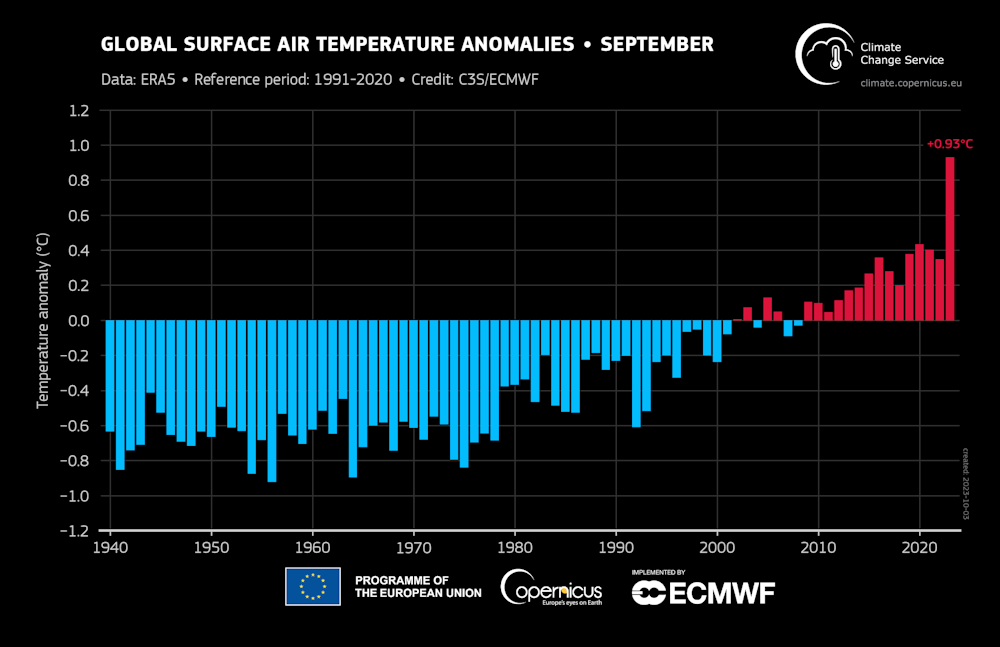
The world is very warm right now. We’re not only seeing record temperatures, but the records are being broken by record-wide margins.
Take the preliminary September global-average temperature anomaly of 1.7°C above pre-industrial levels, for example. It’s an incredible 0.5°C above the previous record.
The preliminary September global temperature is well above every previous value in the instrumental record. Copernicus
So why is the world so incredibly hot right now? And what does it mean for keeping our Paris Agreement targets?
Here are six contributing factors – with climate change the main reason temperatures are so high.
1. El Niño
One reason for the exceptional heat is we are in a significant El Niño that is still strengthening. During El Niño we see warming of the surface ocean over much of the tropical Pacific. This warming, and the effects of El Niño in other parts of the world, raises global average temperatures by about 0.1 to 0.2°C.
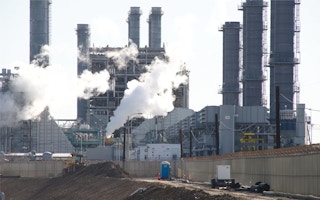
Led by China and Southeast Asia, new oil and gas facilities are being developed that will make decarbonisation harder to achieve.
Almost three-quarters of new oil and gas capacity is being built in Asia, with one-fifth of global supply under development in China. Image: Jon Sullivan, CC BY-NC 2.0
Record growth in solar power capacity and electric car sales are in line with a pathway towards net zero emissions globally by mid-century, as are industry plans for the roll-out of new manufacturing capacity for them. This is significant, since those two technologies alone deliver one-third of the emissions reductions between today and 2030 in the pathway.
Clean energy innovation has also been delivering more options and lowering technology costs. In the IEA’s original Roadmap in 2021, technologies not yet available on the market delivered nearly half of the emissions reductions needed for net zero in 2050. That number has now fallen to around 35% in this year’s update.
Extreme heat and flooding could erase $65bn in apparel export earnings from four Asian countries by 2030 as it jeopardises the health of the workers, new research has revealed.
The slow growth from extreme climate conditions will also result in one million fewer jobs being created, found the study by Cornell University and Schroders.
The research mapped out the climate vulnerability of 32 apparel production hubs of six global brands in Bangladesh, Cambodia, Pakistan and Vietnam. It found flooding and heat pose material risks to entire fashion industry, leading to a 22 per cent decline in export earnings.
These projections are expected to rise significantly by 2050, representing about 69 per cent in foregone export earnings and 8.64 million fewer jobs, warned the researchers.
But brands, investors or regulators are not prioritising in planning for these risks in the countries that collectively represent 18 per cent of global apparel export due to the industry’s focus on mitigation rather than adaptation measures, said the study.
September 11, 202311:48 PM GMT+7Updated 9 days ago
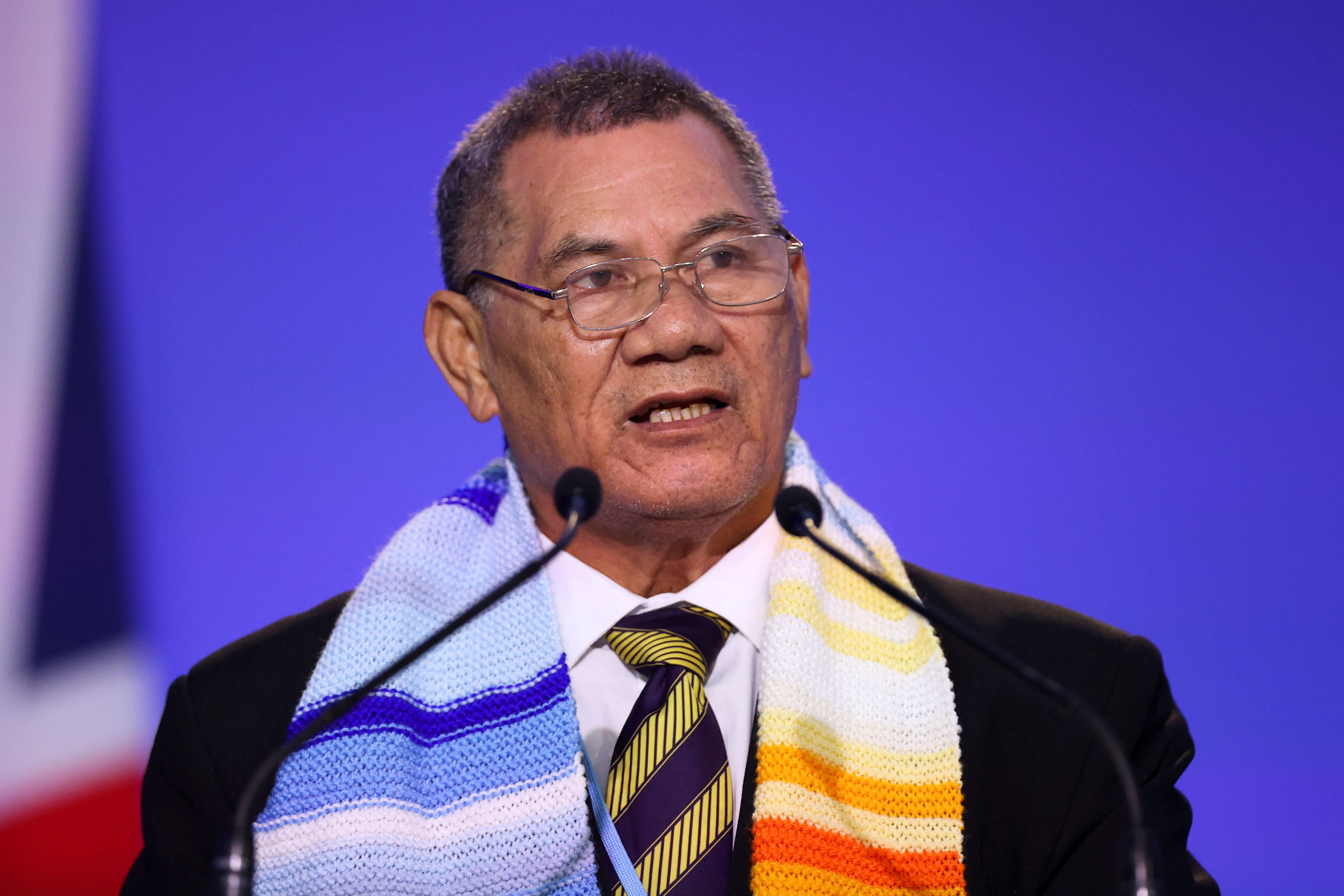
Sept 11 (Reuters) – The prime ministers of two small island nations that face ongoing impacts from rising sea levels appeared at legal hearings at an international court in Germany on Monday, and seek an advisory opinion on the obligations of countries to combat climate change.
Prime Ministers Kausea Natano of Tuvalu and Gaston Browne of Antigua and Barbuda gave evidence at the International Tribunal for the Law of the Sea, which will consider whether carbon emissions absorbed by the ocean should be considered marine pollution, and what obligations nations have to protect the marine environment.
In addition to the small island states, countries including Germany, France, Saudi Arabia and Australia will speak at hearing sessions scheduled until September 25.
The tribunal will then issue an advisory opinion, which is not legally binding, but offers an authoritative statement on legal matters that could guide countries as they craft climate protection law.
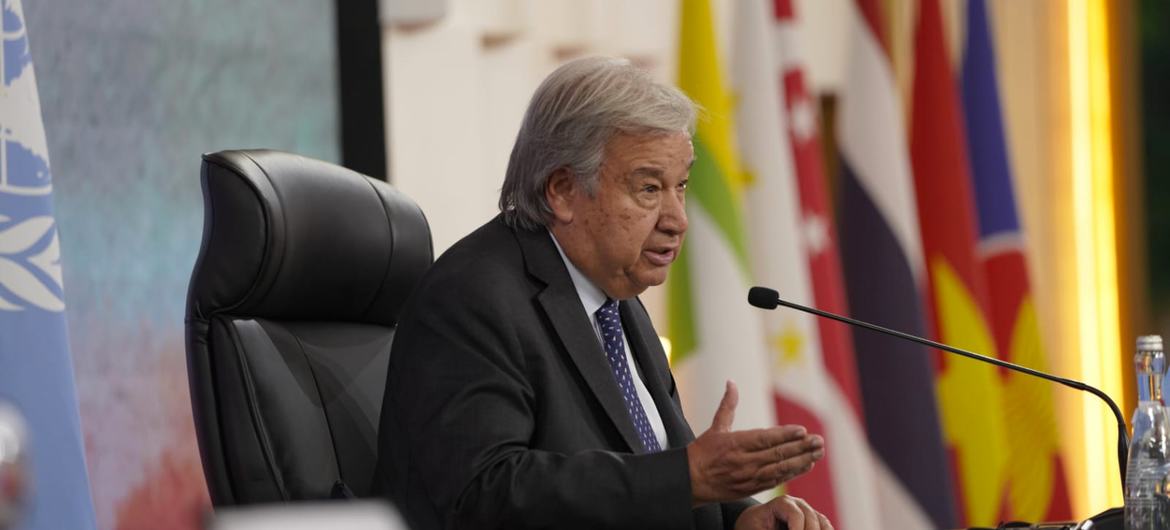
Amid rising geopolitical tension, Southeast Asia is fulfilling a “vital role in building bridges of understanding” worldwide said the UN chief on Thursday.
António Guterres was speaking in Jakarta, Indonesia, at the opening of the ASEAN-United Nations Summit, addressing Member States of the Association of Southeast Asian Nations and declaring “our partnership is more important than ever.”

 CVD
CVD 