British research ship crosses paths with world’s largest iceberg as it drifts out of Antarctica

APnews.com BY SYLVIA HUIUpdated 4:23 PM GMT+7, December 5, 2023

Britain’s polar research ship RRS Sir David Attenborough has crossed paths with the world’s largest iceberg as it was drifting out of Antarctic waters. (Dec. 5)Photos

BY SYLVIA HUIUpdated 4:23 PM GMT+7, December 5, 2023Share

LONDON (AP) — Britain’s polar research ship has crossed paths with the largest iceberg in the world — a “lucky” encounter that enabled scientists to collect seawater samples around the colossal berg as it drifts out of Antarctic waters, the British Antarctic Survey said Monday.

The RRS Sir David Attenborough, which is on its way to Antarctica for its first scientific mission, passed the mega iceberg known as the A23a on Friday near the tip of the Antarctic Peninsula.

Tiếp tục đọc “British research ship crosses paths with world’s largest iceberg as it drifts out of Antarctica”

History fades as rising sea levels slowly destroy Thailand’s temple murals

theguardian.com Saltwater damage could see precious historical Buddhist artworks dating back hundreds of years slowly fade entirely from view

by Rebecca Ratcliffe and Navaon Siradapuvadol in NonthaburiWed 29 Nov 2023 02.37 GMT

If you look closely, you can just about see the characters and scenes that once stretched across the walls of Wat Prasat, a temple in Nonthaburi. There’s the dark shape of an elephant’s head, a figure slouching on its back; outlines of swords pointing upwards to the centre of the display; patches of curved roofs.

“The mural used to be more vivid,” says Phra Maha Natee, the abbot of Wat Prasat. Even when he was a novice monk, 20 years ago, the image – which shows one of the jātakas stories that recall the Buddha’s past lives – was easier to understand. “The colour was brighter and sharper,” he says.

The murals offer a glimpse into a past era – a time of prosperity but also social upheaval, when a more empowered nobility had emerged, as did a desire, say historians, for Buddhism to play a more stronger role in reinforcing discipline in society. They date back to the mid or later years of the Ayutthaya kingdom in Siam, which existed from 1351 to 1767, in what is now Thailand and are a treasured early example of the art form.

Tiếp tục đọc “History fades as rising sea levels slowly destroy Thailand’s temple murals”

COP28 climate summit just approved a ‘loss and damage’ fund. What does this mean?

theconversation.com Published: December 1, 2023 2.24am GMT

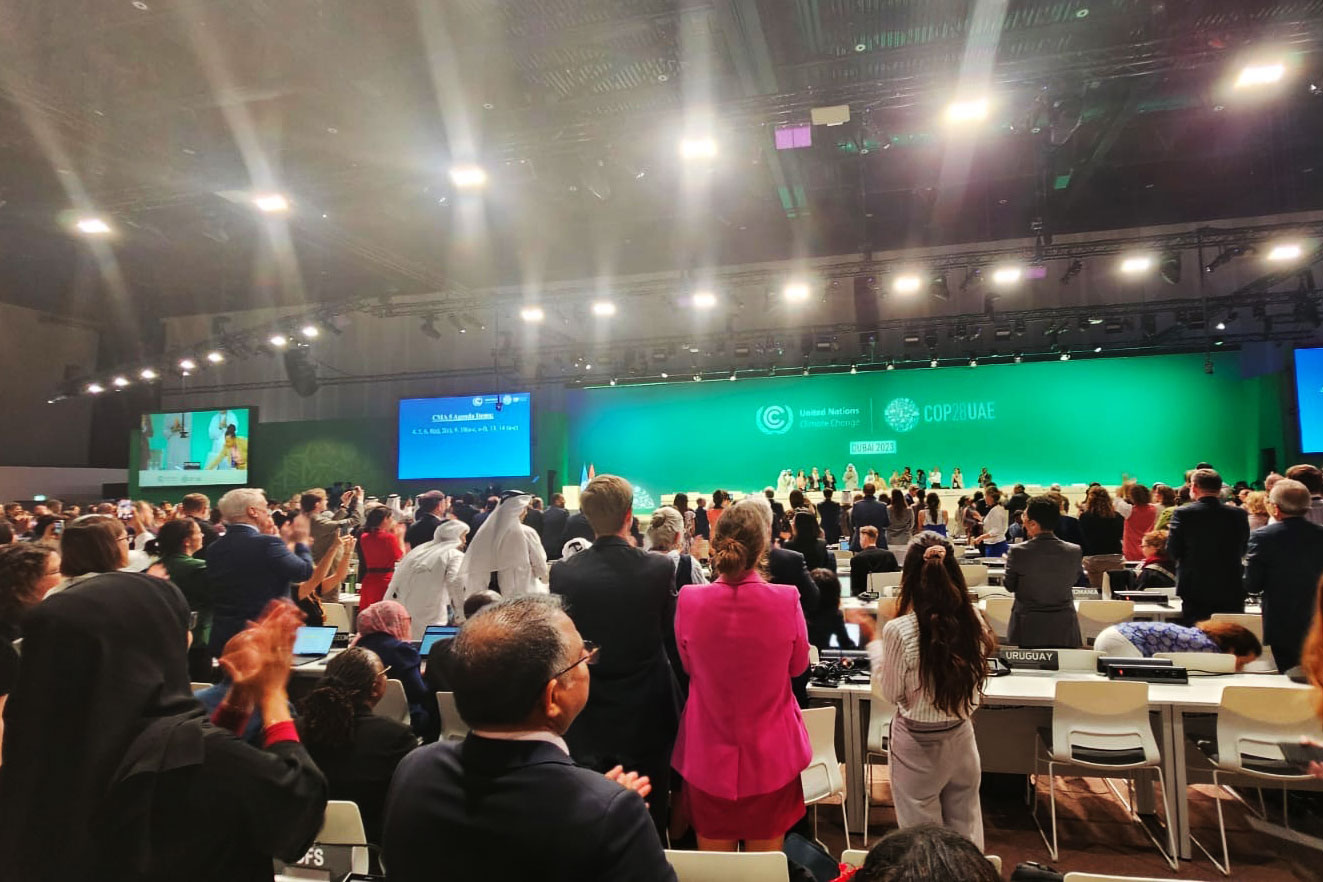
Day one of the COP28 climate summit saw the first big breakthrough: agreement on a “loss and damage” fund to compensate poor states for the effects of climate change.

Met with a standing ovation in Dubai, the agreement means wealthy states and major polluters will put millions of dollars towards a fund that will in turn distribute funds to poor states harmed by climate change. The fund will be administered by the World Bank. Initial commitments amount to US$430 million.

It will come as a huge relief to the United Arab Emirates, the summit’s host. The country was under pressure even before talks began about its fossil fuel expansion plans and the fact the president of the climate talks is chief executive of a national oil company. This undoubtedly featured in the UAE’s decision to commit US$100 million to the fund.

Other countries to make initial commitments to the fund include the United Kingdom ($75 million), United States ($24.5 million), Japan ($10 million) and Germany (also US$100 million). Pressure will now build on other wealthy countries, including Australia, to outline their own commitments to the fund.

Tiếp tục đọc “COP28 climate summit just approved a ‘loss and damage’ fund. What does this mean?”

COP28: four key issues that will dominate the latest UN climate summit

theconversation.com Published: November 29, 2023 4.56pm GMT

The United Nations Environment Programme recently published a report with an unusually strong title for a UN body: “Emissions Gap Report 2023: Broken Record – Temperatures hit new highs, yet world fails to cut emissions (again)”. Yet again, it highlights how far countries are off track from safeguarding the planet – and us.

As the world gathers in the United Arab Emirates for the annual UN climate change conference (or, more formally, Conference of the Parties, COP), the stakes are as high as ever. The head of the UN climate change secretariat Simon Stiell has urged for this meeting – COP28 – to be a “turning point.”

Can this COP deliver on that goal? Perhaps.

As an academic focused on international climate governance, I’ve seen how trust is vital for an ambitious outcome. Delegates negotiate all night. They trade off issues against another. And at the end of the long summit, negotiators and ministers rely on each other to uphold bargains made over hundreds of hours of talks. But, though COP28 will be my 11th climate COP, I’ve never seen trust so low among countries.

Tiếp tục đọc “COP28: four key issues that will dominate the latest UN climate summit”

Most sponsors of Cop28 have not signed up to UN-backed net zero targets

theguardian.com

Firms including Bank of America have made no commitment to cut emissions in line with target system, analysis finds

Sandra Laville Environment correspondentWed 29 Nov 2023 06.00 GMT

Most companies sponsoring the UN climate talks in Dubai are not committed to cutting their greenhouse gas emissions in line with globally recognised net zero targets, it has been revealed.

Only one of the more than 20 sponsors of Cop28 has signed up to UN-backed net zero science-based targets, (SBTi), according to an analysis.

Most of the corporate sponsors, which include the oilfield services company Baker Hughes as well as Bank of America, have made no commitment to reduce emissions to net zero in any time period under the target system.

The global accountancy firm EY, formerly Ernst and Young, which has been hired as the independent verifier of the climate record of all the sponsors, has also not set targets with the net zero scheme.

The targets are recognised as one of the leading voluntary global validations of a company’s commitment to tackling global heating.

The targets are clearly defined science-based pathways for companies and financial institutions to reduce greenhouse gas emissions, and they are reviewed and validated by the SBTi.

Six firms sponsoring the Dubai climate talks, which begin on 30 November, including EY, have made a commitment to set net zero targets, by registering with the scheme. This requires them to submit their plans for validation within 24 months.

Tiếp tục đọc “Most sponsors of Cop28 have not signed up to UN-backed net zero targets”

What drought in the Amazon means for the planet

washingtonpost.com By Nicolás Rivero November 10, 2023 at 6:30 a.m. EST

View of an area affected by severe drought in the Rio Negro, Amazonas, Brazil, on Oct. 28. (Andre Coelho/EPA-EFE/Shutterstock)

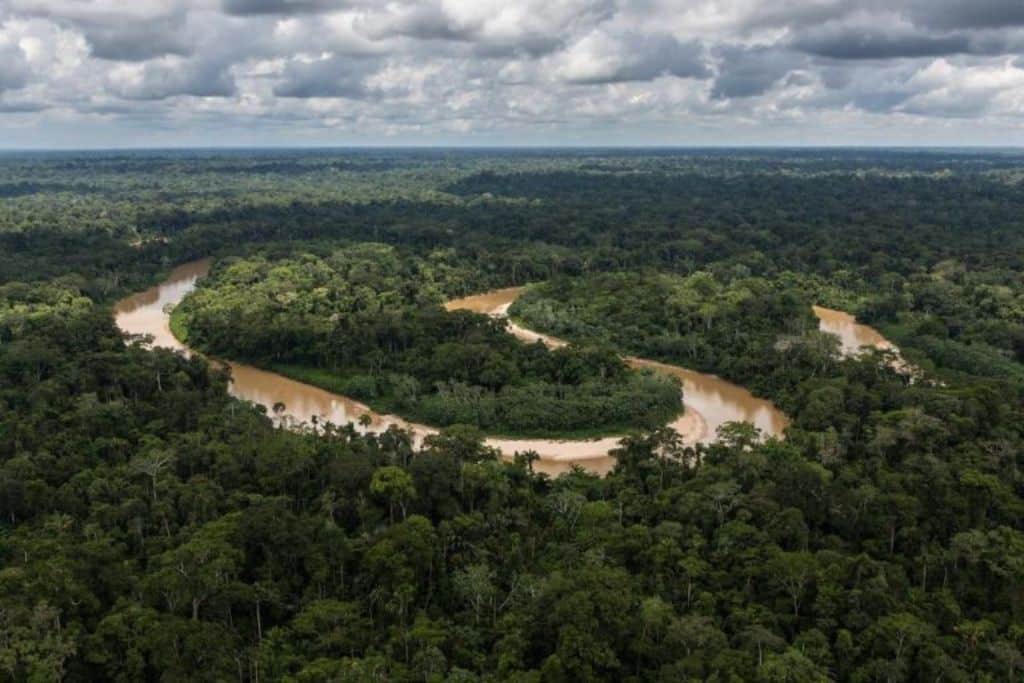
The Amazon — the lush, tropical basin that holds the world’s biggest river, rainforest and a fifth of its fresh water — is running dry.

The region is entering its fifth month of a drought that has been particularly punishing in the northern reaches of the rainforest, in the region around the city of Manaus. The Rio Negro, a northern Amazon tributary, fell to the lowest levels in its recorded history last month. Wildfires have advanced where waterways have retreated.

Tiếp tục đọc “What drought in the Amazon means for the planet”

A moment of truth for the oil and gas industry

Climate change and clean energy confront oil and gas producers with profound choices

Full report here

Oil and gas producers face pivotal choices about their role in the global energy system amid a worsening climate crisis fuelled in large part by their core products, according to our major new special report.

The Oil and Gas Industry in Net Zero Transitions finds that the oil and gas sector – which provides more than half of global energy supply and employs nearly 12 million workers worldwide – has been a marginal force at best in transitioning to an energy system with net zero emissions, accounting for just 1% of clean energy investment globally.

The report shows how the industry can take a more responsible approach and contribute positively to the new energy economy, highlighting that the UN’s COP28 climate summit in Dubai is “a moment of truth” for the oil and gas sector.To start, all oil and gas companies should commit to tackling emissions from their own operations, according to the report. These emissions need to decline by 60% by 2030 to align with the Paris Agreement goal of limiting global warming to 1.5 °C. Companies also need to dramatically change how they allocate their financial resources. In 2022, clean energy investments accounted for a mere 2.5% of the industry’s total capital spending. The report finds that producers looking to align with the aims of the Paris Agreement would need to put 50% of capital expenditures towards clean energy projects by 2030.What’s more, companies must abandon the notion that they can continue with business as usual simply by ramping up the deployment of carbon capture technologies.

The report finds that if oil and gas consumption were to evolve as projected under today’s policy settings, limiting warming to 1.5 °C would require an entirely inconceivable 32 billion tonnes of carbon capture by 2050, with annual investment rising from $4 billion last year to $3.5 trillion.Opportunities lie ahead despite these challenges, however. Nearly a third of the energy consumed in 2050 in a decarbonised energy system comes from technologies that could benefit from the oil and gas industry’s skills and resources, including hydrogen, offshore wind and liquid biofuels.

Lizards, fish and other species are evolving with climate change, but not fast enough

theconversation.com

Climate change is threatening the survival of plants and animals around the globe as temperatures rise and habitats change.

Some species have been able to meet the challenge with rapid evolutionary adaptation and other changes in behavior or physiology. Dark-colored dragonflies are getting paler in order to reduce the amount of heat they absorb from the sun. Mustard plants are flowering earlier to take advantage of earlier snowmelt. Lizards are becoming more cold-tolerant to handle the extreme variability of our new climate.

However, scientific studies show that climate change is occurring much faster than species are changing.

A tiny, royal blue fish with gold stripes looks into the camera. The downward slant of its mouth and shadow at the top of its eye give it an annoyed look.
Zebrafish have evolved to thrive in water a degree or so warmer than normal, but they struggle to survive at higher temperatures. isoft/E+ Getty Images

What is evolutionary adaptation?

Tiếp tục đọc “Lizards, fish and other species are evolving with climate change, but not fast enough”

Vietnam will struggle to meet 2030 offshore wind goal, top official says

Reuters.com

HANOI, Nov 9 (Reuters) – Vietnam will have a hard time reaching its offshore wind power target for 2030, a top executive at a state-owned energy company said, with foreign investors also warning of multiple regulatory hurdles that would need to be cleared.

The Southeast Asian country has good offshore wind power potential given strong winds and shallow waters near densely populated areas, according to the World Bank, which estimates the sector could add at least $50 billion to Vietnam’s economy.

Offshore wind is also a priority for Group of Seven (G7) members that have promised funds to boost the country’s renewable energy sources and reduce its reliance on coal.

Tiếp tục đọc “Vietnam will struggle to meet 2030 offshore wind goal, top official says”

Thailand’s forest communities fall victim to country’s climate promises

devex.com

Greenhouse gas emissions can be offset by carbon sinks such as forests, but expanding these areas can put Indigenous communities, reliant on the forests, at risk.

By Rebecca L. Root // 11 October 2023

Khao Sok rainforest in Thailand. Photo by: Sebastian Kautz / Alamy

From Khao Sok National Park in the southwest to Phu Chi Fa Forest Park in the north, forests cover around 30% of Thailand’s total area. Approximately 23 million people live near or in these lush green landscapes, depending on them for sustenance and livelihoods. But that’s now at risk, due to both climate change-related threats and the policies implemented to protect the forests.

Warangkana Rattanarat, Thailand country director for The Center for People and Forests, warned that the arrival of El Niño earlier this year has caused long droughts and less rain, damaging crops and other forest resources. This has affected the availability of food, as well as the income local people can derive from forest resources, she added.

The country has also experienced floods and the highest temperatures on record this year, impacting forests and the communities within them. In the GermanWatch Global Climate Risk Index 2021, Thailand ranked at number nine globally for long-term climate risks.

Additionally, there are land and tenure rights issues for Indigenous forest communities to contend with, and national climate commitments that have the potential to negatively impact such communities, said experts.

Tiếp tục đọc “Thailand’s forest communities fall victim to country’s climate promises”

The Interdependence of Climate Security and Good Governance: A Case Study from Pakistan

Climateandsecurity.org

By Ameera Adil and Faraz Haider

Last year, Pakistan faced the most devastating floods in the history of the country, which is notable because the country lies on a geographical floodplain. The Indus is an ancient and powerful river. The floodplain of the river covers nearly half of Pakistan, where most of the country’s population resides. When the Indus breathes, as rivers do, the lives and livelihoods on the floodplains are quietly absorbed by the water. 

Climate change had a significant role to play in the 2022 floods. The affected areas received 900mm of rainfall between June to August, which is nearly 350 percent more than the long-term average. Tiếp tục đọc “The Interdependence of Climate Security and Good Governance: A Case Study from Pakistan”

Progress on the Sustainable Development Goals: The gender snapshot 2023

UNwomen.org Publication year: 2023

This publication is the latest instalment in the annual series jointly produced by UN Women and UN DESA. The report provides a comprehensive analysis of gender equality progress across all 17 Sustainable Development Goals (SDGs).

Halfway to the end point of the 2030 Agenda for Sustainable Development, the world is failing to achieve gender equality, making it an increasingly distant goal. If current trends continue, more than 340 million women and girls will still live in extreme poverty by 2030, and close to one in four will experience moderate or severe food insecurity. Growing vulnerability brought on by human-induced climate change is likely to worsen this outlook, as many as 236 million more women and girls will be food-insecure under a worst-case climate scenario.

The gender gap in power and leadership positions remains entrenched, and, at the current rate of progress, the next generation of women will still spend on average 2.3 more hours per day on unpaid care and domestic work than men. No country is within reach of eradicating intimate partner violence, and women’s share of workplace management positions will remain below parity even by 2050. Fair progress has been made in girls’ education, but completion rates remain below the universal mark.

With the clock ticking, urgency mounts.

This report advocates for an integrated, holistic approach to advancing gender equality, involving multistakeholder collaboration and sustained financial backing. Neglecting to amplify efforts and invest in gender parity jeopardizes the entire 2030 Agenda for Sustainable Development.

Additional documents

Climate Change History – PM of the UK, Margaret Thatcher – Speech to UN (Nov. 8, 1989)

Prime Minister of the UK, Margaret Thatcher studied chemistry at Oxford, and worked briefly as a research chemist before becoming a barrister

Mr President, it gives me great pleasure to return to the Podium of this assembly. When I last spoke here four years ago, on the 40th anniversary of the United Nations, the message that I and others like me gave was one of encouragement to the organisation to play the great role allotted to it.

Of all the challenges faced by the world community in those four years, one has grown clearer than any other in both urgency and importance—I refer to the threat to our global environment. I shall take the opportunity of addressing the general assembly to speak on that subject alone.

INTRODUCTION

Tiếp tục đọc “Climate Change History – PM of the UK, Margaret Thatcher – Speech to UN (Nov. 8, 1989)”

Why Is Britain Retreating from Global Leadership on Climate Action?

Yale Environment 360

Prime Minister Rishi Sunak announcing last month that the U.K. will delay the phaseout of gasoline and diesel cars.
Prime Minister Rishi Sunak announcing last month that the U.K. will delay the phaseout of gasoline and diesel cars. JUSTIN TALLIS / POOL VIA AP

While Britain has long been a leader in cutting emissions, Prime Minister Rishi Sunak is now implementing a stunning reversal of climate-friendly policies, with new plans to “max out” oil production. Business leaders have joined environmentalists in condemning the moves.

BY FRED PEARCE • OCTOBER 17, 2023

In 1988, British Prime Minister Margaret Thatcher became the first world leader to take a stand on fighting climate change. Last month, exactly a quarter-century later, her successor Rishi Sunak tore up a cross-party consensus on the issue that had survived the intervening eight general elections and replaced it with a populist assault on what had been his own government’s environmental policies.

Thatcher, who trained as a chemist before entering politics, took her stand at a packed meeting of the country’s most prestigious science body, the Royal Society, on September 27, 1988. She told the assembly that “we are creating a global heat trap which could lead to climate instability” and promised action to curb global warming and achieve “stable prosperity”.

Tiếp tục đọc “Why Is Britain Retreating from Global Leadership on Climate Action?”