A groundbreaking new report, “Resilience, Readiness, and Response,” from Project CASA (Climate and Security Action through Civil-Military Cooperation in Climate-Related Emergencies) highlights the increasing and essential role of national militaries in addressing the escalating global climate crisis.
The report is the result of a comprehensive two-year study which provides the first cross-national dataset on military involvement in climate disasters. Edited by Ronald A. Kingham and Dr. Ashley McIlvain Moran and published by the Environment & Development Resource Centre (EDRC), the report serves as both a critical resource and a call to action for policymakers and practitioners grappling with climate-worsened disasters.
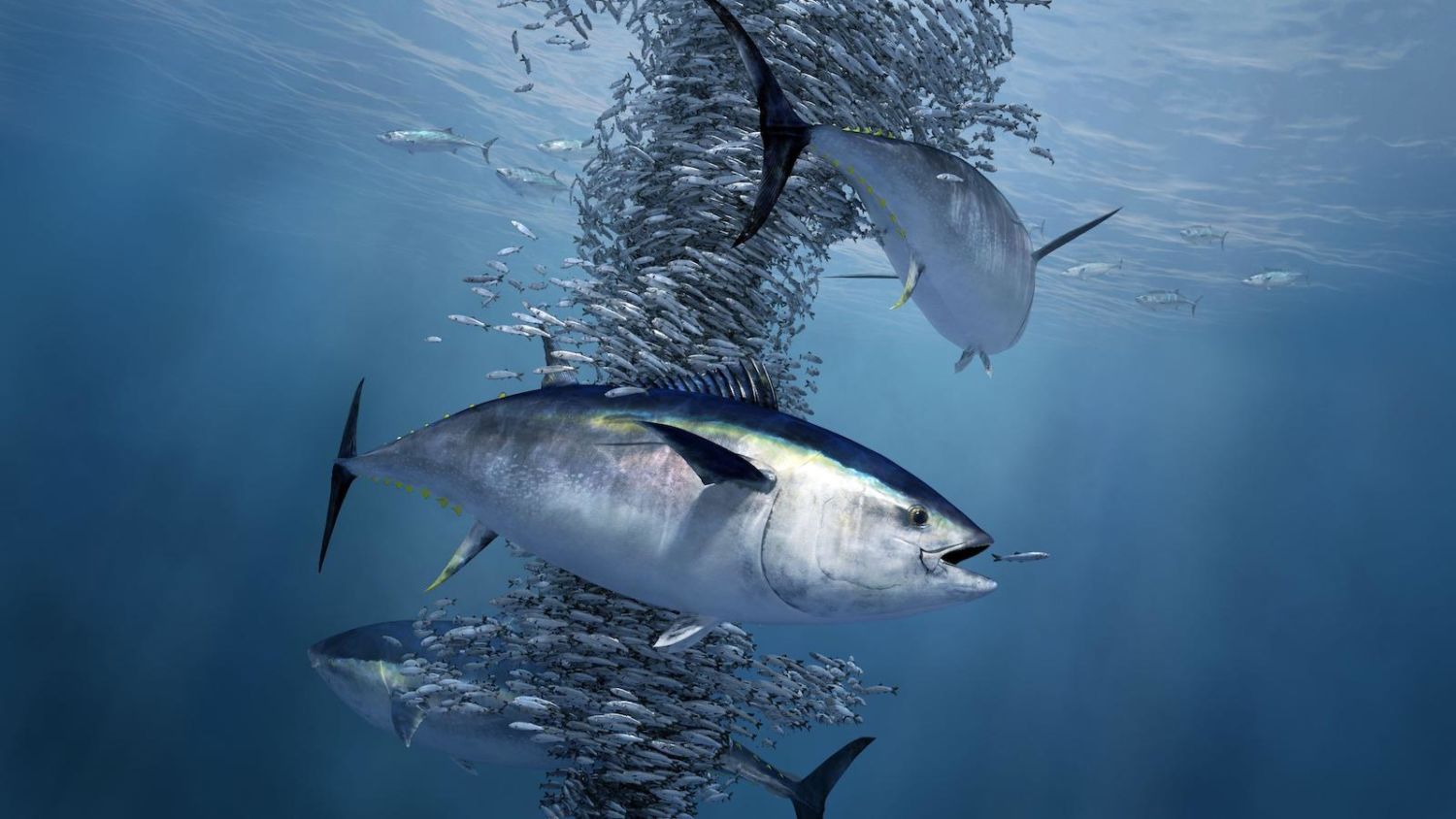
Atlantic bluefin tuna, shown feeding on a school of herring, have been driven into narrower layers of water by oxygen declines. MARKO STEFFENSEN / ALAMY STOCK PHOTO
Global warming not only increases ocean temperatures, it triggers a cascade of effects that are stripping the seas of oxygen. Fish are already moving to new waters in search of oxygen, and scientists are warning of the long-term threat to fish species and marine ecosystems.
Off the coast of southeastern China, one particular fish species is booming: the oddly named Bombay duck, a long, slim fish with a distinctive, gaping jaw and a texture like jelly. When research ships trawl the seafloor off that coast, they now catch upwards of 440 pounds of the gelatinous fish per hour — a more than tenfold increase over a decade ago. “It’s monstrous,” says University of British Columbia fisheries researcher Daniel Pauly of the explosion in numbers.
The reason for this mass invasion, says Pauly, is extremely low oxygen levels in these polluted waters. Fish species that can’t cope with less oxygen have fled, while the Bombay duck, part of a small subset of species that is physiologically better able to deal with less oxygen, has moved in.
The boom is making some people happy, since Bombay duck is perfectly edible. But the influx provides a peek at a bleak future for China and for the planet as a whole. As the atmosphere warms, oceans around the world are becoming ever more deprived of oxygen, forcing many species to migrate from their usual homes. Researchers expect many places to experience a decline in species diversity, ending up with just those few species that can cope with the harsher conditions. Lack of ecosystem diversity means lack of resilience. “Deoxygenation is a big problem,” Pauly summarizes.
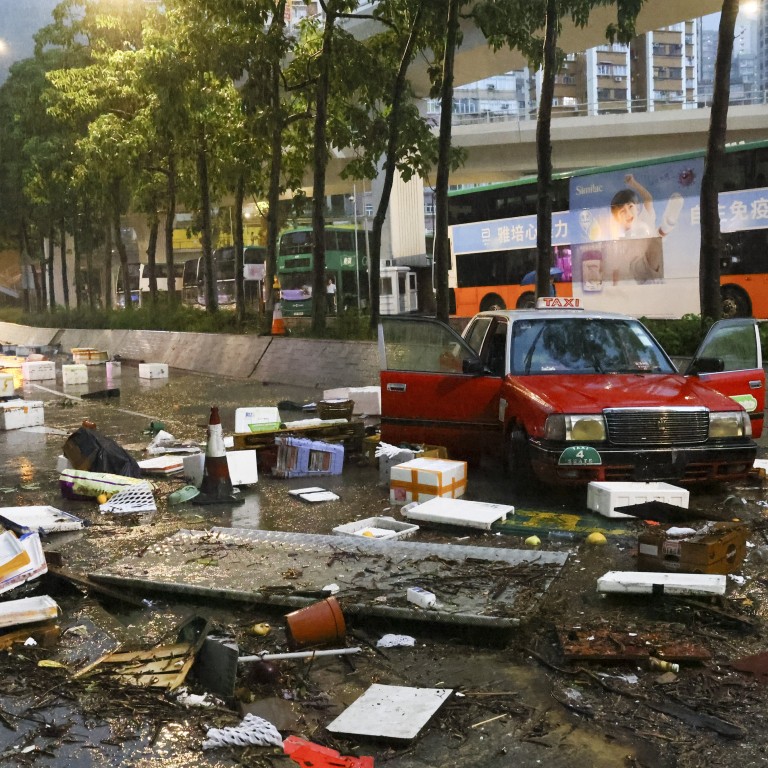
A Hong Kong road is strewn with debris, rubbish and an abandoned taxi as floodwaters recede. Photo: Dickson Lee
Hong Kong officials met the press at 2.30pm on Friday to provide details on efforts in handling the aftermath of the city’s worst downpour in more than a century amid mounting questions over a perceived lack of preparedness.
ADB president Takehiko Nakao speaks at the Food Security Forum in Manila. Credit: Diana G. Mendoza/IPS
ipsnews – MANILA, Jun 25 2016 (IPS) – Farming and agriculture may not seem cool to young people, but if they can learn the thrill of nurturing plants to produce food, and are provided with their favorite apps and communications software on agriculture, food insecurity will not be an issue, food and agriculture experts said during the Asian Development Bank (ADB)’s Food Security Forum from June 22 to 24 at the ADB headquarters here. Tiếp tục đọc “Can Better Technology Lure Asia’s Youth Back to Farming?”→
Rob Bailey Research Director, Energy, Environment and Resources
Antony FroggattSenior Research Fellow, Energy, Environment and Resources
Laura Wellesley Research Associate, Energy, Environment and Resources
chathamhouse– Human consumption of meat and dairy products is a major driver of climate change, but this new paper finds that there is a major lack of public awareness and understanding of the link between eating meat and dairy and climate change.
Consumption of meat and dairy produce is a major driver of climate change.
Greenhouse gas emissions from the livestock sector are estimated to account for 14.5 per cent of the global total, more than direct emissions from the transport sector.
Even with ambitious supply-side action to reduce the emissions intensity of livestock production, rising global demand for meat and dairy produce means emissions will continue to rise.
Shifting global demand for meat and dairy produce is central to achieving climate goals.
Recent analyses have shown that it is unlikely global temperature rises can be kept below two degrees Celsius without a shift in global meat and dairy consumption.
Reducing demand for animal products could also significantly reduce mitigation costs in non-agricultural sectors by increasing their available carbon budget.
chanelnewsasisa – A water crisis is developing in central and southern Vietnam as the region is hit by its worst drought in recent history. The United Nations says 1.5 million people face an acute shortage of drinking water.
KON TUM, Vietnam: Life has become harder for Ta Dinh Hao since the rains stopped earlier than usual last September.
The once teeming fish pond in front of his concrete house in Vietnam’s Central Highlands is now parched earth. His rice field has been dead for months and the cassava is struggling, but the 47-year-old farmer’s biggest worry is the dangerously low water level in his household well.
If the well dries up, he could afford to buy drinking water for another two or three months. “But after that, we won’t last,” he said with a sad smile.
Hao’s cassava is surviving but doing badly. (Photo: Tan Qiuyi)
asia.nikkei.com – The green revolution has done wonders for Asia. Yields for most crops, particularly the region’s main staple of rice, have doubled over recent decades. In the Lower Mekong Delta, considered to be Asia’s rice bowl, the new technologies and crop strains that the green revolution brought were a big success.
Rice production in the Lower Mekong countries of Cambodia, Laos, Myanmar and Vietnam soared 68% between 1980 and 1995. During the same period, average yields more than doubled from their levels in the 1960s to about 3.5 tons per hectare. Total land area planted with rice also increased by around 25% to 16.3 million hectares between 1996 and 2005.
By the end of 2013, however, the gains seemed to have leveled off. Between 2006 and 2013, average yield growth slowed to 22% across all of the Lower Mekong countries except Cambodia, as growth in rice production slid to 36%.
The slower trends in yield and production growth were not unique to the Lower Mekong. They also applied to the rest of Asia for various reasons. Chief among them is that green revolution technologies, particularly new rice seed varieties, had become exhausted. Poor land and water quality were also culprits in the drop-off, along with inadequate farm management practices and the rapid conversion of farmland to non-agricultural use. Eroding profit margins due to a decline in the price of rice on global markets exacted a heavy toll as well.
Low productivity
There is reason for alarm at the change. Agriculture still provides 10% of Asia’s value-added output and is an important source of employment as about 45% of jobs in Asia are in rural areas. With declining yields and production, this means that productivity, the value of output per worker, will decline further. Tiếp tục đọc “Reinvigorating agricultural productivity in the Lower Mekong”→
The poorest half of the global population are responsible for only around 10% of global emissions yet live overwhelmingly in the countries most vulnerable to climatechange – while the richest 10% of people in the world are responsible for around 50% of global emissions
—
Oxfam – Climate change is inextricably linked to economic inequality: it is a crisis that is driven by the greenhouse gas emissions of the ‘haves’ that hits the ‘have-nots’ the hardest. While COP21 in Paris will see a deal negotiated between governments on the basis of the total emissions produced in their territories, the real winners and losers will be their citizens. The true test of the deal will be whether it delivers something for the poorest people who are both the least responsible for and the most vulnerable to climate change, wherever they live.
In this briefing Oxfam presents new data analysis that demonstrates the extent of global carbon inequality by estimating and comparing the lifestyle consumption emissions of rich and poor citizens in different countries.
See also the technical briefing on the methodology and data sets. DOWNLOAD here
The following is an excerpt from the book Food Foolish.
GreenBiz – One-third or more of the food we produce each year is never eaten.
More than 1 billion metric tons of food is lost or wasted, never making it from the farm to our fork.
Often in developing countries it decays in fields before harvest or spoils while being transported. Some is lost in retail markets before consumers can buy it. Meanwhile, in developed countries people buy too much and then throw it away. They reject perfectly nutritious food that is cosmetically imperfect. Tiếp tục đọc “Food foolish: Waste, hunger and climate change”→
Rob Bailey Research Director, Energy, Environment and Resources
Tim Benton Professor of Population Ecology, University of Leeds
Taking smart and practical steps to ease the impact of the changing climate on food supplies is vital to ride out the droughts and storms that will impact food prices.
The US midwest was hit by its worst drought in over 50 years in 2012. Photo via Getty Images.
chathamhouse – Recent events highlight concerns about the risks to global food security posed by changing patterns of extreme weather affecting the world’s ‘breadbasket’ regions such as the American midwest, South America’s southern cone, the Black Sea and the Yangtze River valley. In 2012, the worst drought to hit the US midwest in half a century sent international maize and soybean prices to record levels. In 2011, wheat prices nearly doubled after an unprecedented heat wave devastated the Russian harvest. The global food price crisis of 2007-08 had its roots in a run of poor harvests in previous years.


 Print
Print


 CVD
CVD 