A coal-mine that powered German industry for almost half a century will get a new lease on life when it’s turned into a giant battery that stores excess solar and wind energy.
The state of North-Rhine Westphalia is set to turn its Prosper-Haniel hard coal mine into a 200-MW pumped storage hydroelectric reservoir, which acts like a battery and will have enough capacity to power more than 400,000 homes, said state governor Hannelore Kraft. The town of Bottrop, where people worked the 600 meter (1,969 foot) deep mine since 1974, will keep playing a role in providing uninterrupted power for the country, she said.
By Rob Verdonck +Follow18 December 2020, 11:14 GMT+7
Study examines turning coal operations into pumped hydro sites
Other projects aim to add wind, solar at shuttered mines
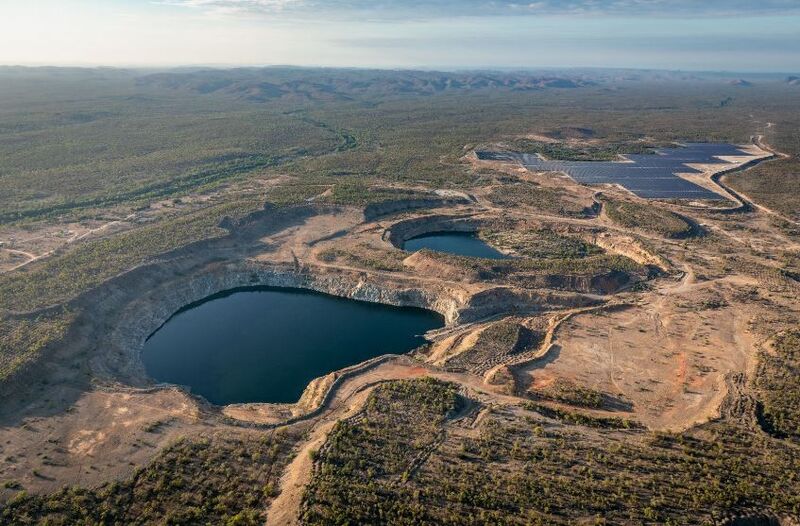
Genex Power’s 50-megawatt solar farm at the disused Kidston mine. Photographer: Genex
Australia is studying plans to transform a disused underground coal mine into a pumped hydro facility, part of a wider effort to reuse retiring fossil fuel sites for renewable energy generation.
“Nguyên tố Đất hiếm” là 17 nguyên tố hóa học với tên gọi lạ lùng và đặc điểm không bình thường. Số nguyên tử của chúng là từ 57-71, 21 và 39. Hai phân nhóm nhỏ hơn, một nhóm là hiếm hơn và vì thế có giá trị hơn nhóm còn lại, có đặc điểm hóa học tương tự, vì vậy chúng thường được tìm thấy và khai thác cùng nhau.
Mặc dù tên gọi là hiếm, đất hiếm không phải là chất hiếm về mặt địa lý nhưng được phân tán rộng khắp lớp vỏ trái đất. Tuy nhiên, đất hiếm được khai thác ở một vài nơi và bởi một vài công ty bởi vì chúng thường không xuất hiện tập trung một chỗ với lượng lớn. Hơn nữa khai thác mỏ ngày càng nhiều chi phí và rủi ro, thị trường đất hiếm trên thế giới không lớn (vài tỷ đô la một năm), dễ bay hơi, phức tạp và bị chi phối bởi Trung Quốc, nơi mà không phải tất cả các mỏ và xuất khẩu khoáng sản đều hợp pháp và minh bạch. Một chuyên gia kết luận rằng khoảng một nửa số đất hiếm được sản xuất trên toàn cầu năm 2015 không nằm trong thống kê chính thức. Tiếp tục đọc “Khủng hoảng kim loại đất hiếm: ngành năng lượng sạch đừng lo lắng”→
Motorists can charge their vehicles automatically in less than a minute with the battery-swapping system.
adb.org_Imagine you’re buying a car, and the manufacturer forces you to purchase not only the vehicle itself but also demanded you pay upfront for 10 years worth of fuel. About $25,000 for the car and another $50,000 for the gas. Would you still purchase the car? Absolutely not, unless the gasoline was given at a discount price, right?
Anyone shopping for an electric car could be forgiven for thinking that manufacturers are asking to pay upfront for future energy use. These vehicles are still on average about 35% more expensive than non-electric cars – despite gradually declining battery prices and the promise of practically zero maintenance fees. Tiếp tục đọc “Battery swapping can propel India’s electric car revolution”→
Foreignaffair – In the run-up to the Paris talks at the end of the year, governments are preparing their strategies to negotiate national emissions reduction targets. But elsewhere, a different battle is unfolding as firms and governments compete to try to capture the benefits of the rise of the new green economy. A wave of trade disputes in clean energy industries is one result. Since 2010, at least 11 such cases have been initiated. Trade cases in solar photovoltaics, in particular, have emerged as some of the most politically charged in recent history.
Trade disputes over subsidies and price dumping have the potential to stymie the deployment of low-carbon energy technologies by increasing their price relative to fossil fuels. And they are unnecessary; most arise out of the assumption that the clean energy race is a zero-sum game between competing national and regional economies. But that isn’t how green industries work, and government policy needs to catch up with the reality that domestic firms (and efforts to protect the environment) benefit from free trade in the clean energy industry.
Sprott Power Corporation’s Wind Asset Manager Peder Schlanbusch looks out from on top one of the 15 wind turbines which were officially opened in Amherst, Nova Scotia, June 25, 2012.
An EU-organised trade mission brought Europe’s leading cleantech companies to meet Southeast Asian firms, creating new growth opportunities and strengthening trade ties between both regions.
The EU Business Avenues 2015 trade mission brought 41 European cleantech, waste and water management, and pollution control companies to explore new opportunities in Singapore and Vietnam. Image: EU Business Avenues
European clean technology firms and their Southeast Asian counterparts spent a week exploring new collaborations and growth opportunities during a trade mission to Singapore and Vietnam – a move that is expected to strengthen trade ties between both regions.
Organised by the EU delegation to Singapore, the EU Business Avenues trade mission brought 41 small and medium enterprises (SMEs) from Europe’s energy efficiency, pollution, waste and water technology sectors to explore opportunities in Southeast Asia. Tiếp tục đọc “Firmer ties between EU and ASEAN on clean technology”→




 CVD
CVD 