Security and Economic Challenges for Taiwan in Cross-Strait Relations

Home » Security and Economic Challenges for Taiwan in Cross-Strait Relations
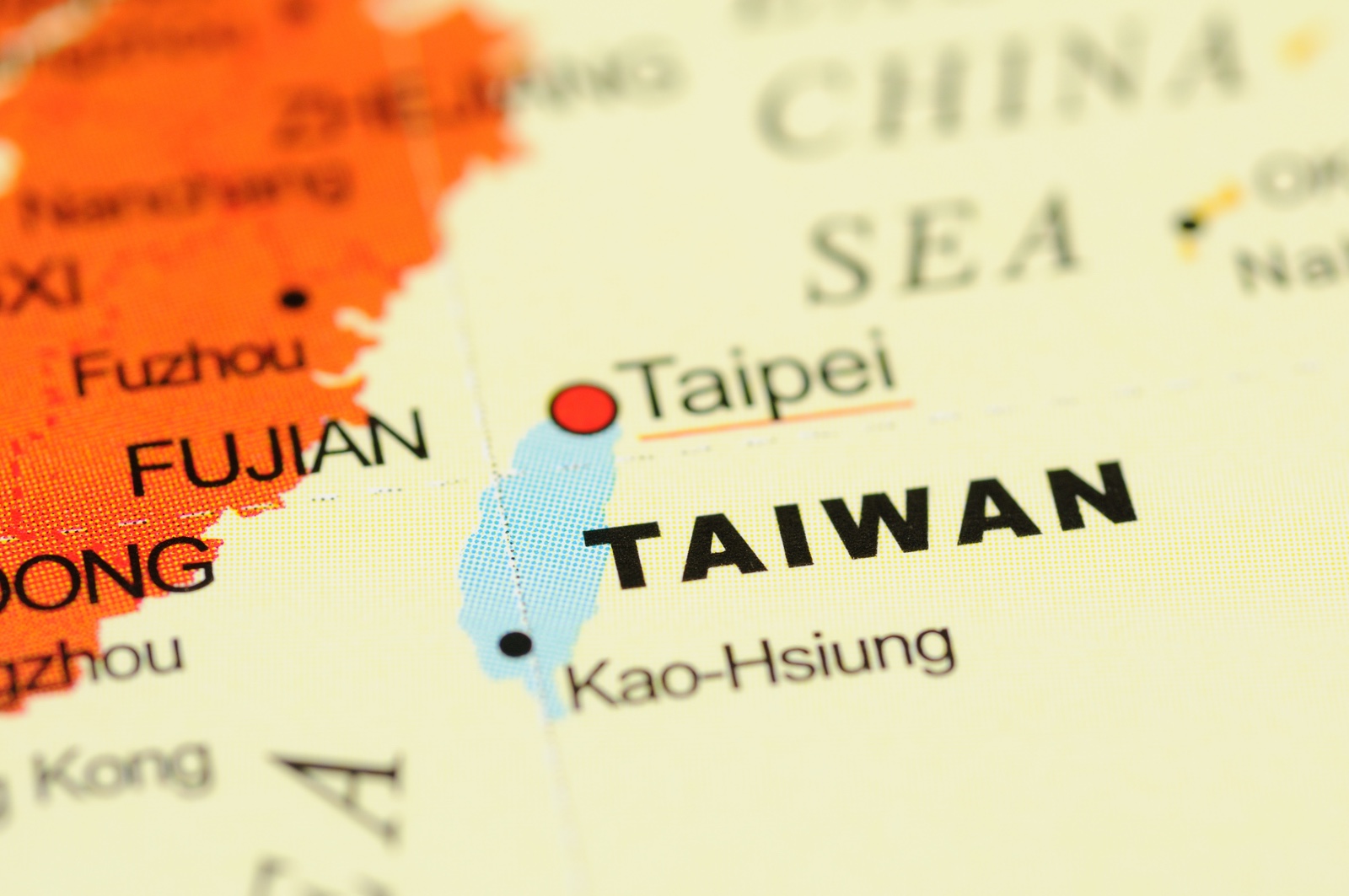
Taiwan

Security and Economic Challenges for Taiwan in Cross-Strait Relations

Chien-pin Li is Professor of Political Science and Dean of the College of Humanities and Social Sciences at Sam Houston State University. Before his current position, he taught at Kennesaw State University for 26 years, and was a founding member of the China Research Center. He received his Ph.D. in Political Science from the University of Iowa and was an Associate Research Fellow at Academia Sinica (Taipei, Taiwan), a Senior Fellow at the Atlantic Council of the United States (Washington, D.C.) and a Research Fellow at the Pacific Cultural Foundation (Taipei, Taiwan). His teaching and research interests focus on East Asian political economy, including trade disputes, trade negotiations, and regional integration. He is the author of Rising East Asia: The Quest for Governance, Prosperity, and Security (2020) and has published articles in Asian Survey, Pacific Review, Issues & Studies, International Studies Quarterly, and other journals. 

More articles by the Author »

Print Friendly, PDF & Email

The security and economic landscape in the Indo-Pacific is increasingly difficult to navigate. While trade agreements such as the Comprehensive and Progressive Agreement for Trans-Pacific Partnership, the successor to the Trans-Pacific Partnership or TPP, and the Regional Comprehensive Economic Partnership signal an interest to cooperate in a region full of economic vibrancy, competition and rivalry between great powers cast significant uncertainty over the peace and stability in the region. The paradoxical trends in economic and security affairs are particularly evident in cross-Strait relations between Taiwan and China.

Tiếp tục đọc “Security and Economic Challenges for Taiwan in Cross-Strait Relations”

China’s Threat of Force in the Taiwan Strait

By Raul “Pete” PedrozoTuesday, September 29, 2020, 9:16 AM lawfareblog

A view of Taiwan’s Kaohsiung Harbor, which faces the Taiwan Strait. (Flick/Formosa Wandering, https://flic.kr/p/9aCnHR; CC BY-NC 2.0, https://creativecommons.org/licenses/by-nc/2.0/)

Raul "Pete" Pedrozo

Captain Raul (Pete) Pedrozo, U.S. Navy (Ret.), is the Howard S. Levie Chair on the Law of Armed Conflict and Professor of International Law in the Stockton Center for International Law at the U.S. Naval War College. He was a Peer Reviewer for the International Committee of the Red Cross Commentary of 2017 on the Convention (II) for the Amelioration of the Condition of Wounded, Sick and Shipwrecked Members Of the Armed Forces at Sea (1949) and is currently one of two U.S. representative to the International Group of Experts for the San Remo Manual on the Law Applicable to Armed Conflicts at Sea, produced by the International Institute of Humanitarian Law. Prior to his retirement from the Navy he served as the senior legal advisor to Commander, U.S. Pacific Command and was a Special Assistant to the Under Secretary of Defense for Policy, Office of the Secretary of Defense. Pedrozo is co-author of the forthcoming, “Emerging Technology and the Law of the Sea” (Oxford University Press).

________

On Sept. 18 and 19, People’s Liberation Army combat aircraft on 40 occasions intentionally crossed the median line in the Taiwan Strait that separates mainland China from the island of Taiwan. Taiwan President Tsai Ing-wen immediately condemned the provocation as a “threat of force.”

The center line in the Taiwan Strait (also known as the median line, middle line or Davis Line, named after Brig. Gen. Benjamin Davis, commander of Task Force 13 in Taipei and famed commander of the World War II Tuskegee Airmen) has its origins in the 1954 U.S.-Taiwan Mutual Defense Treaty. The treaty was one link in the chain of U.S. collective defense arrangements in the Western Pacific—which included agreements with the Republic of the Philippines, Australia, New Zealand, Japan and the Republic of Korea—designed to resist further communist subversive activities directed against their territorial integrity and political stability. Pursuant to Article V of the Mutual Defense Treaty, an armed attack in the treaty area, which included Taiwan and the Pescadores (or Penghu) Islands, directed against the territory of either party would be considered a danger “to its own peace and safety” and each party “would act to meet the common danger in accordance with its constitutional processes.” An addendum to the treaty established a buffer zone into which U.S. aircraft were not allowed to enter.

Tiếp tục đọc “China’s Threat of Force in the Taiwan Strait”

Southeast Asians sticking with China on Taiwan: survey

asiatimesDemocracy Perception Index survey shows most Southeast Asians would not support cutting economic ties with China if it invades Taiwan

By DAVID HUTTJUNE 1, 2022Print

Military helicopters carrying large Taiwan flags do a flyby rehearsal on October 5, 2021, ahead of National Day celebrations amid escalating tensions between Taipei and Beijing. Photo: AFP / Ceng Shou Yi / NurPhoto

A recent Democracy Perception Index survey of worldwide public opinion found that a majority of Southeast Asians would not support their governments cutting economic ties with China if Beijing launched an invasion of Taiwan. 

The same report found that only Singaporeans, from the six Southeast Asian countries surveyed, favored cutting economic ties with Russia because of its invasion of Ukraine in February. Indonesians and Vietnamese were two of the three nationalities who believed most strongly that ties with Russia should be maintained.  

The Democracy Perception Index 2022 survey, published this month by Latana and the Alliance of Democracies Foundation, asked respondents: “If China started a military invasion of Taiwan, do you think your country should cut economic ties with China?” 

Tiếp tục đọc “Southeast Asians sticking with China on Taiwan: survey”

China threatens retaliation after new US arms sales to Taiwan

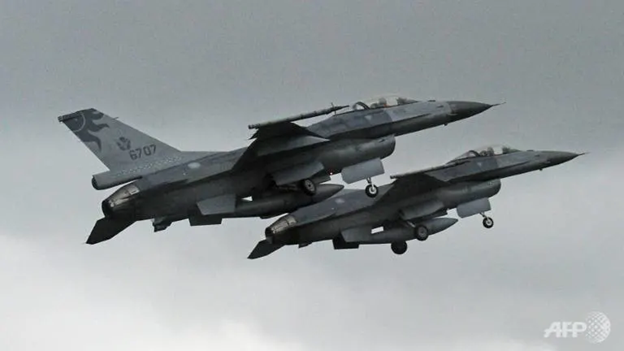
Two US-made Taiwanese F-16 fighter jets take-of from the Hualien air force base in Taiwan on January
File photo of two US-made Taiwanese F-16 fighter jets. (Photo: AFP/Sam Yeh)

22 Oct 2020 05:44PM

BEIJING: China threatened on Thursday (Oct 22) to retaliate against the latest US arms sale to Taiwan, as the island welcomed the weapons package but said it was not looking to get into an arms race with Beijing.

The Trump administration has ramped up support for Taiwan through arms sales and visits by senior US officials, adding to tensions between Beijing and Washington, already heightened by disagreements over the South China Sea, Hong Kong, human rights and trade.

Tiếp tục đọc “China threatens retaliation after new US arms sales to Taiwan”

CHINESE MILITARY BEEFS UP COASTAL FORCES AS IT PREPARES FOR POSSIBLE INVASION OF TAIWAN

SCMP

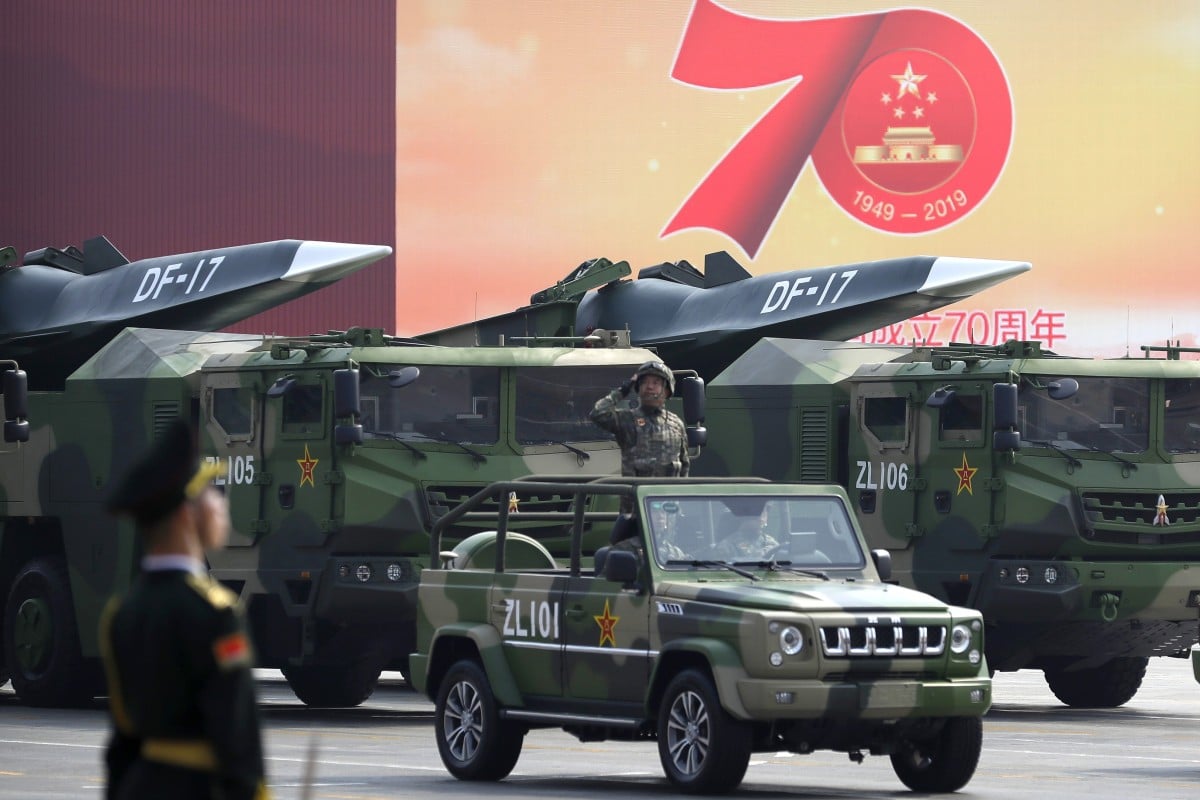
Missile bases have been upgraded and equipped with the most advanced hypersonic missile the DF-17, according to one military sourceBuild-up of forces comes as the PLA continues with a series of exercises designed to keep up the pressure on the island

Minnie Chan

Minnie Chan

Published: 8:06am, 18 Oct, 2020Why you can trust SCMP

Coastal rocket bases have been equipped with DF-17 ballistic missiles. Photo: AP

Coastal rocket bases have been equipped with DF-17 ballistic missiles. Photo: APBeijing is stepping up the militarisation of its southeast coast as it prepares for a possible invasion of Taiwan, military observers and sources have said.

The People’s Liberation Army has been upgrading its missile bases, and one Beijing-based military source said it has deployed its most advanced hypersonic missile the DF-17 to the area.

Tiếp tục đọc “CHINESE MILITARY BEEFS UP COASTAL FORCES AS IT PREPARES FOR POSSIBLE INVASION OF TAIWAN”

Taiwan says Chinese anti-submarine aircraft off its coast

Beijing regards Taiwan as its territory and has vowed to retake the island
Beijing regards Taiwan as its territory and has vowed to retake the island AFP/Daniel SHIH

17 Sep 2020 09:03AM CNA

TAIPEI: Two Chinese anti-submarine aircraft flew into Taiwan’s air defence identification zone on Wednesday (Sep 16) and were warned to leave by Taiwan’s air force, the island’s defence ministry said on Thursday, the day a senior US official is due to arrive.

Tiếp tục đọc “Taiwan says Chinese anti-submarine aircraft off its coast”

Đài Loan: Thương hải tang điền

  • SÁNG ÁNH
  • 04.06.2020, 06:31

TTCT – Tình hình Đài Loan đã nóng lên trong những ngày qua từ sau lễ nhậm chức của người đứng đầu chính quyền hòn đảo, bà Thái Anh Văn. Nhưng cần hiểu lịch sử lâu dài của vùng đất phức tạp này mới thấy hết tầm quan trọng của những diễn tiến gần đây.

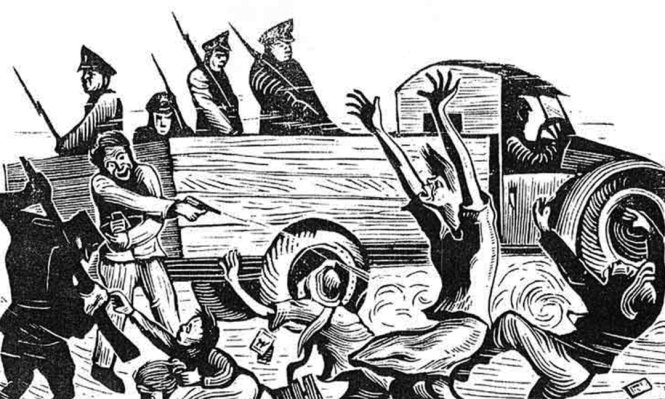
Ngày 27-2-1947, công an tại Đài Bắc đến nhà bắt giữ và đánh đập một phụ nữ bán thuốc lá lậu. Quần chúng bất mãn bèn phản đối, công an nổ súng và bắn chết một người.

Đài Loan: Thương hải tang điền
Một tác phẩm nghệ thuật mô tả sự biến 228.

Tiếp tục đọc “Đài Loan: Thương hải tang điền”

Ahead of Trump trip, China urges US not to allow Taiwan president in

China urged the United States on Friday not to permit Taiwan’s president to travel through U.S. territory en route to the island’s diplomatic allies in the Pacific, a sensitive visit shortly ahead of U.S. President Donald Trump’s trip to Beijing.

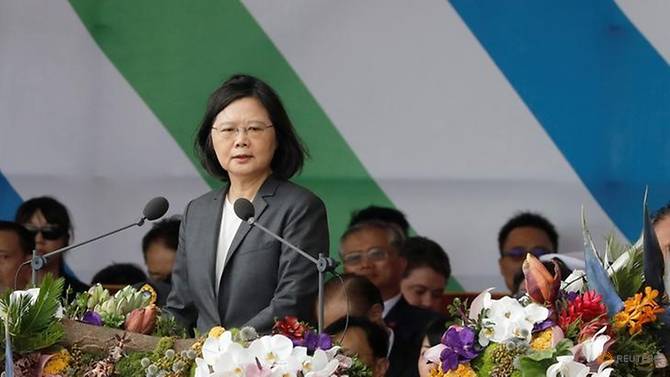
Taiwan President Tsai Ing-wen gives a speech during the National Day celebrations in Taipei, Taiwan, October 10, 2017. REUTERS/Tyrone Siu

Bookmark

BEIJING/TAIPEI: China urged the United States on Friday not to permit Taiwan’s president to travel through U.S. territory en route to the island’s diplomatic allies in the Pacific, a sensitive visit shortly ahead of U.S. President Donald Trump’s trip to Beijing.

China considers democratic Taiwan to be a wayward province ineligible for state-to-state relations and has never renounced the use of force to bring the island under its control. Tiếp tục đọc “Ahead of Trump trip, China urges US not to allow Taiwan president in”

Tự do hàng hải của nước lớn

  • DANH ĐỨC
  • 28.07.2017, 12:27

TTCT– Thứ sáu 21-7 vừa rồi, Jared Dummitt và Eliot Kim, hai nghiên cứu sinh của Trường Luật Harvard, đã đăng một bài trên website luật học lawfareblog.com có tựa đề “khác lạ”: “Chiến tranh vì biển: Hãy quen dần với điều đó trên Biển Đông”.

Tự do hàng hải của nước lớn
Tàu sân bay tự đóng đầu tiên của Trung Quốc (chưa đặt tên) được hạ thủy ngoài khơi thành phố cảng Đại Liên tháng 4-2017.-Ảnh: The New York Times

Hai tác giả bắt đầu bằng câu chuyện: “Tuần này, hải quân và không quân Trung Quốc đã thực hiện các hoạt động mở rộng – trong số đó có một số vụ là chưa từng có trước đó ở trong và xung quanh lãnh hải của Nhật Bản, Đài Loan và Mỹ. Bắc Kinh đã tỏ rõ giọng điệu thách thức khi dấy lên những dấu hỏi về tính thích đáng của các hoạt động này”. Tiếp tục đọc “Tự do hàng hải của nước lớn”

China confirms arrest of Taiwan activist Lee Ming-che

Al Jareeza

Beijing says the activist is being investigated on suspicion of ‘pursuing activity harmful to national security’.

Chinese authorities said Lee Ming-che was being investigated on ‘pursuing activities harmful to national security’ [AP]

China has confirmed it is detaining Taiwanese pro-democracy activist Lee Ming-che, who went missing last week.

Ma Xiaoguang, spokesman for China’s Taiwan Affairs Office, said Lee was being investigated on suspicion of “pursuing activities harmful to national security”.

Lee disappeared on March 19 after clearing immigration in Macau. He never showed up for a planned meeting later that day with a friend across the border in China’s city of Zhuhai. Tiếp tục đọc “China confirms arrest of Taiwan activist Lee Ming-che”

China warns U.S. over arms sales to Taiwan

 Japan Times

AFP-JIJI Mar 20, 2017

China on Monday reiterated its firm opposition to U.S. arm sales to Taiwan, amid reports that Donald Trump’s administration is preparing a large shipment of advanced weaponry for the self-ruling island.

“China firmly opposes U.S. arms sales to Taiwan, this is consistent and clear-cut,” foreign ministry spokeswoman Hua Chunying told a regular news briefing. Tiếp tục đọc “China warns U.S. over arms sales to Taiwan”

Taiwan defence report warns of China invasion risk

China still sees Taiwan as part of its territory to be brought back into its fold, by force if necessary, even though the island has been self-governing since the two sides split after a civil war in 1949.

Beijing is deeply suspicious of president Tsai Ing-wen, whose Democratic Progressive Party is traditionally pro-independence. Tiếp tục đọc “Taiwan defence report warns of China invasion risk”

China urges US not to allow Taiwan delegation to attend Trump inauguration

Tiếp tục đọc “China urges US not to allow Taiwan delegation to attend Trump inauguration”