The South China Sea is one of the most contested waterways in the world.
Hundreds of kilometres from its mainland, China appears to be increasingly asserting its dominance in this strategically important maritime trade route.
Many of the maritime disputes involve areas claimed by both the Philippines and Beijing.
Flashpoints are becoming more frequent, including collisions between coastguard boats and other vessels.
101 East joins the Philippine coastguard and witnesses firsthand skirmishes with the Chinese navy in the disputed waters.
Có bốn diễn biến chính định hình môi trường an ninh ở Biển Đông năm 2024: (1) Trung Quốc gia tăng hành vi cưỡng ép đối với tàu thuyền và máy bay của hải quân Philippines; (2) Philippines thông qua chiến lược phòng thủ biển mới; (3) Việt Nam tăng cường hoạt động xây dựng tại quần đảo Trường Sa; và (4) đàm phán về Bộ Quy tắc Ứng xử (COC) tiến triển chậm chạp. Tiếp tục đọc “Tóm tắt tình hình Biển Đông năm 2024”→
On 17th June 2024, Filipino and China Coast Guards clashed at sea. Armed with knives and axes, this is the worst clash in recent memory. With tensions running high, many question if the USA will step in, and whether Manila will invoke the mutual defense treaty it has with the US.
As confrontations with China increase in frequency, the Philippines has deepened its partnership with Australia, and also Japan. On 8th July 2024, Japan and the Philippines signed the reciprocal access agreement, which is a landmark defence deal that allows both nations to hold joint military drills in each other’s territories.
Why have there been so many clashes between Philippines and China in the South China Sea in the last 2 years? How are countries like the US, Japan and Australia related to the South China Sea conflict?
It has been two years since President Marcos Jr won the Philippines’ Presidential race, and tensions are high in the South China Sea. Each day brings new confrontations between Chinese and Filipino vessels in the disputed waters. In a departure from his predecessor, President Duterte’s stance, President Marcos Jr has had a tumultuous relationship with China. From cancelling BRI projects to brinkmanship in the South China Sea, relations between Manila and Beijing have deteriorated. At the same time, the Philippines draws closer to the US, potentially changing the complexion of US-China rivalry in the Indo-Pacific. As each side assert their claims, are we one miscalculation away from armed conflict?
Vietnam says it is ready to hold discussions with the Philippines regarding Manila’s claims to an extended continental shelf in the South China Sea. Philippine assertions overlap with those from China and Vietnam. While clashes between Beijing and Manila have been high profile and sometimes violent, the Philippines and Vietnam have relied on diplomacy to settle their dispute. Buena Bernal reports.
Gần đây Philippines hai lần đưa người đổ bộ lên rạn san hô Hoài Ân trên quần đảo Trường Sa của Việt Nam. Sự việc đó đã làm căng thẳng với TQ leo thang khi phía TQ dùng cả trực thăng đến thổi gió mạnh để ngăn chặn.
The countries’ opposing ideologies amid clashing sovereignty claims could lead to years of militarisation and confrontation in the region if not contained, analysts warn
Manila has been boosting defence ties with various countries with the aim of building ‘collective deterrence’ in the event of conflict in the region
The recent trading of barbs between China and the Philippines over ideological differences highlights the “perennial mistrust” between the two neighbours, experts say, noting that their disparate approaches to democracy and authoritarianism are likely to further escalate tensions in the South China Sea.
The National Task Force West Philippine Sea (NTFWPS) vehemently condemns the illegal and aggressive actions carried out by the Chinese Coast Guard and Chinese Maritime Militia against the civilian Bureau of Fisheries and Aquatic Resources (BFAR) vessels Datu Sanday, Datu Bankaw, and Datu Tamblot today during a regular BFAR humanitarian and support mission of providing oil subsidy and grocery packs to over 30 Filipino fishing vessels near Bajo De Masinloc in the West Philippine Sea. As of this reporting the mission is on-going. Tiếp tục đọc “STATEMENT OF THE NATIONAL TASK FORCE FOR THE WEST PHILIPPINE SEA”→
US-China: Is A New NATO Emerging In Asia? | When Titans Clash 2 – Part 1/3 | CNA Documentary
CNA Insider – 29-4-2022
As the Ukraine crisis unfolds, China accuses the US of creating an Indo-Pacific version of NATO, and warns of a “Ukraine style tragedy” for Asia. On the other hand, countries like Japan, Philippines, India, Australia and South Korea, seek closer ties to the US as concerns emerge over China’s actions. Could Asia witness a war in the years ahead? Tiếp tục đọc “When titans clash 2 (3 parts)”→
Amidst rising tensions in the South China Sea and the Taiwan Strait, the American military is set to expand its presence in the Philippines. The Marcos administration wants to increase the number of US forces in the country, by allowing Americans access to four additional military bases including Palawan and Cagayan, through the Enhanced Defense Cooperation Agreement (EDCA). This move reverses the cooling US-Filipino ties under President Duterte. But the long, storied history between the two countries could complicate the return of US troops. At the same time, Chinese investments in the archipelago are in jeopardy, as Beijing protests the move. What is behind this troop buildup in the Philippines, and could this raise the temperature in the region, as China reacts to the growing American might at its doorstep?
As the two superpowers compete for dominance in the Pacific, Dena Takruri asks Filipinos how they feel being caught in the middle. Who is the bigger threat to the Philippines: the U.S. or China?
TTCT – Dù là đồng minh có hiệp ước của nhau và vừa thắt chặt thêm tình hữu nghị về quân sự, quan hệ Mỹ – Philippines thật ra không phải lúc nào cũng bằng phẳng.
Khi tôi đến thăm Subic Bay năm 1998, khu chế xuất vừa hoạt động và hãng xưởng còn lưa thưa. Đây là khu miễn thuế, ra vào phải qua kiểm soát hải quan, chỗ mua sắm chỉ có vài hàng quán mới mở và loãng khách với một khu phức hợp và ba rạp phim.
Cả khu còn do quân đội Philippines quản lý, hoang vắng với những nhà kho tiền chế và bungalow quân đội Mỹ bỏ lại nằm bắt bụi từ 1992.
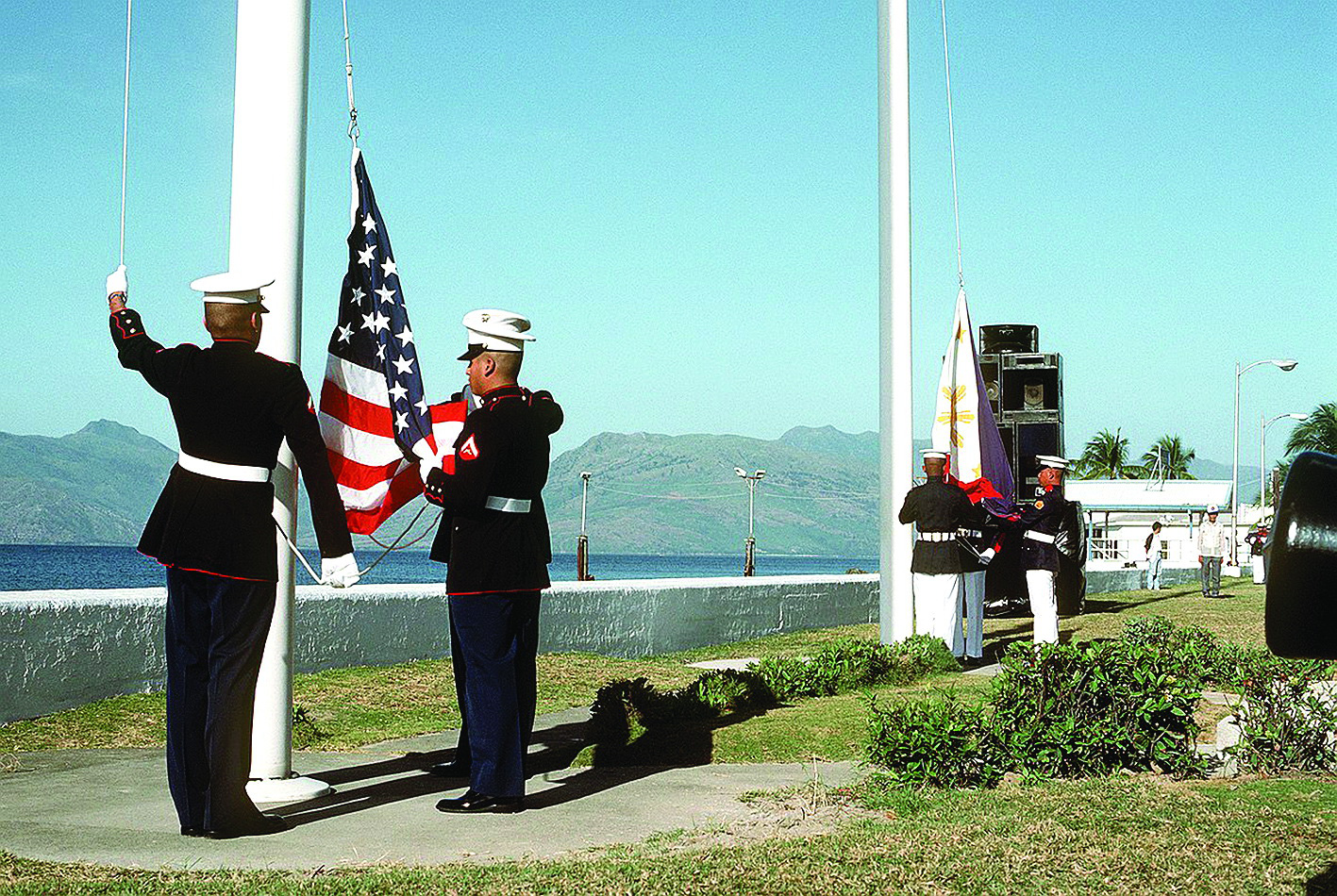
Lễ hạ cờ Mỹ và thượng cờ Philippines ở căn cứ Subic Bay ngày 24-11-1992. Ảnh: Wikipedia
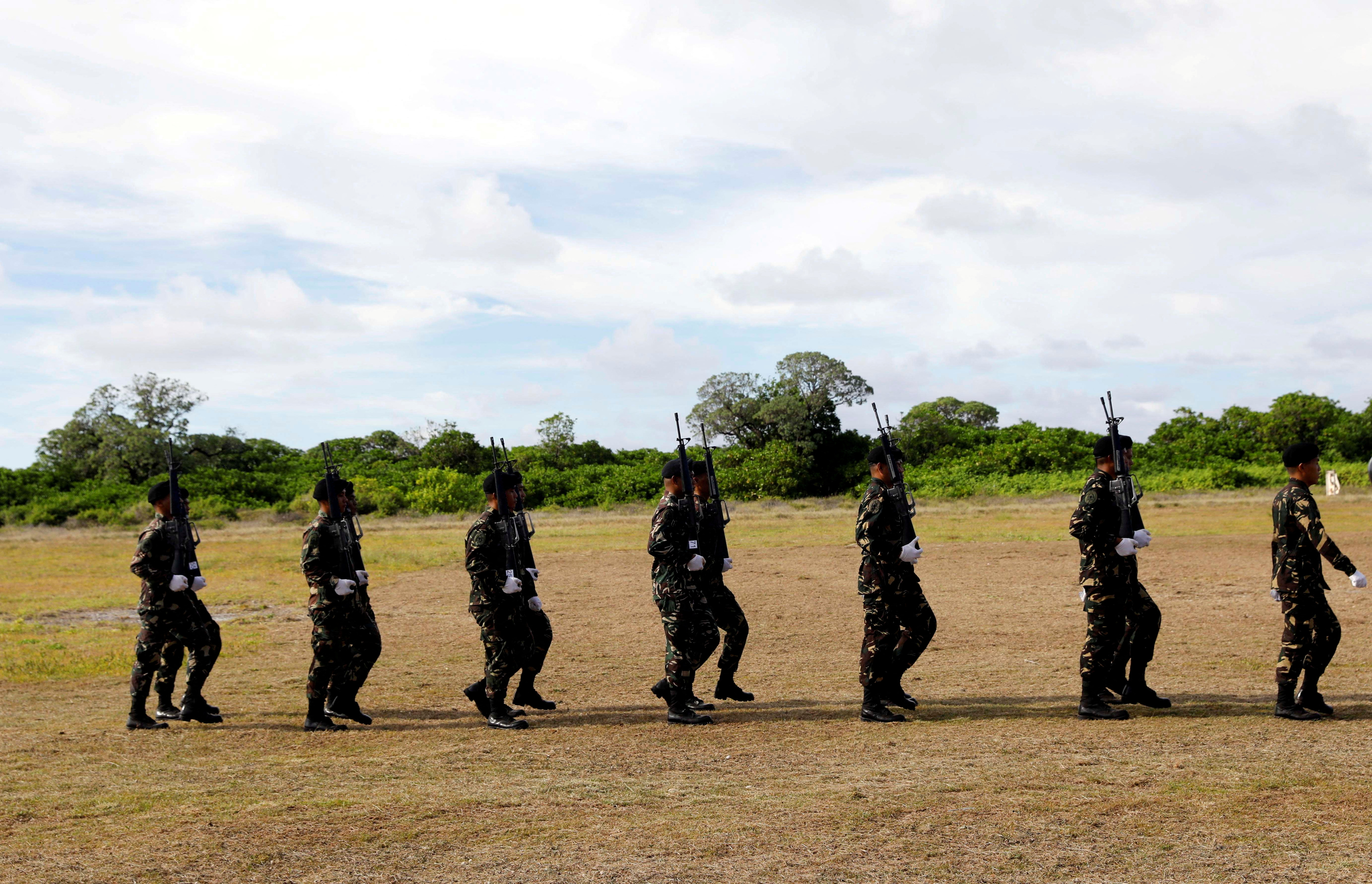
Filipino soldiers march in Philippine occupied Thitu island in disputed South China Sea, April 21, 2017. REUTERS/Erik De Castro
MANILA, Dec 22 (Reuters) – The Philippines’ defence ministry on Thursday ordered the military to strengthen its presence in the South China Sea after monitoring “Chinese activities” in disputed waters close to a strategic Philippine-held island.
The ministry did not specify what activities those were and its statement follows a report this week of Chinese construction on four uninhabited features in the disputed Spratly islands, news that Beijing has dismissed as “unfounded”.
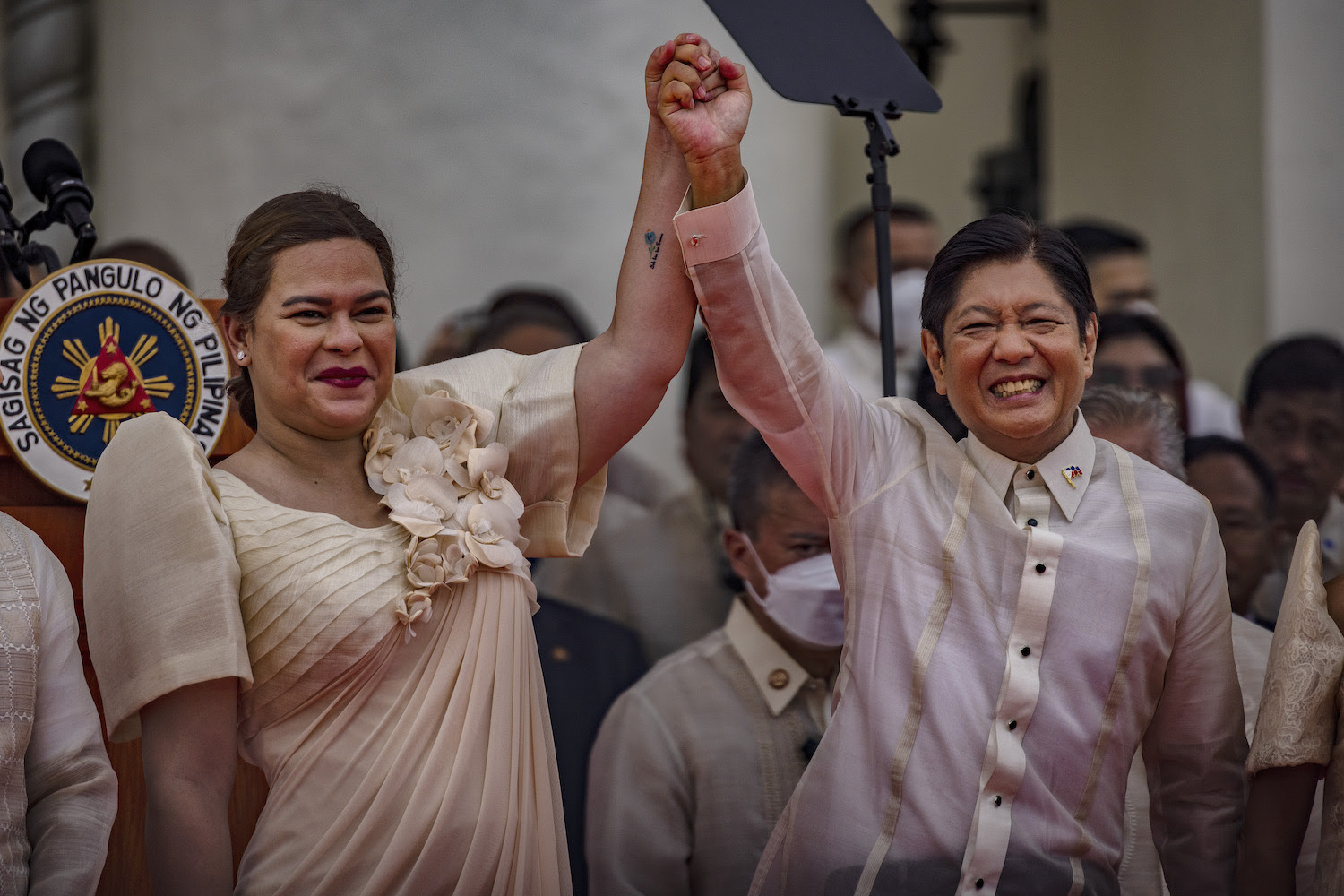
Ferdinand Marcos Jr. is now the president of the Philippines, 36 years after he fled the country along with his dictator father. Marcos took the oath of office today at a muted ceremony in Manila, urging citizens to look ahead to the future, as his mother, Imelda, looked on.
Marcos, known in the Philippines by his nickname Bongbong, has risen to the country’s highest office after a social media-driven campaign helped to rehabilitate his family’s image, transforming memories of the bloody days of martial law, when thousands were tortured and killed, to a nostalgic golden era.
nikkei – Nearly 50 years after Ferdinand Marcos Sr. declared brutal martial law, the Philippines is poised to elect his son. Has history been forgotten?
Nikkei staff writersMay 7, 2022 03:26 JST
NEW YORK — Welcome to Nikkei Asia’s podcast: Asia Stream.
Every week, Asia Stream tracks and analyzes the Indo-Pacific with a mix of expert interviews and original reporting by our correspondents from across the globe.
This week, we focus on one of Asia’s most dynamic but flawed democracies: the Philippines. With the election just days away, we get under the hood of the electoral system and investigate the powerful role that dynasties play in the country, with a special focus on Ferdinand Marcos Jr., the front-runner on the cusp of taking power. We then take into account that other essential, if dangerous, tenet of modern Philippine democracy: disinformation, and how it is being used to gain support among the country’s most vulnerable populations.



 CVD
CVD 