While focus is on North Korea, China continues South China Sea buildup: Think tank

channelnewsasia
 
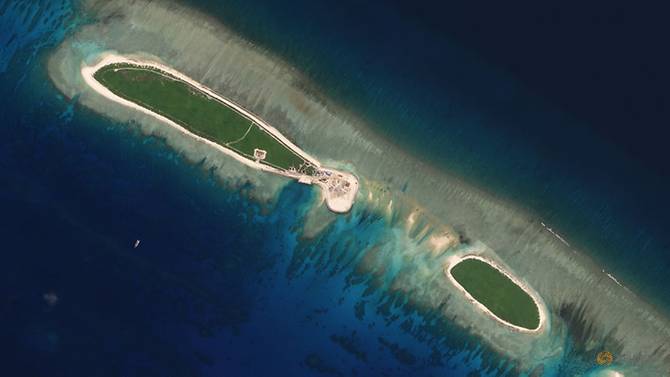
Satellite photo shows Chinese-controlled North Island, part of the Paracel Islands group in the South China Sea, on Sep 29, 2017. (Photo: Planet Labs/Handout via Reuters)

WASHINGTON: While attention in Asia has been distracted by the North Korean nuclear crisis in the past year, China has continued to install high-frequency radar and other facilities that can be used for military purposes on its man-made islands in the South China Sea, a US think tank said on Thursday (Dec 14).

Chinese activity has involved work on facilities covering 29 hectares of the Spratly and Paracel islands, territory contested with several other Asian nations, according to the Asia Maritime Transparency Initiative of Washington’s Center for Strategic and International Studies. The report cited satellite images. Tiếp tục đọc “While focus is on North Korea, China continues South China Sea buildup: Think tank”

China begins new work on disputed South China Sea island

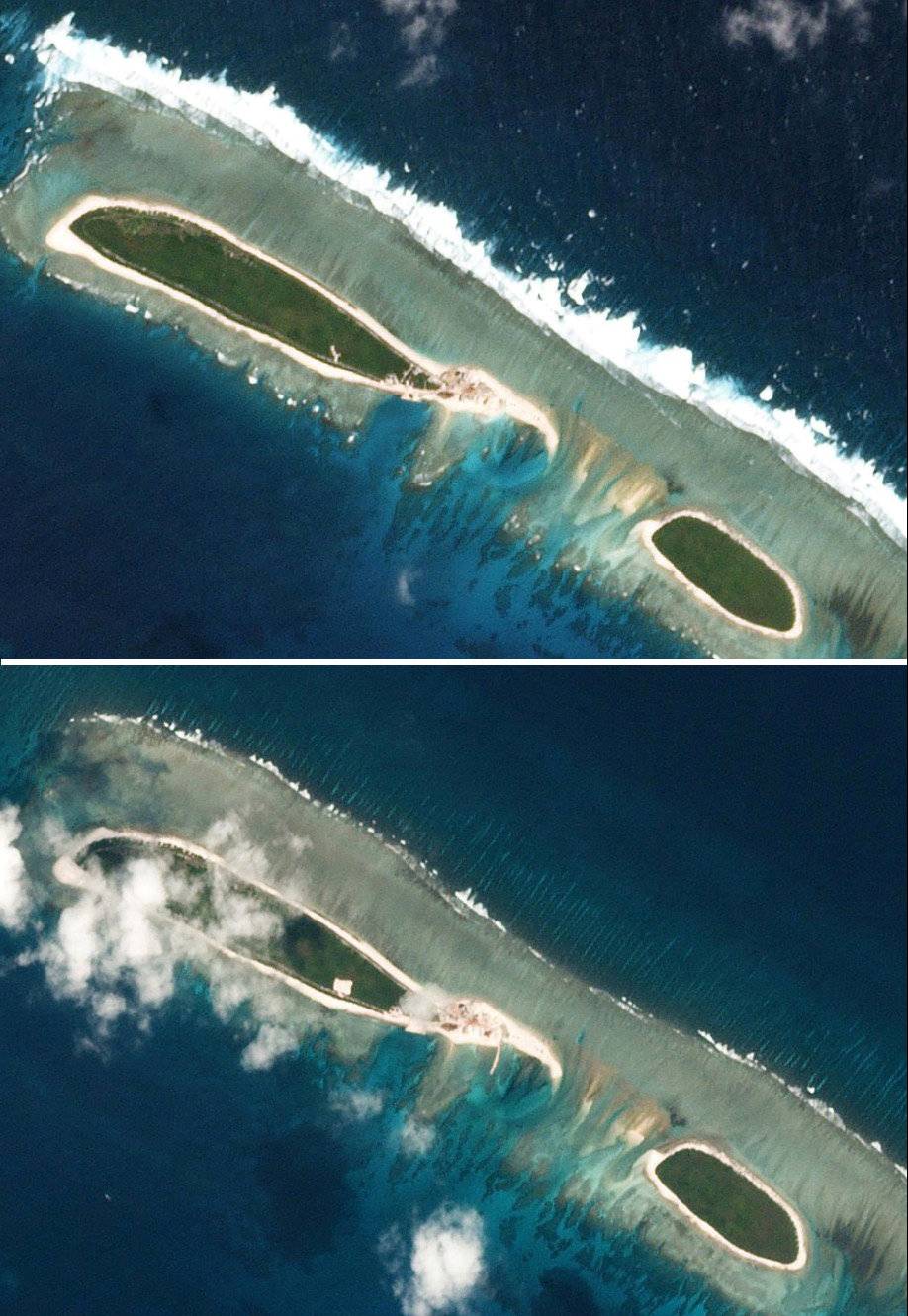
A combination of satellite photos shows Chinese-controlled North Island, part of the Paracel group in the South China Sea, on Feb. 15 (top) and on March 6. Reuters

japan times

Reuters Mar 15, 2017

China has started fresh construction work in the disputed South China Sea, new satellite images show, a sign that Beijing is continuing to strengthen its military reach across the vital trade waterway.

Regional military attaches and experts believe the work shows China’s determination to build up its network of reefs and islets, even if it is seeking to avoid a fresh confrontation with the new administration of U.S. President Donald Trump. Tiếp tục đọc “China begins new work on disputed South China Sea island”

Why China is building islands in the South China Sea

Vox – 17 thg 2, 2017

China claims they aren’t military bases, but their actions say otherwise.

China is building islands in the South China sea and its causing disputes among the other nations in the region; Malaysia, the Philippines, Brunei, Vietnam, and Indonesia. The US has many allies in the region and uses its massive Navy to patrol international waters, keeping shipping lanes open for trade.

ASEAN unsettled by China weapon systems, tension in South China Sea

The region’s foreign ministers were unanimous in their concern over China’s militarisation of its artificial islands, but were confident a framework for a code of maritime conduct could be agreed with Beijing by June, Philippine Foreign Secretary Perfecto Yasay said.

Yasay did not say what developments provoked the concern, but said the 10-member Association of Southeast Asian Nations (ASEAN) hoped China and the United States would ensure peace and stability.

He said demilitarisation would be a key component of any ASEAN-China code of conduct, but it was too soon to say whether Beijing’s dismantling of its weapons installations would be a prerequisite.

“The ASEAN members have been unanimous in their expression of concern about what they see as a militarisation of the region,” Yasay told reporters after a ministers’ retreat on the Philippine island of Boracay.

Referring to China’s manmade islands in the Spratly archipelago, Yasay said ASEAN countries had “noticed, very unsettlingly, that China has installed weapons systems in these facilities that they have established, and they have expressed strong concern about this.”

With the Philippines chairing the bloc this year, Yasay’s comments signal a rare, firm position by a grouping that often struggles to achieve consensus, due to its contrasting opinions on how to respond to China’s assertiveness.

ASEAN’s statements of concern often avoid mentioning China by name. Much is at stake from upsetting China, as ASEAN members, to varying extents, are under its influence and need its trade, investment and tourists.

TRUMP UNCERTAINTY

Regional geopolitics has become more uncertain since the election of U.S. President Donald Trump, particularly over his administration’s role in a region strongly courted by Washington during the “pivot” of predecessor Barack Obama.

Friction between the United States and China over trade and territory under Trump has fuelled worry that the South China Sea could become a flashpoint.

China claims most of the waters, through which about US$5 trillion (£4.02 trillion) in ship-borne trade passes every year. Brunei, Malaysia, the Philippines, Taiwan and Vietnam also have claims.

China on Friday completed war games with an aircraft carrier that unnerved neighbours. A day later the U.S. navy said its aircraft carrier strike group had started routine patrols in the South China Sea, a step China had warned against.

Yasay said ASEAN nations recognised policies under Trump were still evolving, but hoped they could be unveiled within a few months to provide a “more concrete and clearer picture”, especially regarding China.

“We do not know the complete picture of what this foreign policy might be, insofar as its relationship with China is concerned. We’re, however, hopeful that the policy that would come out will be positive.”

Asked if China was committed to a set of rules on the South China Sea, he said Beijing had shown it was keen.

But all parties should ensure that the code, which has made little progress since the idea was agreed in 2002, needed to be legally “binding and enforceable”, Yasay added.

(Additional reporting by Enrico Dela Cruz and Manolo Serapio Jr; Writing by Martin Petty; Editing by Clarence Fernandez)

China likely to build on reef near Philippines: Minister

In an interview with AFP, Delfin Lorenzana said he believed China would eventually reclaim Scarborough Shoal, just 230 kilometres from the main Philippine island of Luzon.

Beijing has already built up a number of islets and reefs in the Spratly Islands in the South China Sea, installing military facilities on several of them.

Analysts say similar installations on nearby Scarborough Shoal could give China effective military control over the disputed Sea – something the US has said it is not prepared to accept. Tiếp tục đọc “China likely to build on reef near Philippines: Minister”

Philippines filed diplomatic protest over South China Sea buildup: Minister

MANILA: The Philippines has filed a diplomatic protest with China, its foreign minister said on Monday, over Beijing’s installation last year of anti-aircraft and anti-missile systems on its manmade islands in the disputed South China Sea.

The protest note was sent to the Chinese embassy in December, after confirmation of a report from the US-based Center for Strategic and International Studies about a weapons buildup on seven artificial islands in the Spratlys. Tiếp tục đọc “Philippines filed diplomatic protest over South China Sea buildup: Minister”