Why China is finally starting to acknowledge its overcapacity problem

channelnewsasia.com

Where Beijing once celebrated its manufacturing and export prowess, it now openly discusses the need to curb “involution”. This is a dramatic departure from its previous stance, says Enodo Economics’ Diana Choyleva.

Commentary: Why China is finally starting to acknowledge its overcapacity problem
People browse in electric car showrooms located on the 5th floor in a popular shopping mall in Beijing on Jul 21, 2025. (Photo: CNA/Hu Chushi)

LONDON: For years, Beijing dismissed Western concerns about Chinese overcapacity as protectionist rhetoric. When the United States and European Union complained about cheap Chinese exports flooding global markets, China’s response was predictable: These were simply competitive advantages in a free market economy.

That narrative has now fundamentally shifted. In a remarkable policy U-turn, China has not only started acknowledging the overcapacity problem but is treating it as a national priority that requires urgent intervention.

While there have been signs of this narrative change for a while, the clearest signal of this messaging transformation came through recently on China’s own policy channels.

In July, the Communist Party’s leading journal Qiushi warned that “disorderly competition has destroyed entire industry ecology”. This wasn’t diplomatic language about market dynamics – it was an admission that destructive competition had reached crisis proportions.

Tiếp tục đọc “Why China is finally starting to acknowledge its overcapacity problem”

China’s “National Unified Market” – Standardizing the Domestic Market to Spur Internal Circulation

china-briefing.com

April 14, 2022Posted by China BriefingWritten by Arendse HuldReading Time:  10 minutes

A new set of opinions from the central government describe how China will build a “national unified market” across a wide range of sectors and fields. The national unified market will seek to break down local protectionism and market segmentation by implementing standards and regulations that are applicable countrywide and integrating infrastructure across regions to increase market efficiency, promote fair competition, and ultimately boost domestic consumption and production. The national unified market is a key implementation of China’s “dual circulation” strategy and will likely act as a catalyst for further nationwide industry standards and market regulations in the coming years.

On April 10, 2022, the Central Committee of the Communist Party of China (CCCPC) and the State Council jointly released the Opinions on Accelerating the Construction of the National Unified Market (the “opinions”). This document outlines the creation of a “national unified market” to improve standardization and consistency in the implementation of regulations across a wide range of industries in China. 

Tiếp tục đọc “China’s “National Unified Market” – Standardizing the Domestic Market to Spur Internal Circulation”

Can Vietnam Replace China? No, But it was Never Supposed to Either

vietnam-briefing.com

March 27, 2023Posted by Vietnam BriefingWritten by Pritesh SamuelReading Time: 

An opinion piece in Bloomberg titled ‘Trying to Replace China’s Supply Chains? Don’t Bother?’, published March 1, 2023, claims that ‘Vietnamese factories were supposed to save globalization’ but that they cannot. This is incorrect and here’s why, writes Dezan Shira and Associates, Head of Business Intelligence, Pritesh Samuel.


Vietnam’s factories were never supposed to save globalization. They offer businesses an alternate location for manufacturing – in line with a China+1 strategy that myriad companies now pursue due to rising costs in China.

Globalization is shaped by several factors, including geopolitics, national interests of governments, regional trade and investment initiatives, public policymaking directives by key trade bodies, and so on. It cannot be trivialized into the assumption that a single country can save it.

China’s advanced supply chain and supplier network, driven by the government’s long-term national policies, make it a manufacturing giant. At present, no single country, including Vietnam, can fully replace China’s manufacturing capacity.

Tiếp tục đọc “Can Vietnam Replace China? No, But it was Never Supposed to Either”

China’s economy is ‘in deep trouble’ as Xi heads for next decade in power

Laura He

Analysis by Laura He, CNN Business

Published 7:52 PM EDT, Fri October 14, 2022

Video Ad Feedback

‘Are the best days behind China now?’ Disillusioned Chinese ponder future

14:05 – Source: CNNHong KongCNN Business — 

When Xi Jinping came to power a decade ago, China had just overtaken Japan to become the world’s second largest economy.

It has grown at a phenomenal pace since then. With an average annual growth rate of 6.7% since 2012, China has seen one of the fastest sustained expansions for a major economy in history. In 2021, its GDP hit nearly $18 trillion, constituting 18.4% of the global economy, according to the World Bank.

Tiếp tục đọc “China’s economy is ‘in deep trouble’ as Xi heads for next decade in power”

China is still the ultimate prize that Western banks can’t resist

edition.cnn.com

Analysis by Laura HeCNN Business

Updated 1041 GMT (1841 HKT) January 14, 2022

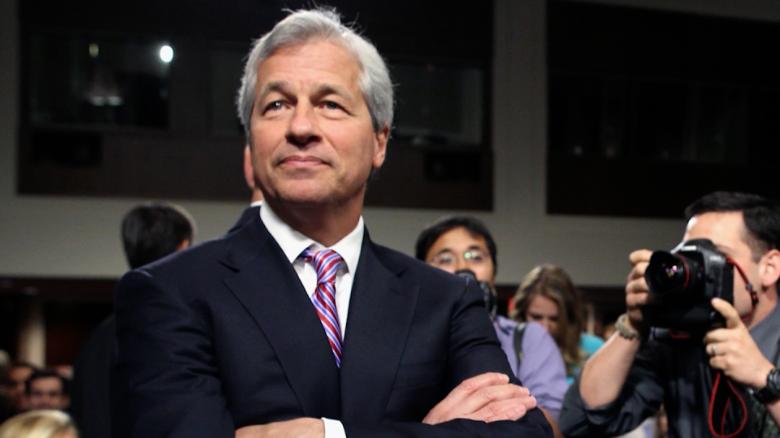
Jamie Dimon on China joke: 'I regret and should not have made that comment'

A version of this story appeared in CNN’s Meanwhile in China newsletter, a three-times-a-week update exploring what you need to know about the country’s rise and how it impacts the world. Sign up here.

Hong Kong (CNN Business)For many companies, doing business in China is getting trickier by the day. But Western banks and asset managers are more than willing to up their bets on the world’s second biggest economy, convinced that the opportunities remain too good to pass up.Major banks in recent weeks have inked deals to expand their footprint in China — or are otherwise attempting to take greater control of their businesses there — after years of being forced to enter the market via joint ventures. That’s despite fraught geopolitics, a slowing economy and an increasingly hostile environment for private business.Late last month, HSBC (HBCYF) received approval from Chinese regulators to take full control of its life insurance joint venture, which was created in 2009 in equal partnership with a Chinese company under rules that were rolled back in 2020. The bank said the move underscored its “commitment to expanding business in China.”

Tiếp tục đọc “China is still the ultimate prize that Western banks can’t resist”

China debt: how big is it, who owns it and what is next?

SCMP.com 

  • The Institute of International Finance (IFF) estimated that China’s total debt hit 317 per cent of gross domestic product (GDP) in the first quarter of 2020
  • In May 2020, the IFF also said the debt owed to China by the rest of the world had risen to more than 6 per cent of global GDP
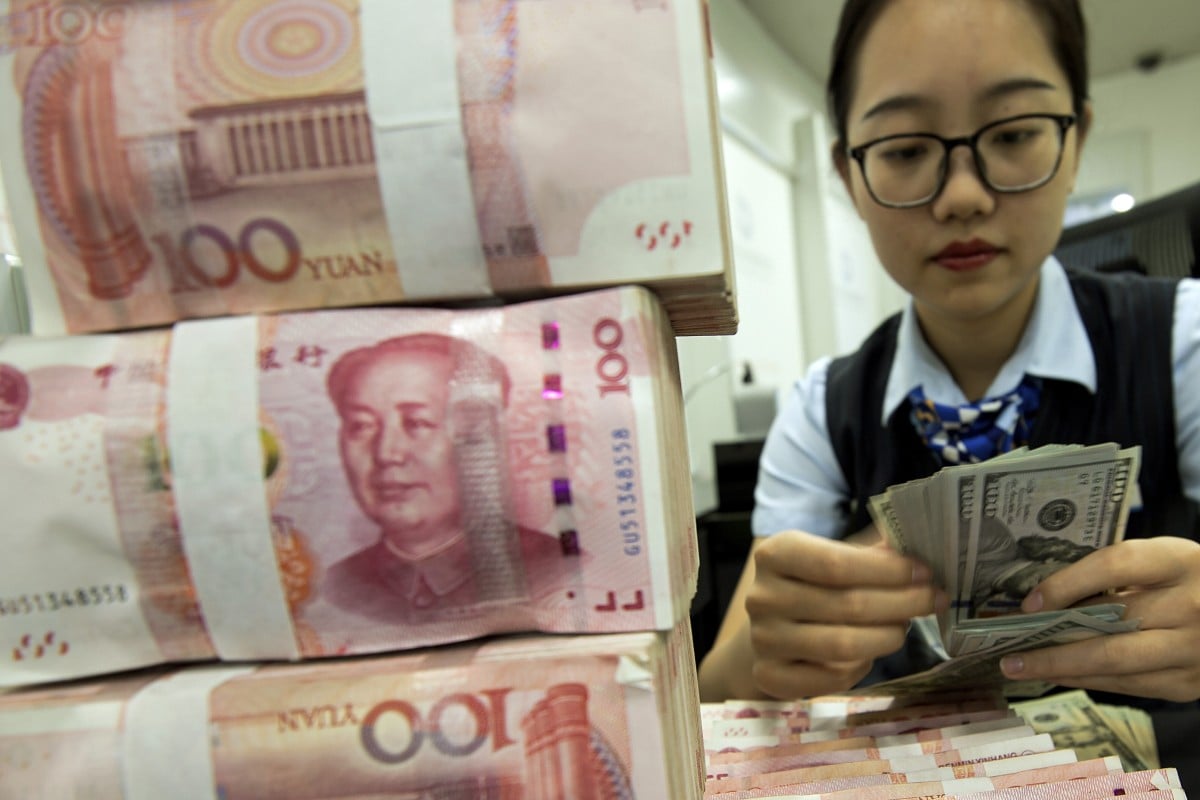
The Institute of International Finance estimated that China’s total debt hit 317 per cent of gross domestic product (GDP) in the first quarter of 2020, up from 300 per cent in the last quarter of 2019 – the largest quarterly increase on record. Photo: AP

What is the nature of China’s debt?

Broadly speaking, China’s debt can be divided into domestic debt and foreign debt.

Tiếp tục đọc “China debt: how big is it, who owns it and what is next?”