
While Buddhism has branched into a number of sects over the centuries, its rich tradition of peace activism continues
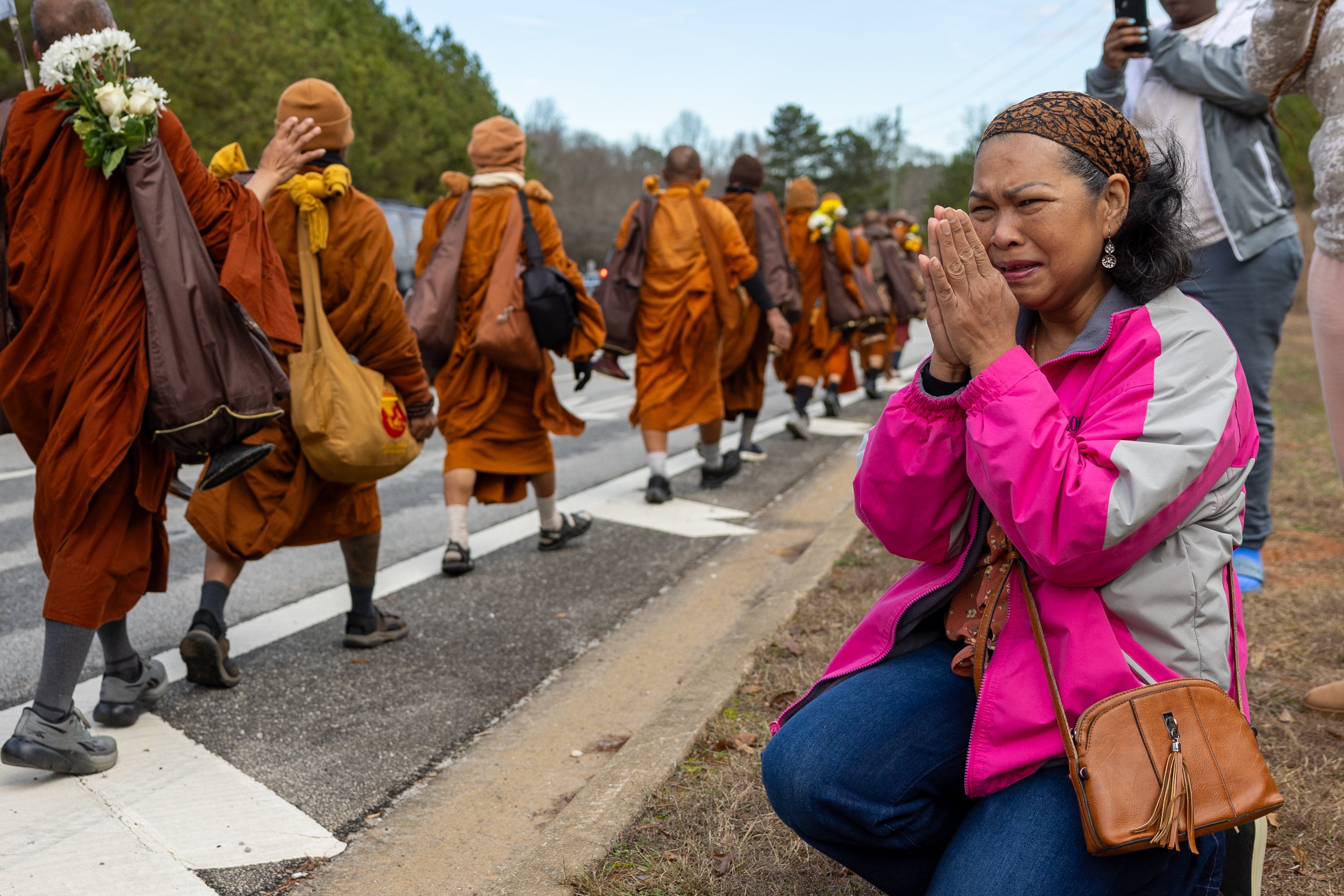
A group of Buddhist monks hasn’t let a car wreck stop them from walking across much of the U.S. to promote peace.
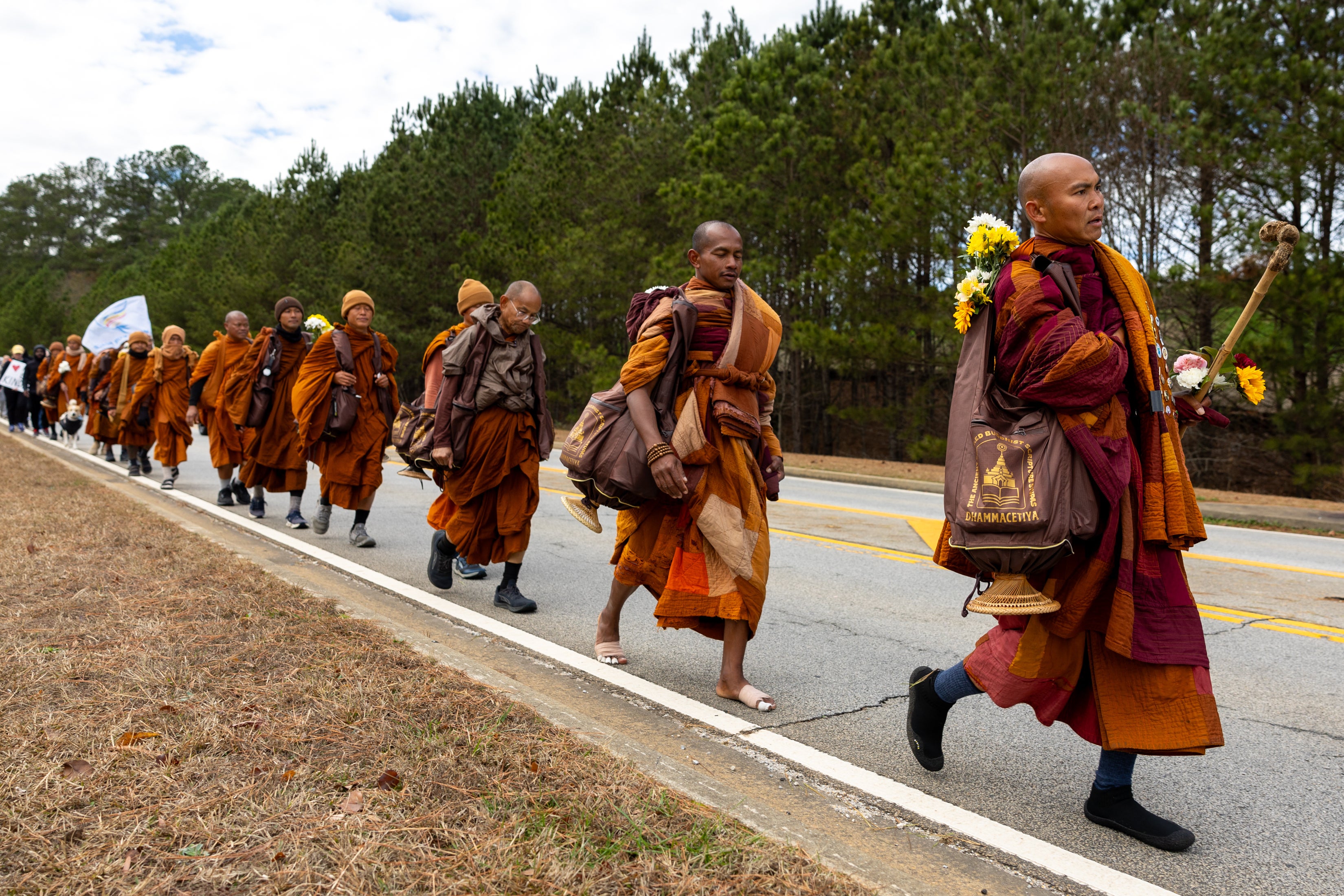
After starting their walk in Fort Worth, Texas, on Oct. 26, the group of about two dozen monks has made it to Georgia as they continue on a path to Washington, D.C., highlighting Buddhism’s long tradition of activism for peace.
The group planned to walk its latest segment through Georgia on Tuesday from the town of Morrow to Decatur, on the eastern edge of Atlanta. Marking day 66 of the walk, the group invited the public to a Peace Gathering in Decatur Tuesday afternoon.
The monks and their loyal dog Aloka are traveling through 10 states en route to Washington, D.C. In coming days, they plan to pass through or very close to Athens, Georgia; the North Carolina cities of Charlotte, Greensboro and Raleigh; and Richmond, Virginia, on their way to the nation’s capital city.
The group has amassed a huge audience on social media, with more than 400,000 followers on Facebook. Aloka has its own hashtag, #AlokathePeaceDog.
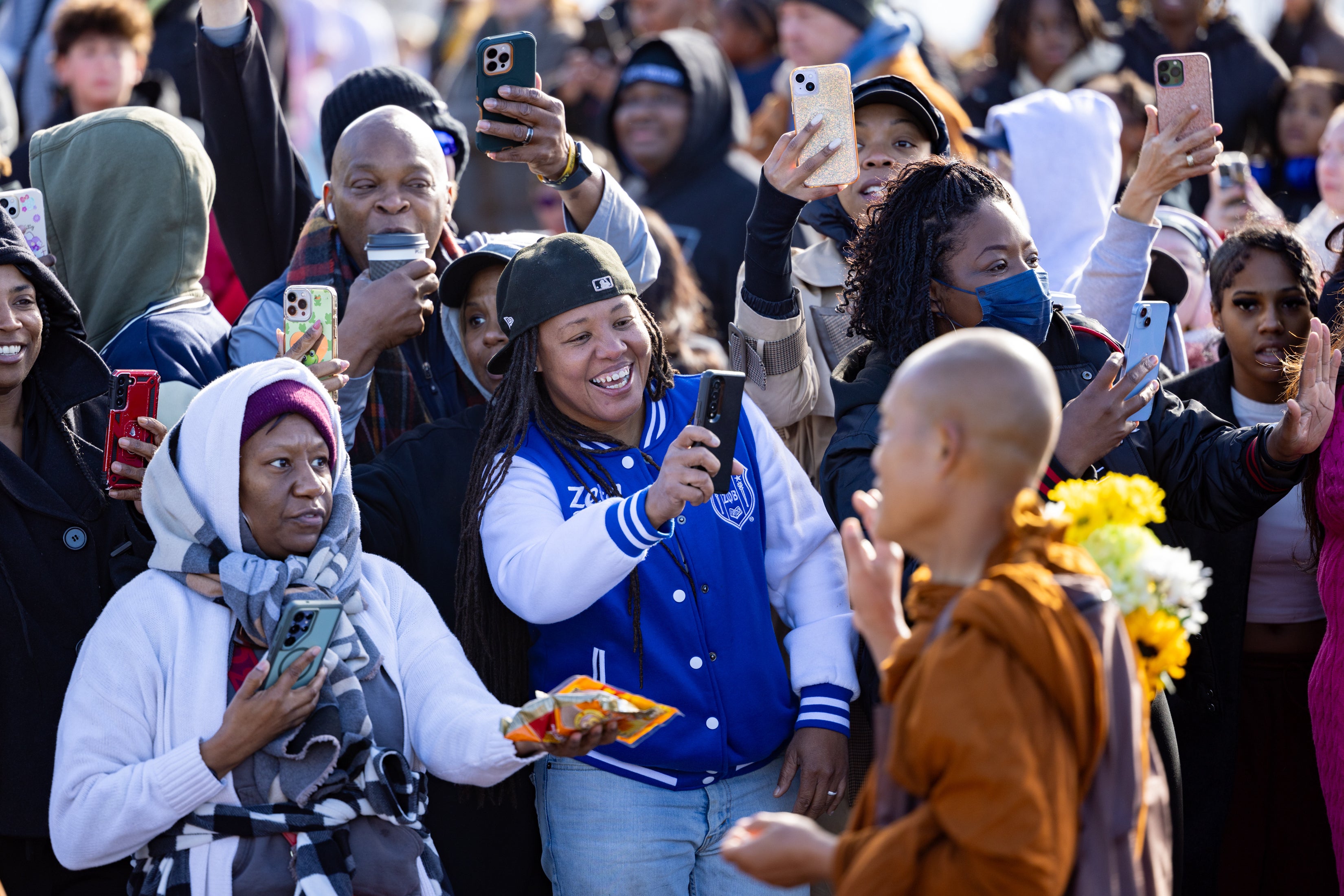
The group’s Facebook page is frequently updated with progress reports, inspirational notes and poetry.
“We do not walk alone. We walk together with every person whose heart has opened to peace, whose spirit has chosen kindness, whose daily life has become a garden where understanding grows,” the group posted recently.
The trek has not been without danger. Last month outside Houston, the monks were walking on the side of a highway near Dayton, Texas, when their escort vehicle, which had its hazard lights on, was hit by a truck, Dayton Interim Police Chief Shane Burleigh said.
The truck “didn’t notice how slow the vehicle was going, tried to make an evasive maneuver to drive around the vehicle, and didn’t do it in time,” Burleigh said at the time. “It struck the escort vehicle in the rear left, pushed the escort into two of the monks.”
One of the monks had “substantial leg injuries” and was flown by helicopter to a hospital in Houston, Burleigh said. The other monk with less serious injuries was taken by ambulance to another hospital in suburban Houston. The monk who sustained the serious leg injuries was expected to have a series of surgeries to heal a broken bone, but his prognosis for recovery was good, a spokeswoman for the group said.
Buddhism is a religion and philosophy that evolved from the teachings of Gautama Buddha, a prince turned teacher who is believed to have lived in northern India and attained enlightenment between the 6th and 4th centuries B.C.
The religion spread to other parts of Asia after his death and came to the West in the 20th century. The Buddha taught that the path to end suffering and become liberated from the cycle of birth, death and reincarnation, includes the practice of non-violence, mental discipline through meditation and showing compassion for all beings.
While Buddhism has branched into a number of sects over the centuries, its rich tradition of peace activism continues. Its social teaching was pioneered by figures like the Dalai Lama and Thich Nhat Hanh, who have applied core principles of compassion and non-violence to political, environmental and social justice as well as peace-building efforts around the world.
![The Dalai Lama offers blessings to his followers at his Himalayan residence in the northern hill town of Dharamshala, India, on December 20, 2024 [Priyanshu Singh/Reuters]](https://www.aljazeera.com/wp-content/uploads/2025/03/2025-03-11T023323Z_218289473_RC2RSBA1K164_RTRMADP_3_INDIA-DALAI-LAMA-CHINA-1-1741677530.jpg?resize=770%2C513&quality=80)


 CVD
CVD 