TTO – Nhật Bản đã đạt được những bước tiến to lớn trong việc trở thành một trong những quốc gia được các nước Đông Nam Á ủng hộ nhiều nhất. Trước Thủ tướng Suga, ông Abe cũng từng chọn thăm các nước Đông Nam Á đầu tiên.
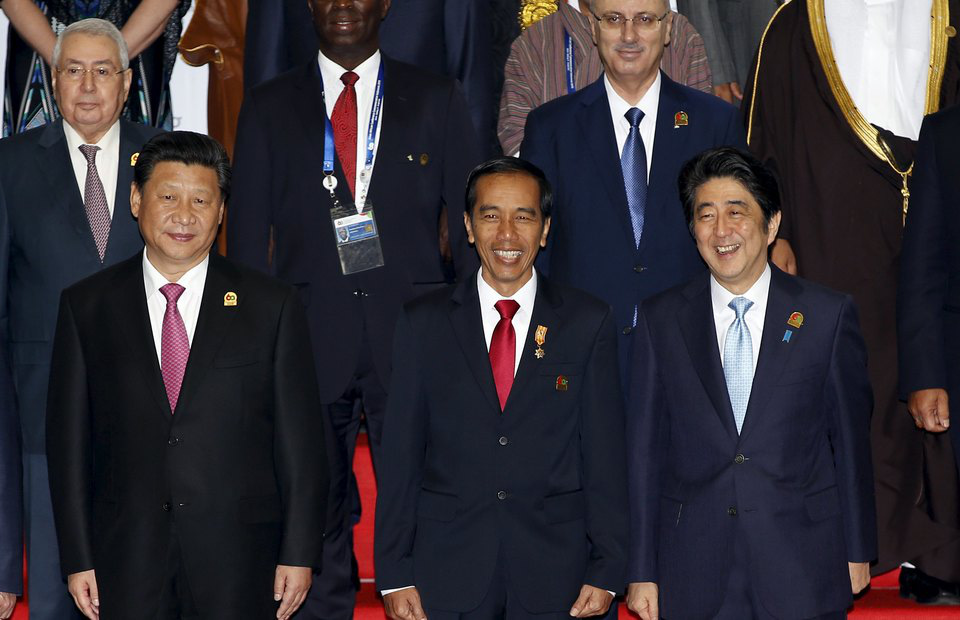
Từ trái sang: Chủ tịch Trung Quốc Tập Cận Bình, Tổng thống Indonesia Joko Widodo và Thủ tướng Nhật Bản Shinzo Abe trong một lần xuất hiện chung ở Jakarta, Indonesia hồi năm 2015 – Ảnh: REUTERS
NEW DELHI: The navies of India, the United States, Australia and Japan held exercises Tuesday (Nov 17) in the Northern Arabian Sea in the second phase of a naval drill seen as part of a regional initiative to counter China’s growing assertiveness in the Indo-Pacific.
Chinese navy conducts simultaneous drills in various theatre commandsManoeuvres designed to show that the maritime force can mobilise personnel in different regions at once, analyst says SCMP
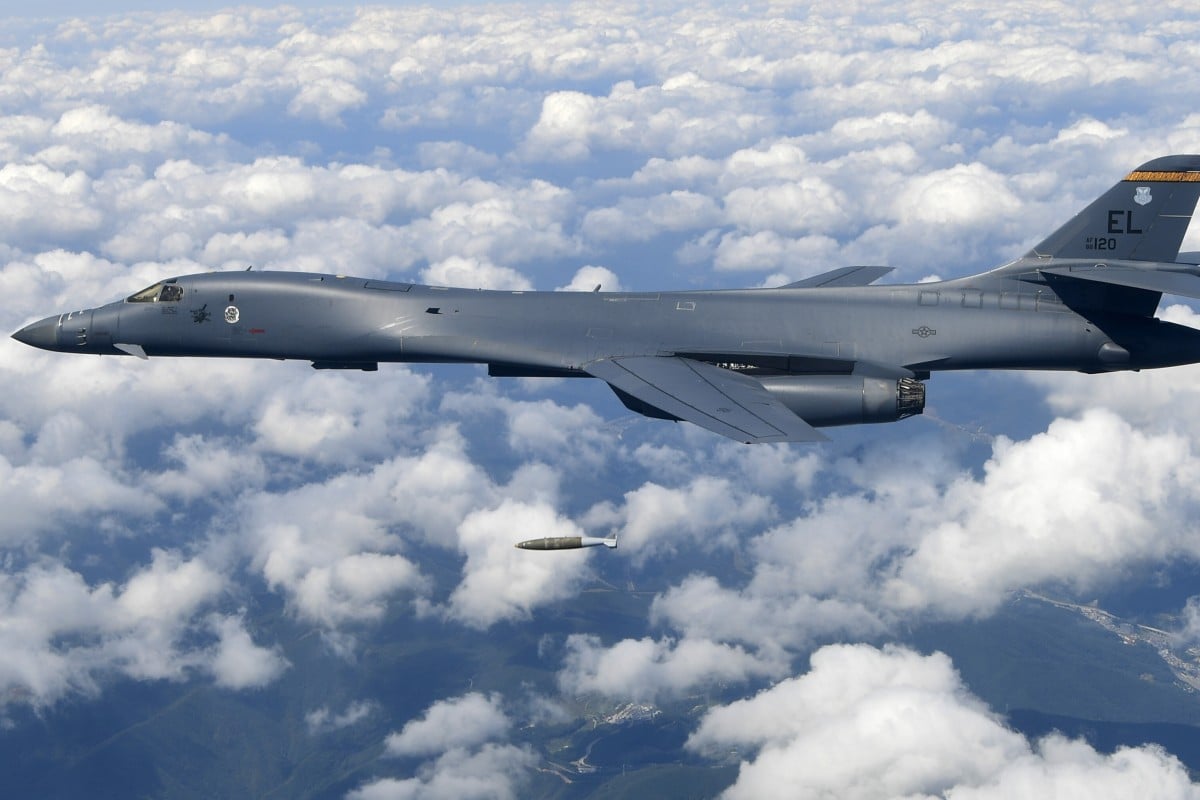
Two US Air Force B-1B bombers entered China’s ADIZ on Tuesday, according to an aviation tracking service. Photo: AP
The United States sent two long-range bombers into China’s air defence identification zone (ADIZ) on Tuesday in an apparent show of force, as the Chinese navy conducted a series of simultaneous massive drills.
According to aviation tracker Aircraft Spots, two US Air Force B-1B Lancer bombers left Andersen Air Force Base in Guam on Tuesday morning and entered China’s ADIZ over the East China Sea.
Aircraft Spots said the bombers were refeulled in flight during the mission.
The B1-B has the biggest payload of any bomber and is a departure from the fighter jets and spy planes the American forces have sent before on missions so close to the Chinese coast.
Such heavy aircraft are not known for being deployed on spying missions, suggesting that the US was sending a blunt warning.
In an address at the 15th East Asia Summit (EAS), External Affairs Minister S Jaishankar also talked about the Indo-Pacific and noted the growing interest in the region as an integrated and organic maritime space with 10-nation ASEAN at its centre.
Vietnam’s Communist Party General Secretary and President Nguyen Phu Trong (centre) walks past flags of the Asean member countries before opening the 37th Asean in Hanoi on Thursday. It was followed by other related meetings, including the East Asia Summit on Saturday. (Reuters photo)
Asia-Pacific leaders voiced concern over the situation in the resource-rich South China Sea at a regional summit on Saturday, a Japanese government official said, as security tensions between the United States and China have shown no sign of easing.
At least some of the ballistic missiles that China’s People’s Liberation Army fired into the South China Sea during an exercise earlier this year, which you can read about more in the War Zone‘s initial story on those drills, reportedly hit a moving target ship. If true, this would be the country’s first known demonstration of an actual long-range anti-ship ballistic missile capability, which could significantly change the operational calculus for any potential opponent, including the United States, in the disputed maritime region and elsewhere in the Pacific.
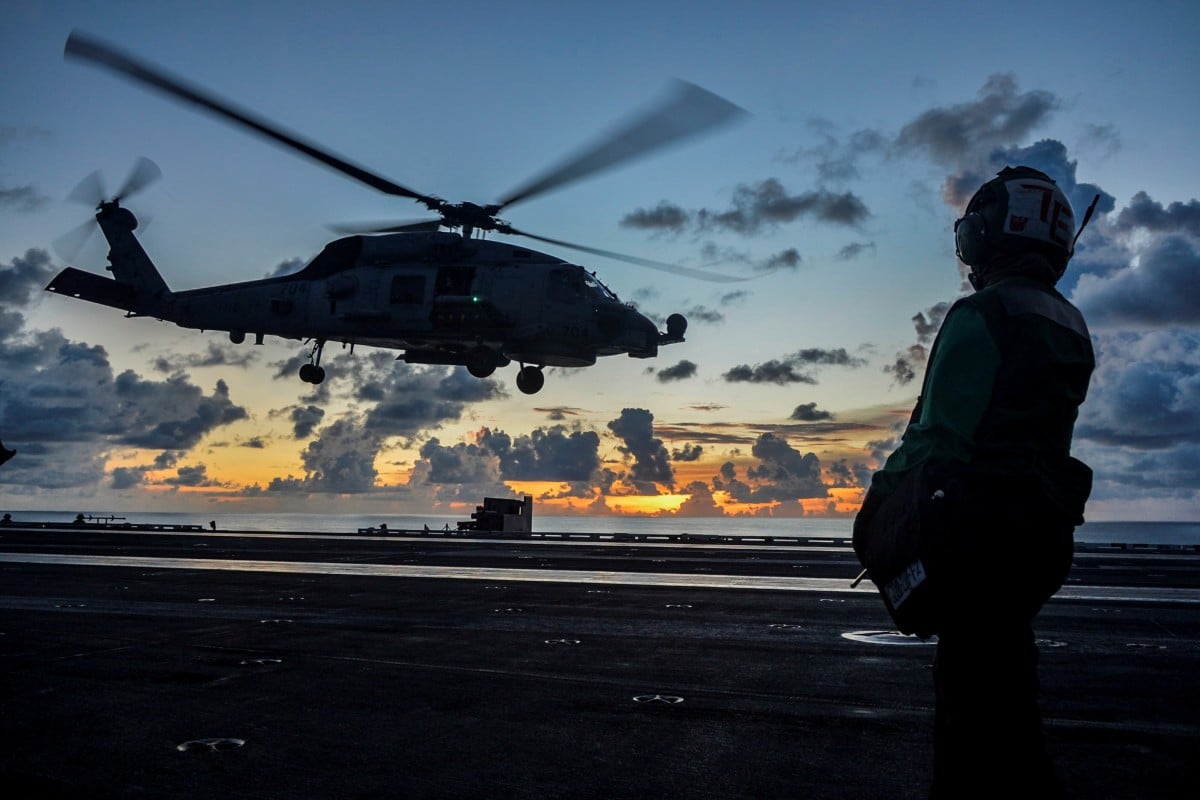
A Sea Hawk helicopter lifts off from the American aircraft carrier USS Ronald Reagan during an exercise in the South China Sea in July. Photo: Reuters
The United States is expected to take a more contained approach to the South China Sea under Joe Biden, but the disputed waters will remain a potential hotspot in the relationship between Beijing and Washington, observers say.“I think he [Biden] will take a different approach to [US President Donald] Trump,” said Wu Shicun, head of the National Institute of South China Sea Studies, which advises the government.“He is likely to pay more attention to the South China Sea but his policies will be more balanced and more contained.”
One possible change is a reduction in the number of freedom of navigation operations conducted by the US Navy in the sea, Wu said.https://www.youtube.com/embed/BcMR2ZCcheI
The patrols have been a regular feature of US military operations since Barack Obama was in the White House but became more frequent under Trump, who gave more flexibility to the Pentagon to plan its naval patrol schedules in the contested waters.ADVERTISING
American forces have conducted eight freedom of navigation operations this year, the same number as in 2019, but up from six in 2018 and four in each of the previous three years. The US says the manoeuvres are necessary to maintain balance in the region, but Beijing regards them as provocative and has condemned them.
“The US military operations in the South China Sea have affected Sino-US relations and increased tensions,” Wu said.
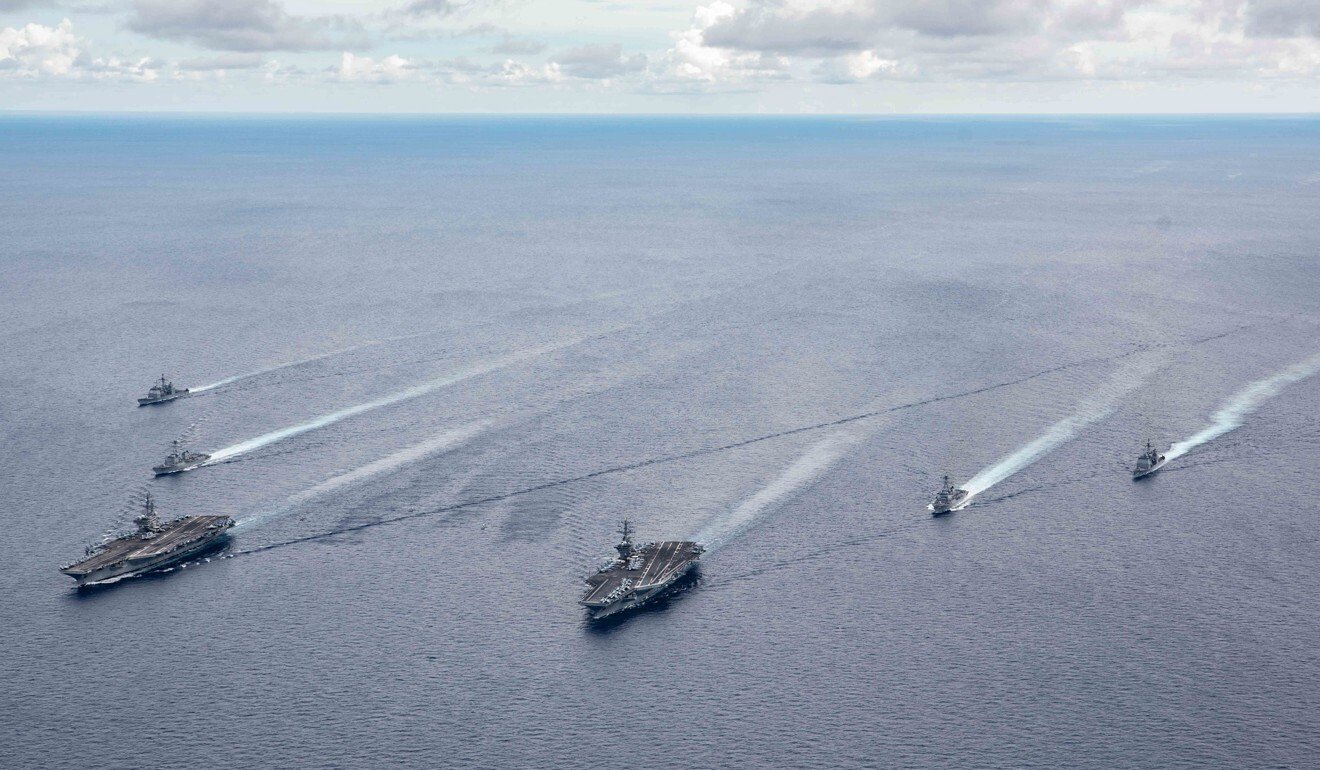
US aircraft carriers and their strike groups take part in a drill in the South China Sea in July. Photo: EPA-EFELe Hong Hiep, a fellow at the ISEAS-Yusof Ishak Institute in Singapore, said the people Biden chose to fill key defence positions would affect Washington’s relationship with Beijing in the South China Sea, but whoever they were, the tensions were unlikely to go away any time soon.
EVERY OTHER SATURDAYSCMP Global Impact NewsletterSIGN UP NOWBy registering, you agree to our T&C and Privacy Policy
Among the front-runners for the post of defence secretary is Michele Flournoy, who served as undersecretary of defence for policy under Obama and is known for advocating a tough stance on China.
“The South China Sea has become an important battleground for US-China strategic competition, where the US can mobilise countries in the region against Beijing, using China’s excessive territorial claims as the rallying call,” Le said.
“As such, under the Biden administration, the US and its allies are likely to continue to maintain or even strengthen their involvement in the South China Sea.”https://www.youtube.com/embed/8eqtl0ym1p8
Meanwhile, Beijing has been stepping up its engagement with its Southeast Asian neighbours.At a video meeting with the Association of Southeast Asian Nations on Thursday, Chinese Premier Li Keqiang said boosting relations with the 10-member bloc was one of Beijing’s priorities.He also called for the negotiations of a code of conduct for the South China Sea to be expedited. In 2018, Li proposed a three-year timeline to create such a code. A second reading of the negotiating draft began in January but the process was halted by the Covid-19 pandemic.
Wu said that Washington’s policy to reject most of Beijing’s territorial claims in the South China Sea, the political turmoil in Malaysia, and possible leadership changes in Vietnam and the Philippines over the next two years would complicate the negotiation process.
Le said that despite those hurdles, Beijing was keen to finalise the code.“[A] deepening US-China rivalry may encourage China to accelerate the negotiations,” he said.
“On the other hand, it may also prompt Washington to back nations to resist some of China’s key demands, such as excluding countries from outside the region from conducting military exercises or marine economic activities in the South China Sea.”
This week, the U.S. government for the first time imposed economic penalties on Chinese businesses for their behavior in the South China Sea. The Commerce Department placed 24 Chinese companies on the Entity List. The list restricts exports of certain goods to companies and individuals that threaten U.S. national security or foreign policy priorities. According to Commerce Secretary Wilbur Ross, the 24 companies (22 of which are state-owned enterprises) were selected because they “played a significant role” in China’s construction of artificial bases in the Spratly Islands. The State Department, meanwhile, announced that it would not issue visas to Chinese nationals “responsible for, or complicit in, either the large-scale reclamation, construction, or militarization of disputed outposts in the South China Sea, or the PRC’s use of coercion against Southeast Asian claimants to inhibit their access to offshore resources.”





 CVD
CVD 