CBSnews.com On the eve of his visit to the United States, China’s president, Jiang Zemin, sat down for a rare interview with Mike Wallace.
In a wide-ranging and surprisingly frank interview, Jiang talked about many topics, including relations between the United States and China, Tiananmen Square and American morals.
Jiang Zemin (born August 17, 1926, Yangzhou, Jiangsu province, China—died November 30, 2022, Shanghai, China) was a Chinese official who was general secretary of the Chinese Communist Party (CCP; 1989–2002) and president of China (1993–2003).
Jiang joined the CCP in 1946 and graduated from Shanghai Jiao Tong University the following year with a degree in electrical engineering. He worked in several factories as an engineer before receiving further technical training in the Soviet Union about 1955. He subsequently headed technological research institutes in various parts of China. In 1980 Jiang became vice minister of the state commission on imports and exports. Two years later he became vice minister of the electronics industry and from 1983 to 1985 was its minister. He had meanwhile become a member of the Central Committee of the CCP in 1982. Named mayor of Shanghai in 1985, he joined the Political Bureau in 1987.
At a time when other popular parts of Asia are struggling with dwindling tourist numbers, how is Vietnam hitting record numbers of visitors?
Vietnam has kicked off the new tourism year by shattering records. According to the national tourism authority, VNAT, almost 2.5 million international visitors arrived in January – the highest number ever recorded in a single month and an 18.5 per cent jump over the previous year.
While these figures represent an economic triumph, they also highlight a shifting geopolitical map.
Travellers are increasingly bypassing the smouldering border disputes between Thailand and Cambodia in favour of the relative stability found in Hanoi and Ho Chi Minh City. However, this new-found “stability” brings its own set of growing pains.
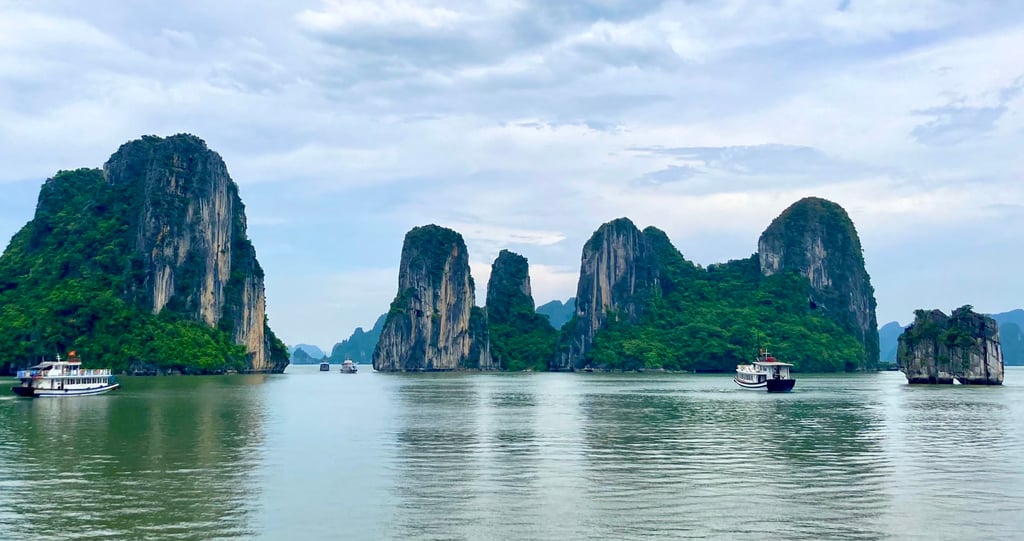
Tourist boats sail through the world-famous waterscape of Halong Bay. Photo: dpa
This surge is being driven by a diversifying demographic.
While most visitors still hail from within Asia, European arrivals are climbing significantly. VNAT credits this boom to eased visa rules – such as the 45-day visa-free stay for German citizens – alongside a rise in direct international flights and Vietnam’s growing reputation as a premier long-haul winter escape.
Hanoi and HCMC now proportionately more expensive than Singapore and Tokyo
HO CHI MINH CITY — To get by in Vietnam’s crowded, bustling capital Hanoi, university employee Nguyen Bich Ha shares a room with her husband and two kids that is 16.5 square meters in size, little bigger than a parking space for a car.
She wishes that the four of them could have a home of their own instead of living in a room in her husband’s parents’ house. She and her husband depend on the in-laws for help taking their children to and from school but sometimes disagree with them on issues related to bringing up the kids and the timing of meals.
“There isn’t much privacy either since there are many shared living spaces,” said Ha, 36. “And since it’s their house, we can’t make decisions on decoration or changes around the house.
Curfews, soldiers in the streets, and a prime minister’s resignation. After a social media blackout and years of corruption claims, Nepal erupted. Security forces fired live rounds, killing at least 19. With demands for mass resignations and new elections, what’s next for Nepal?
Cambodia’s central bank has reportedly revoked the banking license of a conglomerate accused of illicit online activities. But doubts abound about Phnom Penh’s commitment to taking action against cyberfraud networks.
Southeast Asia’s vast cyber scam industry exploded during the COVID-19 pandemic when many of the region’s illegal casino operators turned to online fraudImage: allOver-MEV/IMAGO
The banking arm of a Cambodia-based conglomerate accused of running the world’s “largest ever illicit online marketplace” has had its banking license revoked by the Cambodia’s central bank, Radio Free Asia reported last week.
Huione Guarantee, the Telegram marketplace of Huione Group, has reportedly processed up to €22 billion ($24 billion) in illicit transactions since 2021, making it by far the world’s largest illegal online marketplace, cryptocurrency compliance firm Elliptic reported last year.
Huione Pay, the group’s banking arm, had its license withdrawn because of noncompliance with “existing regulations and recommendations that may have been made by the regulators,” a National Bank of Cambodia spokesperson told Radio Free Asia, a US Congress-funded media outlet.
Japan’s agriculture minister has resigned because of political fallout over his comment that he “never had to buy rice” because he got it from supporters as gifts.Read More
Japan’s agriculture minister has resigned because of political fallout over his comment that he “never had to buy rice” because he got it from supporters as gifts. (Produced by Elaine Carroll)Read More
The intricate histories and niche experiences that we love about Saigon can make it difficult to explore. If you enjoy reading about Saigoneer’s favorite destinations, Urbanist Travel can help create a tailor-made itinerary based on your requests. More Informatio
Read this article in Vietnamese at Sài·gòn·eer.From the very first discussions in 1868 regarding a new marketplace for Saigon, it was not until 1914, that Bến Thành Market became a reality. The birth of the market was like a dream come true, one that came together after nearly five decades of debate in search of solutions for the city’s infrastructure woes.
The five-decade quest to seek a “worthy” marketplace
In her research conducted on the vendors of Bến Thành, anthropologist Ann Marie Leshkowich recounts the lengthy discussions of then Saigon’s colonial administration regarding the establishment of a new commercial center, one that, according to them, must become a place “worthy” of the metropolis they were helping to create.
In 1868, the French had only spent about one decade trying to install a colonial network in Vietnam. Members of the Municipal Council (Conseil Municipal) had the thought of building a new marketplace from metal, replacing traditional thatch markets. In 1869, a budget of 110.000 francs was greenlit, but by 1870, the estimated expenditure had ballooned threefold, causing them to reconsider the planned building methods and amount of materials.
Plastic is now ubiquitous in the Mekong, Asia’s Mother of Rivers, and experts and local people are struggling to contain the risks to human health, biodiversity and livelihoods
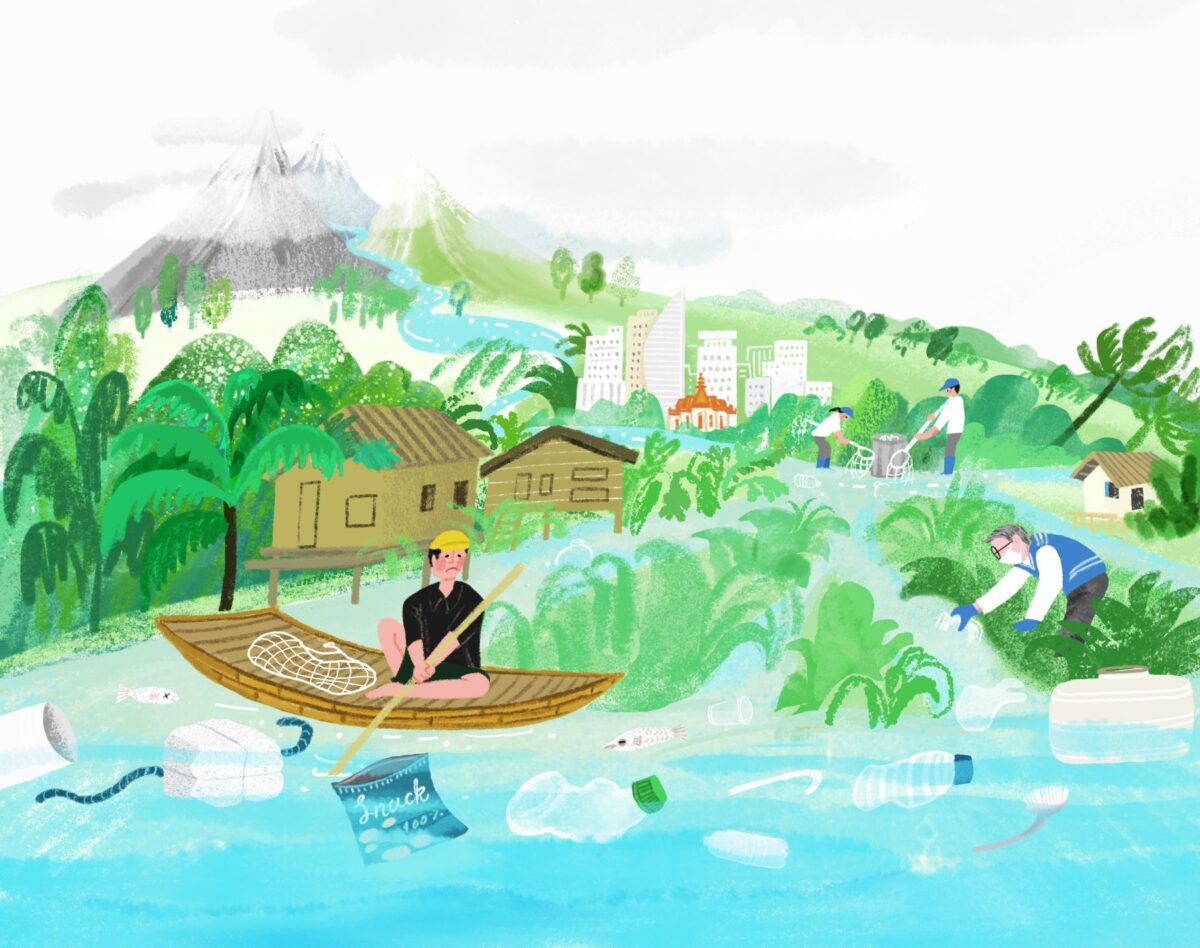
ILLUSTRATION: Sunhee Park / Dialogue Earth
On Sơn Island in Viet Nam’s Mekong Delta, Le Trung Tin scatters fish feed into his ponds, where dozens of snakehead fish leap through the surface in synchronized bursts. “I taught them how to do that,” he says proudly, tossing another handful of feed at his fish.
The scene looks idyllic, but Le’s fish farm is a reluctant response to an escalating crisis. For decades, he made his living fishing the Hậu River, a distributary of the Mekong. But in recent years, plastic waste clogged his nets and strangled the fish. “I had no choice but to stop,” he says. “Everything was tangled – trash, nets, even the fish themselves. It was hopeless.”
Now, Le relies on enclosed ponds using filtered water to keep his fish alive. “I built this ecological environment free of plastic waste, chemical spills and [protected it from] extreme weather,” he says.
Le’s experience reflects the wider challenges facing the Mekong. Stretching over 4,300 kilometres from the Tibetan Plateau to the South China Sea, the river supports nearly 70 million people and some of the world’s most biodiverse ecosystems. Yet, it is one of the most plastic-polluted rivers in the world and among the 10 rivers in Asia that carry the vast majority of plastic to the sea. The Mekong dumps – by some estimates – tens of thousands of tonnes each year into the ocean, with plastic waste accumulating along its banks, tributaries and lakes.
Plastic enters the Mekong in myriad ways – agricultural runoff, unregulated dumping and a flood of single-use packaging from upstream countries like China and Myanmar. It accumulates in hotspots like Tonle Sap Lake in Cambodia and the wetlands of Vietnam’s Mekong Delta, where this plastic waste threatens biodiversity, food security and human health.
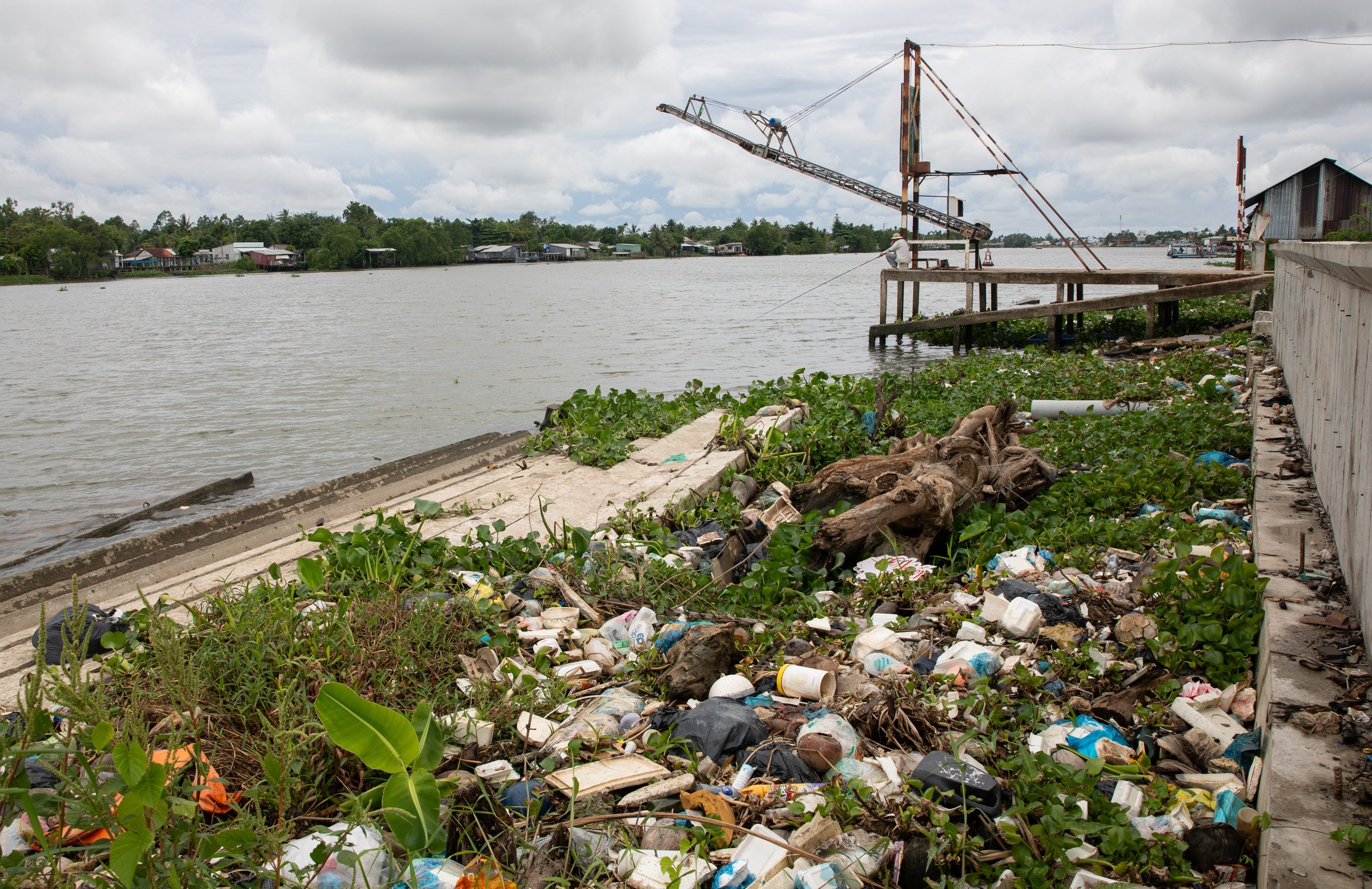
Plastics and other waste accumulate along the riverbank near the city of Can Tho in Vietnam’s Mekong Delta region. PHOTO: Anton L. Delgado / Dialogue Earth
Myanmar has struggled with civil war, military rule and widespread poverty for much of the past seven decades. But the country’s youth have never faced threats to their survival and future as severe as today.
The military coup of February 2021 shattered the hopes of many young people in Myanmar who had envisioned a better and more stable future under their democratically elected leader, Aung San Suu Kyi.
As brutal crackdowns on peaceful protests unfolded, thousands of young people fled to the jungles to take up arms. Hundreds of thousands more joined the civil disobedience movement, abandoning their studies to protest military rule through demonstrations and strikes.
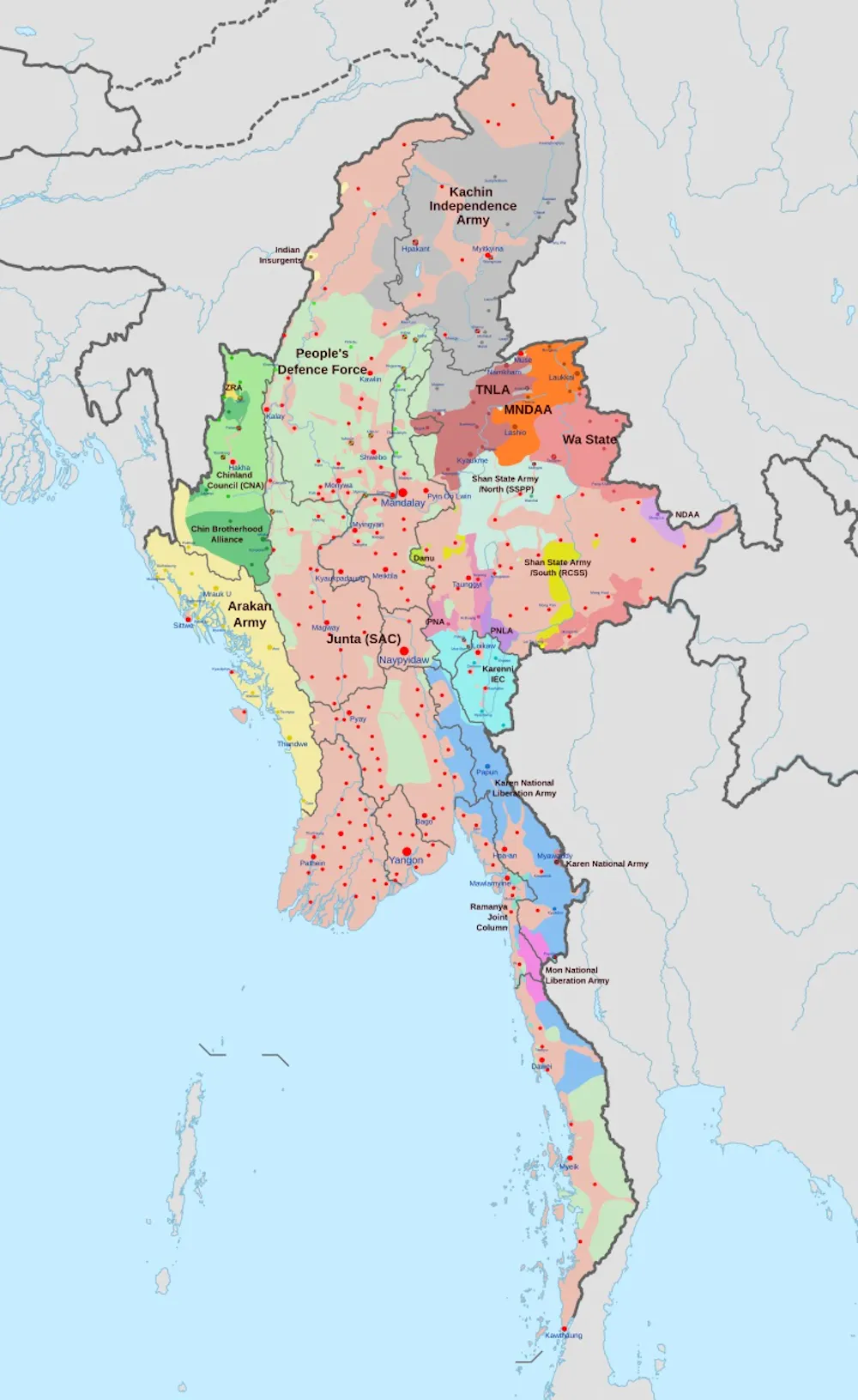
The military situation in Myanmar as of February 4 2025. Wikimedia Commons
Myanmar’s armed opposition has made significant gains over the past year, seizing vast territories from the military – though the latter still controls major cities like Naypyidaw, Yangon, and Mandalay.
Amid the surging violence, young people in Myanmar are finding themselves even more deprived of opportunities and increasingly forced into submission.
In February 2024, Myanmar’s junta declared mandatory military service for men aged 18 to 35 and women aged 18 to 27. Those who do not comply face up to five years in prison.
Trump’s rent-seeking foreign policy pertaining to energy and critical minerals will force Southeast Asian countries to do what they least desire: making a choice between China and the US.
The Trump administration’s insular and rent-seeking foreign policy will significantly alter the geopolitics of energy transition in Southeast Asia. This will manifest in two ways. First, the potential cessation of US involvement in the region’s energy sector will heighten fears of China’s dominance in energy infrastructure projects — including the ASEAN Power Grid (APG). Second, Trump’s intentions of using critical minerals as a bargaining chip for providing military assistance, if applied to the ASEAN region, will impact the regional vision for sustainable mineral development.
The shutting down of the United States Agency for International Development (USAID), an important player in the energy sector, will intensify existing fears of China’s dominance in electricity transmission and generation. As shown in Table 1, China provided approximately US$534 million in aid to the region’s energy sector in 2022, accounting for more than a quarter of the total share. Comparatively, the US provided only US$23.7 million, or 1 per cent of total energy-related aid to Southeast Asia. In addition, the China Southern Power Grid Company and State Grid Corporation of China own and operate significant portions of the national grids in Laos and the Philippines, respectively.
China Leads in Energy Aid
Table 1 Energy-related aid to Southeast Asia 2022 (excerpt) (USD, in %)
Donor
Amount
Contribution
China
534 million
26
ADB
368 million
18
Germany
274 million
13
Canada
231 million
11
South Korea
211 million
10
Japan
167 million
8
World Bank
90.0 million
4
EU Institutions
42.3 million
2
France
42.2 million
2
AIIB
34.8 million
2
United States
23.7 million
1
The table is modified from Lowy Institute’s (2024) Southeast Asia Aid Map.
The Tokyo government is set to introduce a four-day work week for its employees starting in April 2025, following a similar move made by Singapore in December. Governments and companies in Asia have generally been slower than their Western counterparts in taking steps to adopt a healthy work-life balance. For decades, Japan’s work culture has been synonymous with gruelling hours and self-sacrifice. Is Tokyo’s introduction of a four-day work week the start of a shift away from a culture of overwork in Japan and across the region, or is it just a pipe dream for Asia?
By Jessie Yeung, Sophie Jeong, Carlotta Dotto, Woojin Lee, Kenneth Uzquiano and Saki Toi
Published May 25, 2024
(CNN) — Charlie was 15 when his life inexplicably shrank to fit within the frame of his lower bunk bed in his family’s cramped Hong Kong apartment.
“I felt very depressed, confused, like I didn’t know what I wanted,” said Charlie, who’s now 19 and still learning how to navigate the world outside.
Charlie is among millions of hikikomori, a Japanese term for people who cut themselves off from society, sometimes for months or years – often Gen Z and Millennials in the prime of their youth.
The phenomenon first emerged in Asia, and is particularly well-documented in Japan – but similar stories are surfacing in other parts of the world including the United States, Spain and France.
Tại Indonesia, một ứng viên tổng thống và bộ trưởng ngoại giao đã phát biểu về cuộc chiến ở Gaza trước hàng trăm nghìn người biểu tình. Tại Malaysia, thủ tướng, đội khăn keffiyeh của người Palestine, đã dẫn đầu cuộc biểu tình của riêng mình, mô tả tình hình Gaza là “điên rồ” và “đỉnh cao của sự man rợ.” Còn tại Singapore, chính phủ cấm treo cờ của hai bên tham chiến.
Tại Thái Lan và Philippines, sự cảm thông dành cho các nạn nhân dân thường người Palestine đi kèm với sự tức giận trước việc nhiều công dân Thái Lan và Philippines đã bị Hamas giết hoặc bắt làm con tin. Trong khi tại Việt Nam, Lào, và Campuchia, các chính phủ đã thận trọng đưa ra những tuyên bố trung lập về Gaza – dù ký ức về trải nghiệm bị ném bom của các quốc gia này đang dần nổi lên.
Aljazeera – Soviet-era nostalgia and anti-Western sentiment fuel online support for Russia’s Vladimir Putin and his war on Ukraine.
Russian President Vladimir Putin looks through a scope as he shoots a Chukavin sniper rifle (SVCh-380) during a visit to the military Patriot Park in Kubinka, outside Moscow, in September 2018 [File: Alexey Nilkolsky/Sputnik/ AFP]
By Al Jazeera Staff
Published On 18 Nov 202218 Nov 2022
While the West has united in condemnation of Russia’s invasion of Ukraine, opinions differ markedly in parts of the developing world where Russia is not reviled but revered for what some see as its stance against the West and its hypocrisies.
In Southeast Asia, a region dominated for decades by “strongman” political leaders and where nostalgia for the Soviet Union persists in some quarters, Russian President Vladimir Putin has a strong following among social media users who are sympathetic to his invasion of Ukraine and find his macho self-image appealing.



![Russian President Vladimir Putin looks through the scope as he shoots a Chukavin sniper rifle (SVC-380) during a visit to the military Patriot Park in Kubinka, outside Moscow, in September 2018 [File: Alexey Nilkolsky/Sputnik/ AFP]](https://www.aljazeera.com/wp-content/uploads/2022/11/000_1995N2.jpg?resize=770%2C513)
 CVD
CVD 
