A new deal looks set to provide wideranging new minimum conditions to delivery riders and drivers who work for Uber Eats and DoorDash. (ABC News: Abubakr Sajid)
In short:
The Transport Workers Union has reached an agreement with Uber Eats and DoorDash for minimum safety net pay rates and other conditions for delivery drivers and riders.
The union says it is a “significant step” towards improving fairness in the gig economy.
What’s next?
The deal requires approval from the Fair Work Commission.
A historic deal could transform Australia’s gig economy, with the country’s two largest on-demand delivery platforms agreeing to minimum pay rates and providing wide-ranging improvements and protections for riders and drivers.
The agreement struck between the Transport Workers Union (TWU) and Uber Eats and DoorDash followed years of campaigning by workers and the union.
Minimum safety net pay rates would put a floor beneath what have been wildly variable earnings for delivery workers, who have often taken home far less than Australia’s minimum wage under current pay arrangements, which see them paid per delivery, not for time worked.
International standards are proliferating, delivering major benefits to wealthy nations and big multinationals while leaving many developing countries behind, a new World Bank report shows.
Main Messages
Standards are the hidden foundations of prosperity. They are the shared rules that make plugs fit sockets, medicines work safely, and digital systems connect seamlessly. Standards embody collective knowledge, build trust, and enable economies to function efficiently. When they fail, markets fragment; when they work, prosperity follows.
For low- and middle-income countries, standards have never mattered more. Nearly 90 percent of world trade is now shaped by nontariff measures, most linked to standards. From digital systems for payment to charging stations for electric vehicles, new technologies can deliver economywide benefits only when standards exist. Mastering them can enhance national competitiveness and protect against technological, financial, and environmental risks.
Standards are a versatile tool of economic policy.Governments can use voluntary standards to drive innovation and give technical guidance on compliance with regulations. They can also make them mandatory when uniform compliance is necessary to protect health, safety, or the environment. In addition, governments can deploy standards as an instrument of industrial policy without reference to specific technologies or firms.
Ambition must match capacity.Countries should follow a trajectory that takes into account their stage of economic development, first adapting international standards to local realities when needed, then aligning with them as institutions mature, and actively participating in authoring standards in priority areas as capabilities grow. Rwanda’s Zamukana Ubuziranenge (“Grow with Standards”) program exemplifies this path, helping micro, small, and medium enterprises progress step by step towards compliance with international standards.
Investing in quality-enhancing infrastructure makes standards work well. The system of testing, certification, metrology, and accreditation in a country is what makes standards effective. Such systems are expensive to build and easy to neglect. Countries should start with public provision of quality-enhancing services in key sectors, then gradually open these services up to private participation. In many places, capacity gaps are stark: Ethiopia has fewer than 100 accredited auditors for compliance with standards of the International Organization for Standardization (ISO), compared with 12,000 in Germany.
To make standards a springboard for development, countries should do the following:
Create incentives for firms to upgrade the quality of their exports rather than imposing unrealistic mandates.
Adapt and sequence standards to align with the national capacity to enforce them.
Participate actively in international forums for setting standards.
Invest in and share quality infrastructure resources regionally.
The global community, for its part, must do the following:
Support participation by low- and middle-income countries in developing international standards and design tiered standards that reflect diverse capacities among countries.
Deepen regulatory cooperation and reduce fragmentation.
Develop credible standards for emerging technologies and actions to prevent or mitigate climate change.
Expand research and data on the economic and social impacts of standards.
Standards matter for development. Countries that take them seriously are getting ahead. Countries that ignore them risk falling behind.
Having placed artificial intelligence at the centre of its own economic strategy, China is driving efforts to create an international system to govern the technology’s use.
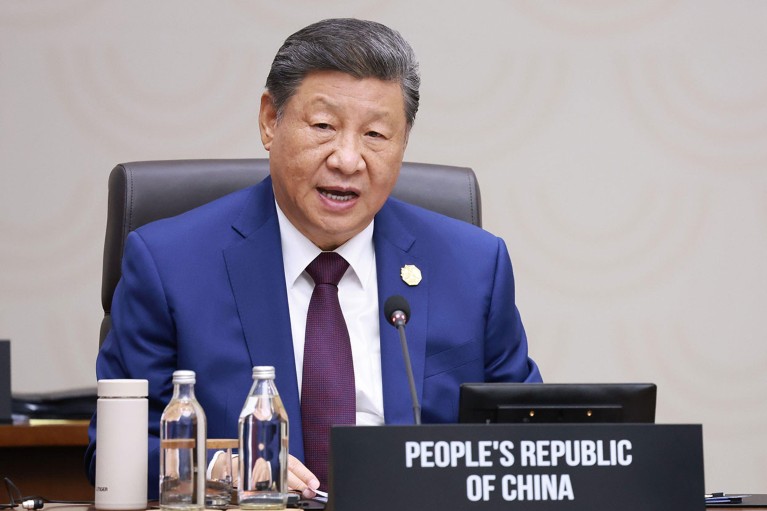
Chinese president Xi Jinping speaking at the 2025 Asia-Pacific Economic Cooperation meeting in Gyeongju, South Korea.Credit: Yonhap via AP/Alamy
So, where does this hidden labor take place? According to Casilli’s research, workers are in countries including Kenya, India, the Philippines, and Madagascar — regions with high levels of digital literacy, access to English- or French-speaking workers, and little in the way of labor protection or union representation.
Behind most of today’s AI models lies the labor of workers in the Global South, who are exposed to disturbing content and poor working conditions. This reality raises urgent questions about the transparency and ethics of AI development.
Picture working 10-hour days tagging distressing images to train an AI model — and getting paid not in money, but in a kilogram of sugar. This isn’t dystopian fiction, but reality for some of the workers behind today’s most advanced artificial intelligence.
While the development of AI is undoubtedly enhancing the lives of many by streamlining processes and offering efficient solutions, it also raises a pressing question: What is the true cost of AI, and who is paying for it?
Antonio Casilli, Professor of Sociology at Télécom Paris and Founder of DipLab, addressed this question during an Esade seminar on the promises and perils of the digitalization of work. The event was part of the kick-off for the DigitalWORK research project, which explores how digital technologies are transforming work and promoting fair, equitable and transparent labor conditions, with Anna Ginès i Fabrellas and Raquel Serrano Olivares (Universitat de Barcelona) as principal investigators.
Satellite images show how data centers are changing America’s landscape
Business insider
Data centers across the street from residential housing are not an uncommon scene in Virginia.
There are over a thousand planned or existing data centers across the US, according to a BI investigation.
Major tech companies are racing to construct even more as the AI boom continues. But at what cost?
Satellite images show where these facilities are cropping up and why they’re a nuisance to many.
Build, baby, build. That’s the mantra behind the AI boom sweeping America.
This year, alone, Amazon, Meta, Microsoft, and Google are projected to spend about $320 billion in capex, mostly for AI infrastructure, according to an analysis of financial statements by Business Insider.
At the heart of this AI infrastructure growth are data centers that house the specialized hardware and high-speed networking equipment, driving the intensive computations behind large language models. However, AI needs more.
Because AI learns by processing increasingly large amounts of data, improving it requires more computational power, which in turn necessitates more data centers.
A BI investigation found 1,240 data centers across America are already built or approved for construction by the end of 2024.
This ARSET training covers general approaches to apply satellite remote sensing data when studying or forecasting climate-sensitive infectious diseases.
Description
Climate-sensitive vector-borne diseases such as malaria impact millions of people each year, causing more than 700,000 deaths annually, according to the World Health Organization (WHO). Satellite remote sensing data can provide valuable insights for monitoring conditions which support disease vectors. In this training, participants will learn the basic principles of how satellite remote sensing data can be applied to track climate-sensitive vector-borne disease outbreaks and provide early warnings for potential outbreaks. Participants will learn about general approaches to apply satellite remote sensing data when studying or forecasting climate-sensitive infectious diseases. These will be illustrated with a case study example in the forecasting of malaria. Participants will also become familiar with some of the common, freely available NASA remote sensing datasets used in these applications, as well as where and how to access them and how to decide which datasets are fit for their purpose.
Part 1: How Remote Sensing Can be Used to Study Climate-Sensitive Infectious Diseases
Identify environmental variables and conditions that can be observed from space which are relevant to climate-sensitive infectious disease outbreaks.
Identify how satellite observations can improve the assessment and forecasting of climate-sensitive infectious disease outbreaks.
List the steps of a conceptual framework for incorporating remote sensing data into the study of climate-sensitive infectious diseases.
Recognize several remote sensing datasets commonly used to study and forecast climate sensitive infectious diseases, along with their key attributes such as resolution, coverage, latency, and uncertainty.
Select appropriate remote sensing datasets for studying climate-sensitive infectious diseases based on the disease characteristics, region of interest, and relevant environmental parameters.
Examine common benefits and challenges of using remote sensing data for studying climate-sensitive infectious diseases.
Part 2: Case Study in the Use of Remote Sensing to Study Climate-Sensitive Infectious Diseases
Identify environmental variables and conditions relevant to malaria that can be observed from space.
Recognize why the remote sensing datasets used in this case study were chosen, based on their key attributes.
Recognize the steps taken for accessing and preparing remote sensing data for use in this case study.
Identify the steps used by the EPIDEMIA system for integrating remote sensing data.
Examine the benefits and challenges of using remote sensing data for tracking and forecasting malaria in Ethiopia, and how these were addressed through the case study.
Examine the primary outcomes of the case study and ways its approach might be expanded in the future.
Such a simple query might seem trivial, but making it possible across billions of sessions requires immense scale. While OpenAI reveals little information about its operations, we’ve used the scraps we do have to estimate the impact of ChatGPT—and of the generative AI industry in general.
OpenAI’s actions also provide hints. As part of the United States’ Stargate Project, OpenAI will collaborate with other AI titans to build the largest data centers yet. And AI companies expect to need dozens of “Stargate-class” data centers to meet user demand.
Estimates of ChatGPT’s per-query energy consumption vary wildly. We used the figure of 0.34 watt-hours that OpenAI’s Sam Altman stated in a blog post without supporting evidence. It’s worth noting that some researchers say the smartest models can consume over 20 Wh for a complex query. We derived the number of queries per day from OpenAI’s usage statistics below. illustrations: Optics Lab
OpenAI says ChatGPT has 700 million weekly users and serves more than 2.5 billion queries per day. If an average query uses 0.34 Wh, that’s 850 megawatt-hours; enough to charge thousands of electric vehicles every day.
2.5 billion queries per day adds up to nearly 1 trillion queries each year—and ChatGPT could easily exceed that in 2025 if its user base continues to grow. One year’s energy consumption is roughly equivalent to powering 29,000 U.S homes for a year, nearly as many as in Jonesboro, Ark.
Though massive, ChatGPT is just a slice of generative AI. Many companies use OpenAI models through the API, and competitors like Google’s Gemini and Anthropic’s Claude are growing. A report from Schneider Electric Sustainability Research Institute puts the overall power draw at 15 terawatt-hours. Using the report’s per-query energy consumption figure of 2.9 Wh, we arrive at 5.1 trillion queries per year.
AI optimists expect the average queries per day to jump dramatically in the next five years. Based on a Schneider Electric estimate of overall energy use in 2030, the world could then see as many as 329 billion prompts per day—that’s about 38 queries per day per person alive on planet Earth. (That’s assuming a global population of 8.6 billion in 2030, which is the latest estimate from the United Nations.) As unrealistic as that may sound, it’s made plausible by plans to build AI agents that work independently and interact with other AI agents.
The Schneider Electric report estimates that all generative AI queries consume 15 TWh in 2025 and will use 347 TWh by 2030; that leaves 332 TWh of energy—and compute power—that will need to come online to support AI growth. That implies the construction of dozens of data centers along the lines of the Stargate Project, which plans to build the first ever 1-gigawatt facilities. Each of these facilities will theoretically consume 8.76 TWh per year—so 38 of these new campuses will account for the 332 TWh of new energy required.
While estimates for AI energy use in 2030 vary, most predict a dramatic jump in consumption. The gain in energy consumption will be driven mostly by AI inference (the power used when interacting with a model) instead of AI training. This number could be much lower or much higher than the Schneider Electric estimate used here, depending on the success of AI agents that can work together—and consume energy—independent of human input.
Báo cáo tội phạm mạng hoạt động ở Đông Nam Á – Compound crime: Cyber scam operations in Southeast Asia
Repurposed hotels, casinos, and private compounds across Cambodia, Laos, Myanmar and the Philippines have become centres of global fraud. These compounds are operated by organized criminal networks that exploit hundreds of thousands of people, many of whom are trafficked and forced to perpetrate online scams. Victims include not only those defrauded online but also the scam workers themselves, subjected to threats, violence, sexual exploitation and extreme working conditions.
The report details how cyber scams —including ‘pig-butchering’ romance-investment scams, crypto fraud, impersonation and sextortion— now generate tens of billions of dollars annually.
Thống kê và xu hướng tội pham Crypto 2025 – Crypto Crime Report: 2025 Statistics & Trends
Crypto crime is escalating fast and shifting in form. In 2024 alone, $51 billion flowed into illicit wallets, with $40 billion laundered and over $2 billion stolen outright. Bitcoin is no longer king in the shadows; stablecoins now dominate criminal crypto flows. This report breaks down who’s losing money, how it’s being funneled, and why tracking these shifts is critical. The insights ahead reveal patterns that can help spot emerging threats and shape stronger policy.
How much cryptocurrency has been stolen in the world
How many Bitcoins have been stolen? How much Ethereum was stolen? How much Solana has been stolen? The biggest crypto rug pulls Cryptocurrency money laundering statistics The biggest crypto scams in history Insights & Implications: Methodology: References:
Recently your social media feed may have been flooded with headlines on the advances in Artificial Intelligence (AI) or even AI-generated images. Text-to-image algorithms such as Dall-E2 and Stable Diffusion are becoming hugely popular. ChatGPT, a chatbot developed by OpenAI, is now the world’s best-performing large language model, reaching 1 million users in its first week – a rate of growth much faster than Twitter, Facebook or TikTok.
As AI demonstrates its ability to craft poetry, write code and even pollinate crops by imitating bees, the governance community is waking up to the impact of artificial intelligence on the knotty problem of corruption. Policy institutes and academics have pointed to the potential use of AI to detect fraud and corruption, with some commentators heralding these technologies as the “next frontier in anti-corruption.”
Artificial Intelligence (AI) has the potential to address some of the biggest challenges in education today, innovate teaching and learning practices, and ultimately accelerate the progress towards SDG 4. However, these rapid technological developments inevitably bring multiple risks and challenges, which have so far outpaced policy debates and regulatory frameworks. This publication offers guidance for policy-makers on how best to leverage the opportunities and address the risks, presented by the growing connection between AI and education. It starts with the essentials of AI: definitions, techniques and technologies. It continues with a detailed analysis of the emerging trends and implications of AI for teaching and learning, including how we can ensure the ethical, inclusive and equitable use of AI in education, how education can prepare humans to live and work with AI, and how AI can be applied to enhance education. It finally introduces the challenges of harnessing AI to achieve SDG 4 and offers concrete actionable recommendations for policy-makers to plan policies and programmes for local contexts.
It’s a Wild West out there for artificial intelligence. AI applications are increasingly used to make important decisions about humans’ lives with little to no oversight or accountability. This can have devastating consequences: wrongful arrests, incorrect grades for students, and even financial ruin. Women, marginalized groups, and people of color often bear the brunt of AI’s propensity for error and overreach.
The European Union thinks it has a solution: the mother of all AI laws, called the AI Act. It is the first law that aims to curb these harms by regulating the whole sector. If the EU succeeds, it could set a new global standard for AI oversight around the world.
But the world of EU legislation can be complicated and opaque. Here’s a quick guide to everything you need to know about the EU’s AI Act. The bill is currently being amended by members of the European Parliament and EU countries.
What’s the big deal?
The AI Act is hugely ambitious. It would require extra checks for “high risk” uses of AI that have the most potential to harm people. This could include systems used for grading exams, recruiting employees, or helping judges make decisions about law and justice. The first draft of the bill also includes bans on uses of AI deemed “unacceptable,” such as scoring people on the basis of their perceived trustworthiness.
The country has one of the world’s most powerful facial recognition systems, which is being used in various ways, but concerns have been raised, as the programme Why It Matters finds out.
Even as Facebook’s #10yearchallenge sparks concerns that the social media giant is mining data for facial recognition AI, China’s facial recognition systems are already a reality in everyday life. Why It Matters host Joshua Lim finds out how public restrooms use it to prevent people from taking too much toilet paper; and how jaywalkers are identified, then publicly shamed on a digital billboard. Tiếp tục đọc “From dispensing toilet paper to shaming jaywalkers, China powers up on facial recognition”→
‘All the worst tendencies of the private sector in taking advantage of people are heightened by these new technologies’ … Joseph Stiglitz. Photograph: Alexandre Isard/Paris Match/Contour/Getty Images
The technology could vastly improve lives, the economist says – but only if the tech titans that control it are properly regulated. ‘What we have now is totally inadequate’
It must be hard for Joseph Stiglitz to remain an optimist in the face of the grim future he fears may be coming. The Nobel laureate and former chief economist at the World Bank has thought carefully about how artificial intelligence will affect our lives. On the back of the technology, we could build ourselves a richer society and perhaps enjoy a shorter working week, he says. But there are countless pitfalls to avoid on the way. The ones Stiglitz has in mind are hardly trivial. He worries about hamfisted moves that lead to routine exploitation in our daily lives, that leave society more divided than ever and threaten the fundamentals of democracy.
The ACLU is worried about a Kafka-esque near future where police and other government agencies harness the power of facial recognition technologyto identify undocumented migrants, minority activists or individuals joining public protests. As such, the organization is demanding that online retail giant Amazon stop selling “dangerous” face recognition technology to law enforcement, which could potentially help police identify individuals from footage gathered from a variety of sources, including surveillance cameras in public and retail establishments, as well as from police body cameras.
A few times a month, Bassam pushes a shopping cart through the aisles of a grocery store stocked with bags of rice, a small selection of fresh vegetables, and other staples. Today he’s wearing a black sweater tucked into denim jeans, which are themselves tucked into calf-high boots caked in mud. The Tazweed Supermarket, where he’s shopping, is on the periphery of a 75,000-person refugee camp in the semi-arid Jordanian steppe, six and a half miles from the Syrian border.





 CVD
CVD 