Islands to eliminate plastic waste

VNN – Update: July, 05/2019 – 08:43

A training course of solid waste sorting opens on the Chàm Islands, off the coast of Hội An city. The Islands began a plastic waste monitoring programme. — VNS Photo Công Thành
Hoài Nam

CHÀM ISLANDS — The Chàm Islands’ Marine Protected Area (MPA) management board, in co-operation with the International Union for Conservation of Nature (IUCN), has launched a new garbage sorting programme as part of efforts to reduce plastic waste in Việt Nam.

The project is one of 12 nationwide that IUCN and Greenhub – an NGO working in waste management – have implemented to support the community in classifying waste. Tiếp tục đọc “Islands to eliminate plastic waste”

Đà Nẵng là thành phố xanh nhất Việt Nam

KTVDB – 13/07/2018 – 09:55:06

Tổ chức Bảo tồn thiên nhiên thế giới – WWF vừa công nhận Đà Nẵng đạt danh hiệu Thành phố Xanh Quốc gia của Việt Nam năm 2018.


Đà Nẵng cùng với 21 thành phố khác trên thế giới tham gia vào vòng bình chọn cuối cùng của cuộc thi Thành phố Xanh quốc tế

Để đạt được danh hiệu này, Thành phố đã gây ấn tượng với Ban giám khảo bởi các giải pháp tiếp cận toàn diện và tham vọng về thích ứng và giảm thiểu biến đổi khí hậu, nhằm góp phần thực hiện mục tiêu mà Thoả thuận Khí hậu Paris 2015 đặt ra. Tiếp tục đọc “Đà Nẵng là thành phố xanh nhất Việt Nam”

Building tough, resilient towns in the Greater Mekong Subregion

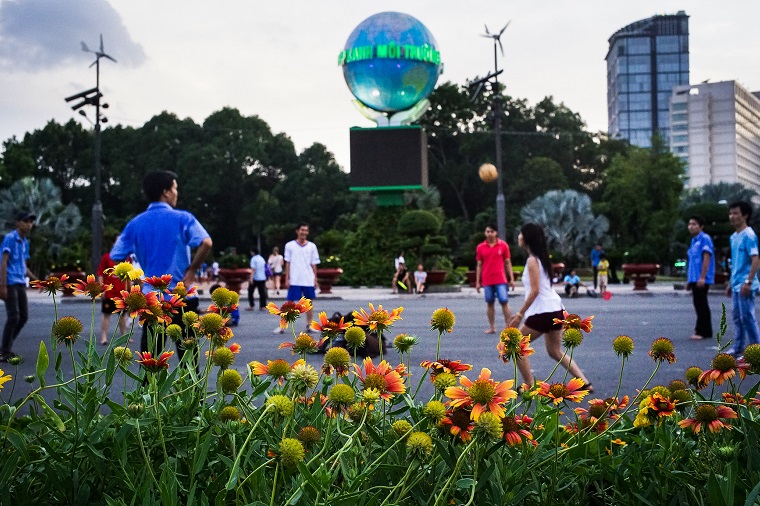
Building Tough, Resilient Towns in the Greater Mekong SubregionParks and other green spaces provide both health and environmental benefits, making them a key element in making towns and cities more livable and climate-resilient. Photo: ADB.

greatermekong – Vulnerable towns in Cambodia, Lao People’s Democratic Republic, and Viet Nam are using “green infrastructure” to stave off the impacts of climate change.

The towns of Battambang, Kaysone Phomvihane, and Dong Ha are very different but they have a few things in common. Each is threatened by flooding that stands to get worse in the face of climate change, and each is undergoing a climate resilience makeover to address the problem.

Battambang, Cambodia has a large flood- and drought-prone watershed area and sits near the Tonle Sap Lake. Kaysone Phomvihane in Lao People’s Democratic Republic faces frequent extreme flooding along the Mekong River. Dong Ha in Viet Nam is a typhoon-prone coastline city threatened by sea level rise, storm surge, and flash flooding.

These communities face long-term harm because of the diversion of their scarce resources from social services and other activities to emergency responses to floods and other climate-related disasters. Tiếp tục đọc “Building tough, resilient towns in the Greater Mekong Subregion”

The architecture of resilience

Published on Monday, 04 December 2017

View of Chandigarh High Court from Secretariat. Photo by Eduardo Guiot.

ADB.org_Southern Meghalaya in far northeastern India is one of the wettest places on Earth, crisscrossed by fast-flowing rivers and mountain streams. Here bridges aren’t built – they’re grown, ensuring connectivity in a remote area.

Local tribes identified a species of Indian rubber tree with an incredibly strong root system that flourishes in this region. The roots of the ficus elastic grow on huge boulders along the riverbanks, or even in the middle of the rivers.

To make the roots grow in the right direction, local tribes use different techniques from simply pulling the roots to tying or twisting them, until over time the roots formed the desired architectural structure.

Root bridges, also used in Indonesia, are a great example of how green infrastructure can provide alternative solutions to deliver sustainable connectivity. The normal course in Meghalaya would have been a bridge, but that would have been difficult and expensive in such areas.

  Green infrastructure not yet core part of urban infrastructure planning

Unfortunately, this approach is the exception rather than the rule. Green infrastructure today falls short of being a part of urban infrastructure core planning and asset inventory. It lacks provisions for long-term maintenance and management, as is done for other essential services.

When I studied architecture and urban planning in Chandigarh, an Indian city designed in 1966 by the famous Swiss-French architect Le Corbusier, I realized that cities are like people. They have interlinked systems with dependencies on nature – land, air, and water. Tiếp tục đọc “The architecture of resilience”