The gap in global standards – World Development Report 2025

STANDARDS FOR DEVELOPMENT

worldbank.org

Rising Standards Reshape the Global Economy

International standards are proliferating, delivering major benefits to wealthy nations and big multinationals while leaving many developing countries behind, a new World Bank report shows. 

Main Messages

  • Standards are the hidden foundations of prosperity. They are the shared rules that make plugs fit sockets, medicines work safely, and digital systems connect seamlessly. Standards embody collective knowledge, build trust, and enable economies to function efficiently. When they fail, markets fragment; when they work, prosperity follows.
  • For low- and middle-income countries, standards have never mattered more. Nearly 90 percent of world trade is now shaped by nontariff measures, most linked to standards. From digital systems for payment to charging stations for electric vehicles, new technologies can deliver economywide benefits only when standards exist. Mastering them can enhance national competitiveness and protect against technological, financial, and environmental risks.
  • Standards are a versatile tool of economic policy.Governments can use voluntary standards to drive innovation and give technical guidance on compliance with regulations. They can also make them mandatory when uniform compliance is necessary to protect health, safety, or the environment. In addition, governments can deploy standards as an instrument of industrial policy without reference to specific technologies or firms.
  • Ambition must match capacity.Countries should follow a trajectory that takes into account their stage of economic development, first adapting international standards to local realities when needed, then aligning with them as institutions mature, and actively participating in authoring standards in priority areas as capabilities grow. Rwanda’s Zamukana Ubuziranenge (“Grow with Standards”) program exemplifies this path, helping micro, small, and medium enterprises progress step by step towards compliance with international standards.
  • Investing in quality-enhancing infrastructure makes standards work well. The system of testing, certification, metrology, and accreditation in a country is what makes standards effective. Such systems are expensive to build and easy to neglect. Countries should start with public provision of quality-enhancing services in key sectors, then gradually open these services up to private participation. In many places, capacity gaps are stark: Ethiopia has fewer than 100 accredited auditors for compliance with standards of the International Organization for Standardization (ISO), compared with 12,000 in Germany.
  • To make standards a springboard for development, countries should do the following:
    • Create incentives for firms to upgrade the quality of their exports rather than imposing unrealistic mandates.
    • Adapt and sequence standards to align with the national capacity to enforce them.
    • Participate actively in international forums for setting standards.
    • Invest in and share quality infrastructure resources regionally.
  • The global community, for its part, must do the following:
    • Support participation by low- and middle-income countries in developing international standards and design tiered standards that reflect diverse capacities among countries.
    • Deepen regulatory cooperation and reduce fragmentation.
    • Develop credible standards for emerging technologies and actions to prevent or mitigate climate change.
    • Expand research and data on the economic and social impacts of standards.
  • Standards matter for development. Countries that take them seriously are getting ahead. Countries that ignore them risk falling behind.

➜ Download Main Messages: English | عربي | Español | Français | Português | Pусский | 中文
China wants to lead the world on AI regulation — will the plan work?

nature.com

Having placed artificial intelligence at the centre of its own economic strategy, China is driving efforts to create an international system to govern the technology’s use.

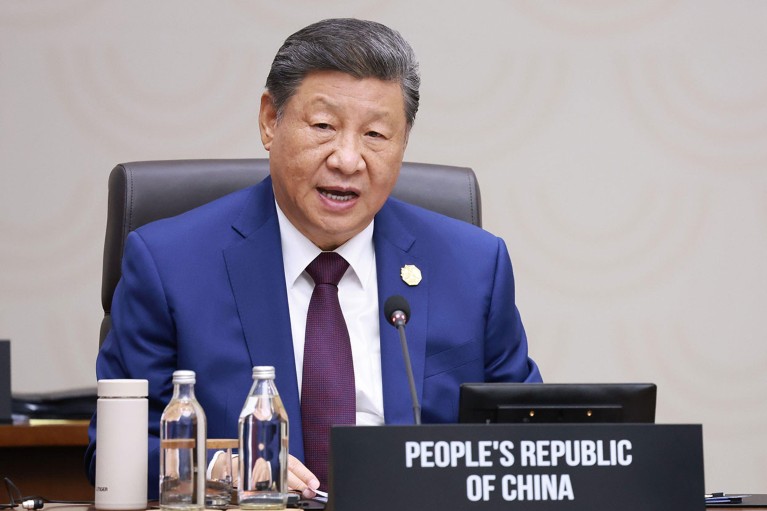
Chinese President Xi Jinping speaks at the APEC Economic Leaders' Meeting.
Chinese president Xi Jinping speaking at the 2025 Asia-Pacific Economic Cooperation meeting in Gyeongju, South Korea.Credit: Yonhap via AP/Alamy

Despite risks ranging from exacerbating inequality to causing existential catastrophe, the world has yet to agree on regulations to govern artificial intelligence. Although a patchwork of national and regional regulations exists, for many countries binding rules are still being fleshed out.

Tiếp tục đọc “China wants to lead the world on AI regulation — will the plan work?”

The cost of human labor behind AI development

Digital sweatshops of the Global South

So, where does this hidden labor take place? According to Casilli’s research, workers are in countries including Kenya, India, the Philippines, and Madagascar — regions with high levels of digital literacy, access to English- or French-speaking workers, and little in the way of labor protection or union representation. 

Do Better Team

Behind most of today’s AI models lies the labor of workers in the Global South, who are exposed to disturbing content and poor working conditions. This reality raises urgent questions about the transparency and ethics of AI development.

Picture working 10-hour days tagging distressing images to train an AI model — and getting paid not in money, but in a kilogram of sugar. This isn’t dystopian fiction, but reality for some of the workers behind today’s most advanced artificial intelligence. 

While the development of AI is undoubtedly enhancing the lives of many by streamlining processes and offering efficient solutions, it also raises a pressing question: What is the true cost of AI, and who is paying for it? 

Antonio Casilli, Professor of Sociology at Télécom Paris and Founder of DipLab, addressed this question during an Esade seminar on the promises and perils of the digitalization of work. The event was part of the kick-off for the DigitalWORK research project, which explores how digital technologies are transforming work and promoting fair, equitable and transparent labor conditions, with Anna Ginès i Fabrellas and Raquel Serrano Olivares (Universitat de Barcelona) as principal investigators. 

AI isn’t autonomous, it’s human-powered

Tiếp tục đọc “The cost of human labor behind AI development”

How many data centers are there in the USA

Businss Insider

Satellite images show how data centers are changing America’s landscape

Business insider

Suburban homes next to data centers
Data centers across the street from residential housing are not an uncommon scene in Virginia. 
  • There are over a thousand planned or existing data centers across the US, according to a BI investigation.
  • Major tech companies are racing to construct even more as the AI boom continues. But at what cost?
  • Satellite images show where these facilities are cropping up and why they’re a nuisance to many.

Build, baby, build. That’s the mantra behind the AI boom sweeping America.

This year, alone, Amazon, Meta, Microsoft, and Google are projected to spend about $320 billion in capex, mostly for AI infrastructure, according to an analysis of financial statements by Business Insider.

At the heart of this AI infrastructure growth are data centers that house the specialized hardware and high-speed networking equipment, driving the intensive computations behind large language models. However, AI needs more.

Because AI learns by processing increasingly large amounts of data, improving it requires more computational power, which in turn necessitates more data centers.

A BI investigation found 1,240 data centers across America are already built or approved for construction by the end of 2024.

Tiếp tục đọc “How many data centers are there in the USA”

Remote Sensing for Climate-Sensitive Infectious Diseases

NASA Earth Data

This ARSET training covers general approaches to apply satellite remote sensing data when studying or forecasting climate-sensitive infectious diseases.

Description

Climate-sensitive vector-borne diseases such as malaria impact millions of people each year, causing more than 700,000 deaths annually, according to the World Health Organization (WHO). Satellite remote sensing data can provide valuable insights for monitoring conditions which support disease vectors. In this training, participants will learn the basic principles of how satellite remote sensing data can be applied to track climate-sensitive vector-borne disease outbreaks and provide early warnings for potential outbreaks. Participants will learn about general approaches to apply satellite remote sensing data when studying or forecasting climate-sensitive infectious diseases. These will be illustrated with a case study example in the forecasting of malaria. Participants will also become familiar with some of the common, freely available NASA remote sensing datasets used in these applications, as well as where and how to access them and how to decide which datasets are fit for their purpose.

Part 1: How Remote Sensing Can be Used to Study Climate-Sensitive Infectious Diseases

  • Identify environmental variables and conditions that can be observed from space which are relevant to climate-sensitive infectious disease outbreaks.
  • Identify how satellite observations can improve the assessment and forecasting of climate-sensitive infectious disease outbreaks.
  • List the steps of a conceptual framework for incorporating remote sensing data into the study of climate-sensitive infectious diseases.
  • Recognize several remote sensing datasets commonly used to study and forecast climate sensitive infectious diseases, along with their key attributes such as resolution, coverage, latency, and uncertainty.
  • Select appropriate remote sensing datasets for studying climate-sensitive infectious diseases based on the disease characteristics, region of interest, and relevant environmental parameters.
  • Examine common benefits and challenges of using remote sensing data for studying climate-sensitive infectious diseases.

Host: Assaf Anyamba

Guest Instructors: Tatiana Loboda

Materials

Part 2: Case Study in the Use of Remote Sensing to Study Climate-Sensitive Infectious Diseases

  • Identify environmental variables and conditions relevant to malaria that can be observed from space.
  • Recognize why the remote sensing datasets used in this case study were chosen, based on their key attributes.
  • Recognize the steps taken for accessing and preparing remote sensing data for use in this case study.
  • Identify the steps used by the EPIDEMIA system for integrating remote sensing data.
  • Examine the benefits and challenges of using remote sensing data for tracking and forecasting malaria in Ethiopia, and how these were addressed through the case study.
  • Examine the primary outcomes of the case study and ways its approach might be expanded in the future.

Host: Assaf Anyamba

Guest Instructors: Michael Wimberly

Materials

What happens when you say “Hello” to ChatGPT?

The Hidden Behemoth Behind Every AI Answer

Billions of daily queries are reshaping energy and infrastructure

IEEE.org

Such a simple query might seem trivial, but making it possible across billions of sessions requires immense scale. While OpenAI reveals little information about its operations, we’ve used the scraps we do have to estimate the impact of ChatGPT—and of the generative AI industry in general.

This article is part of The Scale Issue.

OpenAI’s actions also provide hints. As part of the United States’ Stargate Project, OpenAI will collaborate with other AI titans to build the largest data centers yet. And AI companies expect to need dozens of “Stargate-class” data centers to meet user demand.

ChatGPT uses 8.5 Wh/day per user in 2025, equal to running a 10W LED bulb for 1 hour.

Estimates of ChatGPT’s per-query energy consumption vary wildly. We used the figure of 0.34 watt-hours that OpenAI’s Sam Altman stated in a blog post without supporting evidence. It’s worth noting that some researchers say the smartest models can consume over 20 Wh for a complex query. We derived the number of queries per day from OpenAI’s usage statistics below. illustrations: Optics Lab

ChatGPT uses 850 MWh daily, equaling 14,000 EV charges for 2.5 billion global queries.

OpenAI says ChatGPT has 700 million weekly users and serves more than 2.5 billion queries per day. If an average query uses 0.34 Wh, that’s 850 megawatt-hours; enough to charge thousands of electric vehicles every day.

ChatGPT's 912B queries yearly need 310 GWh, equal to powering 29,000 US homes.

2.5 billion queries per day adds up to nearly 1 trillion queries each year—and ChatGPT could easily exceed that in 2025 if its user base continues to grow. One year’s energy consumption is roughly equivalent to powering 29,000 U.S homes for a year, nearly as many as in Jonesboro, Ark.

AI queries need 15 TWh/year, equal to two nuclear reactors\u2019 output.

Though massive, ChatGPT is just a slice of generative AI. Many companies use OpenAI models through the API, and competitors like Google’s Gemini and Anthropic’s Claude are growing. A report from Schneider Electric Sustainability Research Institute puts the overall power draw at 15 terawatt-hours. Using the report’s per-query energy consumption figure of 2.9 Wh, we arrive at 5.1 trillion queries per year.

Generative AI queries projected to reach 120 trillion annually by 2030.

AI optimists expect the average queries per day to jump dramatically in the next five years. Based on a Schneider Electric estimate of overall energy use in 2030, the world could then see as many as 329 billion prompts per day—that’s about 38 queries per day per person alive on planet Earth. (That’s assuming a global population of 8.6 billion in 2030, which is the latest estimate from the United Nations.) As unrealistic as that may sound, it’s made plausible by plans to build AI agents that work independently and interact with other AI agents.

Diagram of 38 Stargate-class data centers with racks of GPUs and construction needed.

The Schneider Electric report estimates that all generative AI queries consume 15 TWh in 2025 and will use 347 TWh by 2030; that leaves 332 TWh of energy—and compute power—that will need to come online to support AI growth. That implies the construction of dozens of data centers along the lines of the Stargate Project, which plans to build the first ever 1-gigawatt facilities. Each of these facilities will theoretically consume 8.76 TWh per year—so 38 of these new campuses will account for the 332 TWh of new energy required.

Graphic: 347 TWh requires 44 nuclear reactors with icons of cooling towers.

While estimates for AI energy use in 2030 vary, most predict a dramatic jump in consumption. The gain in energy consumption will be driven mostly by AI inference (the power used when interacting with a model) instead of AI training. This number could be much lower or much higher than the Schneider Electric estimate used here, depending on the success of AI agents that can work together—and consume energy—independent of human input.

Quên chuyện Robot giết người đi – Tính thiên vị là mối nguy hiểm thực sự của trí tuệ nhân tạo hiện nay.

English: Forget Killer Robots—Bias Is the Real AI Danger

John Giannandrea, người đứng đầu lĩnh vực nghiên cứu trí tuệ nhân tạo (AI- Artificial Intelelligence) tại Google quan ngại về các hệ thống máy thông minh học những định kiến của con người.

Người đứng đầu phòng AI của Google không lo lắng về các robot giết người siêu thông minh. Thay vào đó, John Giannandrea quan tâm đến nguy cơ có thể ẩn nấp bên trong các thuật toán trong việc học của máy móc được sử dụng để thực hiện hàng triệu quyết định mỗi phút.

Giannandrea phát biểu trước một cuộc họp gần đây của Google về mối quan hệ giữa con người và hệ thống AI “Câu hỏi về tính an toàn thực sự, nếu bạn muốn gọi cái tên, là nếu chúng ta đưa vào hệ thống này dữ liệu thiên về một hướng, hệ thống sẽ có tính thiên vị”.

Vấn đề thiên vị trong việc học của máy móc gần như trở nên quan trọng hơn khi công nghệ lan rộng đến các lĩnh vực quan trọng như y học và luật pháp, và  nhiều người không có mọt hiểu biết sâu về kỹ thuật được giao nhiệm vụ sử dụng các thiết bị một cách hiệu quả. Một số chuyên gia cảnh báo rằng sự thiên vị trong thuật toán đã phổ biến rộng rãi trong nhiều ngành công nghiệp và hầu như không ai cố gắng để xác định hoặc sửa chữa điều này (đọc bài “Những thuật toán thiên vị có ở khắp nơi, và dường như không ai quan tâm“).
Tiếp tục đọc “Quên chuyện Robot giết người đi – Tính thiên vị là mối nguy hiểm thực sự của trí tuệ nhân tạo hiện nay.”

Những vấn đề pháp lý thực tế của Trí tuệ nhân tạo – Artificial Intelligent

English: Artificial Intelligence: The Real Legal Issues

Nếu bạn đang đọc bài này, rất có thể bạn sẽ bắt gặp khái niệm Trí tuệ Nhân tạo – AI/Artificial Intelligent trong các nghiên cứu của mình. Giống như hầu hết các vấn đề thời thượng, có rất nhiều bài viết về chủ đề này chia thành hai loại – tài liệu hoặc giả định một mức độ kiến ​​thức dựa trên khoa học máy tính hoặc thông thường hơn là phần mềm bán hàng được cải trang dạng mỏng mà không truyền tải được nhiều.

Bài báo này dựa trên bài thuyết trình mà tôi trình bày tại Hội nghị thường niên của SCL Viện Kỹ thuật London vào tháng 6 và hy vọng sẽ cung cấp cho những người không có kiến thức và kinh nghiệm (và người có một ít kiến thức) một nền tảng vững chắc để có thể dựa vào đó để có những hiểu biết và đánh giá thực tiễn về những rủi ro pháp lý khi sử dụng trí tuệ nhân tạo. Vì vậy, bài viết sẽ hy vọng sẽ được tiếp cận được với những người có tư duy pháp lý khi quan tâm đến công nghệ này.

 Những rủi ro pháp lý mà tôi đã phân loại thành “Thách thức nguyên nhân – hệ quả” và “Thách thức về Dữ liệu lớn” Tiếp tục đọc “Những vấn đề pháp lý thực tế của Trí tuệ nhân tạo – Artificial Intelligent”

Artificial Intelligence: The Real Legal Issues

John Buyers
United Kingdom October 23 2017

lexology_If you’re reading this, the chances are that you will have come across the concept of Artificial Intelligence in your prior researches. Like most issues “du jour“, a lot has been written on the topic which falls into two categories – material either presupposes a level of prior computer- science based knowledge or; more commonly is thinly disguised salesware which doesn’t convey a lot.
Tiếp tục đọc “Artificial Intelligence: The Real Legal Issues”

Progress in AI isn’t as Impressive as You Might Think

A new report gauges how far we’ve come, dampening ideas that machines are approaching human-type intelligence.

technologyreview_With so much excitement about progress in artificial intelligence, you may wonder why intelligent machines aren’t already running our lives.

Key advances have the capacity to dazzle the public, policymakers, and investors into believing that human-level machine intelligence may be just around the corner. But a new report (PDF), which tries to gauge actual progress being made, attests that this is far from true. The findings may help inform the discussion over how AI will affect the economy and jobs in the coming years.

“There’s no question there have been a number of breakthroughs in recent years,” says Erik Brynjolfsson, a professor at the MIT Sloan School of Management and one of the authors of the report. “But it’s also clear we are a long way from artificial general intelligence.”

Brynjolfsson points to remarkable advances in image classification and voice recognition. But computers trained to perform these tasks cannot do much else, and they cannot adapt if the nature of the task changes slightly or if they see something completely unfamiliar.

The report is part of an ongoing effort, called the AI Index, to quantify progress in artificial intelligence and identify areas where more is still needed. The other authors are Yoav Shoham, a professor at Stanford; Raymond Perrault, a researcher at SRI; Jack Clark, director of policy at OpenAI; and Calvin LeGassick, project manager for the AI Index.
Tiếp tục đọc “Progress in AI isn’t as Impressive as You Might Think”