Vietnam to cut annual rice exports by 44% to 4 million tonnes by 2030

reuters.com

HANOI (Reuters) -Vietnam aims to cut its rice exports to 4 million tonnes a year by 2030, the government said in a document detailing its rice export strategy, down from 7.1 million tonnes last year.Slideshow ( 2 images )Vietnam is the world’s third-largest rice exporter, after India and Thailand.

The move is aimed at “boosting the exports of high-quality rice, ensuring domestic food security, protecting the environment and adapting to climate change,” according to the government document, dated May 26 and reviewed by Reuters.

Rice export revenue will fall to $2.62 billion a year by 2030, down from $3.45 billion in 2022, the document said.

“Although Vietnam’s rice farming area is shrinking due to climate change and some farmers are switching to growing other crops and raising shrimp, the strategy appears to be too aggressive,” a rice trader based in Ho Chi Minh City said on Saturday.

Tiếp tục đọc “Vietnam to cut annual rice exports by 44% to 4 million tonnes by 2030”
EU warns of pesticide residues found in Vietnamese agricultural products

nongnghiep.vn

(VAN) The EU has warned that bitter leaves and some other agricultural products exported from Vietnam have exceeded the maximum residue level of many active ingredients and banned substances.

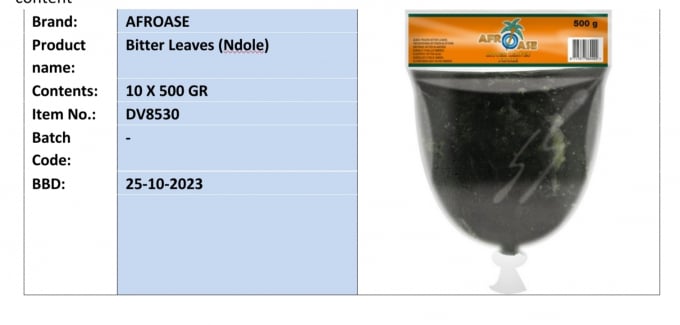
According to the Vietnam Sanitary and Phytosanitary Notification Authorities and Enquiry Point (SPS Vietnam Office), RASFF – Rapid Alert System for Food and Feed of the European Union (EU) has just sent a warning notice, stating that the product of frozen ground bitter leaves of An Van Co., Ltd. Thinh (Address: 60 Ly Thuong Kiet, Ward 1, Bao Loc City, Lam Dong Province) was found to have exceeded the maximum residue level (MRL) of many active ingredients and banned substances.

The product of frozen ground bitter leaves receives warning from the EU.

In which, some active ingredients have high residue levels such as: Thiamethoxam (54 mg/kg); Tebuconazole (26 mg/kg); Propiconazole (34 mg/kg); Diniconazole (86 mg/kg).

The country issuing the notification is the Netherlands, which has notified the consignee. Finland has initiated the recall of the product.

In addition to frozen ground bitter leaves, Vietnam has also received warning on tea exported to Hong Kong. This product contains three banned substances and pesticide residues exceeding EU regulations, including: Chlorfluazuron (0.11 mg/kg); Imidacloprid (0.15 mg/kg) and Chlorpyrifos (0.043 mg/kg).

Being the focal point for transparent information about SPS measures and regulations to WTO members, the Vietnam SPS Office has notified this issue to the Plant Protection Department and related units.

Tiếp tục đọc “EU warns of pesticide residues found in Vietnamese agricultural products”

Drinking coffee in the US? Worry about forests in Vietnam, study warns

eco-business.com

The US’s thirst for coffee drives forest loss in central Vietnam, while Germany’s craving for cocoa is doing the same in West Africa, a landmark study that tracks the drivers of deforestation across borders found.

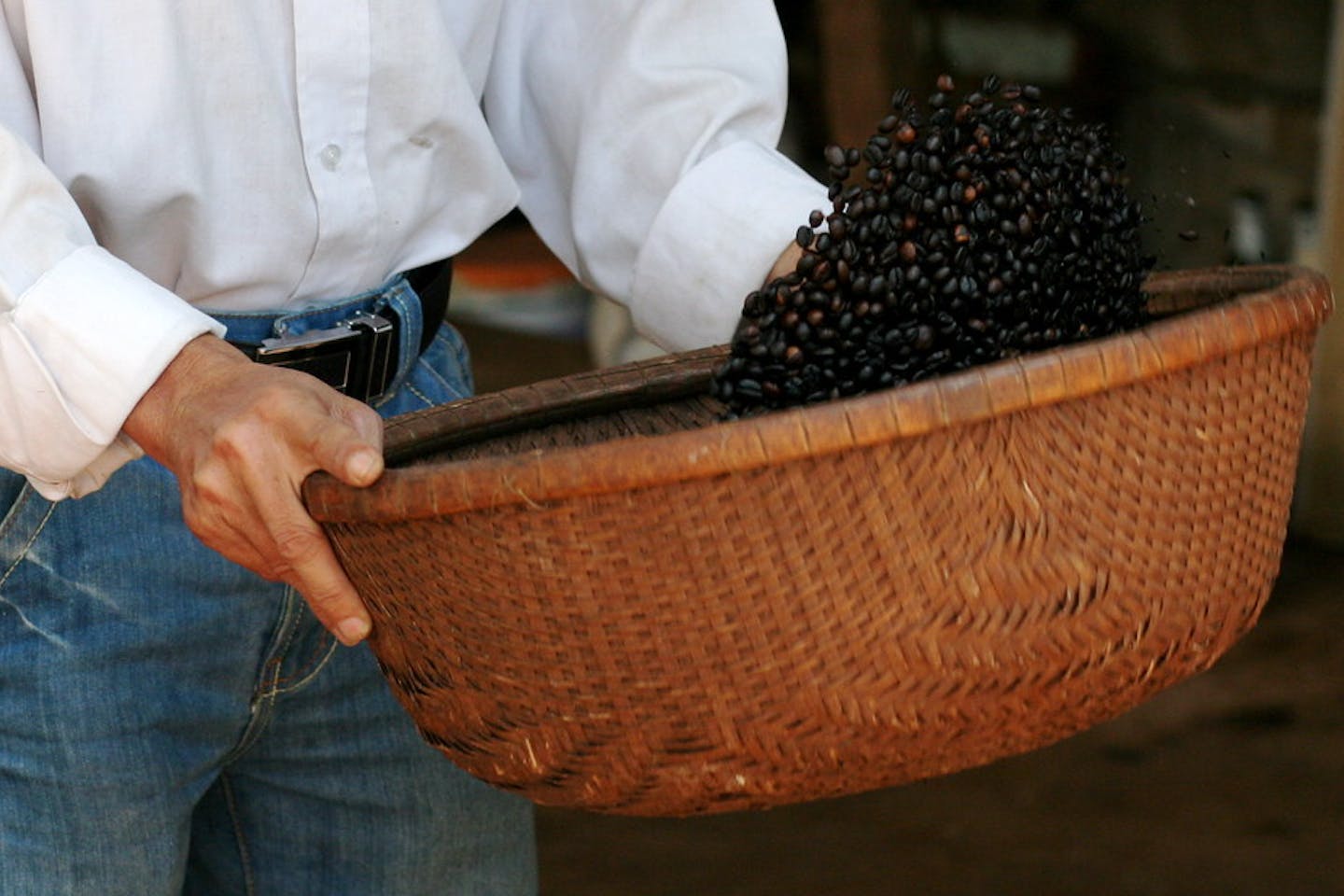
coffee beans Vietnam
<p>A Vietnamese farmer tosses roasted coffee beans in order to remove the bits of burnt skin surrounding each one. Image: jeevsCC BY-NC-ND 3.0</p>

Mongabay.comApril 5, 2021

  • Consumption patterns, especially in wealthier countries, are eating away at forests in some of the world’s most biodiverse regions. In the US, the thirst for coffee drives forest loss in central Vietnam, a landmark study that tracks the drivers of deforestation across borders found.

Germany’s demand for cocoa is linked to forest loss in Côte d’Ivoire and Ghana, while Japan’s demand for agricultural products like cotton fuels deforestation in coastal Tanzania.

Tiếp tục đọc “Drinking coffee in the US? Worry about forests in Vietnam, study warns”

Are rural youth in the Mekong region losing interest in farming?

Smallholder farmers in the Mekong region face increasingly insecure farming livelihoods as land resources are drawn into the hands of developers. SEI is exploring what this means for the future of rural youth and farming.

The livelihoods of millions of smallholder farmers in the Mekong region are tied to their land. But the demands for land for large-scale agriculture, industrial and energy development schemes such as monoculture plantations, special economic zones, and hydropower projects are taking away land from smallholders, giving rise to more landless farmers and increasing land inequality.

Meanwhile, national policies often fail to protect the rights of smallholder farmers who are poorly positioned to compete with these developers and to benefit from the outcomes of the investments.

This indicates a precarious future for smallholder farming-based livelihoods in the Mekong Region, the situation exacerbated by the failure of current labour markets to provide decent, secure jobs for the increasing number of landless people. Tiếp tục đọc “Are rural youth in the Mekong region losing interest in farming?”

Vietnam’s rice paddies offer Japan’s farmers chance to grow

asia.nikkei.com

Local cultivation in emerging Asian markets proves cheaper than exports

HIDEKI SHINOHARA, Nikkei staff writer

A woman wearing a traditional hat sits in a rice field outside Hoi An, Vietnam. © Reuters

NIIGATA, Japan — Japan’s rice farmers are venturing into the rest of Asia to grow their crops locally. Supported by an increase in the number of Japanese restaurants across the region, the farmers are teaming up with locals to apply their expertise, hoping to ride the strong brand power that Japonica rice enjoys.

The trend lets locals indulge their taste in high-quality Japanese rice without paying stratospheric prices for imported versions, as some wealthy Chinese are doing. Tiếp tục đọc “Vietnam’s rice paddies offer Japan’s farmers chance to grow”

EU gives Vietnam ‘yellow card’ over illegal fishing

Fresh fish in Vietnam. [Commission]

The European Union said on Monday (23 October) it has given a “yellow card” to Vietnam, warning the Pacific country it could ban seafood exports unless Hanoi does more to tackle illegal fishing.

The European Commission said Vietnam should fix the problem “within a reasonable timeframe” but did not set a deadline.

The roles of community seed banks in climate change adaption

Although community level seed-saving initiatives have been around for about 30 years, until recently they have received little attention in the scientific literature on climate change adaptation and plant genetic resources. Based on research experiences from various countries, this article argues that community seed banks can enhance the resilience of farmers, in particular of communities and households most affected by climate change. Community seed banks can secure improved access to, and availability of, diverse, locally adapted crops and varieties, and enhance related indigenous knowledge and skills in plant management, including seed selection, treatment, storage, multiplication, and distribution.

Full article http://www.tandfonline.com/doi/full/10.1080/09614524.2017.1294653

Mekong Delta during the flood season

Last update 11:07 | 10/08/2017

People in the Mekong Delta region of Vietnam are busy fishing when the flooding season has come.

On the fields of An Giang Province’s Phu Hoi Commune, nets have been laid to catch fish, crabs and snakes.

Huynh Van Tai, a local resident who has much experience in fishing during the flooding season, said that this year the flooding arrived earlier than expected so many people had not yet prepared for the work.

Bui Thi Suong in Dong Thap Province’s Hong Ngu District said that earlier, his family earned bigger income from fishing on the flooding season. She even hired dozens of workers for the work. However, in recent years, the seafood source has much decreased.

These days, she and her husband are taking advantages of the flooding season to catch some fish for sales in the market.

Some photos of the busy farmers in the Mekong Delta region in the flooding season:


Mekong Delta during the flood season, social news, vietnamnet bridge, english news, Vietnam news, news Vietnam, vietnamnet news, Vietnam net news, Vietnam latest news, vn news, Vietnam breaking news

On the fields of An Giang Province Tiếp tục đọc “Mekong Delta during the flood season”

The Food Security Solution

May 20, 2016

CSIS – In a world that has become increasingly interconnected and chaotic, with more displaced persons since World War II, and with an array of humanitarian disasters that has outstripped the international community’s budgets and capacity to respond, why should global food security remain an imperative development priority? Why has the United States invested so heavily, to the tune of $5.6 billion over the past five years, in agricultural development and nutrition to reduce extreme poverty?

Agriculture’s Economic Power

Agriculture is the primary source of employment and income for 70 percent of the world’s rural poor, and it contributes more than a third of gross domestic product (GDP) in many of the least developed countries. In light of evidence that GDP growth originating in agriculture can be four times more effective than growth in other sectors in raising incomes of the extremely poor, the economic leverage of agriculture for development is hard to dispute.

Aligning foreign assistance with country-led strategies for agricultural growth is the most effective approach to achieving results for vulnerable smallholder farmers, their families, and their communities. Government ownership is critical to sustaining development investments and to ensuring a sound policy environment for private-sector engagement. In order for agriculture to reach its potential to generate employment, raise smallholder incomes, and catalyze markets, both the will of country leadership to dedicate resources and the ability of local and international private companies to invest along the value chain are required. In some cases, this translates into tough policy reforms that take time to understand, to implement, and to enforce.

National Security Risks Tiếp tục đọc “The Food Security Solution”