Medicines and cosmetics use substances derived from nature. But Bioprospecting can turn into biopiracy. More and more companies are patenting natural ingredients making billions. It can come at a cost to the environment and traditional communities living in biodiversity-rich regions.
On the day French MPs gave themselves a round of applause for approving legislation to reintroduce a banned pesticide last month, a figure rose from the public gallery to shout: “You are supporters of cancer … and we will make it known.”
Fleur Breteau made it known. Her outburst and appearance – she lost her hair during chemotherapy for breast cancer – boosted a petition against the “Duplomb law” to well over 2m signatures.
On Thursday, France’s constitutional court struck down the government’s attempt to reintroduce the pesticide acetamiprid – a neonicotinoid banned in France in 2018 but still used as an insecticide in other EU countries as well as the UK – in a judgment that took everyone by surprise. The ruling said the legislature had undermined “the right to live in a balanced and healthy environment” enshrined in France’s environmental charter.
mekongeye.com Produced in partnership with the Putlizer Center
Long-term intensive chemical use in Laos’ banana farms has degraded the country’s once-fertile soil, and it may take nearly half a century to restore it.
Laos’ fertile soil and its proximity to China have created ideal conditions for banana cultivation to meet the surging demand from Chinese consumers.
This fruit frenzy has attracted Chinese companies to seek farmland in Laos, a landlocked country that has embraced a “green agriculture” approach to combat poverty.
With government approval, the sector has expanded, offering jobs, infrastructure development, and revenue from land once considered undervalued.
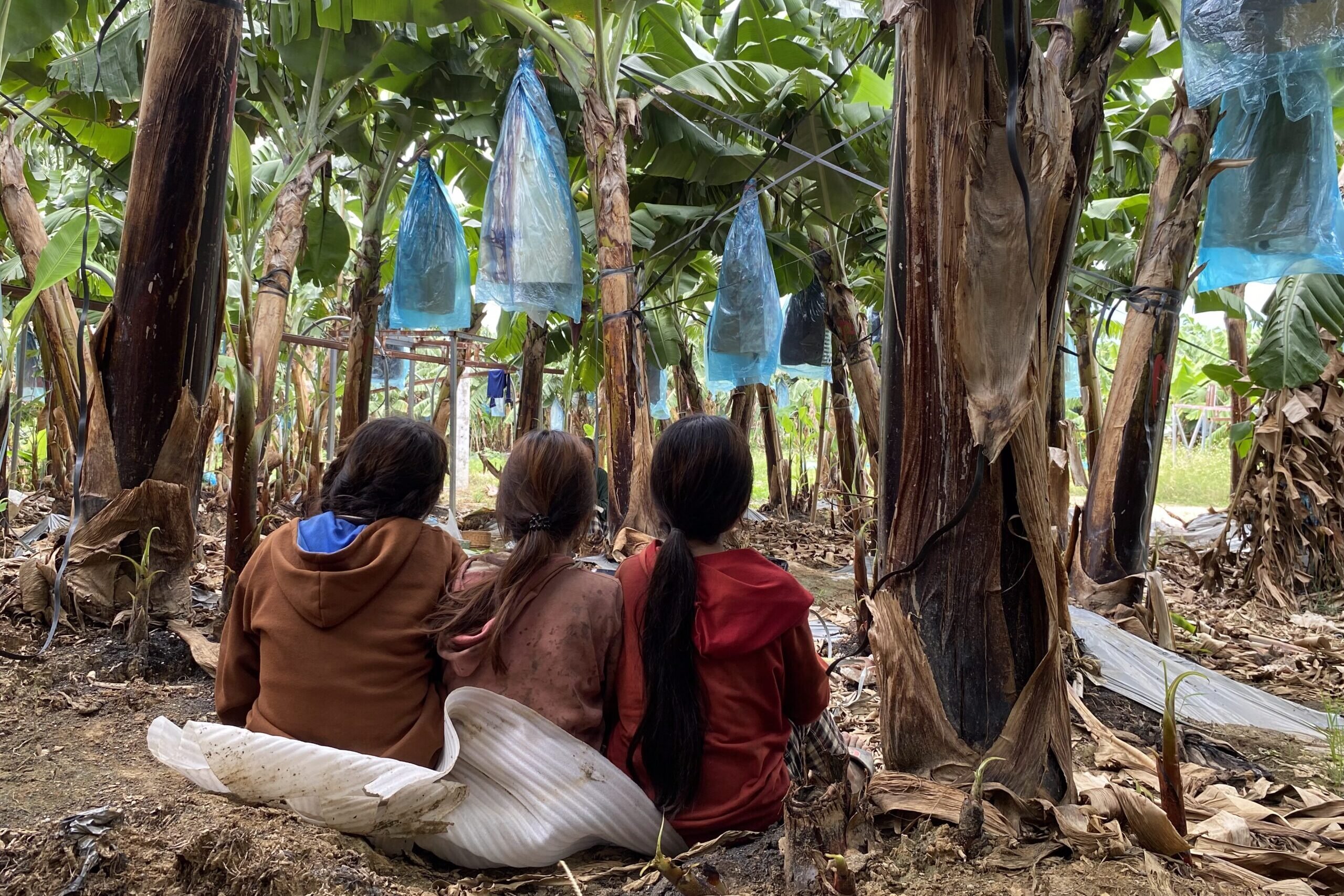
However, an investigation by Mekong Eye and the Rainforest Investigations Network (RIN) reveals that the fruit plantation boom has left a legacy of soil degradation and uncertain livelihoods for many local farmers.
OUDOMXAY & BOKEO, LAOS – Northern Laos is experiencing soil degradation after years of monocropping and widespread chemical use on banana farms operated by Chinese entrepreneurs.
Thiep doesn’t remember the name of the Chinese fruit company that leased his family’s land, only that it was one of the first to arrive in his northern Lao village in 2007.
After a decade of monocropping bananas, the company left and then returned the land to his family. But in the interim, the earth had changed in ways Thiep and his household couldn’t have anticipated.
“The soil is unusually hard and dry, not like it used to be. We had to replace the plow with a stronger one just to break the ground,” Thiep recalled.
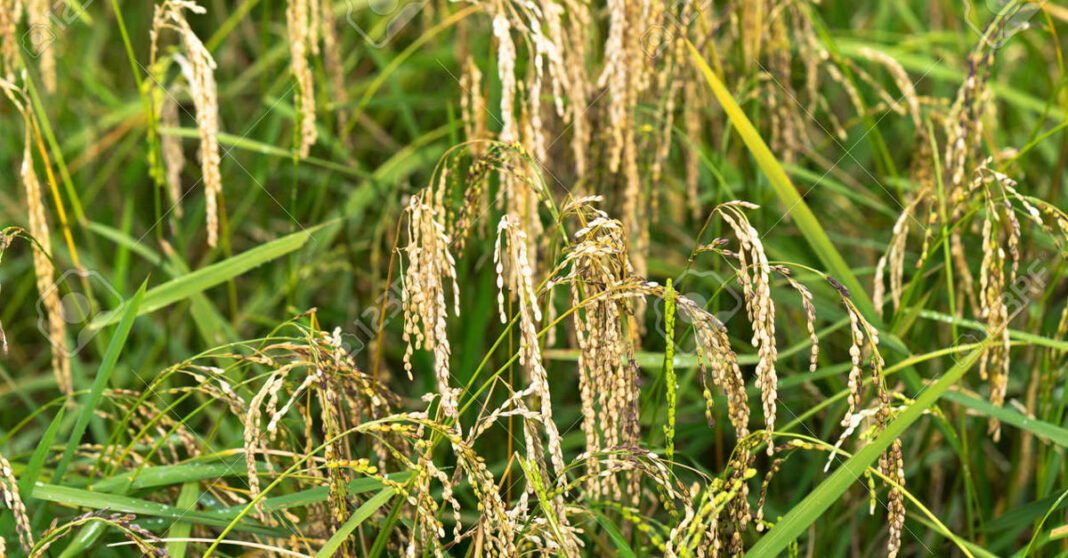
His family members invested extra effort into its first rice crop after reclaiming the plotland. That year, they enjoyed a bumper harvest that was more than they had before the arrival of the Chinese company. But it was the last time they saw such abundance.
“The yield kept decreasing after that,” Thiep said, planting seedlings in the flooded paddy. “Before we leased it out, this plot produced 60 bags of rice. Now it’s down to 30, not enough for the family to eat.”
Nearly two decades ago, Chinese entrepreneurs, attracted by geographic proximity, blanketed northern Laos with banana plantations.
Exporting bananas to China quickly became an economic mainstay, replacing the long reliance on subsistence rice farming. The plantations not only created local jobs but also increased income for households leasing their land to companies.
But investment capital is bittersweet: it may have provided the region with a ladder out of the depths of poverty, but it has ushered in new perils.
Some local workers have reportedly fallen ill or died after pesticide spraying on farms.
Young Hmong workers rest after long hours of labor on a banana plantation in Oudomxay province, northern Laos. Many, including children under 15, face direct exposure to hazardous agricultural chemicals used in the plantations.
A 2017 study, conducted with the Lao government’s involvement, found that agricultural chemicals – used intensively and without consistent management on banana plantations – had poisoned rivers and soil, and harmed the health of residents and plantation workers.
Among the chemicals identified were paraquat – a highly toxic herbicide banned in several countries, including Laos and China – and chlorothalonil, a hazardous substance banned in the EU in 2020 due to its potential to pollute groundwater and cause cancer.
Facing the issue, an official from the Ministry of Industry and Commerce verbally stated in early 2017 that the Prime Minister’s Office had ordered a ban on all commercial banana cultivation, according to the Laos News Agency. However, our reporter was unable to find any official orders on public platforms dating back to 2016.
Japan’s agriculture minister has resigned because of political fallout over his comment that he “never had to buy rice” because he got it from supporters as gifts.Read More
Japan’s agriculture minister has resigned because of political fallout over his comment that he “never had to buy rice” because he got it from supporters as gifts. (Produced by Elaine Carroll)Read More
Southern China is facing a surge in agricultural pests migrating from neighboring Southeast Asian countries, including Laos, Myanmar, and Cambodia. This pest migration, driven by climate-related factors, poses a growing threat to regional food security.
A recent study highlights the role of extreme weather in this phenomenon. Researchers found that the ongoing El Niño event, marked by unusually warm ocean temperatures in the Equatorial Pacific, is contributing to hotter and more humid conditions, which are ideal for pest breeding.
In addition to favorable breeding conditions, strong seasonal winds are carrying these pests into Southern China, facilitating their rapid spread and increasing the risk of crop damage.
While wind is a major factor in their movement, scientists note that insect migration is also influenced by environmental stressors such as extreme heat, drought, and the presence of predators.
Insects migrate in response to immediate environmental cues, the study explains. They may move to escape harsh conditions, find food, avoid overcrowding, or locate new habitats suitable for reproduction.
The problem isn’t confined to China. In Laos, climate change is also taking a toll. The country has experienced record-breaking heatwaves, reaching 43.2 degrees Celsius in 2024, along with persistent water shortages and weakened agricultural infrastructure.
These factors have led to crop failures, livestock losses, and growing food insecurity. An estimated 82 percent of households lack access to safe water, compounding the crisis for rural communities.
Globally, climate change is expected to worsen food insecurity. Rising temperatures and shifting rainfall patterns are already making it more difficult to grow crops in traditional farming regions.
By 2100, nearly 30 percent of the world’s food crops may be exposed to climate conditions they have never encountered before. While much of the focus is on staple crops like rice and wheat, many other plants grown in equatorial regions could also suffer under the changing climate.
As of today, the Trump Administration has paused two essential US global food security initiatives, Feed the Future and the Famine Early Warning Systems Network (FEWS NET). Created in reaction to the 2007-8 global food crisis and resulting instability, Feed the Future is a marquee US government food security program and tool for implementing the bipartisan Global Food Security Act, working in 20 countries to build a more resilient food system and supporting agricultural innovation at 17 US universities. Operating since 1985, FEWS NET provides rigorous analysis and forecasting of acute food insecurity to inform US and other humanitarian responses in 30 countries.
These programs make invaluable contributions to US national security and global stability. For example, Feed the Future builds resilience in five countries where the US National Intelligence Estimate on climate change assesses “building resilience…would probably be especially helpful in mitigating future risks to US interests.” In Central America, where drought during growing seasons has driven increased migration to the United States, Honduran Feed the Future beneficiaries report a 78% lower intent to migrate than the wider population. Meanwhile, FEWSNET’s data and analysis more quickly and efficiently direct US humanitarian support in reaction to conflict, economic shocks, and extreme weather, including in regions where the US military is deployed.
Both programs have historically received consistent bipartisan support. Speaking at the launch of a new Feed the Future initiative last year, Senator John Boozman (R-AR) noted, “food security is national security.” Another Feed the Future supporter, Representative Tracey Mann (R-KS 1st District), has highlighted the value of his district’s Feed the Future Innovation Lab and stated that global food security programs have “an especially strong return on investment because they support American agriculture producers today, while greatly reducing the need for conflict or war-related dollars spent tomorrow” and are “a way to stop wars before they start.” As Executive Director of the World Food Program (2017-2023), former South Carolina Governor and Representative David Beasely testified to the Senate that “Investments in early warning systems like USAID’s Famine Early Warning System…allow humanitarian partners to project and respond in real time to potential emergencies….Without this capacity to forecast food insecurity, the cost of humanitarian intervention is much greater, both in dollars and lives lost.”
Last year, dozens of national security leaders, including the former commanders of Indo-Pacific Command (INDOPACOM), Africa Command (AFRICOM), and Central Command (CENTCOM), endorsed the Council on Strategic Risks’ The Feeding Resilience Plan: Safeguarding US National Security at the Crossroads of Food and Climate Change. The report makes recommendations to US policymakers to better anticipate, prevent, and respond to food- and climate-driven national security threats, including to:
“Support long-term resilience building in vulnerable countries by sustaining and expanding Feed the Future,” noting it and similar programs “bolster vulnerable countries’ ability to withstand food shocks and forestall security threats or need for costly US assistance,” and
“Expand on USAID’s FEWS NET to include longer-term food insecurity warnings” and to have security and defense agencies better “integrate FEWSNET projections with processes to forecast political instability and conflict.”
Amid multiplying threats from instability, extreme weather, and geopolitical competition, these recommendations remain critical today, and highlight the important national security benefits of capabilities like Feed the Future and FEWS NET.
The UNDROP Declaration (1) adopted by the General Assembly of the United Nations on December 17, 2018 reaffirms the UN Declarations on the right to development (2) , the rights of indigenous peoples (3) and the universality of all human rights. It recognises the special relationship and interaction among peasants and other groups working in rural areas and their contribution to conserving and improving biodiversity as well as their own and world-wide food security.
Article 1 of the Declaration defines peasants as any person who engages in small-scale agricultural production for subsistence and/or for the market, who relies significantly on family, household or other non-monetarized labour and who has a special dependency on the land.
It recognises that peasants and people working in rural areas, including youth and the ageing, are migrating to urban areas due to a lack of incentives and the drudgery of rural life, due to insecure land tenure, discrimination and the lack of access to productive resources, financial services and information. The Declaration is based on a concern that peasants and rural workers are burdened with environmental degradation and climate change and suffer disproportionately from poverty, hunger and malnutrition. This Declaration is an important contribution to the advancement of a paradigm for development where the agency of peasants, indigenous and forest peoples is at its foundation.
When it is lychee season, the streets of Bac Giang Province and surrounding areas are a sight to behold.
Over the last few days, Bac Giang Province, home to Luc Ngan District which is famous as the major lychee producing area in the country, has worn a decorated look.
The traffic of motorbikes carrying harvested lychees is several kilometers long.
At 5:30 a.m., highway 279 is packed with lychee traders rushing to deliver the seasonal fruit to wet markets. Lychee are freshly picked daily at 2 a.m.
ADB president Takehiko Nakao speaks at the Food Security Forum in Manila. Credit: Diana G. Mendoza/IPS
ipsnews – MANILA, Jun 25 2016 (IPS) – Farming and agriculture may not seem cool to young people, but if they can learn the thrill of nurturing plants to produce food, and are provided with their favorite apps and communications software on agriculture, food insecurity will not be an issue, food and agriculture experts said during the Asian Development Bank (ADB)’s Food Security Forum from June 22 to 24 at the ADB headquarters here. Tiếp tục đọc “Can Better Technology Lure Asia’s Youth Back to Farming?”→
CSIS – In a world that has become increasingly interconnected and chaotic, with more displaced persons since World War II, and with an array of humanitarian disasters that has outstripped the international community’s budgets and capacity to respond, why should global food security remain an imperative development priority? Why has the United States invested so heavily, to the tune of $5.6 billion over the past five years, in agricultural development and nutrition to reduce extreme poverty?
Agriculture’s Economic Power
Agriculture is the primary source of employment and income for 70 percent of the world’s rural poor, and it contributes more than a third of gross domestic product (GDP) in many of the least developed countries. In light of evidence that GDP growth originating in agriculture can be four times more effective than growth in other sectors in raising incomes of the extremely poor, the economic leverage of agriculture for development is hard to dispute.
Aligning foreign assistance with country-led strategies for agricultural growth is the most effective approach to achieving results for vulnerable smallholder farmers, their families, and their communities. Government ownership is critical to sustaining development investments and to ensuring a sound policy environment for private-sector engagement. In order for agriculture to reach its potential to generate employment, raise smallholder incomes, and catalyze markets, both the will of country leadership to dedicate resources and the ability of local and international private companies to invest along the value chain are required. In some cases, this translates into tough policy reforms that take time to understand, to implement, and to enforce.
economist – GUO, the driver, pulls his car to a merciful halt high above a crevasse: time for a cigarette, and after seven hours of shuddering along narrow, twisting roads, time for his passengers to check that their fillings remain in place. Lighting up, he steps out of the car and dons a cloth cap and jacket: sunny, early-summer days are still brisk 3,500 metres above sea level. Mr Guo is an impish little dumpling of a man, bald, brown-toothed and jolly. He is also an anomaly: a Shanghainese in northern Yunnan who opted to stay with his local bride rather than return to his booming hometown.
The ribbon of brown water cutting swiftly through the gorge below is rich with snowmelt. With few cars passing, its echoing sound fills the air. In the distance, the Hengduan mountains slump under their snowpack as if crumpled beneath its weight. Mr Guo recalls the drivers who have taken a switchback too quickly and fallen to their deaths in the valley below. He tells of workers who lost their footing or whose harnesses failed while building a bridge near his home town of Cizhong, 20 or 30 kilometres south. He pulls hard on his cigarette. “This river”, he says, “has taken so many lives.”
[COLOMBO] Sri Lankan agricultural experts plan to use new satellite imagery developed by the International Rice Research Institute (IRRI) in the Philippines and the European Space Agency (ESA) to forecast rice crops that are now seen to be increasingly vulnerable to changing climate.
“With a capacity to monitor weather conditions and other factors like water availability, continuously, we can advise farmers on what to expect,” says Amitha Bentota, head of Sri Lanka’s Rice Research and Development Institute (RRDI). “Presently, we lack round-the-clock capacity and our predictions reflect the lack of data.”
The IRRI has developed a mosaic of images from ESA’s Sentinel-1A satellite covering over seven million square kilometres of South and South-east Asia. Sentinel’s ‘synthetic aperture’ cameras can monitor the earth’s surface even during rain and cloud cover, allowing continuous monitoring of agriculture.
Author: Calestous Juma, Professor of the Practice of International Development; Director, Science, Technology, and Globalization Project; Principal Investigator, Agricultural Innovation in Africa
The seed industry in sub-Saharan Africa is informal in nature, with approximately 80% of farmers saving and replanting seeds from year to year. This gives them security of access. But improved varieties — including high-yielding and hybrid crops — will increase productivity and income.
To get these seeds into the hands of farmers, a better marketing and distribution system is needed. Local small and medium-sized seed enterprises have a comparative advantage in reaching this underserved market due to their size and market reach.
There has been considerable concern over the potential control of Africa’s seed sector by large corporations. While such firms continue to operate in most countries, it notable that Africa’s seed sector is currently dominated by local start-ups.
The firms are well positioned to promote food security and improve livelihoods among marginalised rural communities. They could help grow the fledgling seed industry, but need better access to credit, research facilities and human resources to achieve their full potential.

 It recognises that peasants and people working in rural areas, including youth and the ageing, are migrating to urban areas due to a lack of incentives and the drudgery of rural life, due to insecure land tenure, discrimination and the lack of access to productive resources, financial services and information. The Declaration is based on a concern that peasants and rural workers are burdened with environmental degradation and climate change and suffer disproportionately from poverty, hunger and malnutrition. This Declaration is an important contribution to the advancement of a paradigm for development where the agency of peasants, indigenous and forest peoples is at its foundation.


 Print
Print

 CVD
CVD 
economist – GUO, the driver, pulls his car to a merciful halt high above a crevasse: time for a cigarette, and after seven hours of shuddering along narrow, twisting roads, time for his passengers to check that their fillings remain in place. Lighting up, he steps out of the car and dons a cloth cap and jacket: sunny, early-summer days are still brisk 3,500 metres above sea level. Mr Guo is an impish little dumpling of a man, bald, brown-toothed and jolly. He is also an anomaly: a Shanghainese in northern Yunnan who opted to stay with his local bride rather than return to his booming hometown.
Tiếp tục đọc “Requiem for a river: Can one of the world’s great waterways survive its development?” →