“The Mekong is Dying”: How China’s River Diplomacy Neglects Locals, Exacerbates Climate Change

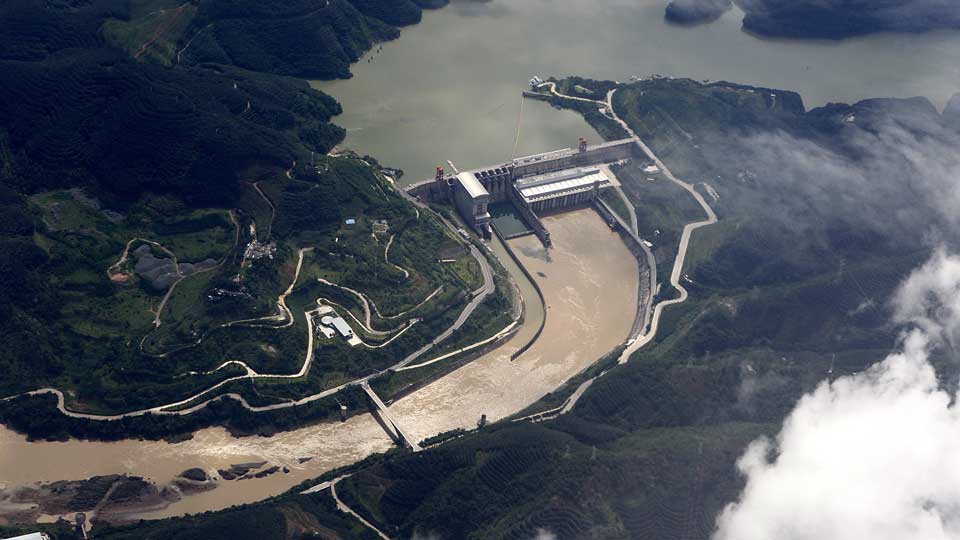
File image of the aerial view of the Jinghong Hydropower Station on the Lancang River, the Chinese part of the Mekong River, in Jinghong city, Xishuangbanna Dai Autonomous Prefecture, southwest China’s Yunnan province. Imaginechina Limited / Alamy Stock Photo

Chinaglobalsouth.com

The rainy season would usually start in May, but this was late June and it was still not raining much. Niwat Roykaew, who grew up on the bank of the Mekong River in Thailand’s northern Chiang Rai province, noticed. 

Born and raised in the Chiang Khong district, Roykaew, 63, was taught to observe the Mekong River to tell the season. But, in the past two decades, the river has become unpredictable like it has “pulsated out of tune”.

Niwat Roykaew is a Thai activist who campaigns for China to share data about water restrictions by its dams upstream.

“The water would get high for two days, then on the third day it would suddenly drop, even during the rainy season,” said Roykaew. 

Local residents like him knew that this delay could mean another year of drought. Since at least 2019, that’s what has happened: the monsoon rain is late, and when it comes, it departs early.

The Mekong River’s water levels in the lower basin, including in Thailand, are now very unstable, being heavily affected both by climate change and hydropower dams upstream that are mostly powered by China, according to local residents, activists, and experts.

Tiếp tục đọc ““The Mekong is Dying”: How China’s River Diplomacy Neglects Locals, Exacerbates Climate Change”

International Waters Governance – Mekong

Mekong

Legal Basis:

The Mekong River Commission (“MRC”) governs the allocation and utilization of the Mekong River waters by four countries – Thailand, Cambodia, Vietnam, and Laos. The MRC was founded in 1995 pursuant to the Agreement on the Cooperation for Sustainable Development of the Mekong River Basin (the “1995 Agreement”), which was signed and entered into force at Chiang Rai, Thailand on 5 April 1995. On 5 April 2010, the heads of state of Thailand, Cambodia, Vietnam, and Laos met in Hua Hin, Thailand for the first MRC Summit to mark the 15th anniversary of the adoption of the 1995 Agreement. The parties adopted a joint declaration—the Hua Hin Declaration—reaffirming their commitment to implementing the 1995 Agreement. The 1995 Agreement was the result of more than 40 years of regional and supra-regional efforts to manage the resources of the Mekong River Delta. In the mid-1950s, the United Nation’s Economic Commission for Asia and the Far East (“ECAFE”) and the U.S. Bureau of Reclamation sent teams to the Mekong to examine water management issues. Both ECAFE and the U.S. Government published detailed reports of their findings. Tiếp tục đọc “International Waters Governance – Mekong”