I mourn the loss of Australia’s Indigenous voice vote – and won’t forgive the media’s mendacity

theguardian.com Thomas Keneally

Thomas Keneally

The polls had been favourable until a brutal press campaign kicked in against this kindly, long-overdue change

  • Thomas Keneally is the author of the Booker-winning Schindler’s Ark

Wed 18 Oct 2023 13.26 BST

Last Sunday, many in Australia profoundly mourned the loss of the Indigenous voice to parliament referendum, the greatest kindly amendment ever to be proposed for the Australian constitution, those dreary old articles of association by which our states and territories rub along together in far-flung federation.

When the referendum was announced in March this year, it was as a result of a message to mainstream Australia from Indigenous Australia, a statement made at Uluru near Alice Springs by Aboriginal representatives. They suggested constitutional recognition of the Aboriginal race’s ancient discovery and ownership of Australia, and proposed that their community’s disadvantages in modern Australia could be addressed through a group of Aboriginal delegates who would advise on federal laws affecting Aboriginal Australians.

https://9f16b9aa9979ae753e00d73da3e26298.safeframe.googlesyndication.com/safeframe/1-0-40/html/container.html

The ownership matter is no longer as controversial as it once was. In the 1970s a Torres Strait Islander named Eddie Mabo was shocked to hear that his garden on Murray Island belonged to the crown. He undertook a long, brave journey from regional courts all the way to the high court, to prove that his tropic garden was not the crown’s, but his own. That decision in 1992 declared that Indigenous Australians had never ceded sovereignty over their land. There were cries that every white-owned house and swimming pool would be imperilled, but the truth was that the decision allowed the Aboriginal people to claim in reality traditional and unalienated, as in not yet purchased under title and built-upon, land. With that decision began the custom of the “welcome to country”: a local tribesman, or at least an Aboriginal Australian, briefly, as a small polite gesture, welcoming people to public events and citing the local tribe and its elders, men and women, past and present. This will continue to be the practice; an acknowledgment of the established fact.

Tiếp tục đọc “I mourn the loss of Australia’s Indigenous voice vote – and won’t forgive the media’s mendacity”
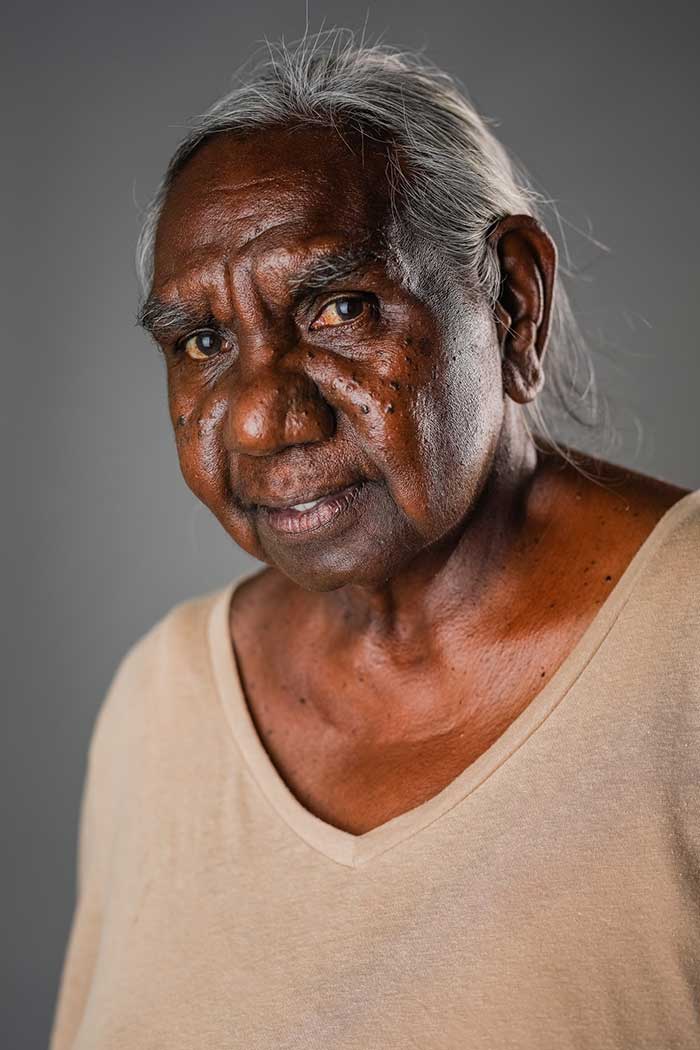
“My people are not threatened by silence. They are completely at home in it.”

Miriam-Rose Ungunmerr-Baumann (Aboriginal activist, educator, artist and 2021 Senior Australian of the year)

*The Indigenous People of Australia have a depth of spirituality that can enrich our NonIndigenous spirits in so many ways. One of these spiritual gifts is Dadirri. Aboriginal people practice deep listening, an almost spiritual skill, based on respect. ‘Dadirri’ is an Aboriginal word meaning ‘inner deep listening and quiet still awareness and waiting‘*

My people are not threatened by silence. They are completely at home in it. They have lived for thousands of years with Nature’s quietness. My people today recognise and experience in this quietness the great Life-Giving Spirit, the Father of us all. It is easy for me to experience God’s presence. When I am out hunting, when I am in the bush, among the trees, on a hill or by a billabong; these are the times when I can simply be in God’s presence. My people have been so aware of Nature. It is natural that we will feel close to the Creator. Our Aboriginal culture has taught us to be still and to wait. We do not try to hurry things up. We let them follow their natural course – like the seasons. We watch the moon in each of its phases. We wait for the rain to fill our rivers and water the thirsty earth…

When twilight comes, we prepare for the night. At dawn we rise with the sun.

We watch the bush foods and wait for them to ripen before we gather them. We wait for our young people as they grow, stage by stage, through their initiation ceremonies. When a relation dies, we wait a long time with the sorrow. We own our grief and allow it to heal slowly.

We wait for the right time for our ceremonies and our meetings. The right people must be present. Everything must be done in the proper way. Careful preparations must be made. We don’t mind waiting, because we want things to be done with care.

We don’t like to hurry. There is nothing more important than what we are attending to. There is nothing more urgent that we must hurry away for.

We wait on God, too. His time is the right time. We wait for him to make his word clear to us. We don’t worry. We know that in time and in the spirit of dadirri (that deep listening and quiet stillness) his way will be clear.

We are river people. We cannot hurry the river. We have to move with its current and understand its ways.

We hope that the people of Australia will wait. Not so much waiting for us – to catch up – but waiting with us, as we find our pace in this world.

If you stay closely united, you are like a tree, standing in the middle of a bushfire sweeping through the timber. The leaves are scorched and the tough bark is scarred and burnt; but inside the tree the sap is still flowing, and under the ground the roots are still strong. Like that tree, you have endured the flames, and you still have the power to be reborn.

Our culture is different. We are asking our fellow Australians to take time to know us; to be still and to listen to us.–

Miriam-Rose Ungunmerr-Baumann (Aboriginal activist, educator, artist and 2021 Senior Australian of the year)

Full text of the reflection: https://www.dadirri.org.au/wp-content/uploads/2015/03/Dadirri-Inner-Deep-Listening-M-R-Ungunmerr-Bauman-Refl1.pdf?fbclid=IwAR277ZxWsZsLFMb2i8sSmYaSLzrMbBfcrwtDxZPp9eBEWCCADQM1_1yQifI

Learn more about Miriam Rose Foundation: https://www.miriamrosefoundation.org.au/about-miriam-rose-foundation/