Sau World Cup là đại học

HUY ĐĂNG – TẤN PHÚC 24/3/2022 6:00 GMT+7

TTCTBên cạnh các khoản thưởng tiền tỉ, những lời tán dương không dứt, các cô gái của bóng đá Việt Nam còn nhận một phần quà đặc biệt ý nghĩa sau thành tích giành vé dự World Cup: suất học bổng đại học.

 Đội trưởng tuyển nữ Việt Nam Huỳnh Như. Ảnh: Nguyên Khôi

Với riêng các nữ tuyển thủ ở TP.HCM, có ít nhất hai trường đại học trao tặng học bổng cho họ, là Đại học Hoa Sen và Đại học Công nghệ thông tin.

Tiếp tục đọc “Sau World Cup là đại học”

G7 Leaders’ Statement (in Brussels, Belgium)

MARCH 24, 2022• STATEMENTS AND RELEASES

  1. We, the Leaders of the G7, met today in Brussels at the invitation of the German G7 Presidency, to further strengthen our cooperation in light of Russia’s unjustifiable, unprovoked and illegal aggression and President Putin’s war of choice against independent and sovereign Ukraine. We will stand with the government and people of Ukraine.
  2. We are united in our resolve to restore peace and stability and uphold international law. Following the United Nations General Assembly resolution on March 2022, we will continue to stand with the overwhelming majority of the international community, in condemning Russia’s military aggression and the suffering and loss of life it continues to cause.
  3. We remain appalled by and condemn the devastating attacks on the Ukrainian population and civilian infrastructure, including hospitals and schools. We welcome the investigations of international mechanisms, including by the Prosecutor of the International Criminal Court. We will work together to support the gathering of evidence of war crimes. The siege of Mariupol and other Ukrainian cities, and the denial of humanitarian access by Russian military forces are unacceptable. Russian forces must immediately provide for safe pathways to other parts of Ukraine, as well as humanitarian aid to be delivered to Mariupol and other besieged cities.
  4. The Russian leadership is obligated to immediately comply with the order of the International Court of Justice to suspend the military operations that it commenced on 24 February 2022 in the territory of Ukraine, without any further delay. We also urge Russia to withdraw its military forces and equipment from the entire territory of Ukraine.
  5. We further call upon the Belarusian authorities to avoid further escalation and to refrain from using their military forces against Ukraine. Moreover, we urge all countries not to give military or other assistance to Russia to help continue its aggression in Ukraine. We will be vigilant regarding any such assistance.
     
  6. We will spare no efforts to hold President Putin and the architects and supporters of this aggression, including the Lukashenko regime in Belarus, accountable for their actions. To this end, we will continue to work together, along with our allies and partners around the world.
  7. We underline our resolve to impose severe consequences on Russia, including by fully implementing the economic and financial measures we already imposed. We will continue to cooperate closely, including by engaging other governments on adopting similar restrictive measures to those already imposed by G7 members and on refraining from evasion, circumvention and backfilling that seek to undercut or mitigate the effects of our sanctions. We task the relevant Ministers in a focused initiative to monitor the full implementation of sanctions and to coordinate responses related to evasive measures, including regarding gold transactions by the Central Bank of Russia. We stand ready to apply additional measures as required, continuing to act in unity as we do so. We commend those partners who have aligned with us in these efforts.
  8. Russia’s attack has already risked the safety and security of nuclear sites in Ukraine. Russian military activities are creating extreme risks for the population and the environment, with the potential for catastrophic result. Russia must comply with its international obligations and refrain from any activity that imperils nuclear sites, allowing unhindered control by the Ukrainian authorities, as well as full access by and cooperation with the International Atomic Energy Agency.
  9. We warn against any threat of the use of chemical, biological and nuclear weapons or related materials. We recall Russia’s obligations under the international treaties to which it is a signatory, and which protect us all. In this regard, we categorically denounce Russia’s malicious and completely unfounded disinformation campaign against Ukraine, a state in full compliance with international non-proliferation agreements. We express concern about other countries and actors that have amplified Russia’s disinformation campaign.
     
  10. We are resolved in our support to the Ukrainian people in their heroic resistance to Russia’s unjustifiable and illegal aggression. We will step up our support to Ukraine and neighbouring countries. We thank all those who are already providing humanitarian aid to Ukraine and ask others to join. We will furthermore collaborate in our efforts to bolster democratic resilience and defend human rights in Ukraine and neighbouring countries.
  11. We will continue efforts to support Ukraine in defending its networks against cyber incidents. In preparation for any Russian malicious cyber response to the actions we have taken, we are taking steps to increase the resilience of the infrastructure in our respective nations by strengthening our coordinated cyber defences and improving our shared awareness of cyber threats. We will also work to hold accountable those actors that engage in destructive, disruptive, or destabilising activities in cyberspace.
  12. We further commend neighbouring states for their solidarity and humanity in welcoming Ukrainian refugees and third country nationals from Ukraine. We highlight the need to further increase international assistance to countries neighbouring Ukraine, and, as a concrete contribution to this end, underline our commitment to receiving, protecting, and supporting refugees and displaced persons as a consequence of the conflict. We thus all stand ready to welcome them on our territories. We will take further steps to broaden our support to Ukraine and neighbouring countries.
  13. We are concerned by the escalating and reinforced repression against the Russian people and the increasingly hostile rhetoric of the Russian leadership, including against ordinary citizens. We deplore the Russian leadership’s attempt to deprive Russian citizens of access to unbiased information through censorship, and denounce its malicious disinformation campaigns, which we will not leave unaddressed. We express our support to those Russian and Belarusian citizens standing up against the unjustified war of aggression against their close neighbour Ukraine. The world sees them.
  14. The people of Russia must know that we hold no grievances against them. It is President Putin, his government and supporters, including the Lukashenko regime in Belarus, who are imposing this war and its consequences on Russians and it is their decision that besmirches the history of the Russian people.
  15. We are taking further steps to reduce our reliance on Russian energy, and will work together to this end. At the same time, we will ensure secure alternative and sustainable supplies, and act in solidarity and close coordination in the case of possible supply disruptions. We commit to actively support countries willing to phase out their dependency on Russian gas, oil and coal imports. We call on oil and gas producing countries to act in a responsible manner and to increase deliveries to international markets, noting that OPEC has a key role to play. We will work with them and all partners to ensure stable and sustainable global energy supplies. This crisis reinforces our determination to meet the goals of the Paris agreement and of the Glasgow climate pact and limit the rise in global temperatures to 1.5°C, by accelerating reduction of our reliance on fossil fuels and our transition to clean energy. 
  16. We stand in solidarity with our partners who have to bear the rising price of President Putin’s unilateral choice to wage war in Europe. His decision is putting the global economic recovery at risk, undermines the resilience of global value chains and will have severe impacts on the most fragile countries. We call on the international community to take action by fully recognising Russia’s responsibility and protecting the most vulnerable countries, with the support of international and regional institutions.
  17. More immediately, President Putin’s war places global food security under increased pressure. We recall that the implementation of our sanctions against Russia takes into account the need to avoid impact on global agricultural trade. We remain determined to monitor the situation closely and do what is necessary to prevent and respond to the evolving global food security crisis. We will make coherent use of all instruments and funding mechanisms to address food security, and build resilience in the agriculture sector in line with climate and environment goals. We will address potential agricultural production and trade disruptions, in particular in vulnerable countries. We commit to provide a sustainable food supply in Ukraine and support continued Ukrainian production efforts.
  18. We will work with and step up our collective contribution to relevant international institutions including the World Food Programme (WFP), in parallel with Multilateral Development Banks and International Financial Institutions, to provide support to countries with acute food insecurity. We call for an extraordinary session of the Council of the Food and Agriculture Organization (FAO) to address the consequences on world food security and agriculture arising from the Russian aggression against Ukraine. We call on all participants of the Agriculture Markets Information System (AMIS) to continue to share information and explore options to keep prices under control, including making stocks available, in particular to the WFP. We will avoid export bans and other trade-restrictive measures, maintain open and transparent markets, and call on others to do likewise, consistent with World Trade Organization (WTO) rules, including WTO notification requirements.
  19. International organisations and multilateral fora should no longer conduct their activities with Russia in a business as usual manner. We will work closely with our partners to act as appropriate, based on shared interests, as well as rules and regulations of respective institutions.
Tiếp tục đọc “G7 Leaders’ Statement (in Brussels, Belgium)”

Remarks by President Biden in Press Conference in NATO Headquarters (Brussels, Belgium)

MARCH 24, 2022

NATO Headquarters
Brussels, Belgium

6:32 P.M. CET
 
THE PRESIDENT:  Good evening, everyone.  With all the press that’s here, you must be getting very tired.  Am I the 16th or 17th?  At any rate, all kidding aside, thank you for taking the time.

I — today marks one month since Russia began its carnage in Ukraine, the brutal invasion of Ukraine.  And we held a NATO summit the very next day.  At that time, my overwhelming objective, wanting that summit, was to have absolute unity on three key important issues among our NATO and European allies.

First was to support Ukraine with military and humanitarian assistance. 

Second was to impose the most significant — the most significant sanctions — economic sanction regime ever, in order to cripple Putin’s economy and punish him for his actions.

Third was to fortify the eastern flank of our NATO Allies, who were obviously very, very concerned and somewhat at — worried what would happen.

Tiếp tục đọc “Remarks by President Biden in Press Conference in NATO Headquarters (Brussels, Belgium)”

‘Iran was our Hogwarts’: my childhood between Tehran and Essex – podcast

Growing up in Essex, my summers in Iran felt like magical interludes from reality – but it was a spell that always had to be broken. By Arianne Shahvisi 

Illustration of a young woman looking at a magical scene of Tehran

Illustration: Nathalie Lees/The Guardian

Written by Arianne Shahvisi, read by Serena Manteghi and produced by Esther Opoku-Gyeni

theguardian – Fri 29 Oct 2021 05.00 BST

Listen here

  • Read the text version here

Tiếp tục đọc “‘Iran was our Hogwarts’: my childhood between Tehran and Essex – podcast”

‘We tried to be joyful enough to deserve our new lives’: What it’s really like to be a refugee in Britain – podcast

As a child, I fled Afghanistan with my family. When we arrived in Britain after a harrowing journey, we thought we could start our new life in safety. But the reality was very different.

Photograph of Zarlasht Halaimzai. Photograph: Sarah Lee/ The Guardian
 Photograph: Sarah Lee/The Guardian

The Guardian – By Zarlasht Halaimzai – Fri 21 Jan 2022 09.00 GMT

Written by Zarlasht Halaimzai, read by Serena Manteghi, and produced by Hattie Moir.

Listen here

• Read the text version here

Tiếp tục đọc “‘We tried to be joyful enough to deserve our new lives’: What it’s really like to be a refugee in Britain – podcast”

China and the West begin the big face-off

Plain English Version – July 27, 2021

Chinese President Xi Jinping at the Great Hall of the People in Beijing Photo Credit: Aly Song/Reuters.

China is challenging the West. What is the West? It is not only nations in Europe or North America. It is countries that practice democracy.

India, Japan, South Korea, and Australia are Western nations that surround China. They worry about China’s size and ambitions. They view China with suspicion. Also, in the West, the United States and most of Europe see China as an adversary.

China is one country against the West.

Tiếp tục đọc “China and the West begin the big face-off”

In New York City, Asians are the growing population

Plain English Version – October 19, 2021

There is a surge in the number of Asian residents across New York City. Photo Credit: Janice Chung for The New York Times.

It looked like the number of people living in New York City was shrinking. The 2020 census data would tell us how much.

Surprise! The city’s population actually grew by almost eight percent. Most of the population increase was Asian people. Today, people who call themselves Asian are sixteen percent of all the residents of New York City.

Tiếp tục đọc “In New York City, Asians are the growing population”

War Crimes in Ukraine

War Crimes by Russia’s Forces in Ukraine

PRESS STATEMENT

ANTONY J. BLINKEN, SECRETARY OF STATE

MARCH 23, 2022

Since launching his unprovoked and unjust war of choice, Russian President Vladimir Putin has unleashed unrelenting violence that has caused death and destruction across Ukraine.  We’ve seen numerous credible reports of indiscriminate attacks and attacks deliberately targeting civilians, as well as other atrocities.  Russia’s forces have destroyed apartment buildings, schools, hospitals, critical infrastructure, civilian vehicles, shopping centers, and ambulances, leaving thousands of innocent civilians killed or wounded.  Many of the sites Russia’s forces have hit have been clearly identifiable as in-use by civilians.  This includes the Mariupol maternity hospital, as the UN Office of the High Commissioner for Human Rights expressly noted in a March 11 report.  It also includes a strike that hit a Mariupol theater, clearly marked with the word “дети” — Russian for “children” — in huge letters visible from the sky.  Putin’s forces used these same tactics in Grozny, Chechnya, and Aleppo, Syria, where they intensified their bombardment of cities to break the will of the people.  Their attempt to do so in Ukraine has again shocked the world and, as President Zelenskyy has soberly attested, “bathed the people of Ukraine in blood and tears.”

Every day that Russia’s forces continue their brutal attacks, the number of innocent civilians killed and wounded, including women and children, climbs.  As of March 22, officials in besieged Mariupol said that more than 2,400 civilians had been killed in that city alone.  Not including the Mariupol devastation, the United Nations has officially confirmed more than 2,500 civilian casualties, including dead and wounded, and emphasizes the actual toll is likely higher.

Tiếp tục đọc “War Crimes in Ukraine”

Gang rule in Haiti: kidnappings, no fuel, no power, no food.

Plain English Version – October 28, 2021

A woman shouting during an anti-government protest. Photo Credit: AP Rodrigo Abd.

In Haiti, gangs block ports. Fuel shipments cannot get through. Hospitals are shutting down. Cellphones are losing power. Hunger is growing.

In recent months, assassins killed the president. An earthquake shook a part of the country. The nation is on the brink of collapse.

Gangs now rule about half the capital of Haiti. Workers are afraid to drive their fuel trucks. A gang kidnapped missionaries. It is demanding a ransom of $1 million for each of the seventeen captives. The police know where the hostages are. But the police can’t enter the neighborhood because the gangs outgun them.

Tiếp tục đọc “Gang rule in Haiti: kidnappings, no fuel, no power, no food.”

In Mexico, It is the unions against the workers

Plain English Version – February 3, 2022

The General Motors facility in Silao, Mexico. Photo Credit: Luis Antonio Rojas for The New York Times.

Unions make life better for workers. That is the idea. But what if the unions are corrupt? What if union leadership works for the benefit of employers? That is the reality for labor in Mexico.

Mexico has big factories. It is a rich country in Latin America. Yet its workers still earn low wages compared to other countries in the region.

The unions in Mexico are the reason. Big unions are closely allied with politicians and employers. They have kept wages low. They have made it hard to organize new unions. Their leaders have wealth and power. There is suspicion of corruption.

Tiếp tục đọc “In Mexico, It is the unions against the workers”

The war comes to Asia

nikkeiFrom refugees to sanctions, Asian countries are being forced to pick sides in the Russia-Ukraine war.

Nikkei staff writers – March 18, 2022 11:43 JST

NEW YORK — Welcome to Nikkei Asia’s podcast: Asia Stream.

LISTEN HERE

Every week, Asia Stream tracks and analyzes the Indo-Pacific with a mix of expert interviews and original reporting by our correspondents from across the globe.

Tiếp tục đọc “The war comes to Asia”

War crimes – The Geneva Conventions of 1949 and their Additional Protocols on war crimes

Geneva Conventions of 1949 and Additional Protocols, and their Commentaries

Geneva Convention (I) on Wounded and Sick in Armed Forces in the Field,1949 and its commentary

12.08.1949

Geneva Convention (II) on Wounded, Sick and Shipwrecked of Armed Forces at Sea, 1949 and its commentary

12.08.1949

Geneva Convention (III) on Prisoners of War, 1949 and its commentary

12.08.1949

Geneva Convention (IV) on Civilians, 1949 and its commentary

12.08.1949

Additional Protocol (I) to the Geneva Conventions, 1977 and its commentary

08.06.1977

Annex (I) AP (I), as amended in 1993 and its commentary

30.11.1993

Annex (I) AP (I), 1977 and its commentary

08.06.1977

Annex (II) AP (I), 1977 and its commentary

08.06.1977

Additional Protocol (II) to the Geneva Conventions, 1977 and its commentary

08.06.1977

Additional Protocol (III) to the Geneva Conventions, 2005 and its commentary

08.12.2005

29-10-2010 Overview

Inernational Committee of the Red Cross

The Geneva Conventions and their Additional Protocols are international treaties that contain the most important rules limiting the barbarity of war. They protect people who do not take part in the fighting (civilians, medics, aid workers) and those who can no longer fight (wounded, sick and shipwrecked troops, prisoners of war).

The Geneva Conventions and their Additional Protocols are at the core of international humanitarian law, the body of international law that regulates the conduct of armed conflict and seeks to limit its effects.  They specifically protect people who are not taking part in the hostilities (civilians, health workers and aid workers) and those who are no longer participating in the hostilities, such as wounded, sick and shipwrecked soldiers and prisoners of war.  The Conventions and their Protocols call for measures to be taken to prevent or put an end to all breaches. They contain stringent rules to deal with what are known as “grave breaches“. Those responsible for grave breaches must be sought, tried or extradited, whatever nationality they may hold.

Tiếp tục đọc “War crimes – The Geneva Conventions of 1949 and their Additional Protocols on war crimes”

Genocide, Crimes against Humanity, War Crimes, Ethnic Cleansing

United Nations: Office of Genocide Prevention and the Resposibility to Protect

DEFINITIONS

Genocide

Background

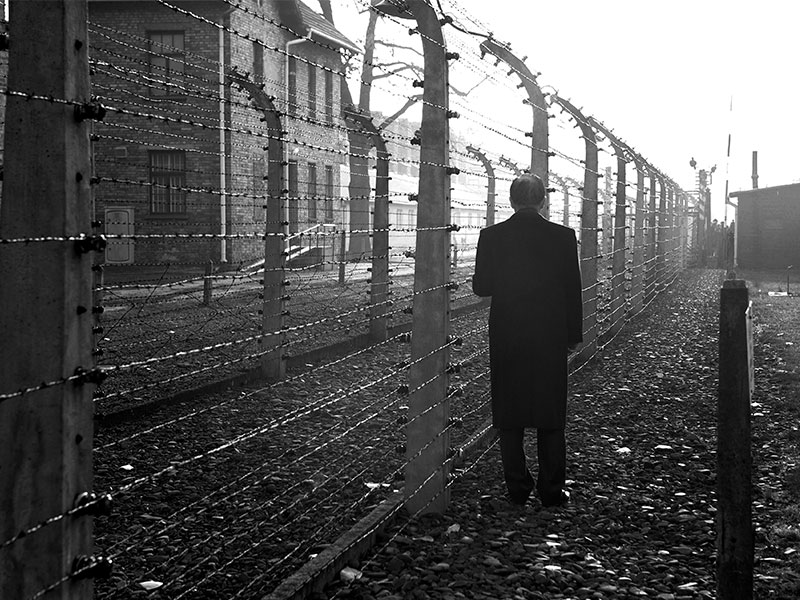
Secretary-General visits Auschwitz-Birkenau, Poland. UN Photo/Evan Schneider

The word “genocide” was first coined by Polish lawyer Raphäel Lemkin in 1944 in his book Axis Rule in Occupied Europe. It consists of the Greek prefix genos, meaning race or tribe, and the Latin suffix cide, meaning killing. Lemkin developed the term partly in response to the Nazi policies of systematic murder of Jewish people during the Holocaust, but also in response to previous instances in history of targeted actions aimed at the destruction of particular groups of people. Later on, Raphäel Lemkin led the campaign to have genocide recognised and codified as an international crime. Tiếp tục đọc “Genocide, Crimes against Humanity, War Crimes, Ethnic Cleansing”

India and elsewhere: Religious wars are forever

thetimesinplainenglish.com – February 10, 2022

Plain English Version

At the Dasna Devi temple, a placard read: “This is a holy place for Hindus. Entry of Muslims is forbidden.” Photo Credit: Saumya Khandelwal for The New York Times.

People of different backgrounds live together. Unless, for some reason, they decide not to live together. They do seem to get along better in dictatorships. Tito ran Yugoslavia, Hussein ran Iraq and Khaddaffi ran Libya. Their people had no freedom of choice about with whom they lived. And so, for the most part, they got along.

Tiếp tục đọc “India and elsewhere: Religious wars are forever”