The Vietnam War has been called the first truly televised war – and the Caravelle Hotel in old Saigon was one of its most vital media hubs.
As American involvement in the Vietnam War increased in the 1960s, so did the world’s media attention. International news crews, reporters and photojournalists descended on Saigon, the capital of then-South Vietnam, to beam war stories to the world.
They set up camp in the city’s hotels, especially those on the strategically located Lam Son Square. Media, military and intelligence personnel rubbed shoulders as war stories were sniffed out in the bars and restaurants.
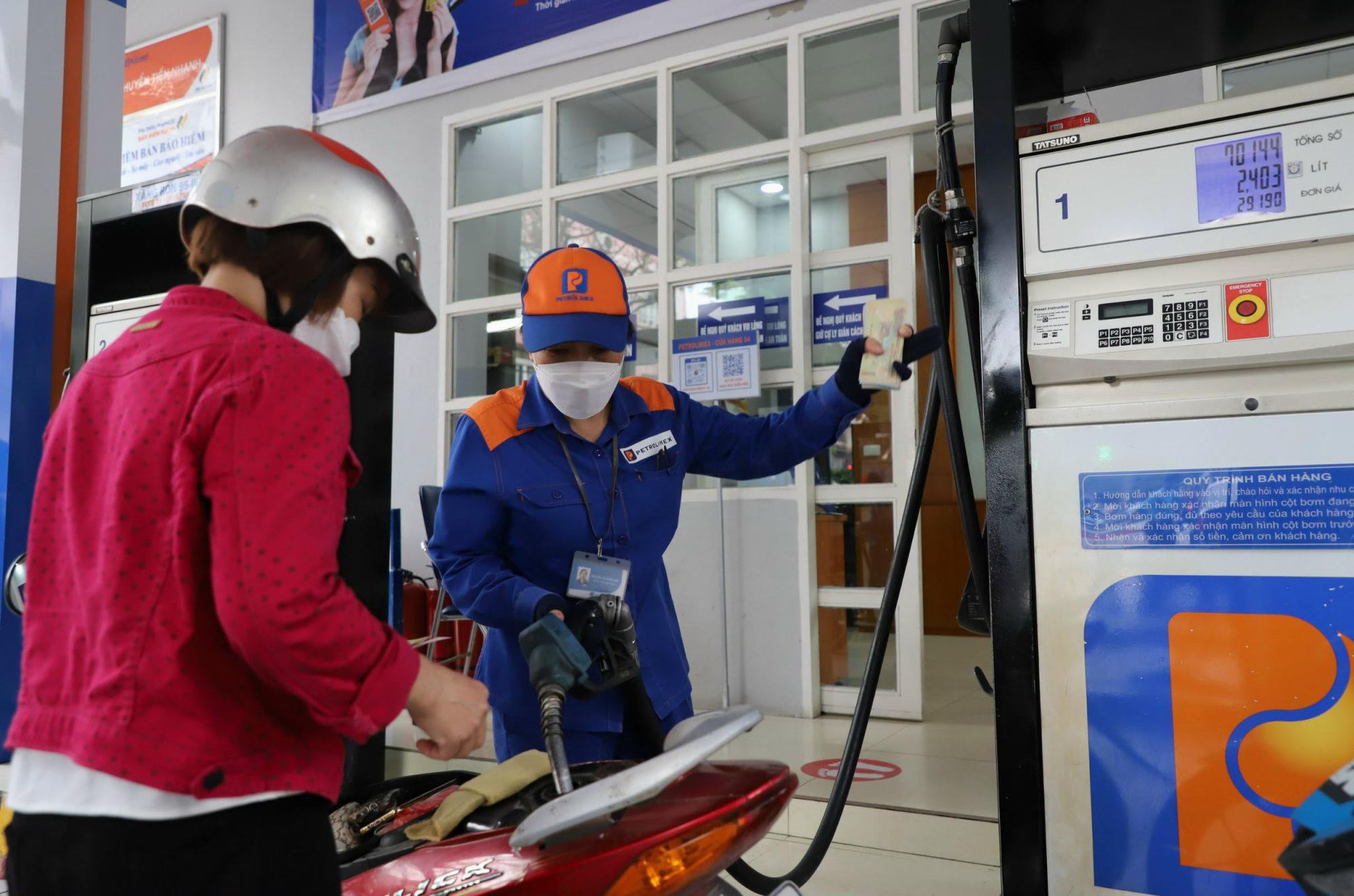
(NLĐO) – Trong thời gian giá xăng dầu tăng cao, Chính phủ tìm cách giảm thuế để giảm giá, hạn chế tác động đến nền kinh tế thì các doanh nghiệp kinh doanh xăng dầu vẫn lãi cả ngàn tỉ đồng.
Người dân, doanh nghiệp vẫn còn đang khốn khó với giá xăng dầu tăng cao kéo mặt bằng giá hàng hoá, chi phí khác tăng mạnh theo thì bất ngờ doanh nghiệp ngành xăng dầu niêm yết trên sàn chứng khoán tiết lộ lãi khủng.
Điển hình, Công ty CP Lọc hóa dầu Bình Sơn (mã chứng khoán: BSR, đơn vị vận hành Nhà máy Lọc dầu Dung Quất – Quảng Ngãi) công bố báo cáo tài chính với mức lãi tăng vọt. Chỉ trong quý II/2022, doanh nghiệp này đạt doanh thu thuần 52.000 tỉ đồng, lãi ròng hơn 9.900 tỉ đồng – tăng gấp 6 lần so với cùng kỳ năm trước và là mức tăng cao nhất từ trước đến nay. Còn tính chung 6 tháng đầu năm 2022, doanh nghiệp này lãi ròng khoảng 12.300 tỉ đồng.
John F. Helliwell, Vancouver School of Economics, University of British Columbia
Haifang Huang, Professor, Department of Economics, University of Alberta
Shun Wang, Professor, KDI School of Public Policy and Management
Max Norton, Vancouver School of Economics, University of British Columbia
Acknowledgment: The authors are grateful for the financial support of the WHR sponsors, and especially for data from the Gallup World Poll, the Lloyd’s Register Foundation World Risk Poll, and the ICL/YouGov Data Portal. For much helpful assistance and advice we are grateful to Lara Aknin, Ragnhild Bang Nes, Chris Barrington-Leigh, Meike Bartels, Jan-Emmanuel De Neve, Liz Dunn, Martine Durand, Maja Eilertsen, Carrie Exton, Carol Graham, Jon Hall, David Halpern, Nancy Hey, Sarah Jones, Richard Layard, Sonja Lyubomirsky, Hannah Metzler, Tim Ng, Gus O’Donnell, Rachel Penrod, Julie Ray, Rajesh Srinivasan, Jeff Sachs, Grant Schellenberg, Ashley Whillans, and Meik Wiking
[TĐH: Nhiều companies chế tạo nhiều “người số” (digital human) để làm “influencers” (người có ảnh hưởng) trên Internet, nói đủ thứ chuyện hấp dẫn người xem, để tạo lợi nhuận cho công ty. Các bạn đừng thấy clip của cô cậu nào xinh đẹp, ăn nói cực kì lưu loát, và nói toàn những điều hấp dẫn mà tin đó là người thật, chuyện thật. Be smart!]
She’s got more than 130,000 followers on Instagram, where she posts photos of her globetrotting adventures. Her makeup is always impeccable, her clothes look straight off the runway. She sings, dances and models — and none of it is real.
Rozy is a South Korean “virtual influencer,” a digitally rendered human so realistic she is often mistaken for flesh and blood.
“Are you a real person?” one of her Instagram fans asks. “Are you an AI? Or a robot?”
According tothe Seoul-based company that created her, Rozy is a blend of all three who straddles the real and virtual worlds.
She is “able to do everything that humans cannot … in the most human-like form,” Sidus Studio X says on its website.
That includes raking in profits for the company in the multibillion-dollar advertising and entertainment worlds.
Since her launch in 2020, Rozy has landed brand deals and sponsorships, strutted the runway in virtual fashion shows and even released two singles.
The “virtual human” industry is booming, and with it a whole new economy in which the influencers of the future are never-aging, scandal-free and digitally flawless — sparking alarm among some in a country already obsessed with unobtainable beauty standards.
How virtual influencers work
The CGI (computer-generated imagery) technology behind Rozy isn’t new. It is ubiquitous in today’s entertainment industry, where artists use it to craft realistic nonhuman characters in movies, computer games and music videos.
But it has only recently been used to make influencers.
Sometimes, Sidus Studio X creates an image of Rozy from head to toe using the technology, an approach that works well for her Instagram images. Other times it superimposes her head onto the body of a human model — when she models clothing, for instance.
An image of Lucy, the Korean virtual human used by Lotte Home Shopping. Credit: Courtesy Lotte Home Shopping
South Korean retail brand Lotte Home Shopping created its virtual influencer — Lucy, who has 78,000 Instagram followers — with software usually used for video games.
Like their real-life counterparts, virtual influencers build a following through social media, where they post snapshots of their “lives” and interact with their fans. Rozy’s account shows her “traveling” to Singapore and enjoying a glass of wine on a rooftop while her fans compliment her outfits.
Older generationsmight consider interacting with an artificial person somewhat odd. But experts say virtual influencers have struck a chord with younger Koreans,digital natives who spend much of their lives online.
Lee Na-kyoung, a 23-year-old living in Incheon, began following Rozy about two years ago thinking she was a real person.
Rozy followed her back, sometimes commenting on her posts, and a virtual friendship blossomed — one that has endured even after Lee found out the truth.
“We communicated like friends andI felt comfortable with her — so I don’t think of her as an AI but a real friend,” Lee said.
“I love Rozy’s content,” Lee added. “She’s so pretty that I can’t believe she’s an AI.”
A profitable business
Social media doesn’t just enable virtual influencers to build a fanbase — it’s where the money rolls in.
Rozy’sInstagram, for instance, is dotted with sponsored content where she advertises skincare and fashion products.
“Many big companies in Korea want to use Rozy as a model,” said Baik Seung-yup, the CEO of Sidus Studio X. “This year, we expect to easily reach over two billion Korean won (about $1.52 million) in profit, just with Rozy.”
He added that as Rozy grew more popular, the company landed more sponsorships from luxury brands such as Chanel and Hermes, as well as magazines and other media companies. Her ads have now appeared on television, and even in offline spaces like billboards and the sides of buses.
Lotte expects similar profits this year from Lucy, who has brought in advertising offers from financial and construction companies, according to Lee Bo-hyun, the director of Lotte Home Shopping’s media business division.
The models are in high demand because they help brands reach younger consumers, experts say. Rozy’s clients include a life insurance firm and a bank — companies typically seen as old-fashioned. “But they say their image has become very young after working with Rozy,” Baik said.
It also helps that, compared to some of their real-life counterparts, these new stars are low-maintainance.
It takes Lotte and Sidus Studio X between a few hoursand a couple of days to create an image of their stars, and from two days to a few weeks for a video commercial. That’s far less time and labor than is requiredto produce a commercial featuring real humans — where weeks or months can be spent location scouting and preparing logistics such as lighting, hair and makeup, styling, catering and post-production editing.
And, perhaps just as important: virtual influencers never age, tire or invite controversy.
Lotte decided on a virtual influencer when considering how to maximize its “show hosts,” said Lee.
Lotte Home Shopping hires human hosts to advertise products on TV — but they “cost quite a lot,” and “there will be changes when they age,” Lee said. So, they came up with Lucy, who is “forever 29 years old.”
“Lucy is not limited to time or space,” he added. “She can appear anywhere. And there areno moral issues.”
A question about beauty
South Korea isn’t the only place to have embraced virtual influencers.
Among the world’s most famous virtual influencers are Lil Miquela, created by the co-founders of an American tech startup, who has endorsed brands including Calvin Klein and Prada and has more than 3 million Instagram followers; Lu of Magalu, created by a Brazilian retail company, with nearly 6 million Instagram followers; and FNMeka, a rapper created by music company Factory New, with more than 10 million TikTok followers.
But there’s one major difference, according to Lee Eun-hee, a professor at Inha University’s Department of Consumer Science: virtual influencers in other countries tend to reflect a diversity of ethnic backgrounds and beauty ideals.
Virtual humans elsewhere have a “uniqueness,” while “those in Korea are always made beautiful and pretty … (reflecting) the values of each country,” she added.
An image of Rozy, the virtual influencer developed by Sidus Studio X in South Korea. Credit: Sidus Studio X
And in South Korea — often dubbed the “plastic surgery capital of the world” for its booming $10.7 billion industry — there are concerns that virtual influencers could further fuel unrealistic beauty standards.
Younger Koreans have begun pushing back against these idealsin recent years, sparking a movement in 2018 dubbed “escaping the corset.”
But ideas of what is popularly considered beautiful in the country remain narrow; for women, this usually means a petite figure with large eyes, a small face and pale, clear skin.
And these features are shared by most of the country’s virtual influencers; Lucy has perfect skin, long glossy hair, a slender jaw and a perky nose. Rozy has full lips, long legs and a flat stomach peeking out under her crop tops.
Lee Eun-hee warned that virtual influencers like Rozy and Lucy could be making Korea’s already demanding beauty standards even more unattainable — and heightening the demand for plastic surgery or cosmetic products among women seeking to emulate them.
“Real women want to become like them, and men want to date people of the same appearance,” she said.
An image of Lucy, the Korean virtual human used by Lotte Home Shopping. Credit: Courtesy Lotte Home Shopping
The creators of Rozy and Lucy reject such criticism.
Lotte representative Lee Bo-hyun said they had tried to make Lucy more than just a “pretty image” by crafting an elaborate back story and personality. She studied industrial design, and works in car design. She posts about her job and interests, such as her love for animals and kimbap — rice rolls wrapped in seaweed. In this way, “Lucy is striving to have a good influence in society,” Lee said, adding: “She’s giving a message to the public to ‘do what you want to do according to your beliefs.'”
Baik, the Sidus Studio X CEO, said Rozy isn’t what “anyone would call beautiful” and that the firm had deliberately tried to make her appearance unique and veer away from traditional Korean norms. He pointed to the freckles on her cheeks and her wide-set eyes.
“Rozy shows people the importance of inner confidence,” he added. “There are other virtual humans that are so pretty … but I made Rozy to show that you can still be beautiful (even without a conventionally attractive face).”
‘Digital blackface’
But concerns go beyond Korean beauty standards. Elsewhere in the world there is debateover the ethics of marketing products to consumers who don’t realize the models aren’t human, as well asthe risk of cultural appropriation when creating influencers of different ethnicities — labeled by some as “digital blackface.“
Facebook and Instagram’s parent company Meta, which has more than 200 virtual influencers on its platforms, has acknowledged the risks.
“Like any disruptive technology, synthetic media has the potential for both good and harm. Issues of representation, cultural appropriation and expressive liberty are already a growing concern,” the company said in a blog post.
“To help brands navigate the ethical quandaries of this emerging medium and avoid potential hazards, (Meta) is working with partners to develop an ethical framework to guide the use of (virtual influencers).”
But one thing appears clear: the industry is here to stay. As interest in the digital world booms — ranging from the metaverse and virtual reality technologies to digital currencies — companies say virtual influencers are the next frontier.
An image of Rozy, the virtual influencer developed by Sidus Studio X in South Korea. Credit: Sidus Studio X
Lotte is hoping Lucy will move from advertising to entertainment, perhaps by appearing in a television drama. The firm is also working on a virtual human that will appeal to shoppers in their 40s to 60s.
Sidus Studio X has big ambitions, too; Rozy will launch her own cosmetics brand in August, as well as an NFT (non-fungible token), and the firm hopes to create a virtual pop trio to take on the music charts.
Baik points out that most fans don’t meet real celebrities in person, only seeing them on screens. So “there is no big difference between virtual humans and the real-life celebrities they like,” he said.
“We want to change perceptions of how people think of virtual humans,” Baik added. “What we do isn’t to take away people’s jobs, but to do things that humans can’t do, such as work 24 hours or make unique content like walking in the sky.
A man in police uniform that raided two gold shops in central Vietnam Sunday and threw gold into the street has been identified as a prison warden.
He took an AK47 rifle to the gold shops at Dong Ba Market at around 12:30 p.m. on Sunday, threatened the staff and shot at the glass shelves where gold items were displayed.
He took the items, threw them into the street, and shouted: “Gold for the poor,” according to eyewitnesses at the shops and the market.
A glass shelf in Hoang Duc gold shop in Thua Thien Hue Province ridden with bullet holes, July 31, 2022. Photo by VnExpress/Vo Thanh
(KTSG) – Trước thông tin TPHCM thu hút nhân tài: 19 người vào làm việc, 14 người ra đi, ba năm qua không tuyển thêm được người nào, thực sự tôi không lấy làm lạ vì bản thân đã từng tham gia vào công việc này. Tôi bàn về nó với tư cách là người trong cuộc và kể những câu chuyện rời rạc để mọi người xâu chuỗi lại và tự rút ra kết luận thì tốt hơn.
Trọng dụng người tài của đất nước là con đường bền vững và đi xa nhất. Trong ảnh: Sinh viên chụp hình kỷ yếu tốt nghiệp đại học. Ảnh: THÀNH HOA
TTO – Báo cáo tổng kết 10 năm công tác phòng, chống tham nhũng, tiêu cực của Bộ Chính trị (2012 – 2022) nêu rõ đã có 37 cán bộ thuộc diện trung ương quản lý đã bị xử lý hình sự, trong đó từ đầu nhiệm kỳ XIII đến nay là 21 cán bộ.
Từ trái qua, trên xuống: các ông Đinh La Thăng, Nguyễn Bắc Son, Trương Minh Tuấn, Trần Văn Minh, Vũ Huy Hoàng, Nguyễn Văn Hiến, Nguyễn Đức Chung, Tất Thành Cang đã bị xử lý hình sự – Ảnh ghép: LÊ HIỆP
Thay mặt Bộ Chính trị, Thường trực Ban Bí thư Võ Văn Thưởng vừa ký báo cáo tổng kết 10 năm công tác phòng, chống tham nhũng, tiêu cực giai đoạn 2012 – 2022, nhiệm vụ giải pháp thời gian tới.
TTCT – Khi người tiêu dùng rên xiết bởi đồng tiền mất giá, lãi bán hàng không đủ mua xăng dầu, hay mùa đông tới châu Âu có lẽ phải hạ lò sưởi xuống 18 độ C – thì chiến sự ở Ukraine là lời giải thích quá vội vã và quá dễ dãi. Về lâu dài, biến đổi khí hậu mới là nguyên nhân chính.
Nhiều nước châu Âu đang trải qua giai đoạn nắng nóng kỷ lục. Ảnh: Reuters
Các nghiên cứu trước đây đã chỉ ra mối liên hệ giữa thời tiết khắc nghiệt và khủng hoảng kinh tế, nhưng chỉ tập trung vào các nước đang phát triển, tình cờ cũng là những quốc gia bị lũ lụt, bão và hạn hán thường xuyên và nghiêm trọng hơn nhiều so với phương Tây. Nói cách khác, người ta đã cố tình lờ đi một điểm yếu của phương Tây, vốn vẫn luôn bị ảnh hưởng bởi biến đổi khí hậu, nay chỉ lộ rõ hơn vì chiến sự Ukraine.
TTCT – Những lý do khó hiểu cho câu chuyện luẩn quẩn bế tắc về nhà ở cho người lao động tại TP.HCM.
Khu nhà lưu trú cho công nhân Khu chế xuất Linh Trung 2 giai đoạn 1. Ảnh: K. YÊN
Muốn có nhà trọ giá phù hợp
Trong khu nhà trọ ở khu phố 3, phường Bình Chiểu, TP Thủ Đức (TP.HCM), vợ chồng chị Nhi và hai con trai sống trong phòng trọ khoảng 15m2, chỗ ngủ là cái gác nhỏ. Tiền nhà trọ, điện, nước… tổng cộng 2,5 triệu đồng/tháng.
Tháng nào tăng ca nhiều thì thu nhập của hai vợ chồng gần 20 triệu đồng, mỗi năm tiết kiệm được khoảng 30 triệu đồng nên việc mua nhà với gia đình chị là chuyện xa vời. “Gia đình tôi chỉ mong có khu trọ giá phù hợp với thu nhập, chỗ ở ổn định để con cái học hành”, chị Nhi nói.
TTCT – Indonesia đã đảm bảo để đại hội thể thao người khuyết tật của khu vực vẫn có thể diễn ra bình thường…
Đại hội thể thao người khuyết tật Đông Nam Á lần thứ 11 (ASEAN Para Games) đã khai mạc hôm 26-7 và kéo dài đến ngày 7-8 tại Indonesia. Đoàn thể thao người khuyết tật Việt Nam tham dự với 153 thành viên, gồm 17 HLV, 120 VĐV cùng đội ngũ cán bộ quản lý, tham gia thi đấu 8 môn thể thao, gồm điền kinh, bơi, cử tạ, cầu lông, bóng bàn, cờ vua, Judo và bắn cung.
Lẽ ra ASEAN Para Games 11 là sự kiện diễn ra tại Việt Nam, ngay sau SEA Games 31. Bởi đối với các đại hội thể thao, từ lớn nhất hành tinh như Olympic cho đến nhỏ nhất như khu vực Đông Nam Á là SEA Games, đều tiếp ngay sau là một đại hội thể thao cho người khuyết tật.
Nhưng vừa rồi, chúng ta chỉ nhận tổ chức SEA Games 31, còn ASEAN Para Games thì từ chối. Khi nghe tin từ chối tổ chức Para Games, cộng đồng thể thao người khuyết tật Việt Nam hết sức bức xúc, nhưng vẫn không thay đổi được gì.
Even before Russian President Vladimir Putin launched his war against Ukraine and set off a global scramble for fossil fuels, the battle against climate change was being lost. With national leaders and international diplomacy proving ineffective, is there any hope of saving ourselves?
NEW YORK – It is often said that no one wins a war, just that some lose less than others. Russia’s war against Ukraine promises to be no exception. One clear loser is already evident: the planet.
With 161 votes in favour, and eight abstentions*, the UN General Assembly adopted a historic resolution on Thursday, declaring access to a clean, healthy and sustainable environment, a universal human right.
The resolution, based on a similar text adopted last year by the Human Rights Council, calls upon States, international organisations, and business enterprises to scale up efforts to ensure a healthy environment for all.
The UN Secretary-General, António Guterres, welcomed the ‘historic’ decision and said the landmark development demonstrates that Member States can come together in the collective fight against the triple planetary crisis of climate change, biodiversity loss and pollution.
foreignpolicy – This week, Uzbekistan has hosted two major summits with consequences for South Asia. The first was an international conference on Afghanistan held on Monday and Tuesday. And now, the foreign ministers from the Shanghai Cooperation Organization (SCO)—a multilateral group that aims to promote stability across Eurasia—have gathered in Tashkent, the capital, for a meeting on Thursday and Friday focused on regional peace and security and global inflation.
Take-away food and drink packaging is dumped in a public site in Thu Thiem New Urban Area in HCMC, May 2022. Photo by VnExpress/Quynh TranGarbage from take-away food and drinks make up 44 percent of plastic waste found at surveyed sites in Vietnam, according to the World Bank.
Plastic waste at both surveyed river and coastal sites across Vietnam came mostly from take-away-related sources.
Take-away related waste accounted for 43.6 percent in number and 35.1 percent in weight of the total plastic waste, followed by fisheries-related waste (32.6 percent in number and 30.6 percent in weight), and household-related waste (21.6 percent in number and 22.8 percent in weight), according to a World Bank report released this week.Total amount of plastic waste by source on surveyed sites in Vietnam2020-2021Take-away related wasteTake-away related wasteFisheries related waseFisheries related waseHousehold related wasteHousehold related wasteAgriculture related-wasteAgriculture related-wasteSanitary and medical related wasteSanitary and medical related wasteTake-away related waste●
Xu hướng gọi đồ ăn trực tuyến trong giai đoạn dịch COVID-19 làm gia tăng chóng mặt lượng rác thải nhựa, tạo áp lực nặng nề đến môi trường toàn cầu.
Theo thống kê của Bộ Tài nguyên và Môi trường, bình quân mỗi hộ gia đình sử dụng khoảng 1 kg túi nilon mỗi tháng. Lượng chất thải nhựa và túi nilon hiện tại chiếm khoảng từ 8 – 12% chất thải rắn sinh hoạt, nhưng chỉ có khoảng từ 11 – 12% trong số đó được xử lý tái chế. Số còn lại chủ yếu được chôn lấp, đốt và thải ra ngoài môi trường. Vậy đâu là giải pháp để xử lý rác thải nhựa thông minh và hiệu quả.