Cambodia’s deadly politics| 101 East
Al Jazeera English – 13-1-2017
They’ve endured genocide, war and grinding poverty, and now the people of Cambodia appear to be battling another enemy, with a crackdown on opposition voices.
Conversations on Vietnam Development

Cambodia’s deadly politics| 101 East
Al Jazeera English – 13-1-2017
They’ve endured genocide, war and grinding poverty, and now the people of Cambodia appear to be battling another enemy, with a crackdown on opposition voices.
The flow of plastic entering the ocean is expected to double by 2040. To prevent this tsunami of difficult-to-decompose waste, experts have proposed a global treaty which could oblige all nations to reduce how much plastic they produce and emit to the environment.
At a recent meeting of the United Nations Environment Assembly (UNEA) in Nairobi, Kenya, ministers and representatives from 173 countries agreed on the terms for negotiating such a treaty over the next two years.
Is this the turning point for plastic pollution the world needs? And how will it work? We asked Steve Fletcher, a professor of ocean policy and economy at the University of Portsmouth and an advisor to the UN Environment Prograamme on plastic.
What has actually been agreed in Nairobi?
The UNEA is a gathering of all United Nations member states to discuss and adopt policies for tackling global environmental problems. It is the highest environmental decision-making body in the world. On Wednesday March 2 2022, ministers and representatives from 173 countries formally adopted a resolution to start negotiations for a legally binding agreement to end plastic pollution.
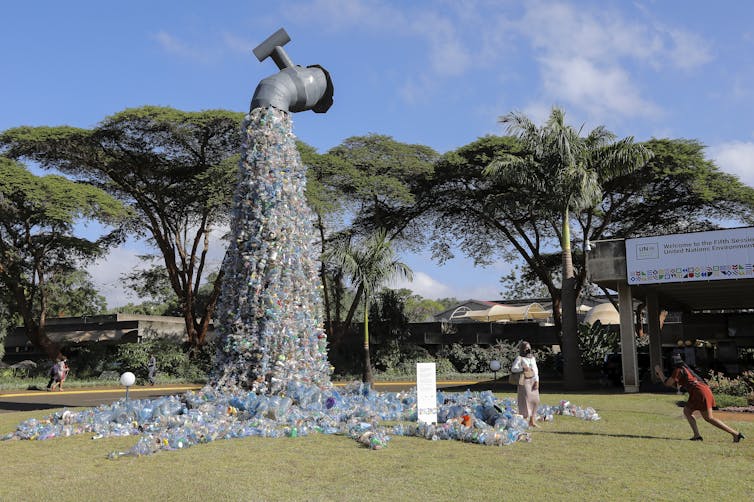
Agreeing the mandate and focus of the negotiations is just the start. Before the end of 2024, the substance of the agreement will need to be thrashed out.
06 APR, 2021
when it comes to the Paris Agreement and climate action; namely that when individuals change their behaviour by consuming differently they can drive industries to change, as those industries are then caught between a ‘greening’ consumer demand and international and governmental policies focusing on climate action.

Back in the 1980s, everyone was talking about the hole in the ozone layer, so what happened, and what can the international agreement to ban CFCs teach us about the importance of multilateral cooperation when it comes to climate action?
The ozone layer is the part of the Earth’s atmosphere that protects the planet from ultraviolet radiation. It’s found in the Stratosphere which is around 10-50km above the surface of the earth. Think of it as a layer of sunscreen that protects us from all manner of harmful rays. Without it, life on Earth would be extremely unpleasant.
Exactly right, in fact it’s a very bad thing.
Tiếp tục đọc “What The Ozone Layer Teaches Us About Climate Action”
HUY ĐĂNG – TẤN PHÚC 16/08/2022 06:16 GMT+7
TTCT – Các hoạt động thể thao người khuyết tật hiện vẫn gần như dựa hoàn toàn vào các nỗ lực tư nhân và cá nhân.
“Mơ ước của tôi là mỗi hiệp hội, liên đoàn đều dành ra một ngày thế này cho các em. Như vậy, mỗi tháng hay thậm chí mỗi tuần các em khuyết tật đều có một ngày hội thể thao sôi động”, ông Lý Đại Nghĩa thổ lộ khi tổ chức ngày hội hockey dành cho người khuyết tật trí tuệ hồi tháng 7.

Một thành viên CLB hockey của ông James Chew hướng dẫn hockey cho người khuyết tật. Ảnh: H.Đ.
Không lâu sau khi tổ chức sự kiện này, ông Nghĩa lên đường dự Para Games 2022 với tư cách lãnh đội của đoàn TP.HCM. Vì ảnh hưởng của đại dịch, kỳ Para Games lần thứ 10 (theo lịch diễn ra tại Philippines năm 2019) đã bị hủy bỏ. Sau 5 năm, cộng đồng người khuyết tật mới lại có một sự kiện lớn để tranh tài.
DW – 09.08.2022 – Enno Hinz
Laos is facing one of its worst economic crises in decades, with the country experiencing galloping inflation and staring at a debt default.

Inflation in Laos has hit a 22-year high, causing a scarcity of essential commodities like fuel
Laos’ economy has been on the brink of collapse due to a spiraling debt crisis that is crippling the country’s finances and bringing it perilously close to default.
In June, the Southeast Asian nation’s Statistics Bureau announced that inflation hit a 22-year high of 23.6%, causing staple goods to become scarce and eroding the population’s purchasing power.
Tiếp tục đọc “Laos economic crisis intensifies amid massive Chinese debt”
Amnesty International’s recent attack on Ukraine raises yet again the issue of how the size, governance, and influence of the largest human rights organizations may damage the cause of human rights.
Blog Post by Elliott Abrams, Council on Foreign Relations
August 16, 2022 10:55 am (EST)
The cause of human rights is now at risk from the largest organizations dedicated to its protection.
Earlier this summer I wrote, here at the CFR web site, an article entitled “Quis Custodiet Ipsos Custodes?” and a blog entry of the same title. There I argued that “the issues of oversight, governance, and bias at the two largest NGOs, which dominate the field globally, cannot be overlooked.” Those two organizations are Human Rights Watch and Amnesty International. As I wrote,
In 2021, Human Rights Watch had $256 million in assets and revenue of $130 million. It employs more than 500 staff members in 105 locations globally and has an annual budget of $97 million. Amnesty International is even larger, raising $436 million in 2020 and spending $376 million.
Tiếp tục đọc “Amnesty International’s Attack on Ukraine”
Green water – the rainwater available to plants in the soil – is indispensable for life on and below the land. But in a new study, we found that widespread pressure on this resource has crossed a critical limit.
The planetary boundaries framework – a concept that scientists first discussed in 2009 – identified nine processes that have remained remarkably steady in the Earth system over the last 11,700 years. These include a relatively stable global climate and an intact biosphere that have allowed civilisations based on agriculture to thrive. Researchers proposed that each of these processes has a boundary that, once crossed, puts the Earth system, or substantial components of it, at risk of upset.
Morgan McFall-Johnsen Aug 13, 2022, 4:30 PM
T.H – 15/08/2022 13:01
(KTSG Online) – Thời gian qua, nhiều cán bộ cấp cao, trong đó có cả những cán bộ đang là Ủy viên Trung ương Đảng đã bị kỷ luật, bị cách các chức vụ trong Đảng, chính quyền, bị truy cứu trách nhiệm hình sự vì dính líu sai phạm nghiêm trọng trong quản lý đất đai, gây thất thoát tài sản Nhà nước.
Từ đầu năm 2022 đến nay, hàng loạt cựu quan chức địa phương bị đưa ra truy tố và xét xử với các tội danh liên quan đến sai phạm trong quản lý, sử dụng đất đai.
Không phải lần đầu tiên những vụ án như trên bị phanh phui nhưng dường như bài học vẫn chưa đủ sức răn đe khi những “lỗ hổng” về cơ chế chính sách vẫn tồn tại. Điều đáng nói là sau nhưng vụ án này để lại hệ lụy không nhỏ, ảnh hưởng xấu đến nền kinh tế, an ninh xã hội cũng như niềm tin của người dân.
Nhiều quan chức đã bất chấp pháp luật, liều lĩnh, câu kết, bắt tay nhau thành những liên minh bảo kê cho các doanh nghiệp sân sau thâu tóm đất công, biến đất công thành đất tư để trục lợi, gây thất thoát tài sản của Nhà nước lên tới hàng trăm, hàng ngàn tỉ đồng.

Một số vụ án điển hình
Tiếp tục đọc “Hàng loạt quan chức bị khởi tố liên quan vi phạm quản lý đất đai”
Vấn nạn xâm phạm bản quyền và điểm “nghẽn” xuất khẩu nông sản (Bài 1)
Báo Lâm Đồng – Cập nhật lúc 06:05, Thứ Sáu, 20/09/2019 (GMT+7)
LTS: Sau hơn 10 năm Việt Nam trở thành thành viên của Công ước quốc tế về bảo hộ giống cây trồng mới (UPOV), trên cả nước đã có hàng trăm giống cây trồng được cấp bằng bảo hộ. Riêng tại tỉnh Lâm Đồng, công tác bảo hộ giống cây trồng đang có chuyển biến tích cực, một số giống cây đã được đăng ký bản quyền, song trên thực tế, tình trạng xâm phạm bản quyền giống cây trồng tiếp tục diễn ra khá phổ biến và chưa được quản lý, bảo hộ nên tạo ra điểm “nghẽn” trong hoạt động xuất khẩu nông sản của tỉnh.
Bùng nhùng cây giống bản quyền
Ðối với các công ty, doanh nghiệp sản xuất nông nghiệp hướng đến hoạt động xuất khẩu thì yếu tố bản quyền về giống là điều kiện tiên quyết để tạo nên thành công. Tuy nhiên, những năm qua, việc xâm phạm bản quyền giống đang trở thành vấn nạn nhức nhối tại tỉnh Lâm Ðồng. Thực tế này đã và đang tạo nên sự thiếu minh bạch trong ngành Nông nghiệp khi giống kém chất lượng mặc sức tung hoành…

Tiếp tục đọc “Vấn nạn xâm phạm bản quyền và điểm “nghẽn” xuất khẩu nông sản (3 bài)”
China forgets who was the real aggressor in Korean War
Voice of America – 9-8-2022
July 27 marked the 69th anniversary of the signing the Korean War armistice between military commanders from the U.S.-led United Nations forces, North Korea and China.
During the 1950-1953 war on the peninsula, the People’s Republic of China backed North Korea with help from the Soviet Union, while U.S.-led U.N. forces defended South Korea.
The armistice, which South Korea refused to sign, brought a cease-fire in lieu of a peace deal ending the war. Tensions have remained high between the two Koreas ever since. Tiếp tục đọc “China forgets who was the real aggressor in Korean War”
After crushing free media, Cambodia’s Hun Sen claims to ‘place high value’ on journalism
Voice of America – 8-5-2021
Marking the 28th annual World Press Freedom Day, Cambodian Prime Minister Hun Sen published a letter on May 3 calling on news media to be guided by ethics and professionalism.
“I sincerely appreciate and place high value on our journalists who have made great efforts to overcome obstacles and dangers in fulfilling their duties to actively broadcast and publish news on what is really happening in the country,” the Phnom Penh Post cites him as saying.
Hun Sen called on local and international media to follow the law and refrain from “spreading fake news” that damages reputations and fosters “social chaos.”
“It’s the way to fight against criminals who seek to gain personal interests by using media as a cover to commit offenses that affect people’s dignity and the prestige of the media and professional journalists. This cannot be tolerated,” Hun Sen said.
Hun Sen’s claim to place a high value on journalism is false. The evidence suggests that those in Cambodia who actively report on “what is really happening in the country” face intimidation, assault and imprisonment.
Pakistan, Sri Lanka debt crises threaten Beijing’s regional influence
By Adnan Aamir, Marwaan Macan-Markar, Shaun Turton and Cissy Zhou – AUGUST 10, 2022
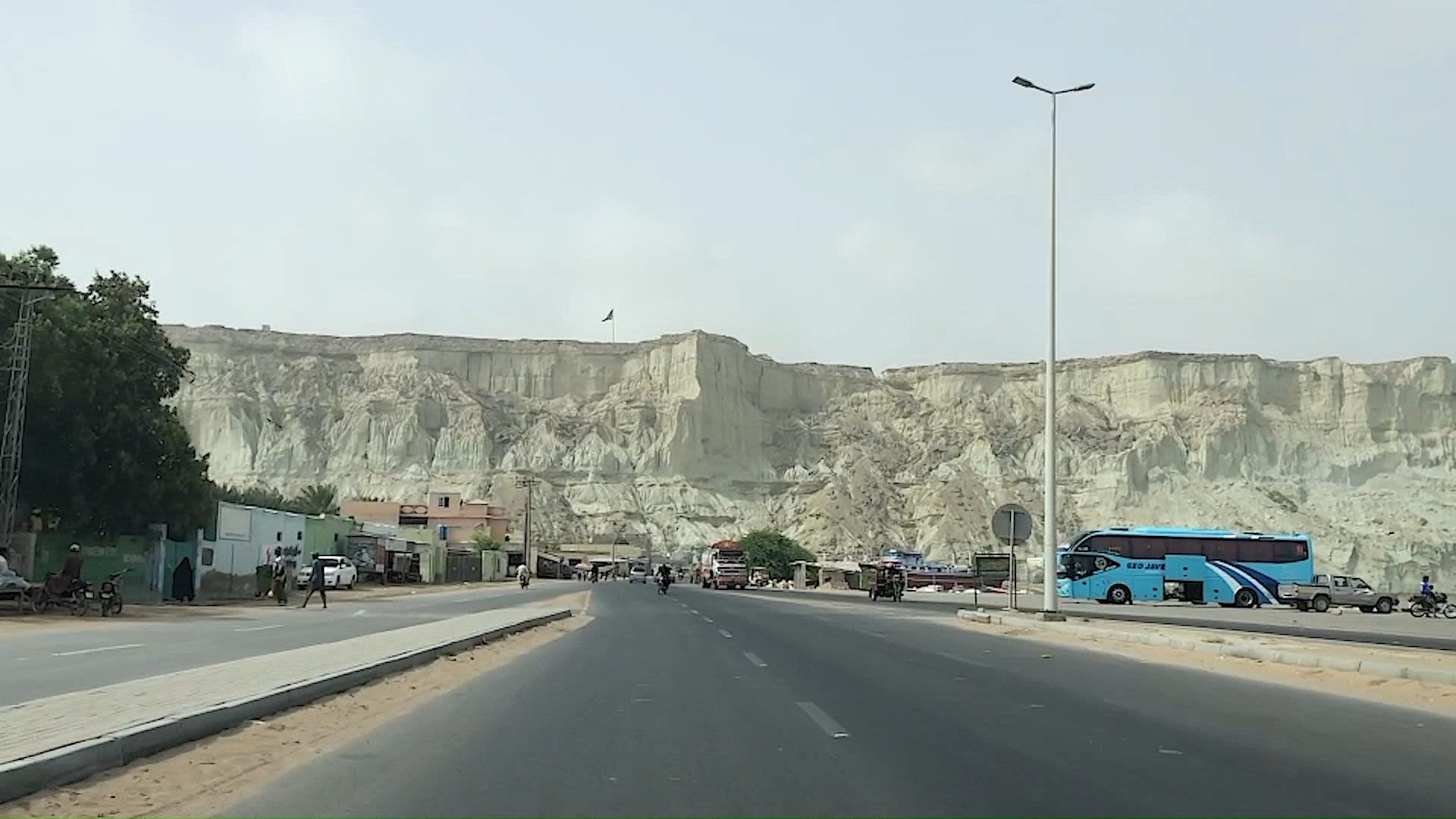
The drive to Pakistan’s port of Gwadar takes seven and a half hours from Karachi via the Makran coastal highway. Much of the 600-km route is deserted, with no restaurants, restrooms or even fuel stations. On a recent journey, around 200 vehicles in total could be counted during the entire drive.
Arriving in the city on Pakistan’s Indian Ocean coast, Chinese and Pakistani flags are ubiquitous, and Chinese-financed construction projects loom, but the city is spookily devoid of economic activity. Near the seafront, broad avenues are curiously empty of vehicles. Inside the city center, the roads are narrow, congested and covered with foul smelling drain water, with few multistory buildings aside from the Chinese-built port compound.
It is hard to visualize Gwadar as the launch pad of a new global paradigm, but that is what Beijing would have the world believe.
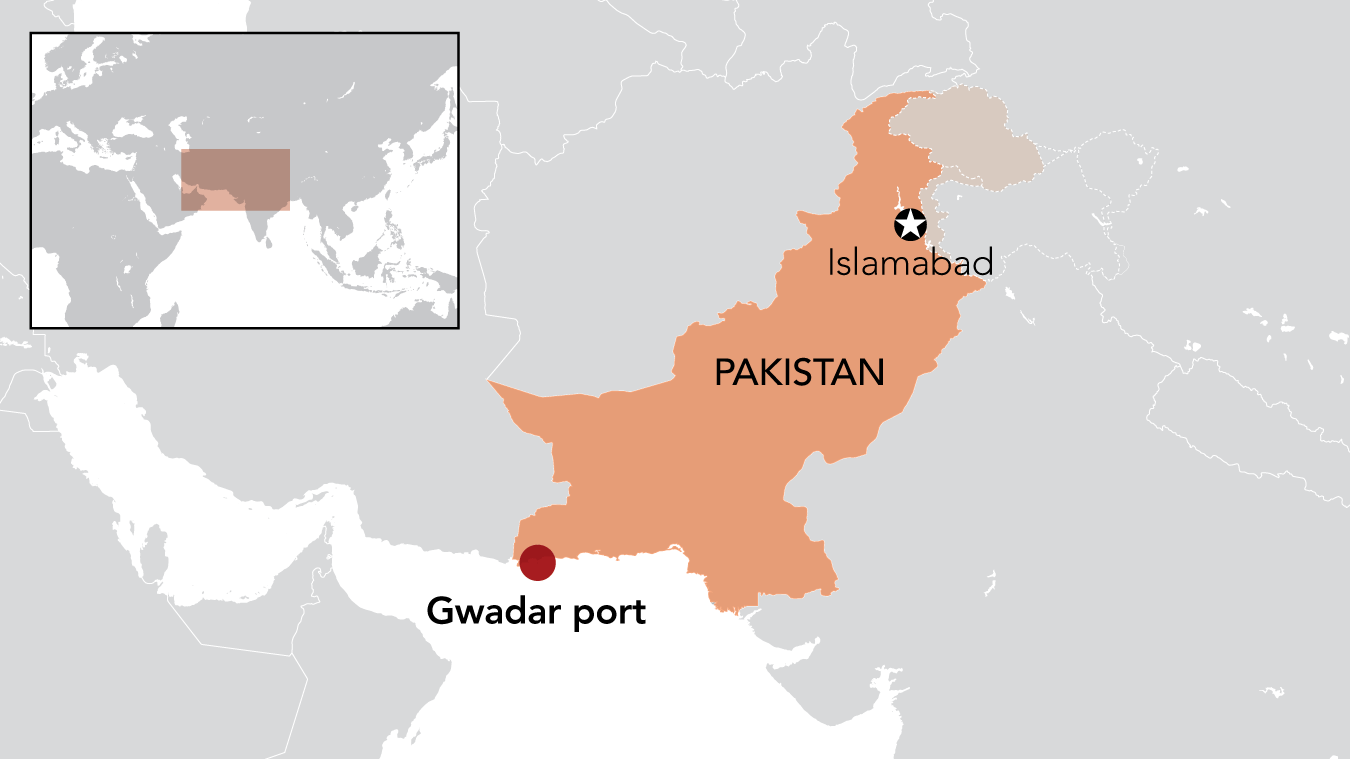
Nine years ago it was plucked out of obscurity — a backwater in Pakistan’s restive Balochistan region — and presented as China’s commercial window onto the Indian Ocean, a hub for regional integration under the Belt and Road Initiative, which was to harness the juggernaut of the Chinese economy to the goal of Asian economic development.
The initiative, which includes pledges to 149 countries, aims to promote Chinese-led regional integration — and sow economic dependence on Beijing.
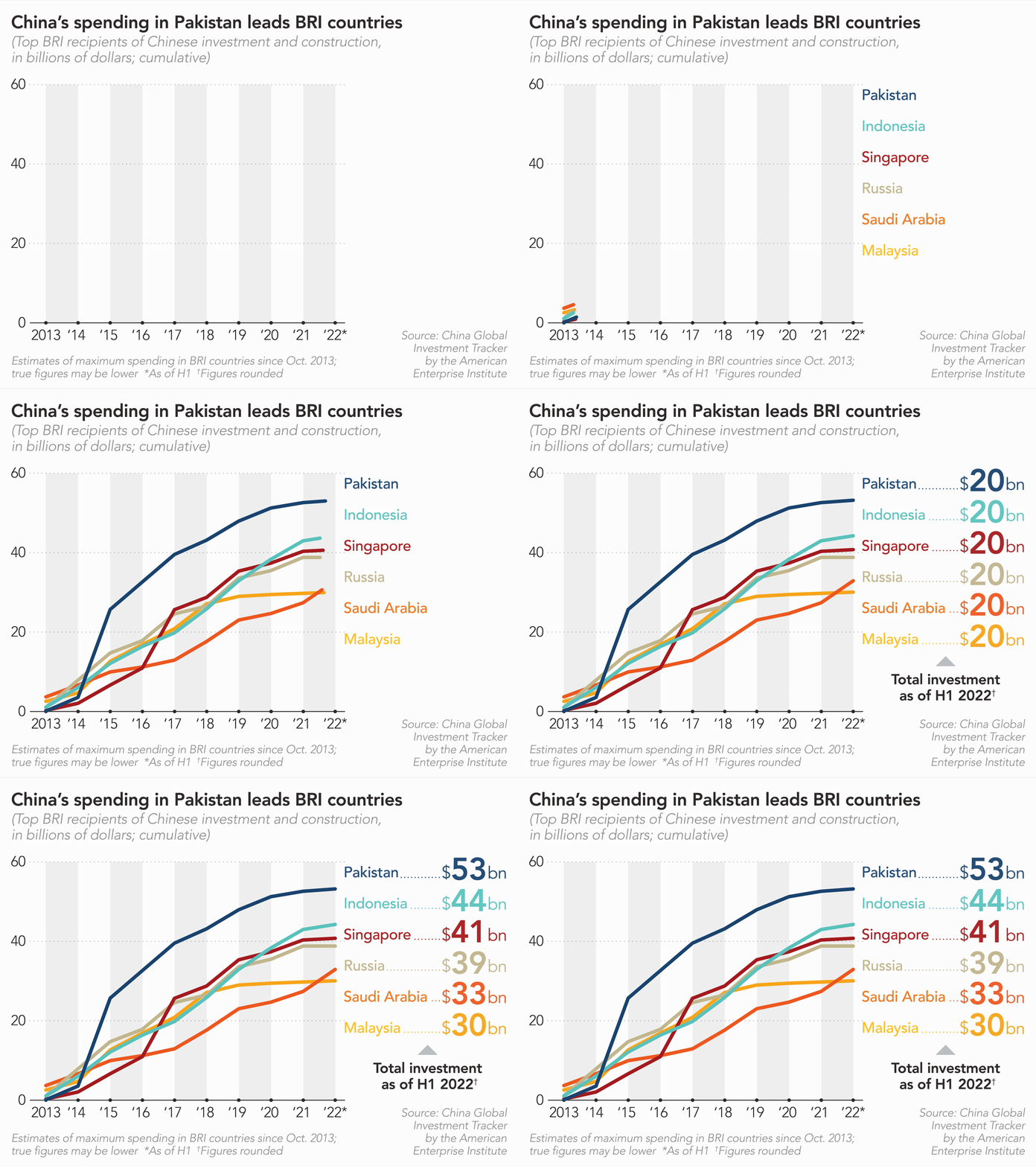
First announced in a speech by Chinese President Xi Jinping in 2013 as the “Silk Road,” the BRI was fleshed out in April 2015 with the announcement of the China-Pakistan Economic Corridor (CPEC), stretching from Gwadar to the Chinese city of Kashgar, in Xinjiang. The CPEC showcased the China-Pakistan “all-weather friendship” with $46 billion in pledged funds that has since grown to $50 billion. It was to be the backbone of the now renamed Belt and Road Initiative.
Tiếp tục đọc “Road to nowhere:China’s Belt and Road Initiative at tipping point”
The Earth is approximately 1.1℃ warmer than it was at the start of the industrial revolution. That warming has not been uniform, with some regions warming at a far greater pace. One such region is the Arctic.
A new study shows that the Arctic has warmed nearly four times faster than the rest of the world over the past 43 years. This means the Arctic is on average around 3℃ warmer than it was in 1980.
This is alarming, because the Arctic contains sensitive and delicately balanced climate components that, if pushed too hard, will respond with global consequences.
A large part of the explanation relates to sea ice. This is a thin layer (typically one metre to five metres thick) of sea water that freezes in winter and partially melts in the summer.
The sea ice is covered in a bright layer of snow which reflects around 85% of incoming solar radiation back out to space. The opposite occurs in the open ocean. As the darkest natural surface on the planet, the ocean absorbs 90% of solar radiation.
When covered with sea ice, the Arctic Ocean acts like a large reflective blanket, reducing the absorption of solar radiation. As the sea ice melts, absorption rates increase, resulting in a positive feedback loop where the rapid pace of ocean warming further amplifies sea ice melt, contributing to even faster ocean warming.
Tiếp tục đọc “Arctic is warming nearly four times faster than the rest of the world“
Author Salman Rushdie is in the hospital with serious injuries after being stabbed by a man at an arts festival in New York State on Aug. 12, 2022. The following article was published on the 30th anniversary of the release of The Satanic Verses.
One of the most controversial books in recent literary history, Salman Rushdie’s “The Satanic Verses,” was published three decades ago this month and almost immediately set off angry demonstrations all over the world, some of them violent.
A year later, in 1989, Iran’s supreme leader, the Ayatollah Khomeini, issued a fatwa, or religious ruling, ordering Muslims to kill the author. Born in India to a Muslim family, but by then a British citizen living in the U.K., Rushdie was forced to go into protective hiding for the greater part of a decade.
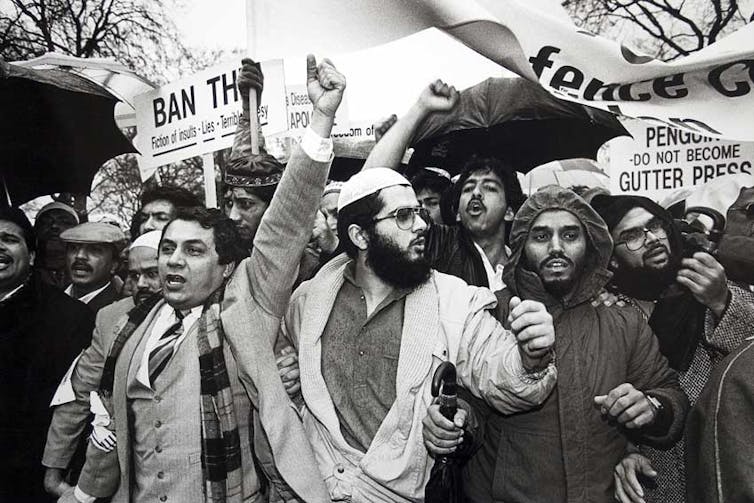
What was – and still is – behind this outrage?
About us
The book, “Satanic Verses,” goes to the heart of Muslim religious beliefs when Rushdie, in dream sequences, challenges and sometimes seems to mock some of its most sensitive tenets.
Muslims believe that the Prophet Muhammed was visited by the angel Gibreel – Gabriel in English – who, over a 22 year period, recited God’s words to him. In turn, Muhammed repeated the words to his followers. These words were eventually written down and became the verses and chapters of the Quran.

