Nuclear power gained a bad reputation following the disasters at Chernobyl, Fukushima and Three Mile Island.
Now, with global energy disruptions caused by Russia’s war in Ukraine and sky-high fuel prices means aging nuclear plants are getting a new lease on life.
And there is new type of nuclear plant is on the horizon- one that could revolutionize the industry.
They are called Small Modular Reactors, or SMRs for short.
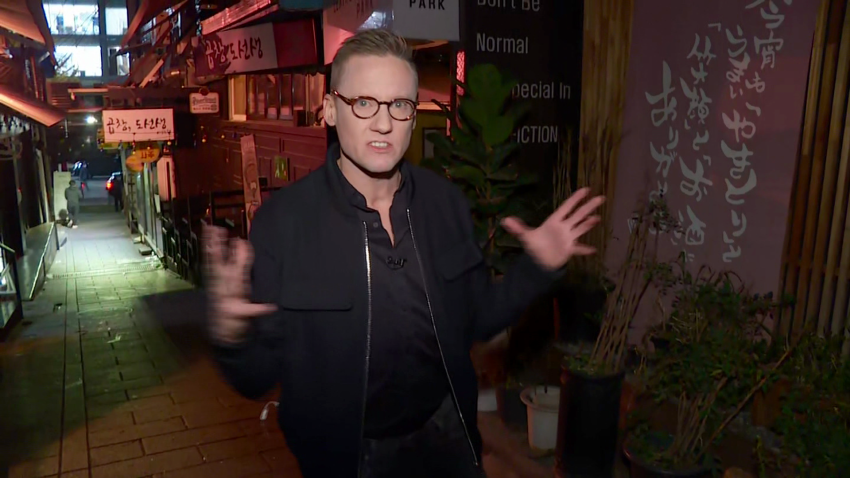
Al Jazeera’s Rob Renolds reports from San Luis Obispo California.
nikkei – Murky origins plague furniture sector coming down from COVID-fueled buying spree
A company displays lumber in Vietnam, whose wood products industry is grappling with risks ranging from the Ukraine war to fake forest certificates and U.S. trade probes. (Photo by Lien Hoang)
HO CHI MINH CITY — Reputational risks are piling up for a Vietnamese lumber industry already beset by a falloff in demand from the heights of the pandemic.
One of the world’s biggest wood and furniture exporters, Vietnam enjoyed a surge in orders when overseas buyers spent COVID lockdowns renovating their home offices and kitchens.
But the Southeast Asian country faces accusations of importing Chinese goods for re-export with “Made in Vietnam” labels since the onset of the China-U.S. tariff war in 2018. Now an actual war in Ukraine is stoking concern that sanctioned products from Russia may be routed through Vietnam, which maintains a neutral stance on the conflict between Kyiv and Moscow, as it does with Beijing and Washington. A third concern, about logging of fuel wood, has added to the pressure.
TTCT – Cáo giác về xuất xứ những UAV “tự sát” mà Nga đang sử dụng ở Ukraine không mới khi đối chiếu lại quá trình trừng phạt Iran của Hội đồng Bảo an Liên Hiệp Quốc.
Nhưng việc Iran nay cung cấp UAV cho Nga cho thấy thế giới đang tiến đến một cục diện hoàn toàn khác.
Ảnh: The New Arab
“Trong đêm 22 và 23-10, kẻ thù “truyền kiếp” đã tấn công miền nam đất nước bằng UAV tự sát. 11 UAV của đối phương đã bị tiêu diệt bởi lực lượng phòng không của Bộ Tư lệnh không quân phía nam ở khu vực Mykolaiv”, Bộ Tư lệnh các lực lượng vũ trang Ukraine đăng trên Facebook sáng thứ hai 23-10.
Bản tin này còn cho biết “thêm 3 UAV Shahed-136 khác đã bị bắn hạ bởi các đơn vị khác ở phía nam”. Chưa hết, “thêm 2 UAV lảng vảng, tìm cách đột phá từ hướng nam, đã bị phá hủy bởi các khẩu đội phòng không của Bộ Tư lệnh không quân đông và trung tâm ở phía đông và bắc Ukraine”.
South Korean authorities said Monday they had no guidelines to handle the huge crowds that gathered for Halloween festivities in Seoul, as families in the country and around the world mourn the 155 victims of Saturday night’s crowd crush.
As growing climate change impacts are experienced across the globe, the message that greenhouse gas emissions must fall is unambiguous. Yet the Emissions Gap Report 2022: The Closing Window – Climate crisis calls for rapid transformation of societies finds that the international community is falling far short of the Paris goals, with no credible pathway to 1.5°C in place. Only an urgent system-wide transformation can avoid climate disaster.
The report is the 13th edition in an annual series that provides an overview of the difference between where greenhouse emissions are predicted to be in 2030 and where they should be to avert the worst impacts of climate change.
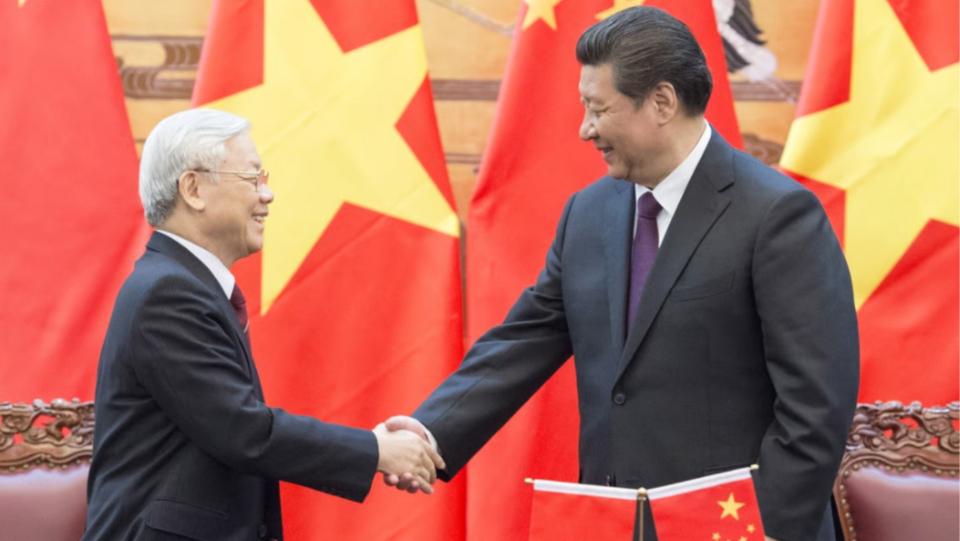
Communist Party of Vietnam leader Nguyen Phu Trong, left, meets with China’s Communist Party leader Xi Jinping in Beijing in 2015. | Xinhua
HANOI—The Socialist Republic of Vietnam will not be coerced into joining the United States-led effort aimed at isolating China and provoking conflict as part of its Cold War 2.0 foreign policy.
That’s a major message expected to come out of the upcoming visit to China by Nguyen Phu Trong, General Secretary of the Communist Party of Vietnam. Trong will travel to China to pay an official visit to the newly re-elected Communist Party of China leader Xi Jinping. Trong will be one of the first world leaders to visit China since the closing the 20th National Congress of the Communist Party of China, earlier this month.
TTCT – Thủ tướng Anh Liz Truss “sẵn sàng bật nút hạt nhân nếu cần”, Chủ tịch Ủy hội châu Âu Ursula Von der Leyen không sợ bom rơi đạn lạc đến Kiev động viên đồng minh, và nữ Thủ tướng Moldova Maia Sandu sẵn sàng ban lệnh động viên. Chính trường châu
Hai phụ nữ đang là cái gai trong mắt người Nga: Maia Sandu và Ursula von der Leyen. Ảnh: Twitter
Đình đám nhất trong các nữ chính khách này gần đây chắc chắn là bà Truss vừa từ nhiệm. Không chỉ vì kỷ lục giữ ghế ngắn ngủi nhất, chỉ 44 ngày (trong đó hết 10 ngày gần như nước Anh không hoạt động vì tang chế của Nữ hoàng Elizabeth II), mà còn vì thành tích trong nhiệm kỳ ngắn kỷ lục.
TTCT – Mối quan hệ trăm năm Mỹ – Saudi Arabia đang đứng trước thử thách chưa từng thấy sau những biến động đảo lộn ở châu Âu và của giá xăng dầu.
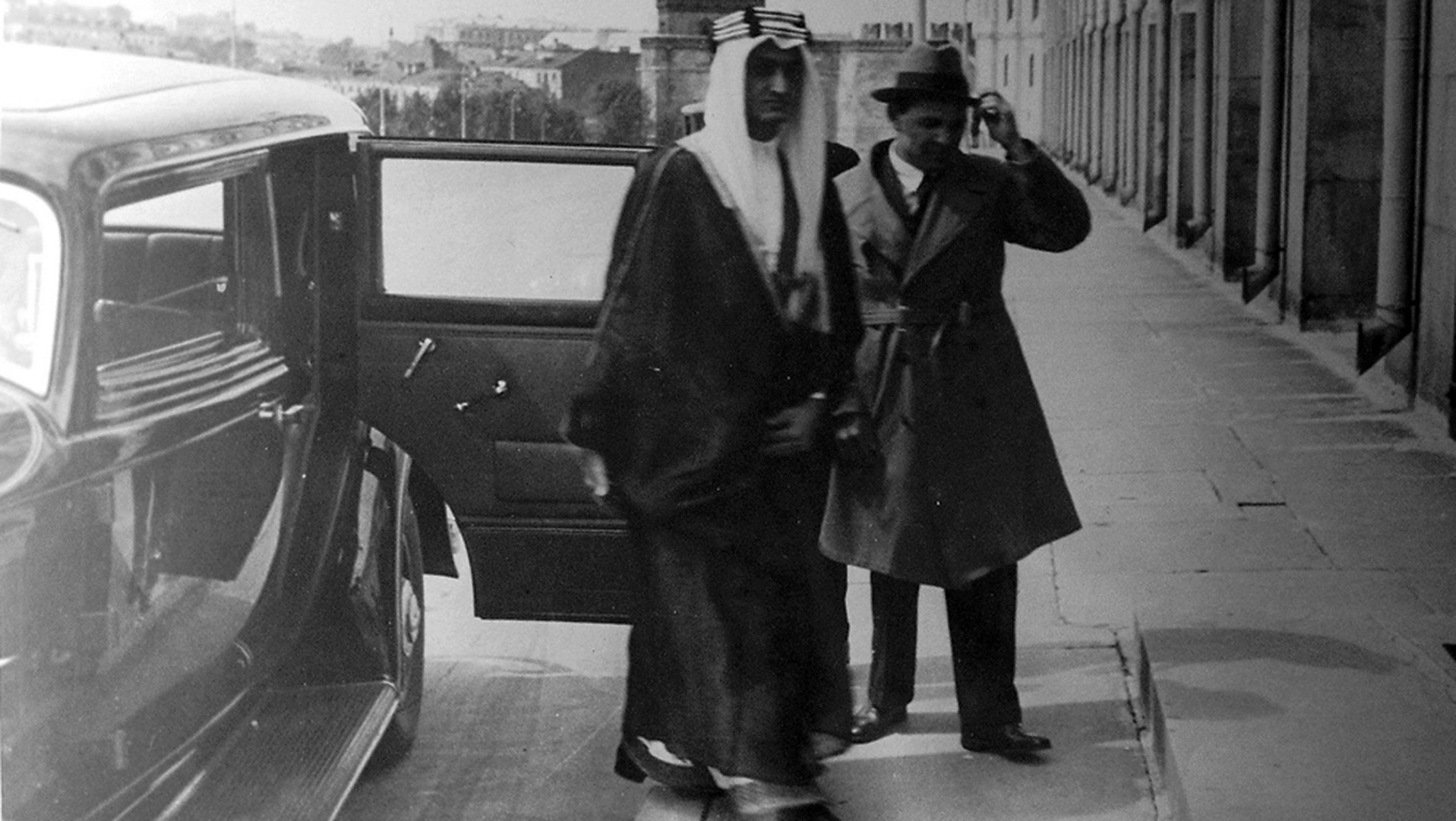
Đại sứ Liên Xô Karim Khakimov và thái tử Saudi Faisal ở Matxcơva năm 1932. Ảnh: Al Jazeera
Tiếng súng trong thành Jeddah, thủ đô của vương quốc Hejaz, vẫn rộn rã. Đó là năm 1926 tại bán đảo Ả Rập, trong cuộc chiến giữa Hejaz và vương quốc láng giềng Nejd. Nejd đang thắng và vua Nejd Ibn Saud mới tuyên bố lên cả ngôi vua nước Hejaz.
Vùng tranh chấp
Chiếc xe cắm cờ nước ngoài của một nhà ngoại giao băng qua hai tuyến khói lửa mù mịt. Ông là tổng lãnh sự tại Hejaz và đến gặp vua xứ Nedj còn ở sa mạc khi quân ông đang tiến vào thủ đô nước địch. Nhà ngoại giao đó là Karim Khakimov. Ông thông báo với vua Ibn Saud rằng nước ông công nhận ngôi vua lưỡng quốc của Saud khi mọi chuyện còn chưa ngã ngũ.
Thật vậy, Liên Xô là nước đầu tiên công nhận chế độ nhà Saud, tức là Saudi Arabia sau này (từ 1932). Khakimov và đại sứ Liên Xô sau ông Nazir Bey Turyakulov trở thành bạn hàn vi của Ibn Saud. Liên Xô sau đó viện trợ 1 triệu bảng Anh mỗi năm cho chế độ Saudi, từ lúc bán đảo còn chưa có mùi dầu hỏa.
Lúc bấy giờ Anh quốc là siêu cường số 1 thế giới và là một đế quốc hàng hải – cái họ cần kiểm soát là các tuyến đường biển, các khu vực ven bờ, hải cảng và kho hàng. Phần nội địa bán đảo Ả Rập họ không cần biết, chỉ hú họa là một sa mạc phải băng qua từ Yemen đến cận Đông trù phú của bờ Địa Trung Hải. Ngay Đế quốc Ottoman (tiền thân của Thổ Nhĩ Kỳ) cũng lơ là cái bãi cát mênh mông đó.
Hejaz ở phía tây còn có vị trí chiến lược và là biểu tượng với thánh địa hành hương, chứ Nejd là nơi nào, hỏi lạc đà e nó cũng lắc đầu, không biết đường đến. Nejd bấy giờ chỉ có vài vạn người du mục chia thành cả trăm bộ lạc hay gia tộc trấn các giếng nước và ốc đảo, sinh sống không khác một ngàn năm trước và chỉ ở bên lề những thời kỳ phát triển rực rỡ của Hồi giáo.
Đó không phải là Baghdad thế kỷ 11 với 60.000 nhà tắm công cộng, hay Cordoba thế kỷ 10 với thư viện 400.000 pho sách. Nejd là sáng ra, “mẹ ơi, con lật cục đá bắt được con kỳ đà” và hôm nay nhà mình có bữa ăn, mấy đứa bé reo hò, “anh cho em cái đuôi để chơi”. Cho nên ở đây vào thế kỷ 18 mới nảy ra chủ nghĩa tôn giáo Wahab, khắt khe cấm rượu cấm đàn, để trở về Hồi giáo được cho là “nguyên thủy” – thời của Thiên sứ (thế kỷ 7).
Rồi năm 1744, vị giáo sĩ khắc khổ Wahab thỏa thuận với tộc trưởng bộ lạc của họ Saud hiệp ước Dariya. Nhà Saud lo đời và nhà Wahab lo đạo. Hiệp ước này đến nay vẫn còn hiệu lực và là nền tảng của chế độ Saud. Hồi giáo Wahab với khuynh hướng về nguồn, nguyên sơ (Salafi) được nhà nước Saud triệt để áp dụng và phổ biến ra bên ngoài nhờ sức mạnh tài chánh từ nguồn dầu mỏ. Nó là gốc gác của các phong trào Hồi giáo quá khích trên toàn thế giới như Al Qaeda hay IS (Nhà nước Hồi giáo tự xưng).
Nhưng cái “nguyên sơ” này đầu thế kỷ 20 đã phải trải qua thay đổi đầu tiên. Ibn Saud gặp phải những vấn đề không hề “nguyên sơ”. Ông trở thành vua Nejd năm 1921, rồi thêm vùng Hejaz năm 1926, lập ra Saudi Arabia năm 1932.
Trước hết, ông phải nhắm mắt lấy tới 150 cô vợ xấu đẹp gì không biết để giao hảo với mọi tộc và thống nhất các bộ lạc trong vùng. Đây là chuyện dễ làm thôi, nhưng trong nước ông còn phải cai trị phần Hejaz là phố thị kinh tế phồn thịnh giao thương, chứ không chỉ phi ngựa múa kiếm trên đồi cát lở. “Ngày đó xa rồi”.
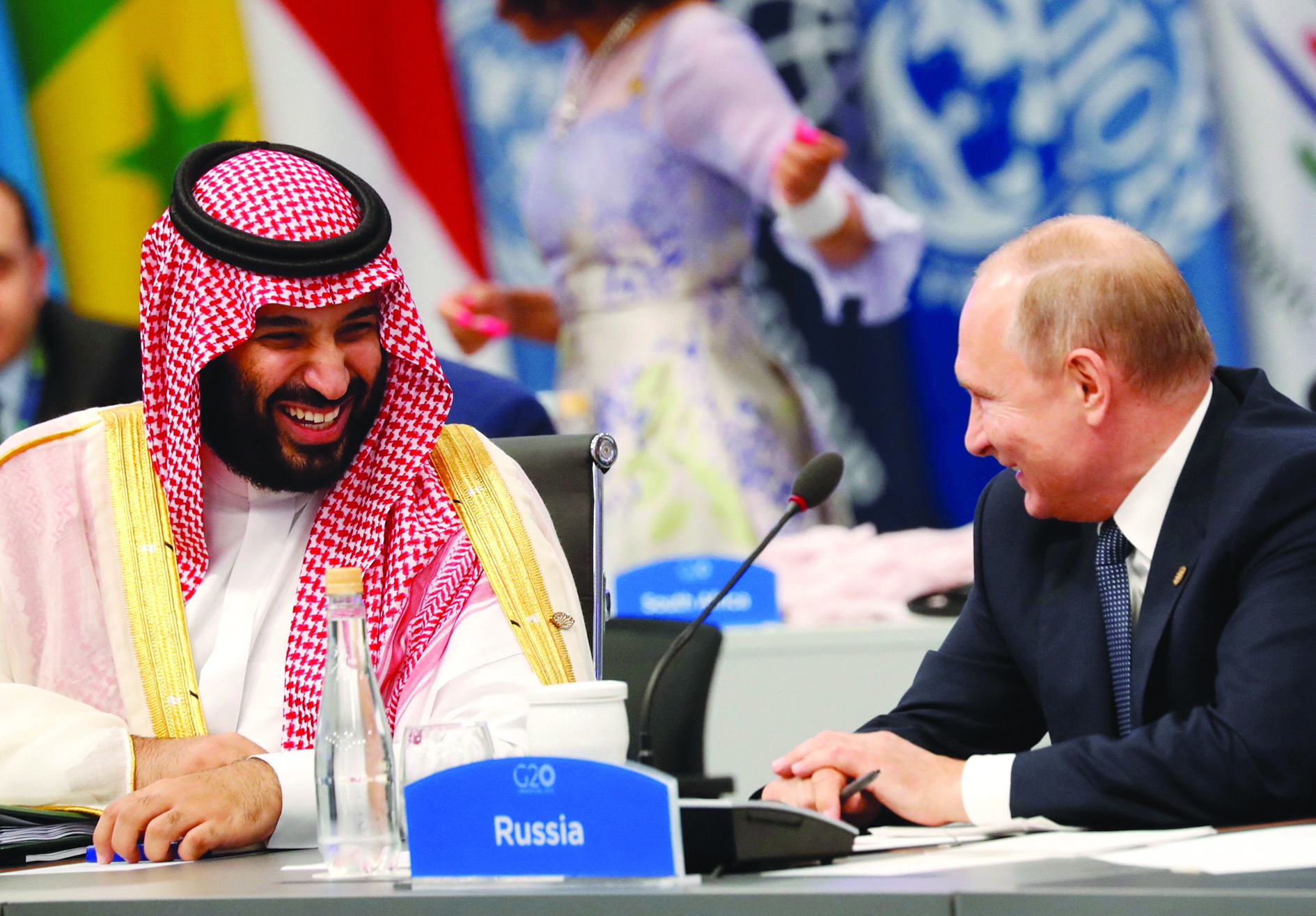
Thái tử MSB và Tổng thống Nga Vladimir Putin ở Buenos Aires năm 2018. Ảnh: Reuters
Tuy nhiên khó khăn nhất là đương đầu với tình hình quốc tế bên ngoài.
Khu vực lúc đó do Anh quốc làm chủ vùng ven biển, tức Yemen và các tiểu vương quốc vùng Vịnh ngày nay. Đây là tuyến đường chiến lược đi lại giữa Anh và thuộc địa quan trọng nhất của họ Ấn Độ. Phần nội địa thì Anh không quan tâm, nhưng vùng ven biển lại rất được chú ý: tiểu vương quốc Kuwait tí ti ở ven bờ quan trọng hơn các vương quốc Hejaz hay Nejd ở sa mạc mênh mông.
Dầu hỏa được phát hiện vào năm 1934 và nhà Saud ký hợp đồng với công ty Hoa Kỳ Socal để khai thác, nhưng chẳng được mấy tiền. Thái tử Faisal đi thăm Matxcơva (1932) và vua Ibn Saud khôn ngoan ve vuốt các thế lực châu Âu, từ phát xít Ý (1937) đến Quốc xã Đức, rồi ký hiệp ước với cả Nhật Bản (1939).
Nhưng khi dầu hỏa bắt đầu quan trọng, Liên Xô mất đi mối quan hệ đặc biệt với nhà Saud (1938). Quan hệ đặc biệt này vốn dựa trên tình bạn cá nhân giữa vua Ibn Saud và các đại sứ Khakimov và Turyakulov. Ở Liên Xô những năm 1937-1938, Turyakalov và Khakimov bị thanh trừng và khai trừ. Khi Matxcơva gửi tân đại sứ sang, Ibn Saud từ chối không nhìn mặt. Anh quốc từ 1940 thay Liên Xô cấp cho nhà Saud hằng năm 1 triệu bảng Anh tiền viện trợ lấy thảo. Ibn Saud cũng kịp khôn khéo bỏ phe Trục, đứng về phe Đồng minh ngay trước khi họ thắng trận.
Quan hệ đặc biệt
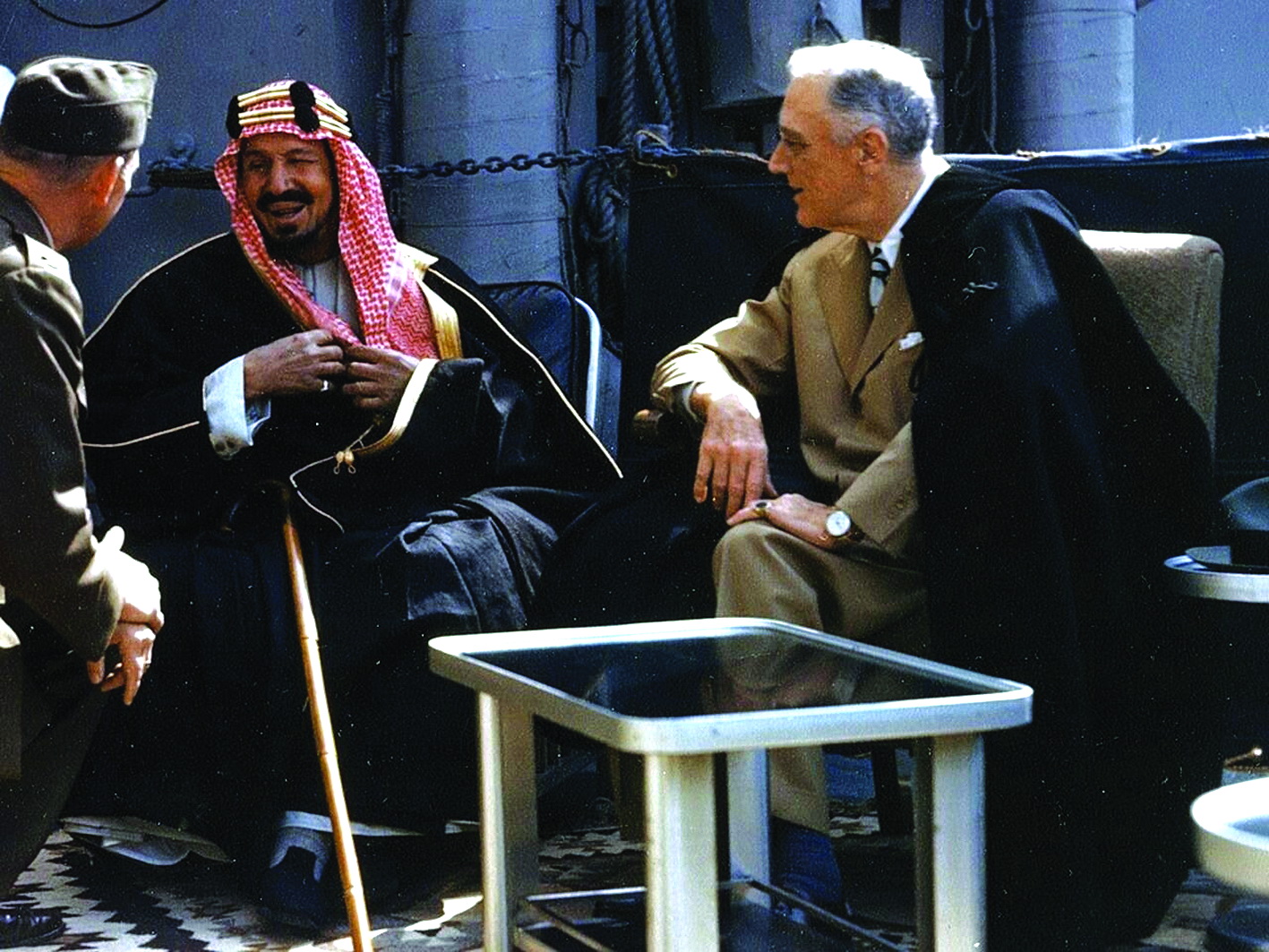
Ngày 14-2-1945 trên chiến hạm Quincy, Ibn Saud hội kiến tổng thống Mỹ Franklin D. Roosevelt. Ông phát hiện ra một chàng đẹp trai, mạnh mẽ và nhà giàu, giàu nhất thế giới sau Thế chiến II. Mỹ lại ở xa, lớ ngớ mới đến đây lần đầu, không gian giảo như Anh hay các thế lực châu Âu vốn đã quen mặt vùng này. Ibn Saud bèn ôm ngay lấy, nguyện sẽ trung thành nâng khăn suốt đời nếu anh bảo vệ cho em. Vương quốc từng được Liên Xô đỡ đầu trước tiên vào năm 1926, tới 1945 trở thành thứ thiếp miền xa của Hoa Kỳ.
Thường thì người ta làm thiếp Mỹ để được Mỹ nuôi. Saudi làm thiếp Mỹ để canh giếng dầu thôi, nhưng dần dà với sự phát triển của nguồn lợi này, đến lượt họ nuôi lại Mỹ. Họ giữ dầu cho Hoa Kỳ và một mực bắt tay, khi cần thì tung ra thị trường cho giá hạ. Dĩ nhiên là giá dầu thế giới không phải là do mình Saudi quyết định, nhưng Saudi là tác tố quan trọng và có ảnh hưởng rất lớn.
Vua Ibn Saud và Tổng thống Mỹ Roosevelt trên chiếm hạm Quincy năm 1945. Ảnh: Wikimedia
Phát triển kỹ nghệ của Mỹ sau Thế chiến II dựa một phần quan trọng vào nguồn nhiên liệu dầu giá cực rẻ này. Cả “lối sống Mỹ” mà thế giới thèm muốn cũng vậy, bởi nó cần xe con dài 5m, xa lộ rộng 6 làn, khu dân cư ngoại ô và trung tâm mua sắm bật đèn sáng trưng ngày đêm. Mỹ mua dầu Saudi giá rẻ và dùng Saudi để giữ giá dầu rẻ.
Saudi bán dầu có tiền thì lại mua súng của Mỹ. Với dân số bản xứ 20 triệu (và 15 triệu lao động nước ngoài), quỹ quốc phòng Saudi là 56 tỉ USD (2021), ngang với Pháp, Đức, Nhật, có khi bằng cả Anh và xấp xỉ cả Nga (như năm 2013, quỹ quốc phòng Saudi là 67 tỉ và Nga là 68 tỉ USD). Còn dư tiền, Saudi mua công khố phiếu Mỹ, tức cho chính quyền Mỹ mượn (116 tỉ USD), hay đầu tư vào nước Mỹ (750 tỉ USD). 750 tỉ USD này có nghĩa là trong của cải của mỗi người Mỹ bất kể già trẻ lớn bé, có 2.300 USD là phần của Saudi.
Ngược lại, Saudi được gì? Trong một thế giới bể dâu, một khu vực lắm tang thương và thay đổi, biết bao nhiêu triều đại và chế độ tiếp nối, bị thay thế và lật đổ khoảng 100 năm nay, họ nhà Saud vẫn an vị như bàn thạch và giữ được nguyên chế độ quân chủ chuyên chế.
Đối phó khủng hoảng
Sự cố xảy ra gần đây vào năm 2014-2016 là khủng hoảng giá dầu. Từ 107 USD/thùng (giá cao nhất 2013) xuống 26 USD/thùng (giá thấp nhất 2016). Thường khi giá dầu xuống, sản xuất và tiêu dùng trên thế giới sẽ tăng nhờ giá nhiên liệu thấp, giúp dầu bán ra nhiều hơn, và dần đi tới mức giá cân bằng. Nhưng khủng hoảng lần này không như thế, và quốc gia chỉ sống về dầu hỏa Saudi mất đi 3/4 thu nhập. Nhà nước không còn phát đủ tiền cho dân chúng ngồi chơi không, nguy cơ bất ổn thành sự thật. Vậy giờ phải làm sao?
Bên trong, trước hết một thái tử khôi ngô tuấn tú xuất hiện: Mohammad bin Salman (MBS). MBS giành ngôi đông cung từ một ông anh bà con (2017) và nhốt cả một nhóm vương tôn vào khách sạn Ritz Carlton để khảo của, lấy được 130 tỉ USD. Ông quyết định thay vì nuôi cả hoàng tộc nhà Saud gồm 2.000 vương tôn các loại, thì từ giờ sẽ giới hạn lại, chỉ nuôi phe của ông thôi, vừa tiết kiệm tiền vừa đỡ phân tán quyền lực!
Cải cách kinh tế ở Saudi khi dầu xuống giá (và mai kia sẽ có ngày cạn kiệt) phải qua cải cách xã hội trước. Phụ nữ Saudi không còn ngồi nhà giũa móng tay đợi chồng cầm tiền của nhà nước phát cho bỏ vào túi LV mang về, thì phải tham gia lao động. Phụ nữ Saudi có trình độ học vấn rất cao vì ngoài đi học, họ chẳng có việc gì để làm. Nhưng học xong thì họ về nhà chứ không dùng hiểu biết cho thế giới bên ngoài. Để ra ngoài lao động, có nghĩa là phải được lái xe (từ 2018) và không phải che mạng (2019).
Để được giới trẻ ủng hộ, MBS cho rạp chiếu phim mở cửa (2018) và ca nhạc hội được tổ chức (2019), trong khi trước đó để giải trí chỉ xem đô vật (2014). Thái tử cho phép du lịch nước ngoài vào và đầu tư vào hạ tầng của ngành này theo gương sáng của UAE. Ông phải nạt thành phần tôn giáo bảo thủ và kềm hãm là vi phạm hiệp ước 1744 giữa quyền lực thế tục với thần quyền Wahab.
Như vậy trong nước thái tử có hai kẻ thù: một bộ phận lớn vương tộc bị ông tước đoạt quyền lợi và thành phần tôn giáo Wahab chủ nghĩa mất dần ảnh hưởng văn hóa và xã hội. Ở ngoài nước, ông vẫn còn trông cậy được sự che chở của Mỹ. Tuy nhiên, năm 2015 thời Obama, Mỹ đi đến thỏa ước với Iran – kẻ thù số 1 của Saudi. Nhưng may thay, thỏa hiệp này bị chính quyền Trump bội ước. Niềm vui tuy vậy ngắn ngủi. Năm 2016 khi gây với láng giềng Qatar, MBS không được chính quyền Trump ủng hộ, nên phải đổi ý, nuốt giận làm lành.
Bài học với người hiểu nhanh như MBS là không còn tin Mỹ được. Vũ khí của họ cũng tốn tiền vô ích, không mang lại chiến thắng ở Yemen, cuộc chiến mà Saudi hậu thuẫn một trong hai phe chính. Ngày 14-9-2019, chỉ bằng 10 máy bay không người lái tàng tàng loại cọt kẹt, phiến quân Houthi ở Yemen đánh Nhà máy dầu Abqaiq-Khurais tại Saudi làm mất một nửa khả năng sản xuất dầu của nước này, tương đương 5% sản lượng cả thế giới. Việc tư hữu hóa 5% cổ phần Công ty dầu mỏ nhà nước Aramco trên thị trường chứng khoán để gây quỹ của thái tử MBS cũng thất bại vì rủi ro quá lớn.
Khu vực này giờ đầy bất trắc và bất trắc nhất vẫn là Iraq, láng giềng chung 800km biên giới với Saudi. Sau khi xâm lăng nước này năm 2003, Mỹ đã phải ra đi, để lại họ dưới ảnh hưởng của Iran. Tại Syria loạn từ 2011, Mỹ không làm được gì và Iran cùng Nga trở thành ảnh hưởng chủ chốt. Ở Libăng và Yemen, Tehran cũng đang tăng sức nặng từng ngày. Saudi có chậm hiểu thì đến đây cũng phải chán, phải thấy Mỹ nhiều khả năng không bảo vệ được họ nữa.
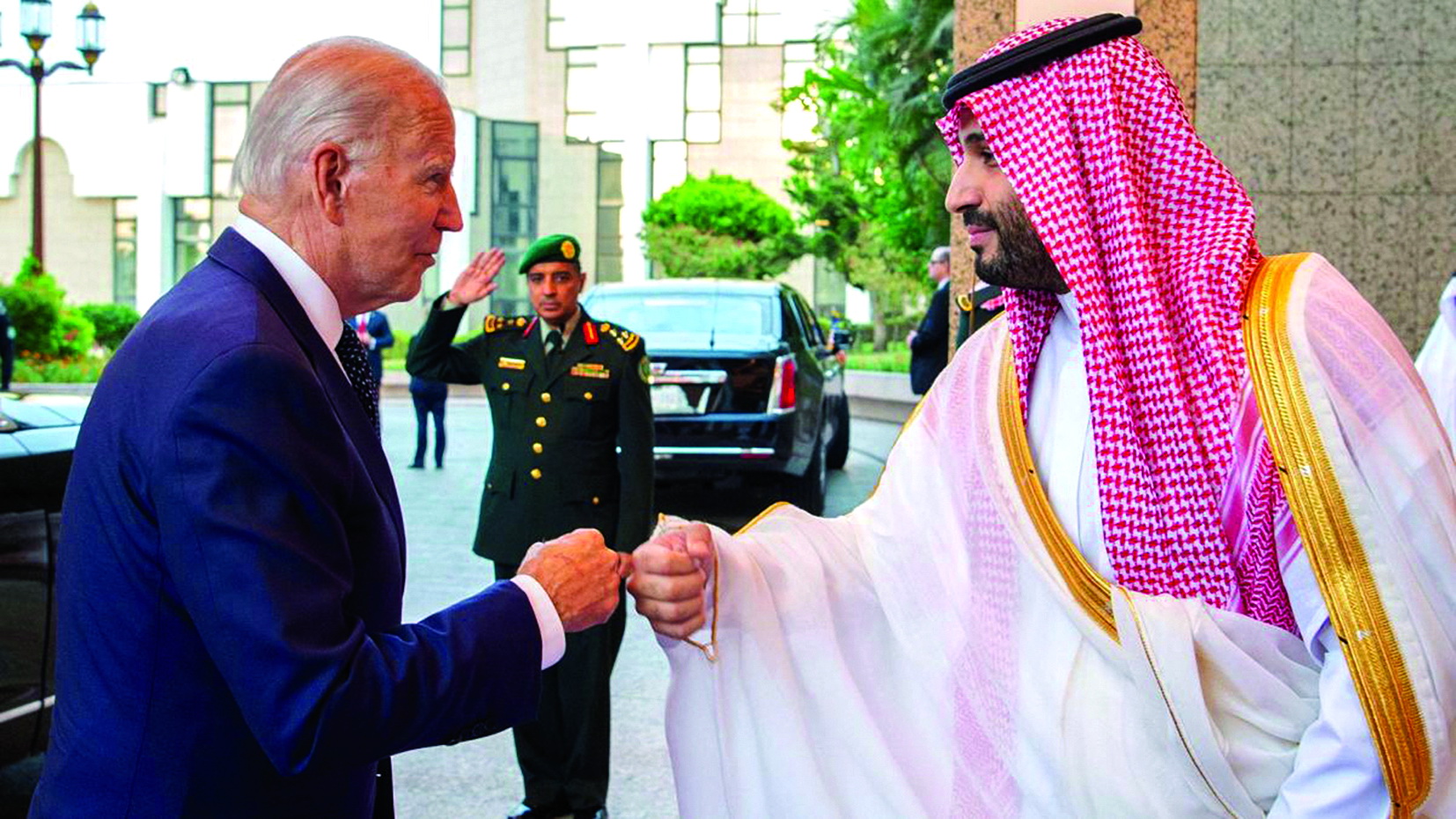
Tổng thống Mỹ Biden và thái tử MBS ở Jeddah, năm 2022. Ảnh: Reuters
Tình chỉ đẹp khi còn dang dở?
Về mặt nhiên liệu, Hoa Kỳ trong thập niên qua đã có thể hoàn toàn tự túc và không cần nhập dầu từ nước ngoài. Ngược lại từ 2015, với nguồn dầu đá phiến rẻ tiền, Mỹ còn xuất cảng nhiên liệu tưng bừng. Năm 2021, Mỹ là nước sản xuất nhiều dầu nhất thế giới, 16,5 triệu thùng mỗi ngày – Saudi và Nga ngang nhau ở hạng nhì với 10,9 triệu thùng.
Khi xảy ra chiến tranh Ukraine, để cô lập Nga, Mỹ lại gọi Saudi ra, vắt chân chữ ngũ, bớ cô nhà hàng cho anh bát dầu hỏa. Họ muốn Saudi mở van như suối, trong khi Saudi lại quyết định cắt 2 triệu thùng để giữ giá. Bị ép dầu ép mỡ, MBS đành hứa lèo là sẽ tăng sản lượng thêm 750.000 thùng/ngày cho đến cuối năm nay thôi, nhưng hình như đang tìm mọi cách để không giữ lời. Anh đánh ai xa xôi trời Âu kệ anh chứ, chẳng lẽ tôi chết đói vì Saudi có thể mất nửa thu nhập nếu nghe lời xui khôn xui dại. Mỹ bèn hắng giọng, tao sẽ không bán súng cho mày nữa.
Tuy Saudi mua rất nhiều vũ khí Hoa Kỳ nhưng như họ đã thấy, điều đó không bảo đảm được an ninh. Vụ đánh nhà máy dầu 2019 cho thấy 10 máy bay không người lái giá có 20.000 USD/chiếc vẫn đủ sức qua mặt ngân quỹ quốc phòng 62 tỉ USD. Nhà Saud không nghe lời đường mật nữa và mê trai mãi thì cũng có ngày phải mở mắt.
Một thực tế không thể chối cãi với nhà Saud là mối đe dọa Iran vẫn còn đó, sau 40 năm cấm vận phong tỏa của Mỹ. Về kinh tế, sản xuất dầu đá phiến của Mỹ sẽ không bớt đi trong tương lai gần – mà sống còn của chế độ Saud là trong tương lai gần đó. MBS có tám năm nữa và cần tiền để thực hành “Viễn tượng Saudi 2030” của ông, nếu không muốn bị quần chúng lật đổ hay bà con họ hàng phanh thây.
Ở Trung Đông ngày nay, nếu Mỹ không bắt nạt được Iran thì ai có thể mở miệng khuyên can? Ai có thể giúp ổn định Iraq và Syria, và ai làm cho các nước này lộn xộn như bây giờ? Rồi tầm nhìn của Saudi có cần đến Kiev không? Xin nhắc, tháng 10-2017, vua Salman sang thăm Nga và mang theo phái đoàn 1.500 người hòng hợp tác và trao đổi mọi lĩnh vực. Đây chỉ là bước đầu và những đòi hỏi cũng như bất bình từ Mỹ hiện chỉ đẩy Saudi về phía đối tác mới. Ngoài ra phải nói từ 1988, Saudi đã mua tên lửa Đông Phong 3 của Trung Quốc, cho tới tận bây giờ là Đông Phong 21. Năm 2021, lại lộ chuyện Trung Quốc giúp Saudi tự sản xuất tên lửa đạn đạo và hai nước tính toán mua bán dầu mỏ bằng nhân dân tệ. Saudi cũng từng lên tiếng cùng UAE rằng họ sẽ có thể tìm cách sản xuất vũ khí nguyên tử.
Mới ngày 10-10 vừa rồi, đến lượt nhà lãnh đạo Mohammed bin Zayed, hay MBZ, của UAE sang thăm Nga. Ngoài đời, MBZ (61 tuổi) được coi là anh hai của MBS (37 tuổi) để chỉ vẽ về chuyện đổi mới xã hội ở Saudi, như ở UAE. Hồi tháng 2, UAE đã không bỏ phiếu chống Nga tại Liên Hiệp Quốc và hiện OPEC đang bị Hoa Kỳ kết tội về hùa với Nga trong chính sách dầu hỏa. Cấm vận và phong tỏa Nga, biến UAE thành trạm đi vòng và tiền Nga phải qua UAE giúp nước vốn đã rất giàu này lại giàu thêm. Tương tự, để tránh bị phong tỏa về mặt quốc tế, dầu và tiền Iran vẫn đi vòng qua Qatar.
Saudi bởi vậy giờ buộc phải lo xa, sau hơn bảy thập niên nép bóng Mỹ. Nhưng như mọi chuyện ly thân, ly hôn hay ly dị, chia tay không hề đơn giản. Về mặt kinh tế, Mỹ không mang gì về cho tổ ấm lứa đôi mà chỉ vòi tiền. Về mặt an ninh, anh ngang dọc ở đâu không biết, nhưng trong xóm nhỏ nhà em thì anh bất lực và trước sau gì em cũng sẽ phải tự lo lấy thân, mà hàng xóm côn đồ lại đông. Lo bằng cách nào thì chưa biết, nhưng xem chừng anh Nga có thể nói hộ một câu!■
Họ Saud phải trị nước theo những điều kiện khắt khe của giáo phái Wahab. Nói qua, Hồi giáo trong 1.400 năm và với 1,8 tỉ tín đồ trên thế giới ngày nay có cả trăm phiên bản trong thời gian và không gian. Phiên bản Wahab giờ phổ biến là nhờ tiền dầu của nhà Saud.
Khi Saudi Arabia trở thành quốc gia, có lúc quân Ikhwan của giáo phái Wahab lộng hành và Ibn Saud phải ngậm ngùi lấy thêm 5 hay 7 cô vợ mới để củng cố quyền lực với các bộ lạc. Sau đời ông, lực lượng Ikhwan “nguyên sơ” tái sinh vào năm 1979, chiếm thành phố thánh Mecca, khiến chế độ xanh máu mặt. Sau khi dẹp loạn xong, chế độ phải càng khắt khe hơn về tôn giáo để khỏi sơ hở. Saudi vì thế mất đi cơ hội cởi mở hơn về mặt xã hội so với các nước láng giềng vùng Vịnh.
Năm 1979 đồng thời xuất hiện một mối đe dọa lớn mới với nhà Saud từ bên ngoài. Đó là chiến thắng của chế độ thần quyền Hồi Shia tại Iran, lật đổ nền quân chủ thân Tây phương. Khoảng 15% dân số Saudi là người Hồi Shia. Họ mà tách ra đòi tự trị thì rắc rối to.
Nhà Saud thành công trong quá khứ là nhờ tài dựng nước của Ibn Saud. Năm 23 tuổi (1902), thanh niên này dẫn chỉ 40 đệ tử leo lên lưng lạc đà trong sa mạc mà xưng vương. Nhờ liên minh với các thầy dòng Wahab, ông thống nhất các bộ lạc ngổn ngang và thôn tính nhà Hashem láng giềng. Bên ngoài, ông xoay trở và đương đầu với Đế quốc Anh, Đế quốc Thổ, ôm cả Liên Xô lẫn khối Trục, và sau cùng là Mỹ. Tiền dầu được đầu tư trở lại Tây phương và mua vũ khí của họ, nhưng vẫn dư giả để nuôi dân chúng. Hai lá bài này vẫn được hậu duệ của ông áp dụng triệt để cho đến hôm nay.
Hôm nay (21.3) là Ngày Thế giới trồng cây do Tổ chức Lương thực và Nông nghiệp Liên Hiệp Quốc (FAO) phát động từ năm 2013, kêu gọi các địa phương, quốc gia cùng nỗ lực trồng cây và nâng cao nhận thức bảo tồn rừng, phát triển bền vững. Ngày 21.3 còn là Ngày Quốc tế về Rừng khích lệ các quốc gia tổ chức các chiến dịch trồng rừng, trước thực trạng rừng trên thế giới đang ngày càng suy giảm về chất lượng và diện tích.
Hoạt động trồng rừng từ nhiều đơn vị, tổ chức xã hội với sự chung tay của cộng đồng vẫn đang được tiếp tục nỗ lực duy trì. Ảnh: CTV
The Brexit effect: how leaving the EU hit the UK | FT Film
Financial Times – 18-10-2022
The UK’s recent disastrous “mini” Budget can trace its origins back to Britain’s decision to leave the European Union. The economic costs of Brexit were masked by the Covid-19 pandemic and the crisis in Ukraine. But six years after the UK voted to leave, the effect has become clear. In this film, senior FT writers and British businesspeople examine how Brexit hit the UK economy, the political conspiracy of silence, and why there has not yet been a convincing case for a ‘Brexit dividend’.
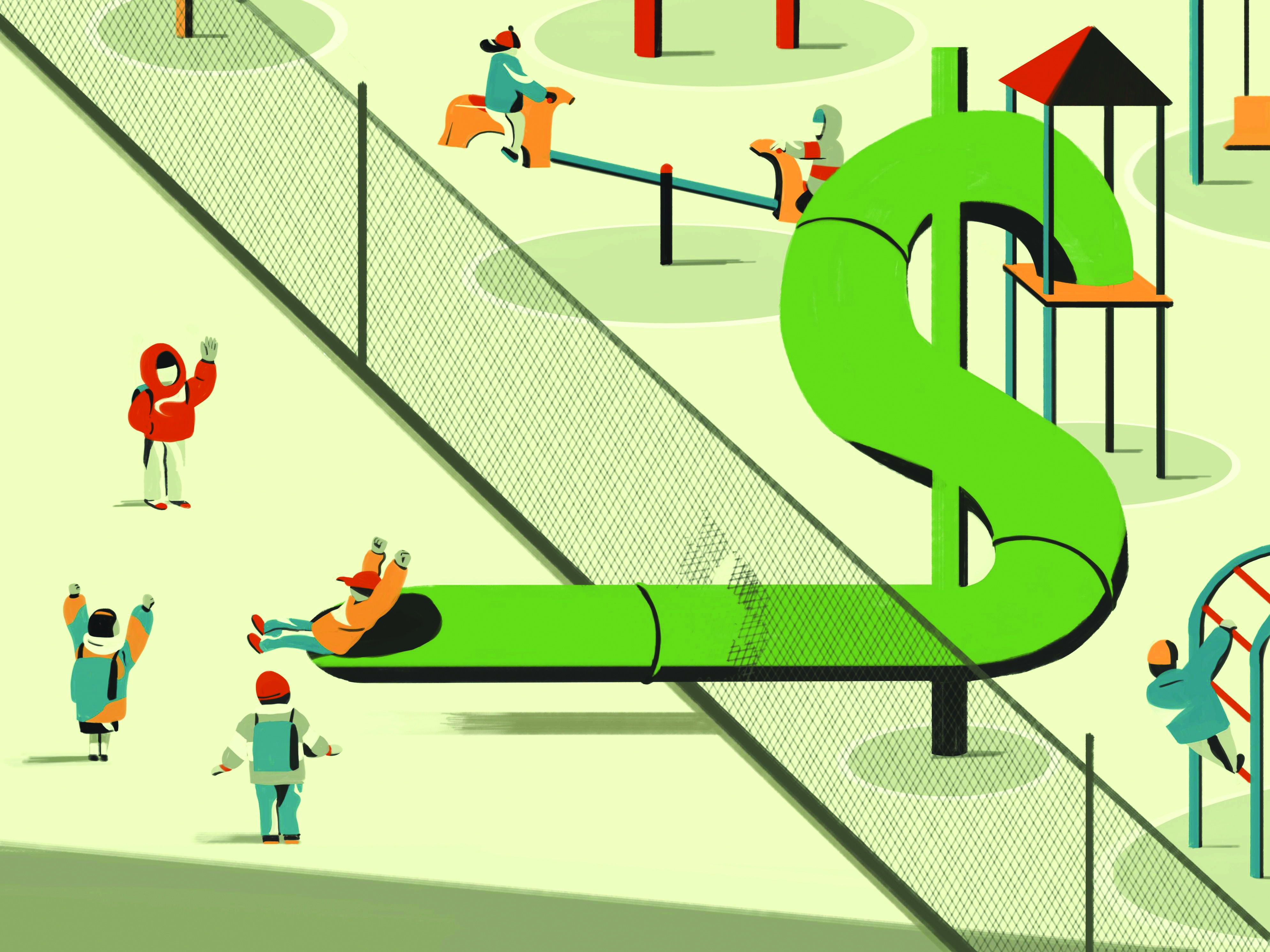
TTCT – Hơn 10 năm qua, cơ sở pháp lý duy nhất để triển khai hoạt động của ban đại diện cha mẹ học sinh, trong đó có vấn đề chống lạm thu tiền trường, là thông tư 55/2011/TT–BGDĐT – một văn bản mà nhiều hiệu trưởng coi như không tồn tại.
Minh họa: Emiliano Ponzi/Washington Post
Lá bài “tự nguyện”
Vào thời điểm những năm 2010 – 2011, tình trạng lạm thu trong các nhà trường đã là vấn đề nhức nhối mỗi khi năm học mới bắt đầu.
For decades, people across South-east Asia have been hunting wild animals for food. But commercial pressures and cheaper snaring methods are causing the region’s forests to be emptied faster than they can be replenished — with repercussions for human and forest health.
They were taken to the wildlife rescue centre not in cages but in fine mesh bags, as though they were already fresh meat being sold by the gram.
But the four ferret badgers were still alive and kicking.
The mammals had been literally rescued from the jaws of death.
VIETNAM AND CAMBODIA – Local policemen had seized them from a restaurant and taken them to Save Vietnam’s Wildlife’s facility located within Cuc Phuong National Park, about a two-hour drive from Hanoi.
“The restaurant bought them from people who caught them from the forest,” said Mr Tran Van Truong, who as captive coordinator is in charge of the facility’s operations. “They are a bit stressed now, but they seem okay otherwise. We can probably release them back into the wild after a few days.”
Not all of man’s wild quarry are as lucky.
Demand for bushmeat and exotic pets from city dwellers is contributing to the emptying of South-east Asia’s forests. ST PHOTO: MARK CHEONG
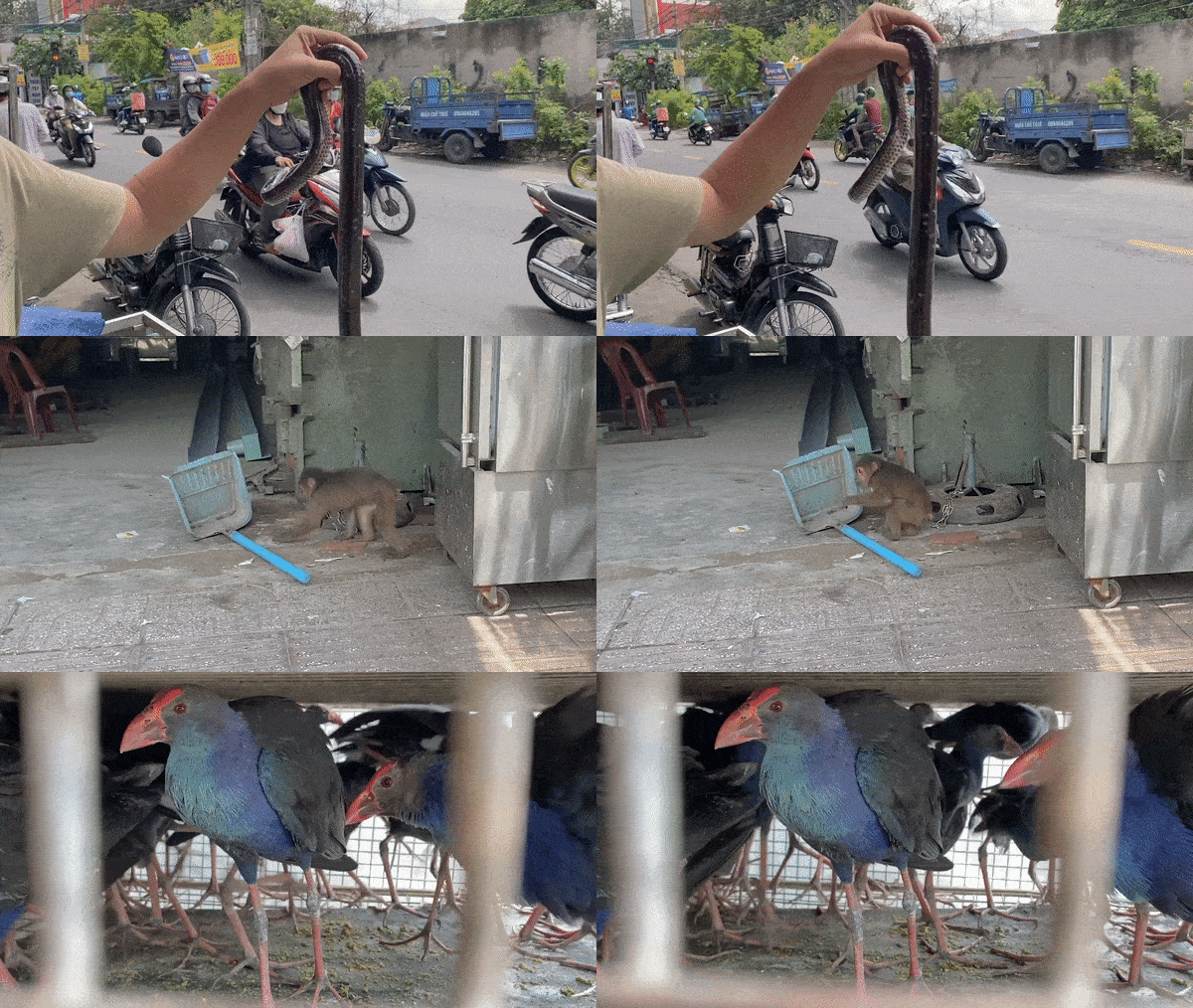
Trapping wild animals for bushmeat may be illegal in Vietnam, but the practice is still widespread in the country. In other parts of South-east Asia too, the Covid-19 pandemic and its likely origins in the wildlife trade has had nary an impact on the region’s appetite for wild meat.
Wild animals are still being taken from the forests in large numbers, to be eaten or kept as pets, and we discovered how voracious appetites for them were still during visits to Vietnam and Cambodia in September.
Wild animals sold at a market in Ho Chi Minh City. VIDEO: ANTON L. DELGADO
Thành phố Hồ Chí Minh trên đà phát triển, ảnh chụp bởi Tuấn Nguyễn, đăng trên Unsplash
Đầu tư cơ sở hạ tầng công cộng là một trong những động lực quan trọng thúc đẩy phát triển kinh tế Việt Nam trong những thập kỷ gần đây. 53% tổng vốn Hỗ trợ Phát triển Chính thức (ODA) nhận được trong giai đoạn 2010-2017 được dùng cho xây dựng cơ sở hạ tầng.1 Việt Nam đã chú trọng đầu tư phát triển giao thông vận tải, đặc biệt là hệ thống đường bộ, sân bay và cảng biển. Đầu tư từ khu vực công và tư vào cơ sở hạ tầng ở Việt Nam đạt 5,7% GDP trong những năm gần đây, cao nhất ở khu vực Đông Nam Á và cao thứ hai ở châu Á, chỉ sau Trung Quốc (6,8% GDP). Việc đẩy mạnh phát triển hạ tầng một mặt đáp ứng yêu cầu của các dự án đầu tư; mặt khác, giúp thúc đẩy tăng trưởng kinh tế và tạo ra nhiều việc làm hơn. Hơn nữa, tốc độ đô thị hóa nhanh chóng ở Việt Nam cũng là động lực mạnh mẽ để phát triển giao thông và tiện ích. Ước tính với 50% dân số hiện đang sinh sống ở các thành phố lớn, sự gia tăng dân số đã vượt quá khả năng cung ứng của các hệ thống kết nối và tiện ích hiện có.
Jolie’s nerves were running high as she walked into the campus of Goldsmiths, the University of London, last Friday morning. She’d planned to arrive early enough that the campus would be deserted, but her fellow students were already beginning to filter in to start their day.
In the hallway of an academic building, Jolie, who’d worn a face mask to obscure her identity, waited for the right moment to reach into her bag for the source of her nervousness – several pieces of A4-size paper she had printed out in the small hours of the night.
Finally, when she made sure none of the students – especially those who, like Jolie, come from China – were watching, she quickly pasted one of them on a notice board.
“Life not zero-Covid policy, freedom not martial-lawish lockdown, dignity not lies, reform not cultural revolution, votes not dictatorship, citizens not slaves,” it read, in English.