TTCT – Không giống các đại học hàng đầu trên thế giới, đại học ở Mỹ không đơn thuần chọn sinh viên xuất sắc nhất mà cân đối cả từ hoạt động ngoại khóa, tài sản gia đình đến sắc tộc. Yếu tố cuối này được cho là không công bằng, và điều này có thể sẽ thay đổi.
Trước hiện tượng nhiều chủ doanh nghiệp FDI bỏ trốn, để lại số nợ lên tới hàng trăm tỷ đồng nhưng không xử lý được, Chuyên gia kinh tế Bùi Ngọc Sơn – Trưởng phòng Kinh tế thế giới, Viện Kinh tế và Chính trị thế giới nhận định, đó là phản ứng bình thường một khi các DN FDI nhận thấy không còn lợi thế kinh doanh hoặc số tiền thu về đã lớn hơn cả khoản vốn bỏ ra thì họ rút.
Cổng chính vào nhà máy Công ty Quatron đóng kín, chủ doanh nghiệp đã biến mất.
Đi vào phân tích từng trường hợp cụ thể, ông Sơn chỉ rõ nhiều vấn đề bất cập, trong đó không loại trừ khả năng DN vẽ dự án xin cơ chế, chớp cơ hội kiếm lợi rồi bỏ trốn.
Outrage Over COVID-19 Restrictions Prompts Rare Protests in China
Tens of thousands of people joined demonstrations (FT) in at least ten cities across China over the weekend, at times clashing with security forces. In addition to objecting to harsh restrictions under the country’s zero-COVID policy, many protesters denounced limitations on freedom of speech and some called for Chinese President Xi Jinping to step down (NYT). The protests were sparked by a deadly fire in a locked-down area of the Xinjiang region on Friday. Demonstrators marched in urban centers and at universities, and today police patrolled areas of Beijing and Shanghai (Reuters) where the demonstrations occurred. Authorities eased some pandemic restrictions (AP) in Beijing and Guangzhou today, but did not mention the demonstrations.
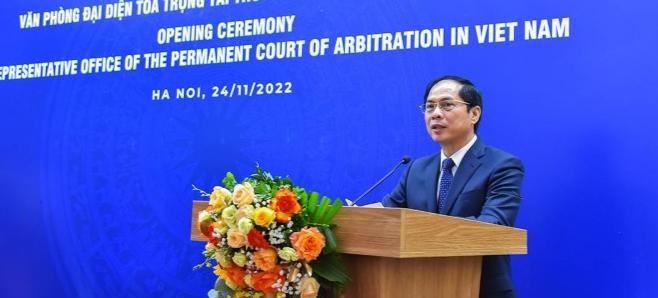
Kinhtedothi – Văn phòng đại diện Hà Nội là văn phòng thứ năm của PCA được thành lập ngoài trụ sở chính tại Cung điện Hòa Bình, thủ đô La Hay của Hà Lan.
Sáng 24/11, Bộ trưởng Ngoại giao Bùi Thanh Sơn cùng Tổng Thư ký Tòa trọng tài thường trực (PCA) Marcin Czepelak đã chính thức khánh thành Văn phòng đại diện của PCA tại Hà Nội với biển tên “Ngôi nhà Hòa bình” tại 48A Trần Phú, Hà Nội.
“Ngôi nhà Hòa bình”
Bộ trưởng Ngoại giao Bùi Thanh Sơn tại buổi lễ sáng 24/11.
Tại buổi lễ, Bộ trưởng Bùi Thanh Sơn chúc mừng Văn phòng PCA chính thức đi vào hoạt động, hiện thực hóa cam kết của hai bên tại Nghị định thư năm 2021. “Việt Nam đánh giá cao vai trò của PCA là cơ quan giải quyết tranh chấp quốc tế, đã đóng góp hiệu quả và tích cực vào giải quyết tranh chấp giữa các quốc gia và giữa quốc gia với các tổ chức, bảo đảm tuân thủ luật pháp quốc tế, góp phần duy trì hòa bình và an ninh quốc tế,” Bộ trưởng Bùi Thanh Sơn khẳng định.
“Em cũng không dám chắc sang năm mình có Tết không” – Hạnh nói với tôi. Tháng Giêng này cô 25 tuổi, một người mẹ đơn thân đang tìm nơi xin làm công nhân may.
Hạnh mất việc trước Tết. Cô cùng với gần 600 công nhân của Công ty TNHH Phương Nam bị quỵt lương do ông chủ Hàn Quốc bỏ trốn.
Tôi gặp Hạnh những ngày giáp Tết 2018, ở Khu công nghiệp Tây Bắc Củ Chi. Hạnh cùng đồng nghiệp đốt lửa ngồi “canh me” ông chủ trước xưởng may. Cô ôm đứa con 10 tháng tuổi: “Kiểu này mất Tết rồi chị ơi”.
Suốt nửa tháng, ban ngày họ ngồi dưới gốc cây, tối đốt lửa thức trắng đêm. Trẻ con vô tư chạy đùa giữa vài tiếng chửi thề, tiếng khóc. Ông giám đốc người Hàn Quốc biến mất cùng tiền lương tháng 12 của họ tất nhiên đã không sủi tăm. Không ai đứng ra giải quyết. Không lương, không thưởng, Hạnh và nhiều người ở lại Sài Gòn Tết này. Kể cả anh chị em dâu rể, gia đình cô có 6 người đều là công nhân cùng nhà máy.
Unabridged original pdf scans – volume 1 (I-II) 671 pages; volume 2 (III-IV) 717 pages; volume 3 (V-VII) 579 pages.
The Gulag Archipelago is Solzhenitsyn’s masterwork, a vast canvas of camps, prisons, transit centres and secret police, of informers and spies and interrogators and also of heroism, a Stalinist anti-world at the heart of the Soviet Union where the key to survival lay not in hope but in despair. The work is based on the testimony of some two hundred survivors, and on the recollection of Solzhenitsyn’s own eleven years in labour camps and exile. It is both a thoroughly researched document and a feat of literary and imaginative power.
VNE – By Bao Uyen November 26, 2019 | 08:58 am GMT+7
Xuan is a worker at a Taiwanese shoe factory. After 15 years of working there she understands the rights the Labor Code gives her.
Bao Uyen
But during her pregnancy, when her managers ask her to do jobs that may not be good for her unborn child, she obliges.
She used to work in the sole glueing division where, every day, she was exposed to industrial glues containing hazardous chemicals. When she became pregnant, she was transferred to the assembling division, where exposure to the glue is limited.
So far so good, but then her managers ask Xuan to return to her old work every time they are short of hands. Though she understands the risks for her baby, she complies.
mekongeye – Residents of the Mekong Delta are seeing houses tumble into rivers and livelihoods disappear due to erosion driven by sand mining
Local government workers use sandbags to fill in areas of subsidence along the Hau River in Chau Phu district, An Giang province, Vietnam (Image: Dinh Tuyen)
Editor’s note: In light of increasingly volatile seasons, the unquantified effects from hydropower, and continued sand mining, mainland Southeast Asia finds itself combating ever more mercurial sandbanks. For the highly populated Mekong Delta region of Vietnam, homes being washed away has become a regular facet of the wet season. But the effects of overdevelopment on the Mekong are felt across the Mekong basin. In Cambodia, the recent consequences have been stark: in May, Vannak Si and Bun Thoeun Srey Leak, both 12, died when a bank gave way in Kandal province, on the border with Vietnam. As the land beneath river-dwellers’ feet becomes ever more unstable, the sand mining and concrete industry defy solutions, as mainland Southeast Asia continues with breakneck development.
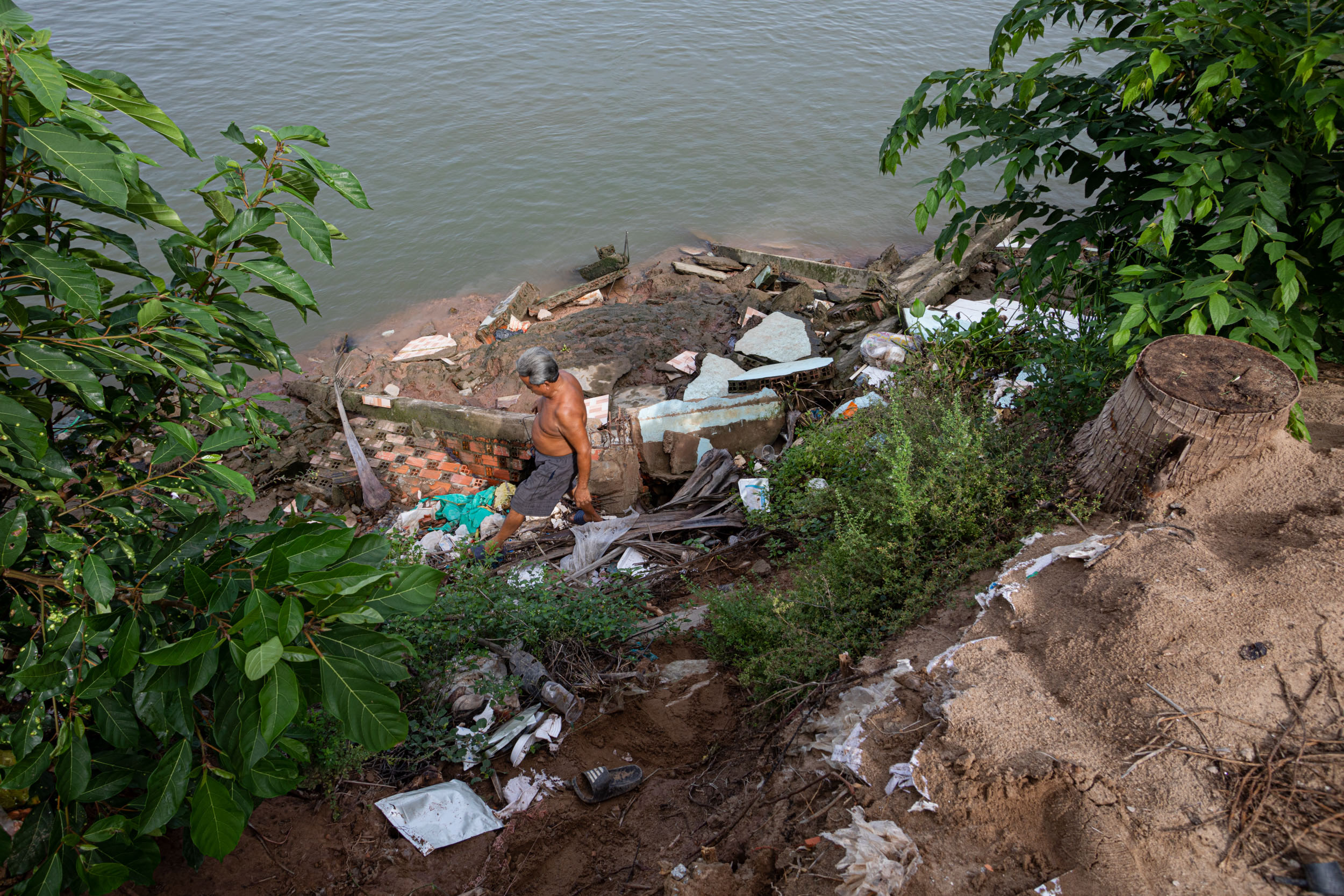
When a riverbank subsided and gave way four years ago, Tran Van Bi’s house collapsed into a river in Vietnam’s Mekong Delta. Everything his family had accumulated over 32 years was gone in an instant.
7 November 2022 at 9:10 (Updated on 7 November 2022 at 18:17)
Traditional slash and burn farming lands ethnic minorities in jail as authorities try to preserve country’s forests.
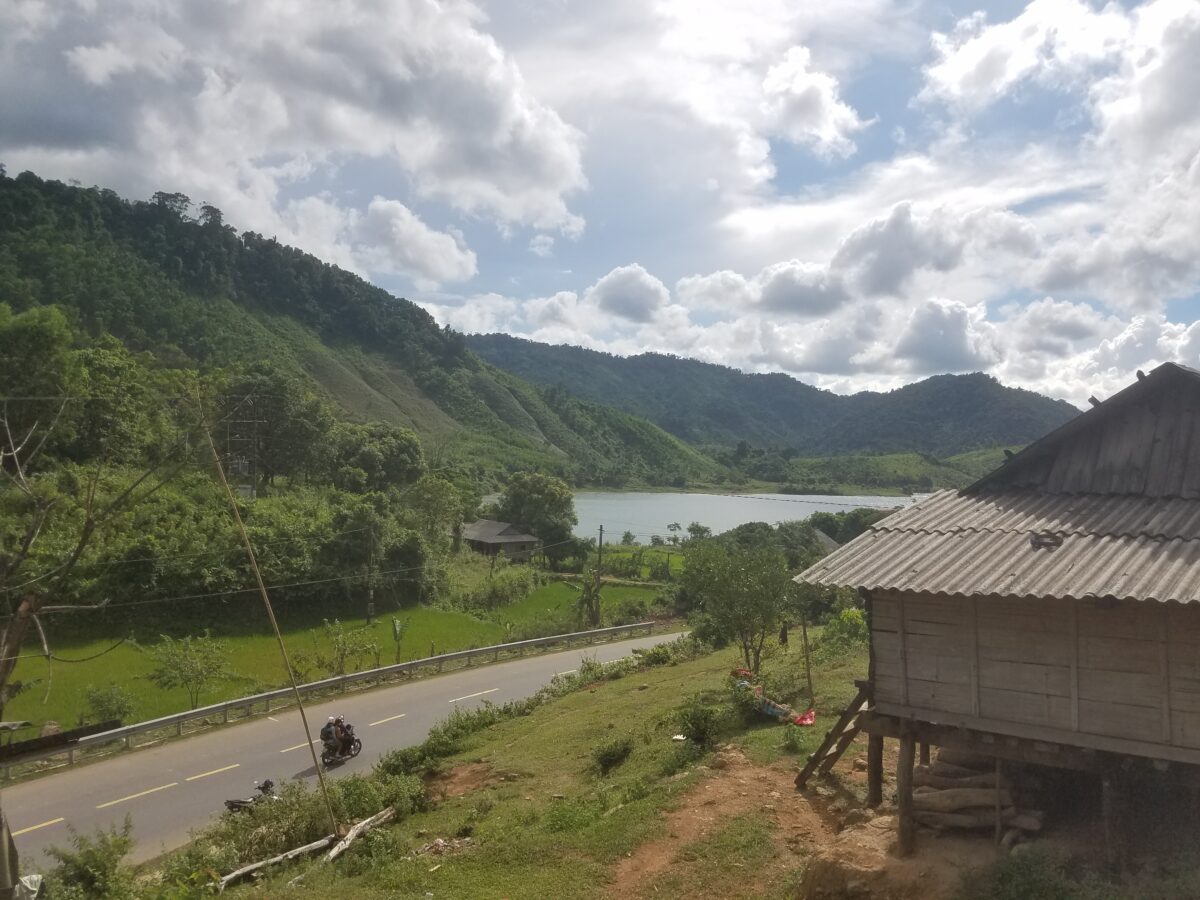
Many people in Dakrong district do not own any farmland. Instead, they are surrounded by a protected forest, hydropower plants and a special-use forest. PHOTO: Nguyen Dac Thanh
QUANG TRI, VIETNAM – One afternoon at the end of 2017, officials in Dakrong district in Central Vietnam’s Quang Tri province visited Ho Thi Nieng’s house. They claimed she and her husband had “burned the protected forest to do farming.”
“We had been cultivating that land for a long time and there had never been a problem,” 26-year-old Nieng, who belongs to the Van Kieu ethnic minority in Ta Leng village, said as she recalled her panic at the accusation.
The following year, in 2018, the young mother was sentenced to nine months in jail for burning the forest to farm it. Nieng’s husband, Ho Van Hai, 32, was also charged with the same crime, but received a suspended sentence – he was only “helping his wife” and had two young children.
552 vụ xâm phạm động vật hoang dã bị xử lý hình sự từ năm 2015 – 2020. Con số này được cho là vẫn chưa tương xứng với thực tế buôn bán, xâm phạm động vật hoang dã đã và đang diễn ra ở Việt Nam.
Một trong 7.000 xác rùa biển chết được công an Nha Trang phát hiện trong kho của Hoàng Tuấn Hải. Năm 2018, Hải bị kết án bốn năm sáu tháng tù. Ảnh: ENV
Nguyễn Hữu Huệ, 52 tuổi, giám đốc một công ty thương mại, bị Công an Hà Nội bắt vào tháng 7.2019, khi đang vận chuyển 7 xác hổ đông lạnh trên xe ô tô. Mỗi xác hổ có thể nặng tới 300kg được Huệ trực tiếp sang Lào thu mua rồi vận chuyển về Việt Nam. Cơ quan điều tra xác định Huệ cầm đầu một đường dây buôn bán các loài động vật nguy cấp, quý hiếm xuyên quốc gia trong nhiều năm qua. Năm 2020, Tòa án Nhân dân thành phố Hà Nội xét xử và tuyên phạt Huệ 6 năm tù giam. Hai đồng phạm bị bắt cùng Huệ – Phan Văn Vui (34 tuổi) và Hồ Anh Tú (28 tuổi) – mỗi người bị tù 5 năm sau khi bị kết tội vi phạm các quy định về bảo vệ các loài nguy cấp, quý hiếm.
Trung tâm Giáo dục thiên nhiên (Education for Nature Vietnam – ENV) nhận định, hình phạt này chưa đủ tính răn đe đối với một “ông trùm” buôn hổ như Huệ, nhất là trong bối cảnh tình trạng tội phạm về động vật hoang dã đang diễn biến hết sức phức tạp tại Việt Nam. Dữ liệu thu thập được từ các phiên toà từ năm 2018-20120 cho thấy, các án phạt quá nhẹ so với mức độ phạm tội không hiếm ở Việt Nam, mặc dù trong hơn ba năm gần đây, Việt Nam đã tăng đáng kể án phạt cho tội phạm về động vật hoang dã.
Qua hàng chục năm đối thoại giữa chính quyền Trung ương và địa phương, với rất nhiều các “cơ chế đặc thù” nhưng dường như các địa phương không chỉ không sáng tạo hơn, phát triển mạnh hơn, tự do hơn mà kết cục lại…xin cơ chế riêng nhiều hơn nữa. Nhưng đó mới là phần nổi của tảng băng.
Hà Nội đang đề xuất sửa Luật Thủ đô để “xây dựng, phát triển thành phố Hà Nội xứng tầm”. Ảnh: hanoimoi.com.vn
The Chinese entrepreneurs chasing an Afghan ‘gold rush’ | 101 East Documentary
Al Jazeera English – 24 thg 11, 2022
When the Taliban returned to power in August 2021, most foreigners and multinational companies had already packed up and left Afghanistan.
Going against the stream of foreigners fleeing the country was a group looking for “once-in-a-lifetime” opportunities: Chinese entrepreneurs.
Despite the ongoing unrest, an economic crisis and United Nations’ concerns over human rights, more Chinese citizens are joining the country’s “gold rush”. Once a small minority, Chinese nationals now make up Afghanistan’s biggest group of expatriates.
With exclusive access to leading Chinese investors, 101 East investigates their growing influence across Afghanistan’s business and media sectors.
The administration of Taiwan’s President Tsai Ing-wen is wary of a Chinese attack launched from the nearby provinces of Fujian and Guangdong. This September photo shows piles to prevent Chinese ships from landing on the island of Kinmen, just off the mainland.
With the Chinese Communist Party’s 20th National Congress now finished, President Xi Jinping is closer than ever to becoming a leader on a par with founding father Mao Zedong. His third term as party leader will be the final stage of the “Great China” project, an initiative fraught with contradictions. This series will examine the next five years by unpacking China’s perspective and logic.
Phải mất hàng nghìn năm, đồng bằng sông Cửu Long mới ra đời. Con người có thể chỉ cần vài thập kỷ để làm nó co rút. Sạt lở chỉ mới là triệu chứng khởi đầu.
Ông Trương Phi Hải bên khu vực sạt lở từng là căn nhà của gia đình bên sông Tiền, thị xã Hồng Ngự, tháng 6/2020. Ảnh: Thành Nguyễn
Euro Cup 2016, sân vận động Parc des Princes (Pháp) nhuộm nỗi buồn của các cổ động viên Bồ Đào Nha khi cầu thủ của họ liên tục dứt bóng hỏng trước khung thành Áo. Cùng thời khắc ấy, ở một múi giờ khác cách Trung Âu sáu tiếng, nơi cuối dòng Mekong, trận bóng thất vọng của Bồ Đào Nha đã cứu một người đàn ông thoát chết trong gang tấc.
Đêm ấy, ông Trương Phi Hải không ngủ sớm như thường lệ. Người đàn ông 67 tuổi thức bên chiếc tivi, cổ vũ cho Cristiano Ronaldo, cầu thủ ông ái mộ. Phía sau nhà, dòng sông Tiền chảy qua thị xã Hồng Ngự (Đồng Tháp) đang trong con nước ròng, đâu đó vài chiếc sà lan chở cát nổ máy rì rì chạy ngang.
3h sáng, tiếng nước sôi xuất hiện, kéo ông Hải ra khỏi trận đấu. “Nó kêu ục ục. Tui đoán bọn cá lóc trong hồ trước nhà làm bọt bóng”, ông chủ trại cá nhớ lại. Nhưng âm thanh sủi bọt lớn dần, át cả giọng bình luận viên trên tivi. Lo cho đàn cá chỉ còn vài tiếng nữa là đến giờ hẹn bán, ông uể oải đứng lên kiểm tra. Được vài bước, bên tai ông vang tiếng “roạt-rầm”. Và nền đất dưới chân như ai đó bẻ ra, căn nhà tường gạch mái tôn ông vừa bước khỏi bỗng rớt gọn xuống con sông. Tủ, giường, bàn ghế, và cả chiếc tivi đang chiếu hình ảnh Ronaldo cũng trượt vào làn nước.
Trong tích tắc, mảnh sân sau ông Hải đang đứng biến thành một hòn đảo nhỏ giữa dòng nước xoáy đục ngầu. Rồi “hòn đảo” cũng tụt dần. Cú sốc đông cứng chân người đàn ông, ông ngồi thụp xuống, hai tay ôm đầu, phó mặc cho số phận. “Người tôi giống như đi thang máy vậy đó. Ngước mắt lên nhìn, không còn thấy trời, không còn thấy sao. Tôi nghĩ mình chết rồi”, ông Hải rít mẩu thuốc, nhớ lại giây phút sinh tử lúc đó.