Một trong những vấn đề toàn cầu quan trọng hiện đang đe dọa nhân loại là tình trạng mất an ninh lương thực và nước. Tình trạng này ngày càng gia tăng bất chấp nhiều tiến bộ công nghệ vượt trội.
Trung Đông và Bắc Phi là các khu vực dễ bị tổn thương nhất khi xảy ra biến đổi khí hậu.
Ảnh: ec.europa.eu
Đó là nhận định của Tiến sĩ Majid Rafizadeh, nhà khoa học chính trị người Mỹ gốc Iran, từng tốt nghiệp Đại học Harvard, với mạng tin tức Arab (arabnews.com) ngày 3/9.
Theo Tiến sĩ Rafizadeh, khi nói đến hệ thống lương thục, điều quan trọng cần chỉ ra là mối quan hệ chặt chẽ giữa sản xuất lương thực và biến đổi khí hậu. Quá trình sản xuất lương thực toàn cầu tạo ra hơn 1/3 tổng lượng khí thải nhà kính. Đây là một trong những nguyên nhân góp phần gây ra hiện tượng nóng lên toàn cầu và biến đổi khí hậu.
Nhưng tại sao chỉ riêng quá trình sản xuất lương thực có thể tạo ra hơn 1/3 lượng khí thải nhà kính do con người gây ra? Điều này phần lớn liên quan đến quy trình sản xuất, chế biến, bảo quản, đóng gói, phân phối, tiêu thụ và thậm chí thải bỏ.
Các quy trình sản xuất lương thực, bao gồm cả việc sử dụng phân bón, là nguyên nhân hàng đầu gây ra “lượng khí thải tổng thể từ hệ thống sản xuất lương thực, hay 39% tổng lượng khí thải, trong khi khí methane từ chăn nuôi và trồng trọt chiếm 35% lượng khí thải nhà kính từ sản xuất lương thực.
World map showing country classifications per the IMF[1] and the UN[2] (last updated April 2023). The countries in light blue form the “Global North”, the rest are mostly categorized as belonging to the “Global South”, with few exceptions under some listings.
The concept of Global North and Global South (or North–South divide in a global context) is used to describe a grouping of countries along the lines of socio-economic and political characteristics. The Global South is a term that broadly comprises countries in the regions of Africa, Latin America and the Caribbean, Asia (without Israel, Japan, and South Korea), and Oceania (without Australia and New Zealand), according to the United Nations Conference on Trade and Development (UNCTAD).[3][4][a] Most of the countries in the Global South are characterized by low income, dense population, poor infrastructure, and often political or cultural marginalization.[5] The Global South forms one side of the divide; on the other is the Global North (broadly comprising Northern America and Europe, Israel, Japan and South Korea, as well as Australia and New Zealand, according to the UNCTAD).[3][4][a] As such, the terms Global North and Global South do not refer to the cardinal directions of north and south as many of the Global South countries are geographically located in the Northern Hemisphere.
The UN and the multilateral system are in crisis – what the Global South must do
Monica Herz Full Professor, Institute of International Relations (PUC-Rio), Associate Dean for Research of the Social Science Center (PUC-Rio), Senior Researcher, BRICS Policy Center, Pontifícia Universidade Católica do Rio de Janeiro (PUC-Rio)
Giancarlo Summa Co-fundador com Mônica Herz do projeto MUDRAL (Multilateralismo e Direita Radical na América Latina), Pesquisador no Centre d’Études Sociologiques et Politiques Raymond Aron (CESPRA), École des Hautes Études en Sciences Sociales (EHESS)
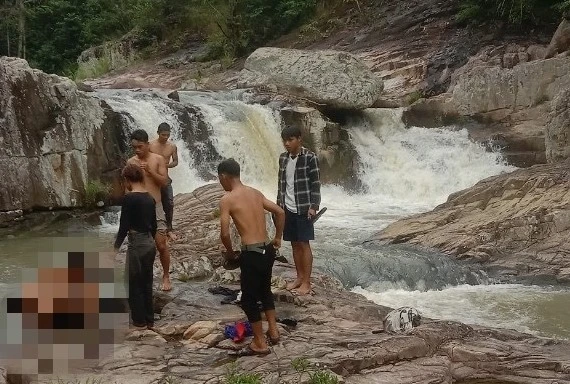
NDO – Sáng 1/10, ông Trần Văn Nhơn, Chủ tịch Ủy ban nhân dân xã Kông Lơng Khơng (huyện Kbang, tỉnh Gia Lai) xác nhận trên địa bàn xã vừa xảy ra một vụ đuối nước thương tâm khiến 2 cháu trai tử vong là em Đ.V.Đ (SN 2012) và Đ.V.K (sinh năm 2011, cùng làng Mơhra-Đáp).
Đoạn suối xã Tơ Tung nơi 2 cháu cháu Đ.V.Đ và Đ.V.K đuối nước.
Vụ việc xảy ra vào lúc 15 giờ ngày 30/9, cháu Đ.V.Đ và Đ.V.K cùng với 2 em nhỏ khác cùng làng đi xuống suối đầu nguồn xã Tơ Tung (đoạn tiếp giáp giữa làng Đắk Pơ Kao và làng Stơr, xã Tơ Tung) để tắm.
Do trời mưa to, nước suối lên nhanh nên các cháu không may bị đuối nước.
Hai em nhỏ đi cùng thấy vậy liền chạy đi tìm người cứu, tuy nhiên, do suối ở xa khu dân cư nên lúc mọi người đến nơi thì các cháu đã tử vong.
Chính quyền, Mặt trận Tổ quốc và các đoàn thể xã Kông Lơng Khơng và huyện Kbang đã đến chia buồn và hỗ trợ 2 gia đình làm thủ tục mai táng cho 2 cháu.
Trước đó, vào ngày 7/9, trên địa bàn huyện Ia Grai (Gia Lai) cũng xảy ra vụ đuối nước khiến 2 nam sinh L.Đ.P.K (9 tuổi) và T.V.H (10 tuổi) là học sinh của Trường Tiểu học Nguyễn Viết Xuân, cùng trú tại làng Bek, xã Ia Bă, huyện Ia Grai đuối nước thương tâm.
Nguyên nhân là chiều 7/9, trường cho nghỉ học, nên 2 học sinh rủ nhau ra hồ nước ở làng Bek bắt cá, tắm. Đến 15 giờ cùng ngày, nghe tiếng kêu cứu, người dân đến hiện trường đưa 2 em lên bờ và chở đi cấp cứu nhưng L.Đ.P.K và T.V.H tử vong sau đó.
(Chinhphu.vn) – Dù ở mức độ quốc gia hay toàn cầu thì biến đổi khí hậu (BĐKH) luôn được xem là vấn đề cấp bách, có tác động tới tiến trình phát triển bền vững trên toàn thế giới. Tác động do BĐKH đang trở thành nguyên nhân gây ra những thách thức an ninh khí hậu.
Nhân Ngày Khí tượng thế giới (23/3) với chủ đề “Đại dương-thời tiết và khí hậu của chúng ta”, Báo điện tử Chính phủ có bài phỏng vấn TS. Tăng Thế Cường, Cục trưởng Cục Biến đổi Khí hậu, Bộ Tài nguyên và Môi trường.
Việt Nam là một trong những quốc gia chịu ảnh hưởng nặng nề nhất của BĐKH, xin ông cho biết tình trạng BĐKH đang diễn ra cực đoan như thế nào trên quy mô toàn cầu và ở Việt Nam?
TS. Tăng Thế Cường: BĐKH đang diễn ra nhanh, trực tiếp tác động mạnh đến an ninh lương thực toàn cầu do nhiệt độ tăng, thay đổi lượng mưa, tần suất các hiện tượng cực đoan, đồng thời làm gia tăng sức ép lên hệ thống đất đai, qua đó bùng phát nguy cơ cao về hoang mạc hoá, suy thoái đất. Những đợt sóng nhiệt, tăng cường, mưa bão, hạn hán, thiên tai, ngập lụt diễn ra ở phạm vi rộng hơn, đặc biệt là ở các thành phố ven biển, gây thiệt hại nặng nề đến cuộc sống con người và tiếp tục hủy hoại các hệ sinh thái. Nước biển dâng sẽ gây ra các đợt tị nạn quy mô lớn do BĐKH.
I. Is climate change a security risk? II. Will climate change cause wars? III. Where is climate change the biggest threat to security? IV. Why do militaries care about climate change? V. How does climate change compare to other security risks? VI. What does climate security mean for diplomacy and development? VII. How can address the security risks of climate change? VIII. Are only poor nations at risk? IX. Is climate change only a long-term risk? X. What’s more important for security: climate change adaptation or mitigation? XI. What role does technology play in addressing the security risks of climate change? XII. Should we be worried about “black swan” events? XIII. Is there a list of relevant government and nongovernmental documents onclimate and security? XIV. Is there a list of relevant government and nongovernmental documents on climate and security? By year of publication?
Ngày 13/9, phát biểu tại phiên họp thứ 54 của Hội đồng Nhân quyền của Liên Hiệp Quốc, Đức Tổng Giám Mục Ettore Balestrero, Quan sát viên Thường trực của Tòa Thánh tại trụ sở Liên Hiệp Quốc ở Genève, Thụy Sĩ, nhắc lại rằng phá thai không phải là một quyền của con người chỉ bởi vì đa số quốc gia khẳng định, bởi vì nhân quyền bắt nguồn từ phẩm giá con người.
Vatican News
Sau khi nhắc lại trong năm 2023, cộng đồng quốc tế và Hội đồng sẽ kỷ niệm 75 năm Tuyên ngôn Quốc tế được thông qua, Đức Tổng Giám Mục Balestrero nhấn mạnh rằng nhân quyền không chỉ đơn giản là một đặc quyền được trao cho các cá nhân bởi sự đồng thuận của cộng đồng quốc tế. Đúng hơn,nhân quyền là biểu hiện của những giá trị khách quan và không tuỳ thuộc thời gian cần thiết cho sự phát triển con người. Tiếp tục đọc “Vatican: Nhân quyền bắt nguồn từ phẩm giá con người”→
Clean air, land, and oceans are critical for human health and nutrition and underpin much of the world’s economy. Yet they suffer from degradation, poor management, and overuse due to government subsidies. “Detox Development: Repurposing Environmentally Harmful Subsidies” examines the impact of subsidies on these foundational natural assets.
Explicit and implicit subsidies—estimated to exceed US$7 trillion per year—not only promote inefficiencies but also cause much environmental harm. Poor air quality is responsible for approximately 1 in 5 deaths globally. And as the new analyses in this report show, a significant number of these deaths can be attributed to fossil fuel subsidies.
Agriculture is the largest user of land worldwide, feeding the world and employing 1 billion people, including 78 percent of the world’s poor. But it is subsidized in ways that promote inefficiency, inequity, and unsustainability. Subsidies are shown to drive the deterioration of water quality and increase water scarcity by incentivizing overextraction. In addition, they are responsible for 14 percent of annual deforestation, incentivizing the production of crops that are cultivated near forests. These subsidies are also implicated in the spread of zoonotic and vector-borne diseases, especially malaria.
Finally, oceans support the world’s fisheries and supply about 3 billion people with almost 20 percent of their protein intake from animals. Yet they are in a collective state of crisis, with more than 34 percent of fisheries overfished, exacerbated by open-access regimes and capacity-increasing subsidies.
Although the literature on subsidies is large, this report fills significant knowledge gaps using new data and methods. In doing so, it enhances understanding of the scale and impact of subsidies and offers solutions to reform or repurpose them in efficient and equitable ways. The aim is to enhance understanding of the magnitude, consequences, and drivers of policy successes and failures in order to render reforms more achievable.
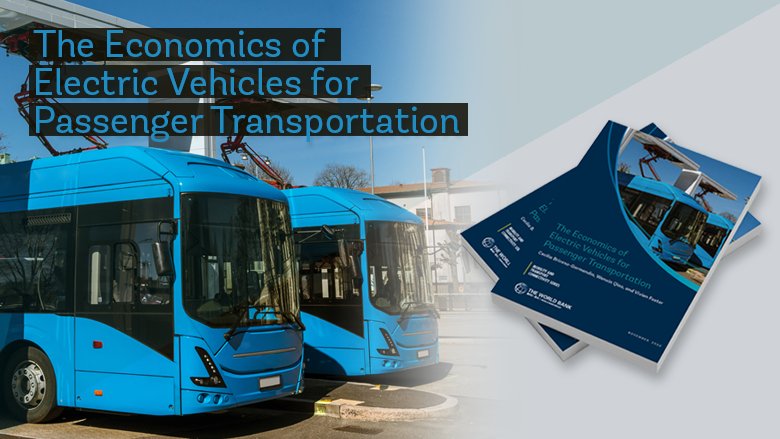
Electrification of transport is one of the most talked about instruments to set the world on a net-zero carbon trajectory. Despite the advantages electric vehicles bring, they remain a relative rarity in developing countries. Most of the world’s 6.6 million EV sales in 2021 were concentrated in major global markets such as China, Europe and the United States. The reason? Electric vehicles come at a cost premium, sometimes more than 70% compared to conventional vehicles, creating a financial hurdle for many consumers in developing countries.
But according to The Economics of E-Mobility for Passenger Transportation, feasible entry points to an electric mobility transition are emerging in several developing countries. Electric buses, which cover long mileage and high occupancy, and electric two- and three-wheeled vehicles, which provide last-mile connectivity, can be cost-effective starting points that also bring development benefits. In about half the countries studied in this report, there is already a strong economic case for e-mobility adoption that is likely to further improve in the next few years.
At the 56th ASEAN Ministerial Meeting and its related meetings in Jakarta in July, it was announced that negotiations for the Code of Conduct of Parties in the South China Sea (COC) had achieved progress on two fronts. First, the second reading of the Single Draft COC Negotiating Text was completed. Second, a set of Guidelines for Accelerating the Early Conclusion of an Effective and Substantive Code of Conduct in the South China Sea was adopted at the Post Ministerial Conference 10+1 Meeting with China. As a matter of fact, these developments are rather more procedural (and perhaps political) than substantive.
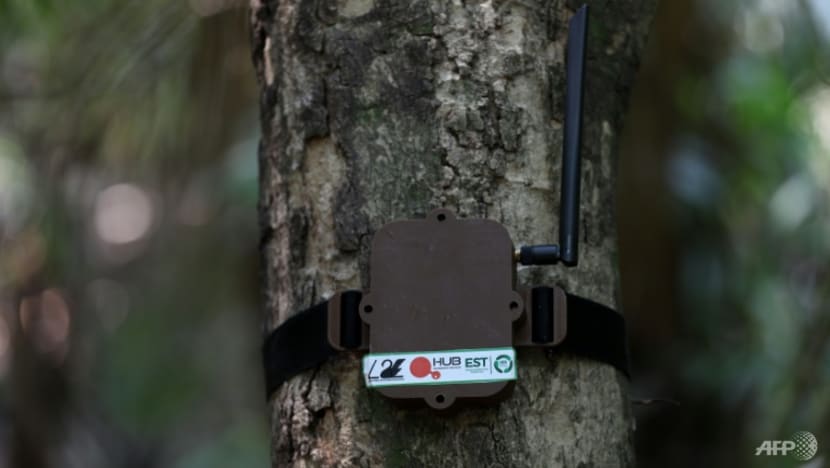
The Curupira sensors look like small internet modems but are in fact wireless and can relay data up to 1km via satellite to others in a network (Photo: AFP/Michael Dantas)
27 Sep 2023 11:58AM(Updated: 27 Sep 2023 12:06PM)
MANAUS, Brazil: Small, artificially intelligent boxes tied to tree trunks in the Brazilian Amazon are the latest weapon in the arsenal of scientists and environmentalists battling destructive jungle invaders.
The boxes, named Curupiras after a folkloric forest creature who preys on hunters and poachers, sport sensors and software trained “to recognise the sounds of chainsaws and tractors, or anything that could cause deforestation”, project manager Thiago Almeida told AFP.
“We recorded the sound of chainsaws and tractors in the forest … then, all the collected sounds were passed on to the AI team to train (the program) so that … it would only recognise these sounds and not the characteristic sounds of the forest, such as animals, vegetation and rain,” he explained.
Every country should have the ability to tell its story to the world. However, a nation’s narrative should be based on facts and rise and fall on its own merits. The PRC employs a variety of deceptive and coercive methods as it attempts to influence the international information environment. Beijing’s information manipulation spans the use of propaganda, disinformation, and censorship. Unchecked, the PRC’s efforts will reshape the global information landscape, creating biases and gaps that could even lead nations to make decisions that subordinate their economic and security interests to Beijing’s.
PRC Information Manipulation
The PRC spends billions of dollars annually on foreign information manipulation efforts.2 Beijing uses false or biased information to promote positive views of the PRC and the Chinese Communist Party (CCP). At the same time, the PRC suppresses critical information that contradicts its desired narratives on issues such as Taiwan, its human rights practices, the South China Sea, its domestic economy, and international economic engagement. More broadly, the PRC seeks to cultivate and uphold a global incentive structure that encourages foreign governments, elites, journalists, and civil society to accept its preferred narratives and avoid criticizing its conduct.
The PRC’s approach to information manipulation includes leveraging propaganda and censorship, promoting digital authoritarianism, exploiting international organizations and bilateral partnerships, pairing cooptation and pressure, and exercising control of Chinese-language media. Collectively, these five elements could enable Beijing to reshape the global information environment along multiple axes:
Overt and covert influence over content and platforms. Beijing seeks to maximize the reach of biased or false pro-PRC content. It has acquired stakes in foreign media through public and non-public means and sponsored online influencers. Beijing has also secured sometimes restrictive content sharing agreements with local outlets that can result in trusted mastheads providing legitimacy to unlabeled or obscured PRC content. In addition, Beijing has also worked to coopt prominent voices in the international information environment such as foreign political elites and journalists. Beyond focusing on content producers, the PRC has targeted platforms for global information dissemination, for example, investing in digital television services in Africa and satellite networks.
Constraints on global freedom of expression. On issues it deems sensitive, the PRC has employed online and real-world intimidation to silence dissent and encourage self-censorship. The PRC has also taken measures against corporations in situations where they are perceived to have challenged its desired narratives on issues like Xinjiang. Within democratic countries, Beijing has taken advantage of open societies to take legal action to suppress critical voices. On WeChat, an application used by many Chinese-speaking communities outside the PRC, Beijing has exercised technical censorship and harassed individual content producers. Notably, data
harvested by PRC corporations operating overseas have enabled Beijing to fine-tune global censorship by targeting specific individuals and organizations.
An emerging community of digital authoritarians. The PRC promotes digital authoritarianism, which involves the use of digital infrastructure to repress freedom of expression, censor independent news, promote disinformation, and deny other human rights.3 Through disseminating technologies for surveillance and censorship, often through capabilities bundled under the umbrella of “smart” or “safe cities,” the PRC has exported aspects of its domestic information environment globally. Beijing has also propagated information control tactics, with a particular focus on Africa, Asia, and Latin America. In parallel, the PRC has promoted authoritarian digital norms that other countries have adopted at a rapid pace. As other countries emulate the PRC, their information ecosystems have become more receptive to Beijing’s propaganda, disinformation, and censorship requests.
Future Impact
The PRC’s global information manipulation is not simply a matter of public diplomacy – but a challenge to the integrity of the global information space. Unchecked, Beijing’s efforts could result in a future in which technology exported by the PRC, coopted local governments, and fear of Beijing’s direct retaliation produce a sharp contraction of global freedom of expression. Beijing would play a significant – and often hidden – role in determining the print and digital content that audiences in developing countries consume. Multilateral fora and select bilateral relationships would amplify Beijing’s preferred narratives on issues such as Taiwan and the international economy. Access to global data combined with the latest developments in artificial intelligence technology would enable the PRC to surgically target foreign audiences and thereby perhaps influence economic and security decisions in its favor. Lastly, Beijing’s global censorship efforts would result in a highly curated international information environment characterized by gaps and inherent pro-PRC biases.
Offshore wind will be critical to achieve the world’s decarbonization and sustainable development goals. Although the cost of offshore wind has dropped dramatically over the past decade, there will be an initial cost premium when developing offshore wind in emerging markets due to a variety of risks and constraints in establishing a new market. Concessional climate finance could help countries overcome this initial cost barrier to help reduce costs for future projects and lay the foundation for the development of successful offshore wind markets.
This report from World Bank’s Energy Sector Management Assistance Program (ESMAP) and International Finance Corporation (IFC), finds that concessional climate financing is essential to unlock offshore wind in emerging markets and estimates that US$15 billion in concessional climate financing, consisting of both grants and loans, could catalyze offshore wind deployment across ten emerging market countries.
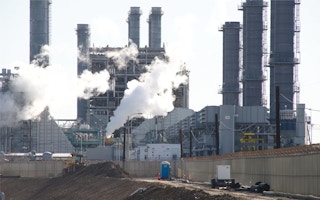
Led by China and Southeast Asia, new oil and gas facilities are being developed that will make decarbonisation harder to achieve.
Almost three-quarters of new oil and gas capacity is being built in Asia, with one-fifth of global supply under development in China. Image: Jon Sullivan, CC BY-NC 2.0





 CVD
CVD 