Trong bối cảnh các nguồn lực tài chính ở vùng dân tộc thiểu số rất hạn hẹp, nguồn lực tự nhiên ngày càng suy kiệt thì cơ hội vươn lên với từng cá nhân, từng gia đình, cơ hội phát triển với các vùng dân tộc thiểu số nằm ở nguồn lực con người. Tuy nhiên, trẻ em ở vùng trũng về giáo dục này khó có cơ hội vươn lên, nếu chính sách giáo dục cho vùng dân tộc thiểu số chưa thay đổi cách tiếp cận.
Tỷ lệ trẻ không đi học ở các DTTS Khmer, Mông và các dân tộc ít người khác cao gấp 4-7 lần so với trẻ thuộc nhóm người Kinh – Hoa, Tày, Thái, Mường, Nùng.Ảnh: Shutter
(trích Chương VII Bên Thắng Cuộc – Tác giả Huy Đức)
Từ tháng 8-1975, ông Võ Văn Kiệt đã giao cho Thành đoàn tổ chức một lực lượng thanh niên xung phong đi “thí điểm” khai khẩn đất hoang. Cuối năm ấy, ông Võ Văn Kiệt triệu tập Ban Thường vụ Thành đoàn đến nhà riêng ông Phan Minh Tánh, bí thư Trung ương Đoàn Thanh niên Cách mạng miền Nam. Vào họp, ông Kiệt giao nhiệm vụ: “Thành phố cần một lực lượng, lực lượng đó là thanh niên xung phong. Giao Thành đoàn đứng ra tổ chức, cần Thành ủy hỗ trợ gì, Thành ủy sẽ đáp ứng”. Ông giải thích: “Phải tạo ra một môi trường để mọi thanh niên đều có thể tham gia lao động để có suy nghĩ tích cực và để hãnh diện về bản thân mình”.
Ông Võ Ngọc An năm ấy ba mươi mốt tuổi, đang là ủy viên Thường vụ Thành đoàn phụ trách báo Tuổi Trẻ, nhớ lại: “Lúc đó, nghe ông Kiệt nói cảm thấy như đang nghe một điều gì đó thật thiêng liêng”. Sau cuộc họp ấy, ông Võ Ngọc An lãnh trách nhiệm huy động tiền bạc để may hàng ngàn bộ đồng phục xanh.
Hàng chục năm sau, nhiều người dân Thành phố nhớ tới ngày 28-3-1976, không chỉ vì tính hoành tráng của cuộc biểu dương lực lượng ở sân vận động Thống Nhất với một “rừng người” áo xanh, tay cầm cuốc xẻng, mà ở cách mở đầu bài nói chuyện của một bí thư cộng sản. Thay vì, “các đồng chí” như cách xưng hô thống trị thời bấy giờ ở trên mọi diễn đàn, ông Võ Văn Kiệt đã làm nhiều thanh niên ứa nước mắt khi nói: “Các em đoàn viên, thanh niên yêu quý!”. Trong số hàng vạn thanh niên có mặt hôm ấy không chỉ có con em Cách mạng. Theo yêu cầu của ông Võ Văn Kiệt, Thành đoàn đã vận động được cả những thanh niên nghiện xì ke, ma túy, có người đã từng là “đĩ, điếm”, có người là “lính ngụy”. Theo ông Võ Ngọc An, trong số ấy có một đại úy Sài Gòn, cha anh đã từng bị giết nhầm bởi “Việt Cộng”. Những thanh niên ấy, từ sau ngày 30-4, thông qua cách cư xử của các cán bộ phường, thông qua những ngôn từ cao ngạo trên báo đài, biết được thân phận của mình, dám mong chi có ngày một ông bí thư gọi mình là “các em yêu dấu”.
Với tư cách là một nhà lãnh đạo Đảng, ông Võ Văn Kiệt cũng nói về truyền thống theo cách của mình: “Tôi cũng xin phép được bày tỏ với lứa tuổi hai mươi của đất nước đã hết đau thương và từ đây thẳng đường đi tới chủ nghĩa xã hội với tất cả tấm lòng trìu mến và kỳ vọng thiết tha của những lớp thanh niên nối tiếp nhau đã từng tham gia khởi nghĩa Nam Kỳ, cách mạng Tháng Tám…”. Ông nói tiếp: “Lý tưởng của họ, ước mơ của họ chính là hiện tại mà hôm nay các em đang sống. Nếu các em sau này có điều kiện ôn lại kỹ càng một giai đoạn cách mạng hùng vĩ đã qua của dân tộc, các em sẽ biết thương yêu vô hạn Tổ quốc Việt Nam nghìn lần yêu dấu. Các em sẽ mạnh lên gấp bội vì một niềm tin ở nhân dân và đất nước”.
What is more impressive is that some EM groups with a population of fewer than 1,000 have had a say in the legislative body.
EM deputies from Cao Bằng Province in their meeting with the president in 2022. — VNA/VNS Photo Thống Nhất
HÀ NỘI — Ethnic minorities’ (EM) representation in the National Assembly (NA) is a fundamental tenet of Việt Nam’s political doctrine; the country has spared no effort in ensuring they are presented from the top.
TTCT – Ở nơi kỹ thuật cắt may hiện đại và kỹ thuật nhuộm chàm cổ xưa gặp nhau.
Tháng 11 này, những người đến xem triển lãm Khói xanh của ba cô gái Sín Chải (Sa Pa) với các nhà thiết kế, học viên tại Trường London College Design & Fashion (LCDF) đã được chứng kiến một sự kết hợp duyên dáng giữa hiện đại và truyền thống trên những sản phẩm có hiệu ứng thị giác và tính ứng dụng cao.
Thế hệ trẻ Mông vùng Tây Bắc đất nước đã tiếp nhận kỹ thuật hiện đại và các nhà thiết kế trẻ đã khám phá những tinh tế tiềm ẩn trong chất liệu vải lanh bản địa, trong kỹ thuật nhuộm chàm, thêu, xe sợi, vẽ sáp ong…
Đằng sau những sản phẩm đó, điều gì đã và đang diễn ra?
Nguyễn Thị Phương Mai và Nguyễn Bình Đức là những người thuộc thế hệ 8X tại Hà Nội, một người là kiến trúc sư, một người làm công nghệ và viết văn.
Nhiều năm trước, trong một lần leo Fansipan, vợ chồng họ gặp anh Vàng A Chư lúc đó đang làm trưởng đội porter dẫn đoàn leo Fansipan. Người thủ lĩnh porter ấy đã gây ấn tượng mạnh đến mức Mai – Đức tìm tới tận nhà Vàng A Chư tại bản Sín Chải, xã San Sả Hồ, Sa Pa.
Với các giá trị văn hóa, lịch sử, kiến trúc và không gian rộng mở của một di sản công nghiệp, Nhà máy Xe lửa Gia Lâm được lựa chọn để trở thành nơi tổ chức chuỗi hoạt động chính của Lễ hội Thiết kế sáng tạo Hà Nội 2023.
Nhà máy Xe lửa Gia Lâm (còn gọi là Nhà máy Hỏa xa Gia Lâm) thành lập từ năm 1905, được đặt tại giao điểm của 4 tuyến đường sắt phía Bắc, như một nhân chứng lịch sử của Thủ đô xuyên suốt thời kỳ Pháp thuộc. Đến nay, từ một nhà máy cũ nằm trong diện cần di dời, Nhà máy Xe lửa Gia Lâm được cải tạo thành tổ hợp sáng tạo nhằm “đánh thức” di sản lâu đời, làm đẹp thêm diện mạo Thủ đô.
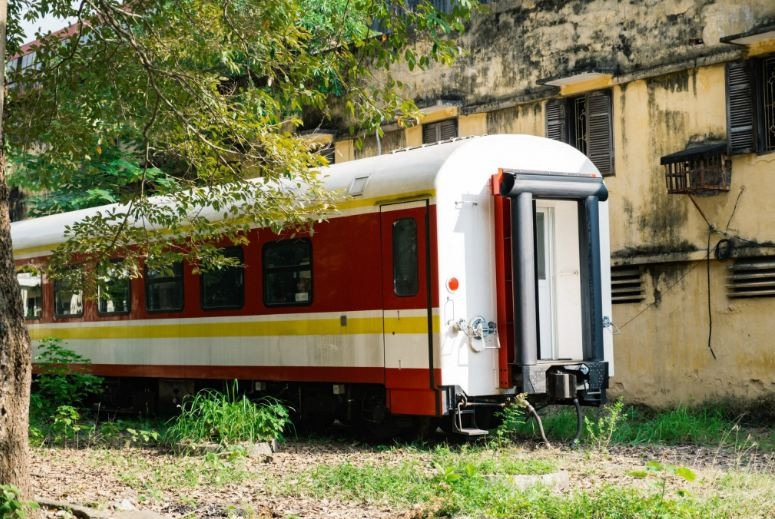
Một toa tàu trưng bày để du khách tham quan tại Nhà máy Xe lửa Gia Lâm.
Mô hình cải tạo di sản công nghiệp thành không gian văn hóa đã có từ lâu. Trên thế giới có Station F, được biết đến như vườn ươm khởi nghiệp cho giới kinh doanh, được xây dựng trên nền nhà ga xe lửa cũ Halle Freyssinet (Pháp); hay Công viên Landschafts Park, được chuyển đổi từ một tổ hợp sản xuất quặng than và thép (Đức); khu nghệ thuật Art Zone 798, ban đầu là một nhà máy sản xuất đồ điện tử (Trung Quốc)… Ở Việt Nam cũng đã có những mô hình tương tự như: Khu tổ hợp Complex 01 (quận Đống Đa) dựa trên nền nhà máy in bỏ hoang; Trung tâm văn hóa Pháp L’Espace (quận Hoàn Kiếm) cũng là một bằng chứng cải tạo di sản công nghiệp thành công, từ xưởng in cũ của Báo Nhân Dân…
Chia sẻ với phóng viên Báo Quân đội nhân dân, TS, kiến trúc sư Phan Đăng Sơn, Chủ tịch Hội Kiến trúc sư Việt Nam cho biết: “Nhà máy Xe lửa Gia Lâm là một di sản công nghiệp đáng quý ở Hà Nội. Việc cải tạo nhà máy thành các không gian sáng tạo nhằm viết tiếp câu chuyện “đánh thức” di sản công nghiệp, phục vụ sự phát triển của Thủ đô nói riêng và nền công nghiệp văn hóa đất nước nói chung. Đây cũng là phương pháp mà thế giới đang theo đuổi. Ở nước ta, hoạt động này còn thí điểm cho sự “lột xác” các địa điểm lịch sử khác đang có nguy cơ xuống cấp hoặc phải di dời trên cả nước. Lễ hội lần này thực sự là cơ hội để các kiến trúc sư, nghệ sĩ tài năng tạo nên những không gian trải nghiệm, triển lãm ấn tượng; thổi hồn cho không khí hân hoan của lễ hội, đóng góp cho mục tiêu gìn giữ những giá trị lịch sử, văn hóa truyền thống Thủ đô”.
Không gian rộng lớn khoảng 20ha được cải tạo thiết kế, sắp đặt thành một không gian nghệ thuật độc đáo, Nhà máy Xe lửa Gia Lâm mang tới những câu chuyện lý thú với nhiều cung bậc cảm xúc về Thủ đô ngàn năm văn hiến, một Hà Nội sáng tạo, mới lạ, mang đậm tinh thần nghệ thuật. Không gian triển lãm nhà máy khai thác các tài liệu lịch sử, những di sản công nghiệp, kết hợp với tinh thần sáng tạo ra những giá trị văn hóa mới. Đặc biệt, Triển lãm “Thí điểm kiến trúc và sắp đặt không gian ga” diễn ra ở 3 địa điểm: Ga Long Biên, ga Gia Lâm và ga Hà Nội. Thí điểm này mang đến cách nhìn mới mẻ về 3 nhà ga. Đó còn là sự kết hợp hài hòa giữa kiến trúc và nghệ thuật đương đại, với tinh thần nghệ thuật là một phần quan trọng trong công cuộc bảo tồn di sản công nghiệp.
Tạo điểm nhấn cho triển lãm, Ban tổ chức mời du khách trải nghiệm hành trình xe lửa di sản với điểm tham quan từ bốt Hàng Đậu-ga Long Biên-ga Gia Lâm-Nhà máy Xe lửa Gia Lâm. Từ đây, du khách tham quan nhà máy, nơi tổ chức các hoạt động chính tại Lễ hội Thiết kế sáng tạo Hà Nội 2023, tham quan nhiều công trình kiến trúc và đầu máy xe lửa hơi nước Tự Lực, biểu tượng của ngành đường sắt Việt Nam.
Bài và ảnh: THÁI PHƯƠNG
[Ảnh] Khám phá “không gian nghệ thuật” tại Nhà máy Xe lửa Gia Lâm
nhandan.vn – Trong khuôn khổ Lễ hội Thiết kế Sáng tạo Hà Nội 2023, người dân Thủ đô và du khách thật sự choáng ngợp trước các tác phẩm nghệ thuật sắp đặt được trưng bày tại Nhà máy Xe lửa Gia Lâm.
The classes not only help Jrai ethnic people in the village learn to read and write, but also contribute to raising people’s awareness and responsibility in protecting the national borders.
Many JRai students have to bring their children to literacy classes. — VNA/VNS Photo
GIA LAI — Border soldiers in the Tây Nguyên (Central Highlands) province of Gia Lai are assuming the role of teachers to eliminate illiteracy among local ethnic people.
The residential area of Suối Khôn in the border commune of Ia Mơ, Chu Prông District has 561 residents of the Jrai ethnic minority group, with most of them being very poor.
Currently, there are 71 illiterate people, accounting for 10 per cent of the area’s population.
Ia Lốp Border Guard Station opened classes to teach people and the soldiers are their teachers.
The classes not only help Jrai ethnic people in the village learn to read and write, but also contribute to raising people’s awareness and responsibility in protecting the national borders.
To get to Suối Khôn Residential Area, it takes more than two hours to travel from the city of Pleiku to Ia Pier Commune, then through a dirt road of more than ten kilometres full of mud and slush.
Lieutenant Colonel Nguyễn Văn Thành, secretary of the station’s Party Committee, said that there were 71 Jrai ethnic people who were illiterate, of which 45 people wanted to learn.
The station’s leaders decided to open classes to teach the illiterate people.
Since earlier this year, Ia Lốp Border Guard Station has organised two four-month literacy classes for the Jrai ethnic minority with 25 students.
The teachers are soldiers including Lieutenant Colonel Vũ Văn Hoàng, who teaches math, and Captain Nguyễn Văn Luân, who teaches Vietnamese language.
The entire programme uses literacy learning materials compiled by the Ministry of Education and Training.
The classes, which take place three evenings per week, received the professional support of Hoàng Hoa Thám Primary School in neighbouring Ia Piơr Commune.
Captain Nguyễn Văn Luân said that the journey of mobilising people to come to class encountered many hardships.
“The weather conditions here are very harsh. People mainly work in agriculture and their lives are very difficult,” Luân said.
“Ethnic minorities often feel an inferiority complex and have low self-esteem so they are timid in communication,” Luân said.
“Therefore, we had to go to each household to mobilise and encourage them to boldly come to class,” the captain said.
Soldiers cum teachers of Ia Lốp Border Guard Station come directly to local residents’ houses to urge them to attend literacy classes. — VNA/VNS Photo
Getting people to come to school was difficult, and maintaining class size was even more difficult.
Lieutenant Colonel Vũ Văn Hoàng said that the classes started in the evening, but in the afternoon the teachers had to go to each house to remind people of the class.
Because the students’ ages ranged from 16 to 60, organising classes and teaching methods must be flexible, especially during the crop season. Students have to work hard during the day so many of them cannot attend classes in the evening, said Hoàng.
“So to maintain the classes, the border guard soldiers had to come to help people with farm work or take care of their children to help them feel secure and focus on their studies,” said Hoàng.
Change of life
Kpui H’Lép, 27, is one of the outstanding students. After only four months of studying, she was able to read and write fluently.
H’Lep happily said: “Before, I was illiterate, very self-conscious and shy. I was always oppressed when doing business and criticised when doing housework.”
“But now it is different. I learned how to read and calculate. I thanked the teachers for helping me and other people in the village to have a better life,” she said.
Another student, Rơ Lan H’Cúc, 26, residing in Sâm Village, Ia Piơr Commune, has a two-year-old daughter whom she has to carry to evening classes.
Rơ Lan H’Cúc often sits at the back of the class but is very diligent and serious.
“I regretted not being literate earlier. Now I have the opportunity to learn many things from teachers. The teachers not only taught us how to read and write but also gave us books, pens, babysitting and farming instructions,” Rơ Lan H’Cúc said.
“I am very grateful to the teachers,” she said.
Suối Khôn residential area was formed in 2003. Most of residents are the Jrai ethnic minority.
Since its formation until now, this residential area has not yet received basic investment in electricity, roads, and schools, and people haven’t fully benefited from social security policies.
The reason is because this land belongs to the administrative boundaries of Ia Mơ Commune but the population is managed by another commune, Ia Piơr Commune.
Hà Văn Tin, vice chairman of the People’s Committee of Ia Piơr Commune, Chu Prông District, said that the authorities of Ia Piơr and Ia Mơ communes and the people in the area hoped that the competent authorities would soon allow the establishment of Khôl Village under Ia Mơ Commune according to a project since April 2022.
This is a condition for Suối Khôn Residential Area to be better managed and develop in the future, Tin said. — VNS
Soldiers of the Ia Lốp Border Guard Station teach literary classes for JRai ethnic minority people. — VNA/VNS Photo
An image taken before South Korean girl band Black Pink’s Born Pink Tour in Hà Nội in July. Tourist arrivals in the city jumped 2.5-fold to 170,000, including 3,000 foreigners, during their two-day concerts. — VNA/VNS Photo Tuấn Đức
The recent successful shows of famous international singers and bands show that Việt Nam is capable of organising mega global shows.
By Thu Ngân
For weeks Hanoian Bùi Trang Dung was unable to decide where to take her family for vacation last summer.
“This place is beautiful in the summer, that place has many delicious foods and the other one is cheaper.” These were the words that constantly ran in the 42-year-old’s mind.
She then came across a piece of information about a music show by a famous singer she loved in Mù Cang Chải in the northern province of Yên Bái.
The holiday destination instantly chose itself: It was to be Mù Cang Chải.
TPO – Hàng loạt núi đá di sản vịnh Hạ Long (Quảng Ninh) đang bị một dự án quy mô quây kín. Trao đổi với Tiền Phong, đại diện lãnh đạo Ban Quản lý vịnh Hạ Long khẳng định vị trí thực hiện dự án nằm trong vùng đệm của vịnh Hạ Long.
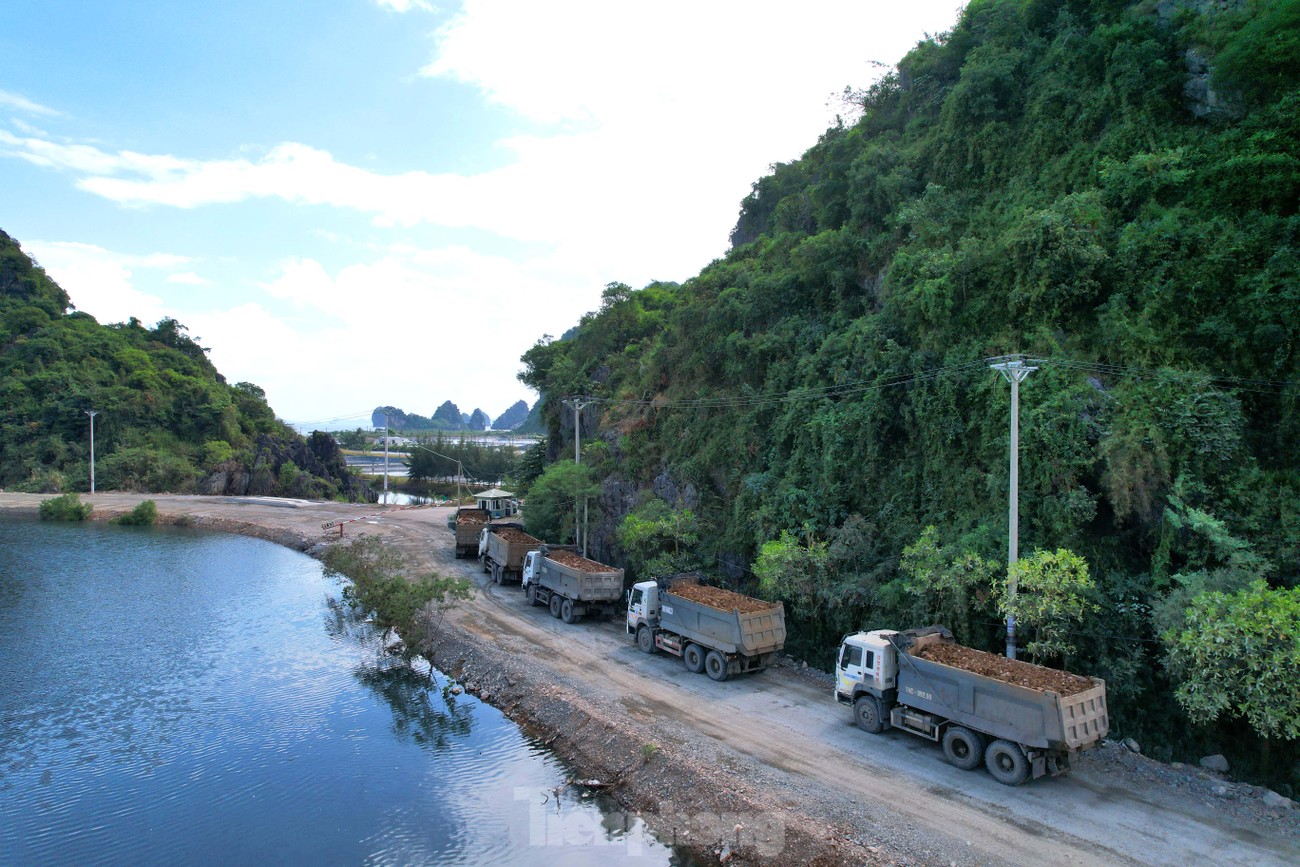
Nhiều ngày nay, khu vực phường Quang Hanh, TP Cẩm Phả (Quảng Ninh) xuất hiện hàng đoàn xe chở đất đá san lấp dự án. Đoàn xe ‘hổ vồ’ này không hề có bạt che phủ khi lưu thông trên đường và có dấu hiệu quá tải.
Theo tìm hiểu, đây là dự án Khu đô thị 10B, được UBND tỉnh Quảng Ninh phê duyệt năm 2021. Hiện dự án đang được triển khai thực hiện.
Điều đặc biệt, dự án này lấn ra vịnh Hạ Long cả cây số tính từ đường bao biển Hạ Long – Cẩm Phả.
Moses leading the Israelites out of Egypt. Tranh của Molnár, 1861
Đặng Hoàng Xa
“Mọi sự đều sẽ hết, nhưng người Do Thái thì không. Tất cả các thế lực khác sẽ qua đi, nhưng Họ vẫn còn. Bí mật trong sự bất tử của Họ là gì?” – Văn hào Mark Twain
Người Do Thái trên vùng đất Israel (Canaan)
Sự ra đời của đức tin
Người Do Thái có nguồn gốc từ người Hebrew cổ đại xuất hiện tại Trung Đông vào 4.000 năm trước. Theo truyền thuyết, người Do Thái và người Ả Rập là con cháu dòng dõi từ Abram (tên lúc sinh của Abraham) là người đã vâng theo lời gọi của Thượng Đế rời bỏ quê hương ở thành Ur thuộc phía Bắc vùng Mesopotamia (Lưỡng Hà) – nay là Đông-Nam Thổ Nhĩ Kỳ, đến lập nghiệp tại xứ Canaan, một vùng đất kéo ngang từ bờ sông Jordan tới biển Địa Trung Hải ngày nay.
Both sides are guilty of invoking the Holocaust, but the Palestinians do it defensively, the Israelis offensively.
In truth, the Palestinians have been so impacted by the implications of the Holocaust, albeit indirectly, that they have never truly understood its essence or comprehended its evil. Arabs are no strangers to colonial, imperial or ethnic violence, but nothing like the industrial-scale crimes perpetrated by Nazi Germany.
Aggrieved and angry, the Palestinians have long believed that it was they who paid the price for the horrors inflicted upon Jews in Europe…
…After all, the early Zionists chose to settle and build a homeland for Jews in Palestine nearly half a century before the Holocaust, knowing all too well that it is the homeland of another people. They wished it cleansed of its non-Jewish inhabitants.
Author: Le Chi Luc Ph.D. Research Scholar, Mahayana Buddhist Studies, Acharya Nagarjuna University, Guntur-522510, A.P, India
Abstract: Ly-Tran dynasty (1009 – 1400 A.D.) was the peak period of Vietnamese feudalism history. It was also known as the golden age of Vietnamese Buddhism. Therefore, the finding of study aim on the explore influence of Buddhist culture in Vietnam during Ly-Tran Dynasty (1009-1400 A.D.), that finds absorbed and deeply influenced in Vietnamese culture. This article addresses the main influences of Buddhist culture on the decisive ideology of this period, which is the premise to create a great landmark in the history of Vietnamese Buddhism finds the influence several aspects related the Vietnamese Buddhists 4 aspects as followed (1) influence on political – social thought, (2) influence on traditional and customs of Vietnamese, (3) influence on literature, and (4) influence on architecture and sculpture.
Prime Minister of the UK, Margaret Thatcher studied chemistry at Oxford, and worked briefly as a research chemist before becoming a barrister
Mr President, it gives me great pleasure to return to the Podium of this assembly. When I last spoke here four years ago, on the 40th anniversary of the United Nations, the message that I and others like me gave was one of encouragement to the organisation to play the great role allotted to it.
Of all the challenges faced by the world community in those four years, one has grown clearer than any other in both urgency and importance—I refer to the threat to our global environment. I shall take the opportunity of addressing the general assembly to speak on that subject alone.
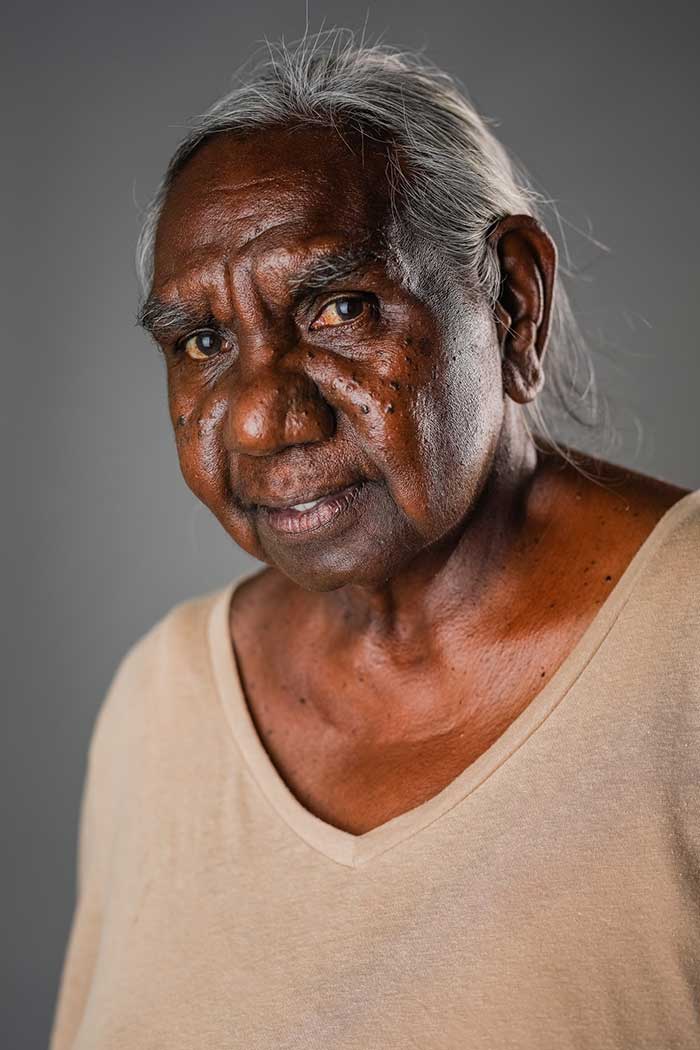
Miriam-Rose Ungunmerr-Baumann (Aboriginal activist, educator, artist and 2021 Senior Australian of the year)
*The Indigenous People of Australia have a depth of spirituality that can enrich our NonIndigenous spirits in so many ways. One of these spiritual gifts is Dadirri. Aboriginal people practice deep listening, an almost spiritual skill, based on respect. ‘Dadirri’ is an Aboriginal word meaning ‘inner deep listening and quiet still awareness and waiting‘*
My people are not threatened by silence. They are completely at home in it. They have lived for thousands of years with Nature’s quietness. My people today recognise and experience in this quietness the great Life-Giving Spirit, the Father of us all. It is easy for me to experience God’s presence. When I am out hunting, when I am in the bush, among the trees, on a hill or by a billabong; these are the times when I can simply be in God’s presence. My people have been so aware of Nature. It is natural that we will feel close to the Creator. Our Aboriginal culture has taught us to be still and to wait. We do not try to hurry things up. We let them follow their natural course – like the seasons. We watch the moon in each of its phases. We wait for the rain to fill our rivers and water the thirsty earth…
When twilight comes, we prepare for the night. At dawn we rise with the sun.
We watch the bush foods and wait for them to ripen before we gather them. We wait for our young people as they grow, stage by stage, through their initiation ceremonies. When a relation dies, we wait a long time with the sorrow. We own our grief and allow it to heal slowly.
We wait for the right time for our ceremonies and our meetings. The right people must be present. Everything must be done in the proper way. Careful preparations must be made. We don’t mind waiting, because we want things to be done with care.
We don’t like to hurry. There is nothing more important than what we are attending to. There is nothing more urgent that we must hurry away for.
We wait on God, too. His time is the right time. We wait for him to make his word clear to us. We don’t worry. We know that in time and in the spirit of dadirri (that deep listening and quiet stillness) his way will be clear.
We are river people. We cannot hurry the river. We have to move with its current and understand its ways.
We hope that the people of Australia will wait. Not so much waiting for us – to catch up – but waiting with us, as we find our pace in this world.
If you stay closely united, you are like a tree, standing in the middle of a bushfire sweeping through the timber. The leaves are scorched and the tough bark is scarred and burnt; but inside the tree the sap is still flowing, and under the ground the roots are still strong. Like that tree, you have endured the flames, and you still have the power to be reborn.
Our culture is different. We are asking our fellow Australians to take time to know us; to be still and to listen to us.–
Miriam-Rose Ungunmerr-Baumann (Aboriginal activist, educator, artist and 2021 Senior Australian of the year)












 CVD
CVD 