The world’s required reading list: The books that students read in 28 countries

reading2

This compilation of reading assigned to students everywhere will expand your horizons — and your bookshelves.

In the US, most students are required to read To Kill a Mockingbird during their school years. This classic novel combines a moving coming-of-age story with big issues like racism and criminal injustice. Reading Mockingbird is such an integral part of the American educational experience that we wondered: What classic books are assigned to students elsewhere?

We posed this question to our TED-Ed Innovative Educators and members of the TED-Ed Community. People all over the globe responded, and we curated our list to focus on local authors. Many respondents made it clear in their countries, as in the US, few books are absolutely mandatory. Below, take a look at what students in countries from Ireland to Iran, Ghana to Germany, are asked to read and why. [Note: To find free, downloadable versions of many of the books listed below, search Project Gutenberg.]

Afghanistan

Quran
What it’s about: The revelations of God as told to the prophet Muhammad, this is the central religious text of Islam and remains one of the major works of Arabic literature.
Why it’s taught: “Overall, there is no culture of reading novels in my country, which is sad,” says Farokh Attah. “The only book that must be read in school is the holy Quran, and everyone is encouraged to read it starting from childhood.” Tiếp tục đọc “The world’s required reading list: The books that students read in 28 countries”

Natural selection gave a freediving people in Southeast Asia bigger spleens

Date:April 19, 2018
Source:Cell Press
FULL STORY

This image shows a Bajau diver hunting fish underwater using a traditional spear.
Credit: Melissa Ilardo

The Bajau people of Southeast Asia, known as Sea Nomads, spend their whole lives at sea, working eight-hour diving shifts with traditional equipment and short breaks to catch fish and shellfish for their families. In a study published April 19 in the journal Cell, researchers report that the extraordinary diving abilities of the Bajau may be thanks in part to their unusually large spleens. The adaptation, the researchers say, is a rare example of natural selection in modern humans — and one that could provide medically relevant insight into how humans manage acute hypoxia.

Tiếp tục đọc “Natural selection gave a freediving people in Southeast Asia bigger spleens”

Kho sách xưa của Quán Ven Đường

Link đến kho sách xưa của miền Nam Việt Nam trước 1975, cùng ca nhạc, và hình ảnh (khoảng cuối bài), của Giáo Sư Huỳnh Chiếu Đẳng, chủ blog Quán Ven Đường

Nhà kho Quán Ven Đường >>

Dưới đây là bài báo về GS Đẳng.

Mến,
Hoành
__________

03/03/2008 09:48:59 AM

Giáo sư Huỳnh Chiếu Đẳng – người thầy tự nguyện và tận tụy

quehuongonline

Trong những năm gần đây ông xuất hiện với trang web Quán Ven Đường trên mạng Internet như một người thầy tận tụy hướng dẫn “Computer phổ cập cho người già” với tinh thần bất vụ lợi hoàn toàn.

Theo yêu cầu của người viết bài này, Giáo sư Huỳnh Chiếu Đẳng (có thể là bút danh của ông) đành gửi đến ít lời giới thiệu vỏn vẹn khiêm tốn về mình. Ông là một nhà giáo thuần túy, đã dạy các môn vật lý & hóa học, trước cũng như sau năm 1975.

Tiếp tục đọc “Kho sách xưa của Quán Ven Đường”

Re-education in Unliberated Vietnam: Loneliness, Suffering and Death

Re-education in Unliberated Vietnam: Loneliness, Suffering and Death – by Ginetta Sagan and Stephen Denney [1982]

Note: The following article was published in The Indochina Newsletter, a newsletter I edited at the time, October-November 1982. Much has changed in the 16 years since this article was written. So far as is known all of the former South Vietnam government officials and officers have been released from the re-education camps and many have been allowed to emigrate to the U.S. under a special program, called Humanitarian Operation. But many of former prisoners have experienced various problems resulting from their long term incarceration under difficult conditions. I hope this article might be of historical interest in understanding what these prisoners have experienced; and also in understanding conditions of imprisonment endured by those dissidents and others still detained in Vietnam. – Steve Denney [1998]

THE INDOCHINA NEWSLETTER
October-November 1982

Re-education in Unliberated Vietnam: Loneliness, Suffering and Death

by Ginetta Sagan and Stephen Denney

(Editor’s Note: The following article is part of a preliminary draft of a report that will be issued later this year on human rights in Vietnam. The report is prepared for the Aurora Foundation, of which Ginetta Sagan is the Executive Director. Mrs. Sagan is a well-known human rights activist who interviewed over 200 former prisoners from Vietnam in preparation for this report. Details of the interviews will be brought out in fuller detail when the report is issued.)

Ten years ago, demonstrations were held around the world to protest political repression and imprisonment in South Vietnam. Seven years ago, Communist forces completed their conquest of South Vietnam. In June of 1975, the new regime ordered hundreds of thousands of Vietnamese to report to authorities for « re-education ». Many are still held in the camps today, but the world is mostly silent on their plight.

« Re-education » means different things to different people. To the Hanoi regime and its more vocal defenders abroad, re-education is seen as a very positive way to integrate the former enemy into the new society. It is, according to Communist leaders of Vietnam, an act of mercy, since those in the camps deserve the death penalty or life imprisonment.(1). The former prisoners, on the other hand, see re-education from quite a different perspective. Tiếp tục đọc “Re-education in Unliberated Vietnam: Loneliness, Suffering and Death”

Hồ Sơ Mật Dinh Độc Lập – Nguyễn Tiến Hưng (audio book)

Nguyễn Tiến Hưng (sinh 1935) là một tiến sĩ kinh tế, nguyên là Tổng trưởng Kế hoạch của Chính phủ Việt Nam Cộng hòa kiêm cố vấn của tổng thống Nguyễn Văn Thiệu, hiện là giáo sư về hưu của Đại học Howard (Washington, D.C., Hoa Kỳ).

00: http://www.mediafire.com/?85lhy04r6qqn722

01: http://www.mediafire.com/?vr9di4h2v9eqcb5
02: http://www.mediafire.com/?gc3hocswxnbe1eh
03: http://www.mediafire.com/?454cuy90mzcg3tb
04: http://www.mediafire.com/?jsw89zn09f6weo9
05: http://www.mediafire.com/?xnrip34l844497e

06: http://www.mediafire.com/?i82i2i0cvth82vz
07: http://www.mediafire.com/?u4h7qmga7z1unk9
08: http://www.mediafire.com/?7lzxjf0ka783dlb
09: http://www.mediafire.com/?2hskmn0zrxoagw6
10: http://www.mediafire.com/?imbe43rq66o1y4m

11: http://www.mediafire.com/?1dhzeavxq3637vl
12: http://www.mediafire.com/?l5hqaidh2oknedv
13: http://www.mediafire.com/?611bfu5kr3hf4df
14: http://www.mediafire.com/?i0ff3z6q9wm5y3i
15: http://www.mediafire.com/?2eomt1p34binp96

16: http://www.mediafire.com/?pbr3fxbm9dg9ikk
17: http://www.mediafire.com/?6791zvvz9ges2fp
18: http://www.mediafire.com/?lh56hak6yv4a6ky
19: http://www.mediafire.com/?3yc8rvn2mgvfaoe
20: http://www.mediafire.com/?dwtbo7eph8ieo9f

21: http://www.mediafire.com/?jc3oigb8if669ra
22: http://www.mediafire.com/?z9we79c36eayj7z
23: http://www.mediafire.com/?r7v4rz2bk6k19ck

The 1968 “Hue Massacre”

by D. Gareth Porter
“Indochina Chronicle,” #33, June 24, 1974

Six years after the stunning communist Tet Offensive of 1968, one of the enduring myths of the Second Indochina War remains essentially unchallenged: the communist “massacre” at Hue. The official version of what happened in Hue has been that the National Liberation Front (NLF) and the North Vietnamese deliberately and systematically murdered not only responsible officials but religious figures, the educated elite and ordinary people, and that burial sites later found yielded some 3,000 bodies, the largest portion of the total of more than 4,700 victims of communist execution.

Although there is still much that is not known about what happened in Hue, there is sufficient evidence to conclude that the story conveyed to the American public by the South Vietnamese and American propaganda agencies bore little resemblance to the truth, but was, on the contrary, the result of a political warfare campaign by the Saigon government, embellished by the U.S. government and accepted uncritically by the U.S. press. A careful study of the official story of the Hue “massacre” on the one hand, and of the evidence from independent or anti-communist sources on the other, provides a revealing glimpse into efforts by the U.S. press to keep alive fears of a massive “bloodbath.”1 It is a myth which has served the U.S. administration interests well in the past, and continues to influence public attitudes deeply today. Tiếp tục đọc “The 1968 “Hue Massacre””

17 Năm Trong Các Trại Cải Tạo – Hồi ký KALE

Giới Thiệu Về Tác Giả KALE:

  • Tên thật là Lê Anh Kiệt
  • Sinh năm 1945, đã trãi qua gần như cả tuổi trẻ trong chiến tranh và tù đày.
  • Không có tham vọng viết văn chỉ viết để diển tả những suy nghĩ, những quan sát về thân phận mình và vận mạng đất nước sau những biến đổi thăng trầm của lịch sử.
  • Tốt nghiệp trường Đại Học Khoa Học Sài Gòn, từng làm giáo sư Toán Lý Hoá đệ nhị cấp tại các trường trung học tư thục như Nguyễn Bá Tòng (Sài Gòn và Gia Định), Hoàng Gia Huệ (Trung Chánh), Khiết Tâm (Biên Hoà), Trần Hưng Đạo (Tổng Tham Mưu).
  • Phục vụ tại Phủ Đặc Ủy Trung Ương Tình Báo VNCH.
  • Sau ngày 30 tháng 4 năm 1975, đi tù cải tạo của cho đến năm 1992.
  • Sang Mỹ năm 1993 và hiện định cư ở tiểu bang Indiana.
  • Về hưu từ năm 2012

17 Năm Trong Các Trại Cải Tạo CSVN >>

The 1974 Paracels Sea Battle: A Campaign Appraisal – Trận Hải chiến Hoàng Sa 1974

tranhoangsa

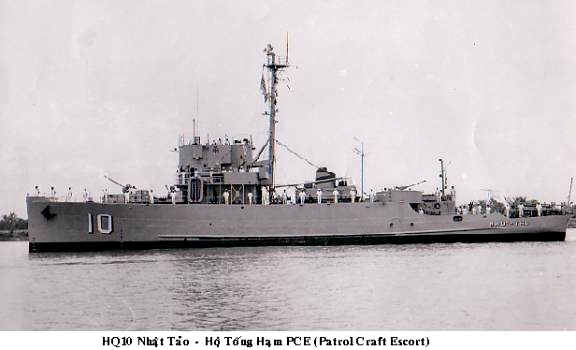
Trận hải chiến Hoàng Sa 1974.

Hộ Tống hạm Nhật Tảo HQ 10

Toshi Yoshihara. Mùa Xuân 2016. Theo U.S. Naval War College

Trần H Sa lược dịch

(Xin lưu ý, các dử liệu về trận hải chiến Hoàng sa 1974 được tác giả nêu lên trong bài viết này đều dựa chủ yếu vào các tài liệu Trung quốc; tài liệu của phía VNCH không có, ngoại trừ một vài bài viết của các sĩ quan hải quân VNCH tham dự trận đánh được trình bày bằng Anh ngữ. Như tác giả đã cảnh giác “Hãy cẩn thận về phẩm chất của các nguồn tài liệu và phương pháp đang được đề cập……Do đó, những gì theo sau đó không phải là một quan điểm trung lập”. Cho nên, người dịch mạn phép được đánh dấu những nơi mà tài liệu TQ thiếu khách quan bằng dấu hỏi kèm mẫu tự, ví dụ (a?), mong người đọc hãy khách quan nhận xét lại theo quan điểm của mình; ngoài ra các ghi chú nguồn tài liệu được tác giả đánh dấu bằng các số thứ tự rải rác trong bài viết  xin theo dỏi trong bản gốc tiếng Anh ở link giới thiệu bên trên .) Tiếp tục đọc “The 1974 Paracels Sea Battle: A Campaign Appraisal – Trận Hải chiến Hoàng Sa 1974”

Lịch Sử Hội Thánh Tin Lành Việt Nam

giadinhmuoicuadat Thứ Năm, 1 tháng 3, 2012

Hội thánh Tin lành Việt Nam được hình thành đã gần một thế kỷ (1911-2006), không do một giáo phái nào truyền giáo, nhưng lại do một Hội Truyền Giáo thuần túy đặt nền tảng, đó là Hội Truyền gíao Phước âm Liên hiệp (The Christian and Missionary Alliance). Quá trình phát triển tuy chậm chạp – vì do có nhiều biến động trong xã hội – nhưng chắc chắn và vững mạnh. Do vậy, hiện nay tuy số tín đồ ít hơn so với các tôn giáo khác tại Việt Nam, nhưng Hội thánh Tin lành vẫn được kể là một trong những tôn giáo lớn.

Tài liệu này nhằm giúp các con cái Chúa có lòng yêu mến và muốn phục vụ Ngài, một cái nhìn khái quát về sự hình thành và phát triển của Hội thánh trong hơn 90 năm qua. Tiếp tục đọc “Lịch Sử Hội Thánh Tin Lành Việt Nam”

Lịch sử Giáo hội Công giáo Việt Nam

Đạo Thiên Chúa và Chủ nghĩa thực dân tại Việt Nam

, , Cao Huy Thuần


Luận án Tiến Sĩ Quốc Gia Khoa Học Chính Trị Đại Học Paris


Vietnam War in photos, Part III: Hands of a Nation

Part I: Early Years and Escalation
Part II: Losses and Withdrawal
Part III: Hands of a Nation

The Atlantic, Alan Taylor, Apr 1, 2015
26 Photos

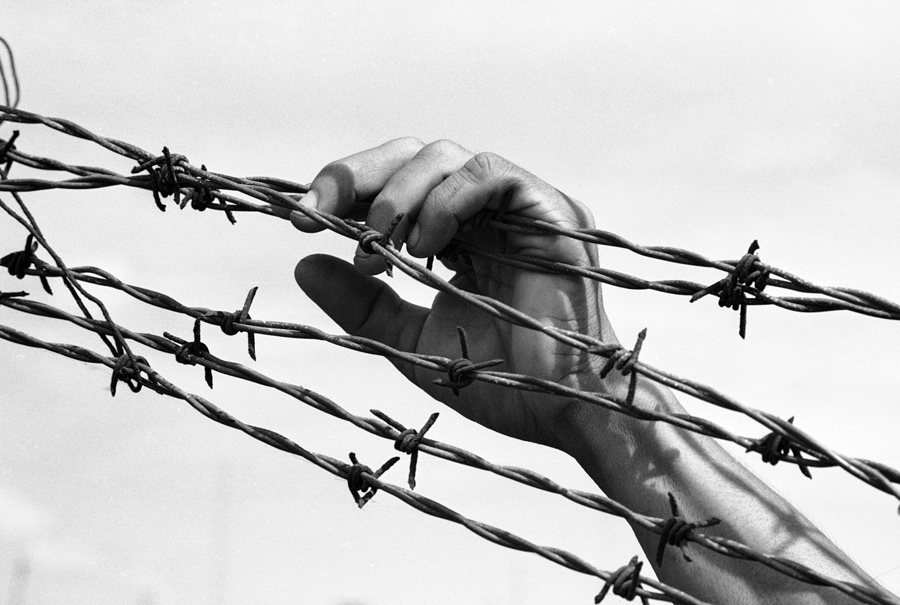
The photojournalist Eddie Adams, who covered the Vietnam War for the Associated Press, not only captured the action and chaos but took the time to get up close to the Vietnamese people whenever he could. In 1968, he undertook a project called “Hands of a Nation,” taking intimate photos of the hands of Vietnamese soldiers and civilians. Their hands were busy doing so many things then: reaching out for medicine, grasping weapons, straining against bindings, soothing, praying, rebuilding. Adams photographed hands young and old, belonging to the healthy and the wounded, the living and the dead.
Hints: View this page full screen.