Get daily analysis on the historic 2020 US election delivered to your inbox.Sign Me UpNo ThanksBy subscribing you agree to ourprivacy policy.In a lengthy front-page commentary in the People’s Liberation Army Daily, the official newspaper of China’s military, the author hailed the “glorious victory” which “left the Americans with the deepest impression that what Chinese people say counts,” and to respect “China’s red lines.”
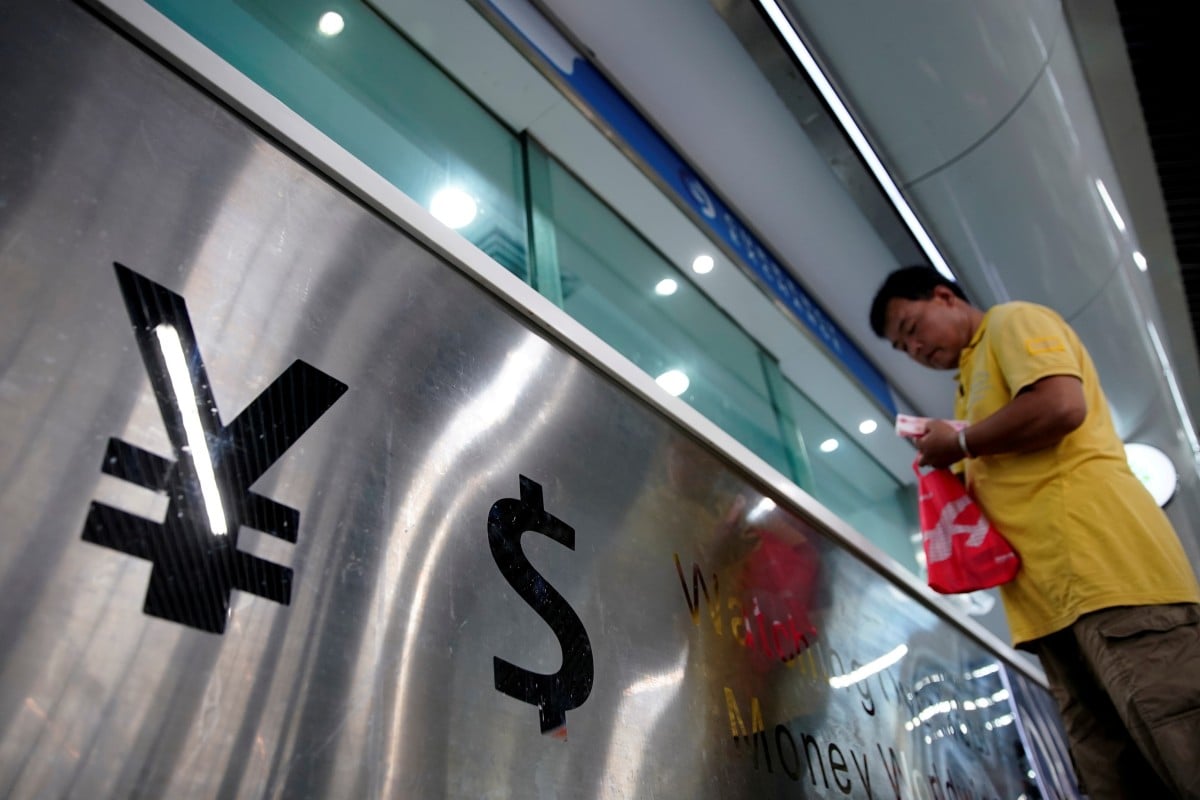
US-China frictions and the threat of American financial sanctions have renewed debate in Beijing about reducing dependence on the US dollarChina cut its holdings of US government debt to US$1.07 trillion in late August, the lowest level since March 2017, the US Department of Treasury says
China has long tried to undermine the US dollar’s dominant role in the international monetary system, despite the fact that the bulk of its reserves are in dollar-denominated assets. Photo: Reuters
China may be speeding up the diversification of its foreign exchange reserves away from US dollar assets in response to potential American financial sanctions, but there are clear limits on how far it can go in its de-dollarisation push, according to analysts.China has long tried to undermine the US dollar’s dominant role in the international monetary system, despite the fact that the bulk of its reserves are in dollar-denominated assets.
Lobsang Sangay, the president of the Tibetan Central Administration (CTA), met the new US special coordinator on Tibet last week. Sangay said it was the first time that the head of the CTA had been received at the State Department.Advertisement
“China will take all necessary measures to protect its interests,” foreign ministry spokesman Zhao Lijian said during a daily news conference in Beijing on Tuesday (Oct 20).
China’s irritation with the United States over Tibet comes at a time when relations between the two world powers are at their lowest point in decades over a range of issues, including trade, Taiwan, human rights, the South China Sea and COVID-19.
Describing Sangay as an anti-China separatist, Zhao said the United States should cease any official contact with him.
The meeting “sent a seriously wrong signal to Tibetan independence forces”, he said.Advertisement
“The US should immediately stop using the Tibet issue to interfere in China’s internal affairs.”
China seized control over Tibet in 1950 in what it describes as a “peaceful liberation”. International human rights groups and exiles routinely condemn what they call China’s oppressive rule in Tibetan areas.
Since its formation in 1959, the Tibetan government-in-exile has been based in Dharamshala in northern India. China’s relations with India became fraught in recent months following a bloody clash between troops stationed on the disputed Himalayan border. Source: Reuters/jt
‘There is only one China in the world, and Taiwan is an inalienable part of Chinese territory,’ says Chinese foreign ministry spokesman Zhao Lijian
The comments come against the backdrop of tensions between India and China along their common border in Ladakh
NEW DELHI: China on Tuesday warned India against launching any talks with Taiwan on trade saying such a move would be violative of the one China policy New Delhi has so far supported.
Senior US human rights official named as special coordinator for Tibetan issues amid increasingly tense relations between Washington and Beijing.
Human rights activists say Beijing suppresses local culture, the Buddhist religion and minorities in Tibet [File: He Penglei/CNS via Reuters]
14 Oct 2020
The United States has appointed a senior human rights official as special coordinator for Tibetan issues, amid increasingly tense relations between Washington and Beijing.
US Secretary of State Mike Pompeo announced on Wednesday that Robert Destro, assistant secretary of state for democracy, human rights and labor, would assume the additional post, which has been vacant since the start of President Donald Trump’s term in 2017.
Hong Kong (CNN)Chinese President Xi Jinping has called on troops to “put all (their) minds and energy on preparing for war” in a visit to a military base in the southern province of Guangdong on Tuesday, according to state news agency Xinhua.
During an inspection of the People’s Liberation Army Marine Corps in Chaozhou City, Xinhua said Xi told the soldiers to “maintain a state of high alert” and called on them to be “absolutely loyal, absolutely pure, and absolutely reliable.”
Taiwan is one of those flash points that has never flashed. The dispute over the island’s fate has had the potential to erupt into conflict between China and the United States for decades. But the feared Chinese invasion has never come. The situation has remained deadlocked for so long that Taiwan’s quandary often drifts into the background of Asian affairs, overshadowed by seemingly more-pressing concerns, such as North Korea’s nuclear ambitions and inflamed tensions between India and Pakistan in Kashmir.
The year is not over, but it’s safe to say that 2020 has been a watershed. Even so, it may be difficult to grasp just how consequential the last several months have been for U.S.-China relations. As the many crises of 2020 recede into the past, it will become increasingly clear that we witnessed the most important sea change in U.S.-China relations in 50 years. Critically, this was the year that the tide of public opinion in the United States turned against China.
The United States has released guidance on its immigration laws that will make it almost impossible for members of a Communist party or similar to be granted permanent residence or citizenship of America.
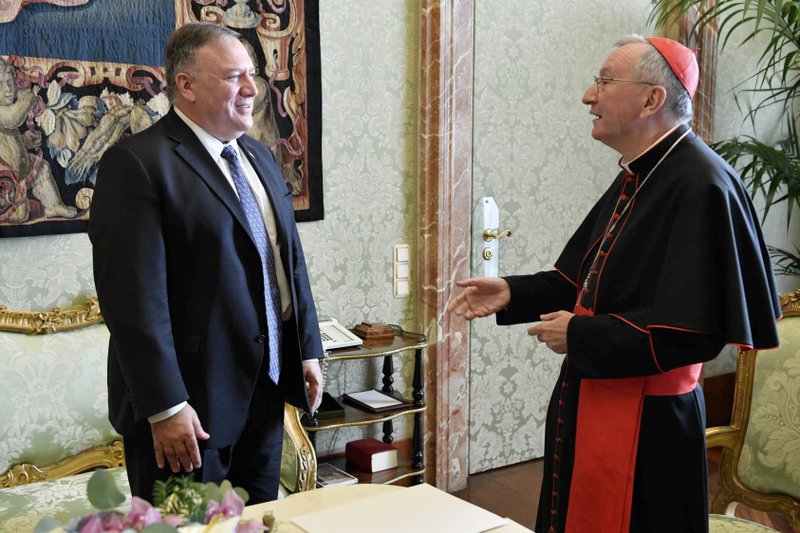
U.S. Secretary of State Mike Pompeo meets Vatican Secretary of State Cardinal Pietro Parolin, at the Vatican, Thursday, Oct. 1, 2020. Pompeo is meeting Thursday with top Vatican officials, a day after tensions over U.S. opposition to the Vatican’s China policy spilled out in public. (Vatican Media via AP)
ROME (AP) — The U.S. and the Vatican butted heads over China on Thursday as the Holy See chafed at U.S. Secretary of State Mike Pompeo’s public call to take a harsher stance against Chinese restrictions on religious freedom.
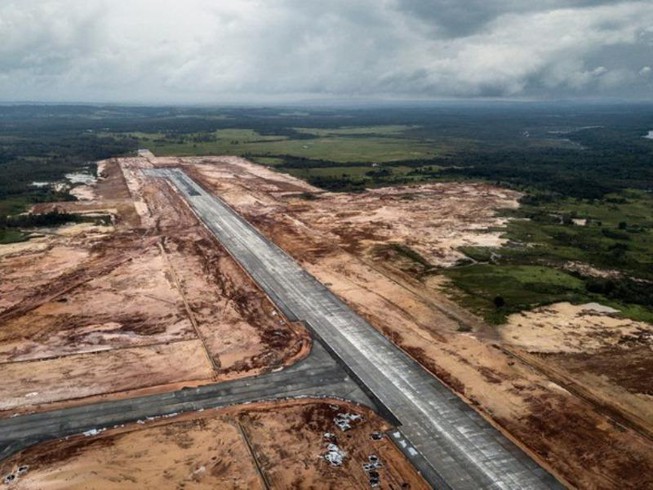
Mỹ trừng phạt một công ty Trung Quốc liên quan dự án khu du lịch tại Campuchia với cáo buộc phục vụ mục đích quân sự cũng như tham vọng “Vành đai và Con đường”.
Đường băng đang được doanh nghiệp Trung Quốc xây dựng tại sân bay quốc tế Dara Sakor của Campuchia. (Ảnh: THE NEW YORK TIMES)
Tờ South China Morning Post đưa tin Bộ Tài chính Mỹ hôm 15-9 đã trừng phạt công ty Union Development Group của Trung Quốc liên quan dự án khu du lịch Dara Sakor ở Campuchia, với cáo buộc chuyển đổi phục vụ mục đích quân sự và phục vụ tham vọng “Vành đai và Con đường”.
China has clashed with neighbors over its fishing in the contested South China Sea, pictured here. Controversially, Chinese fishermen also venture as far as Argentina and Ecuador. Yao Feng/VCG via Getty Images
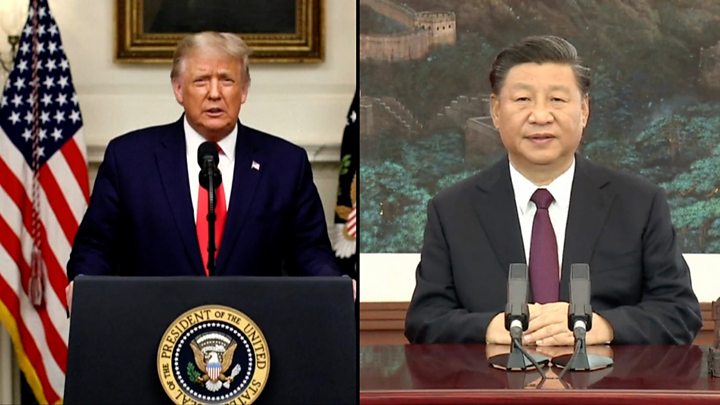
Media captionTrump, Xi Jinping and Guterres address the UN General Assembly
Tensions between the US and China came to the fore of the annual UN General Assembly in New York, with US President Donald Trump blaming China for the spread of coronavirus.
He called for China to be held “accountable” for the pandemic.




![Human rights activists say Beijing suppresses local culture, the Buddhist religion and minorities in Tibet [File: He Penglei/CNS via Reuters]](https://www.aljazeera.com/wp-content/uploads/2020/10/2019-07-18T025504Z_80058370_RC19582F1990_RTRMADP_3_CHINA-TIBET.jpg?resize=770%2C513)


 CVD
CVD 