Chuyên mục: US – China relationship – Liên hệ Mỹ Trung
Beijing Missile Launches Into South China Sea Warned 2 Key US Targets
The missiles launched into the South China Sea on Wednesday included the DF-21D and DF-26B, the South China Morning Post reported, citing a person close to the People’s Liberation Army.
(c) 2020 Bloomberg Bloomberg News Updated: August 28, 2020 11:50 am IST ndtv

China rolled out new PLA Rocket Force as part of a massive military parade in October4
China’s latest volley of missile launches into the world’s most hotly contested body of water served as a warning to two key U.S. targets: aircraft carriers and regional bases.
Tiếp tục đọc “Beijing Missile Launches Into South China Sea Warned 2 Key US Targets”US-China relations: Mark Esper urges allies to help counter China in Indo-Pacific

Published: 7:00pm, 27 Aug, 2020 SCMP
TOP PICKS
NewsChinese missile launch ‘could raise risk of military clash with US’28 Aug 2020
NewsChinese military ramps up coastal drills23 Aug 2020
NewsUS orders fresh sanctions on Chinese firms over South China Sea28 Aug 2020
Tiếp tục đọc “US-China relations: Mark Esper urges allies to help counter China in Indo-Pacific”Tensions flare as Chinese fire four missiles into South China Sea, America adds sanctions
Bloomberg Last Updated: Aug 27, 2020, 10:10 AM EconomicTimes
China launched four medium-range ballistic missiles into the South China Sea on Wednesday amid broader military exercises by the PLA, according to a U.S. defense official who asked not to be identified. The missiles landed in the sea in an area between Hainan Island and the Paracel Islands, the official said. The move came a day after Beijing protested a flyover by a U.S. spy plane.
By David Wainer and Tony Capaccio
U.S.-China tensions over the South China Sea escalated on Wednesday with Beijing firing four missiles into the disputed waterway and the Trump administration strengthening action against companies that helped set up outposts in the region.
US targets Chinese individuals, companies amid South China Sea dispute
Russia
Power Machines
China
1/ China Communications Construction Company Dredging Group Co., Ltd.
2/ China Communications Construction Company Tianjin Waterway Bureau
3/ China Communications Construction Company Shanghai Waterway Bureau
4/ China Communications Construction Company Guangzhou Waterway Bureau
5/ China Communications Construction Company Second Navigation Engineering Bureau
6/ Beijing Huanjia Telecommunication Co., Ltd.
7/ Changzhou Guoguang Data Communications Co., Ltd.
8/ China Electronics Technology Group Corporation, 7th Research Institute (CETC-7)
9/ Guangzhou Hongyu Technology Co., Ltd., (a subordinate institute of CETC-7)
10/ Guangzhou Tongguang Communication Technology Co., Ltd. (a subordinate institute of CETC
11/ China Electronics Technology Group Corporation, 30th Research Institute (CETC-30)
12/ China Shipbuilding Group, 722nd Research Institute
13/ Chongxin Bada Technology Development Co., Ltd.
14/ Guangzhou Guangyou Communications Equipment Co., Ltd.
15/ Guangzhou Haige Communication Group Co., Ltd.
16/ Guilin Changhai Development Co., Ltd.
17/ Hubei Guangxing Communications Technology Co., Ltd.
18/ Shaanxi Changling Electronic Technology Co., Ltd.
19/ Shanghai Cable Offshore Engineering Co., Ltd.
20/ Telixin Electronics Technology Co., Ltd.
21/ Tianjin Broadcasting Equipment Co., Ltd.
22/ Tianjin 764 Avionics Technology Co., Ltd.
23/ Tianjin 764 Communication and Navigation Technology Co., Ltd.
24/ Wuhan Mailite Communication Co., Ltd.


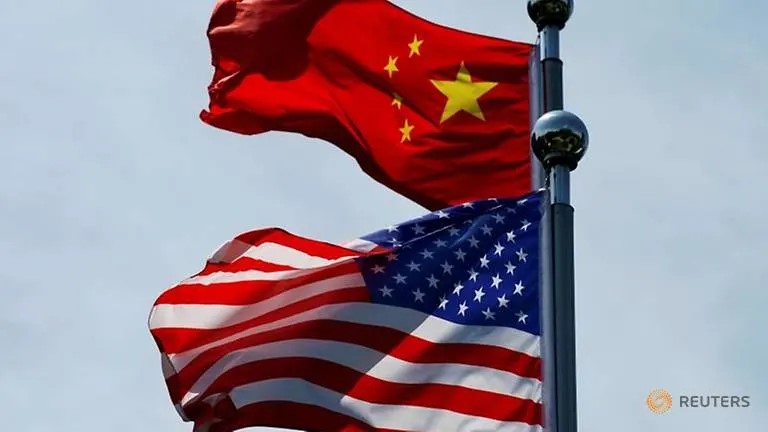
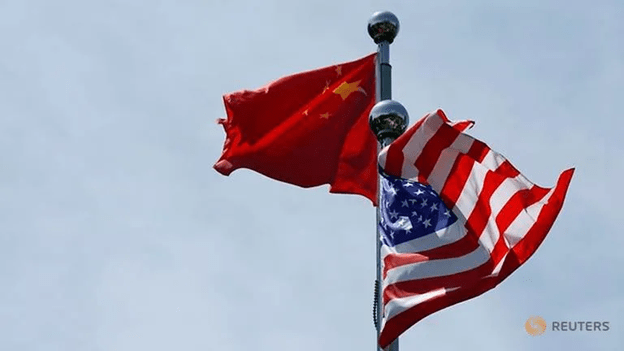
File photo of Chinese and US flags fluttering near The Bund in Shanghai, China, Jul 30, 2019. (Photo: REUTERS/Aly Song)
26 Aug 2020 09:15PM(Updated: 27 Aug 2020 08:59AM) CNA
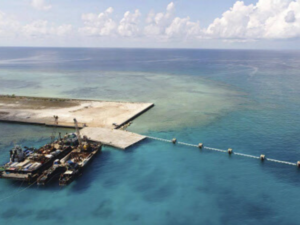
WASHINGTON: The United States on Wednesday (Aug 26) blacklisted 24 Chinese companies and targeted individuals it said were part of construction and military actions in the South China Sea, its first such sanctions move against Beijing over the disputed strategic waterway.
Tiếp tục đọc “US targets Chinese individuals, companies amid South China Sea dispute”The risk of China-US military conflict is worryingly high

The two sides are sleepwalking into confrontation in the South China Sea. ZHOU BO. Financial Times
The US and China have settled into a pattern of military manoeuvring in the South China Sea that allows both sides to ‘save face’ © Zha Chunming/Xinhua/AP
Zhou Bo YESTERDAY
The writer is a senior fellow at the Center for International Security and Strategy at Tsinghua University, and a China Forum expert
The relationship between China and the US is in freefall. That is dangerous. US defence secretary Mark Esper has said he wants to visit China this year, which shows the Pentagon is worried. That Wei Fenghe, China’s defence minister, spoke at length with Mr Esper in August shows that Beijing is worried too. Both men have agreed to keep communications open and to work to reduce risks as they arise.
Tiếp tục đọc “The risk of China-US military conflict is worryingly high”President no more? A US bill would ban the title for China’s leader
- Under the Name the Enemy Act, Xi Jinping would no longer be called China’s president in any US government document
- While it follows remarks by US officials calling Xi general secretary, the legislation is not likely to come up for a vote this session

Owen Churchill in Washington, DC SCMP

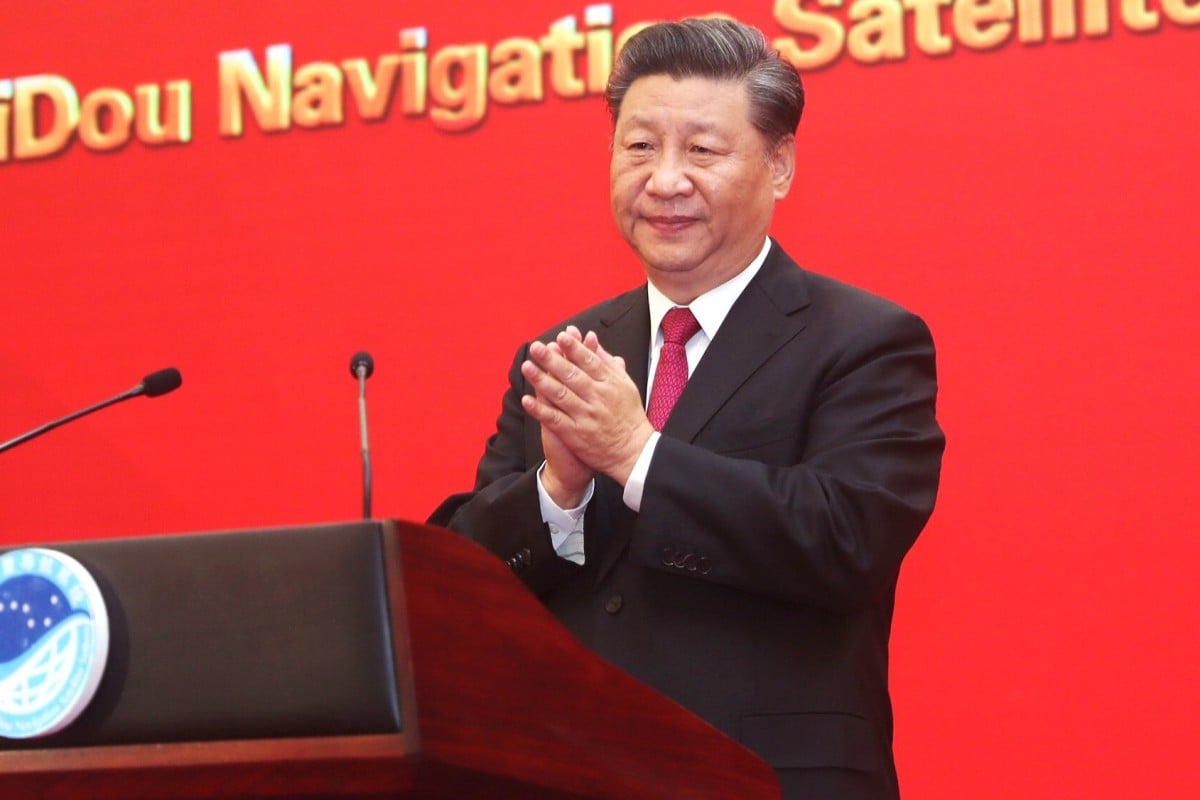
A bill introduced in the US Congress would ban US government documents from referring to Xi Jinping, shown at a ceremony last month in Beijing for the BeiDou navigational satellite system, as China’s president. Photo: Xinhua
Lawmakers in Washington have introduced a bill to change the way the federal government refers to the leader of China, prohibiting the use of the term “president”.
Tiếp tục đọc “President no more? A US bill would ban the title for China’s leader”Taiwan New Frontier in US-China Cold War
Tsai Ing-Wen’s strategic gamble on US-Taiwan ties
Taiwan Tensions: In Conversation With President Tsai Ing-wen
China slams 60 countries, organizations for congratulating Tsai on reelection
US-China relations: US warship sails through Taiwan Strait under scrutiny from Beijing
- Transit of guided-missile destroyer USS Mustin part of America’s ‘commitment to a free and open Indo-Pacific’, US Pacific Fleet says
- People’s Liberation Army, Taiwan send destroyer, frigate to monitor warship’s movements

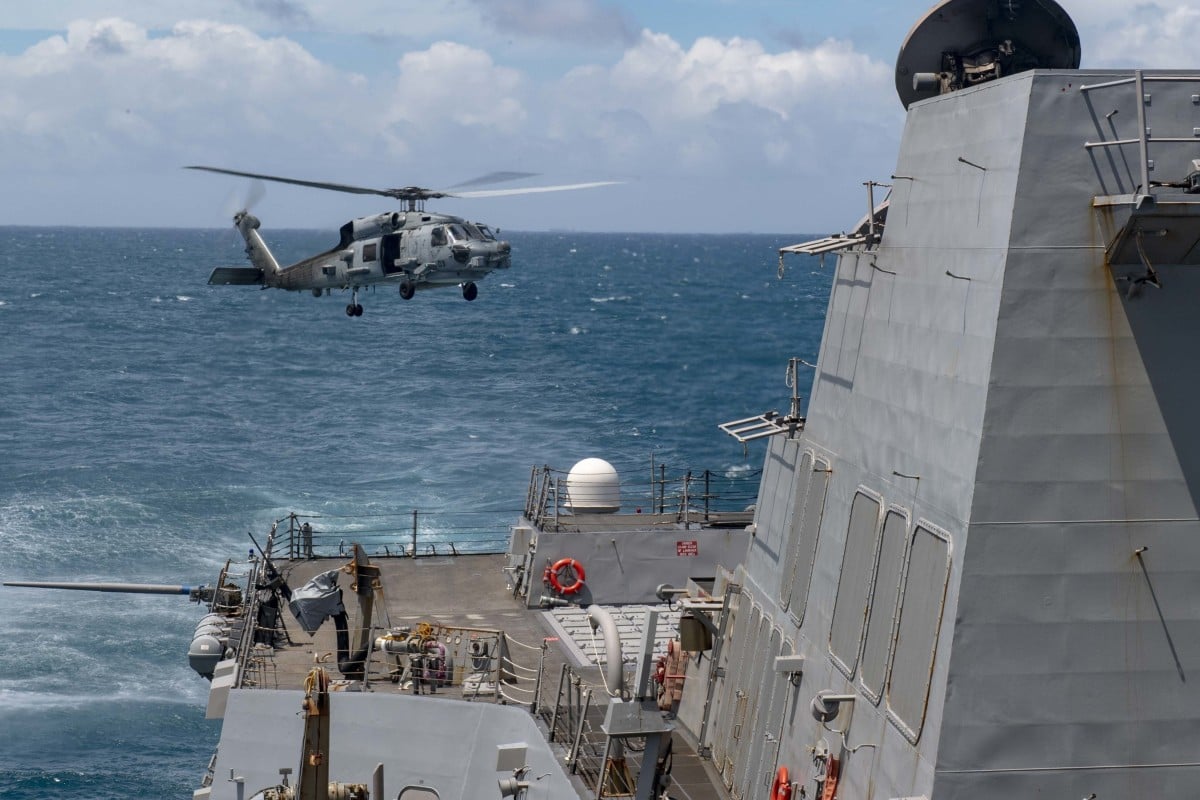
An MH-60R helicopter takes off from the flight deck of the USS Mustin during routine operations. Photo: US NavyThe United States sent a warship through the Taiwan Strait on Tuesday in what it said was a demonstration of its “commitment to a free and open Indo-Pacific”, as military tensions between Washington, Beijing and Taipei in the region continue to simmer.
Tiếp tục đọc “US-China relations: US warship sails through Taiwan Strait under scrutiny from Beijing”Trump cancels US-China trade negotiations
Wednesday, 19 August 2020 brusselstimes

US President Donald Trump told reporters on Tuesday that he had called off US – China trade deal negotiations.
“I don’t want to talk to them now,” Trump said. “If you know what they’ve done to this country and the world, I don’t want to talk to China just yet. So yes, I canceled the talks.”
Tiếp tục đọc “Trump cancels US-China trade negotiations”Fraying U.S.-China Relations Tested by Trump Ahead of Election
Bloomberg News August 17, 2020, 4:00 AM GMT+7 Updated on
- Tensions rise as president highlights tough-on-China stances
- Topics range from TikTok to Taiwan jet sales to Hong Kong
The almost daily drumbeat of tensions between the U.S. and China shows little sign of letting up, while touching on everything from the coronavirus to trade to defense issues to monetary policy.
President Donald Trump has made his tough positions on China a key element in the lead-up to the U.S. presidential election, now less than three months away, and he seems intent on keeping the pressure on.
Tiếp tục đọc “Fraying U.S.-China Relations Tested by Trump Ahead of Election”WeChat ban a formidable weapon in US-China trade war
The hawks in Donald Trump’s administration are on the ascent. Do not expect the US to u-turn on this march towards a harsher stance on China, say Steven R Okun and James Green.


By Steven R Okun By James Green14 Aug 2020 06:00AM(Updated: 14 Aug 2020 08:07AM) CNA
SINGAPORE: Last week’s suite of actions by the United States against WeChat and TikTok were among the most significant developments since March 2018 when US President Donald took formal action in retaliation for China’s unfair trade practices.
Tiếp tục đọc “WeChat ban a formidable weapon in US-China trade war”Semiconductors are a weapon in the U.S.-China trade war. Can this chipmaker serve both sides?
August 10, 2020 5:30 PM GMT+7

What a difference two months can make. In May, Taiwan Semiconductor Manufacturing Co. (TSMC), the world’s largest chipmaker, lost the business of Huawei Technologies—its biggest Chinese customer and the source of 13% of its revenue—as a casualty of geopolitical jockeying between superpowers. But TSMC shareholders took the loss in stride. And by late July, after a stumble by rival Intel, TSMC’s stock had risen almost 50% since May, making it one of the world’s 10 most valuable companies.
May’s low and July’s high have something in common: They both reflect TSMC’s distinctive role in the global tech economy. Although far from a household name, TSMC controls roughly half of the world’s contract chip manufacturing. Brand-name companies that design their own chips—most notably Apple—rely on TSMC’s world-class production so they don’t have to spend tens of billions to build their own factories. Crack open your iPhone and you’ll find a chip from TSMC. If you could crack open an American guided missile, you’d likely find one there too. Its prowess has elevated TSMC to No. 362 on the Global 500, with $35 billion in revenue. Today it gets 60% of sales from the U.S. and about 20% from mainland China.
Techno-nationalism and the US-China tech innovation race
Techno-nationalism: The US-China tech innovation race
New challenges for markets, business and academia
BY ALEX CAPRI
RESEARCH FELLOW, HINRICH FOUNDATION, 20202
Published 03 August 2020
The US-China tech innovation race is challenging the laissez-faire economic model. State interventionism, techno-nationalism and US tech funding initiatives are increasing. This paper outlines the implications for markets, academia, research organizations, and governments of the US-China competition to achieve innovation advantage.
A US-China tech innovation race has sparked a paradigm shift in global trade and commerce that is challenging the long-standing primacy of the world’s open trading system.
Current thinking is tilting towards increased state activism and interventionism, not only in the technology landscape but in many of the industries of the future.
Listen to a discussion with Alex Capri related to this report.
Techno-nationalism
Driving this change is techno-nationalism: a mercantilist-like behavior that links tech innovation and enterprise directly to the national security, economic prosperity and social stability of a nation.
In response to decades of Beijing’s innovation-mercantilism, the US has embarked on its own innovation offensive. Washington’s future tech funding initiatives could surpass the scale of the “moonshot” projects last seen during the space race with the former Soviet Union.
Download “Techno-nationalism: The US-China tech innovation race” by Alex Capri

Andrew Staples and Alex Capri from the Hinrich Foundation discuss why US tech funding initiatives could surpass the scale of the “moonshot” projects.

Share this video on Twitter, LinkedIn and Facebook.
The innovation race involves a broad range of emerging and foundational technologies that will define the industries of the future, including:
- Artificial Intelligence (AI) and machine learning
- Quantum computing and information systems
- Robotics
- Energy storage
- Semiconductors
- Next generation communication (including 5G and 6G)
- Hypersonics.
Underlying themes: US techno-nationalism and innovation
As Washington and its allies ramp up techno-nationalist initiatives, core themes will drive the paradigm shift.
- Public-private partnerships (PPP) – Technology alliances and government-funded initiatives will play an increasingly important role in advancing long-term innovation in the US, the EU and other traditionally open markets.
- Avoiding the China innovation model – The US and EU innovation agendas will not seek to emulate China’s centralized, authoritarian system of techno-nationalism, but, rather, to turbo-charge markets and leverage entrepreneurial ecosystems, as well as academic and defense establishments.
- Balancing tensions between MNEs, markets and techno-nationalism – Multinational enterprises (MNEs) will remain the primary drivers of R&D and innovation in free markets and play a vital role in PPP initiatives. They will be pulled into the US-China technology war in a variety of ways which will require a careful balancing of market forces, the interests of MNEs and the needs of state actors.
- Multilateral technology alliances – US techno-nationalist policy will increasingly align with the security, economic and ideological objectives of the EU and other historic allies. This will produce more cooperation between the US and its partners.
Structure of the report
The report comprises three sections:

Section I – The US-China innovation race: The role of the state
This section examines trends for public-spending in R&D and innovation and reviews a series of techno-nationalist funding initiatives from the US government.
It analyzes state activism in free markets and why governments are uniquely qualified to promote innovation and “blue-sky” technologies in ways that the private sector cannot.
Finally, Section I spotlights a historic example of techno-nationalism: SEMATECH and the US semiconductor public-private partnership, which led to a technological leapfrog by the US semiconductor industry, past Japan, in the 1990s.
Section II – MNEs, markets and governments: Navigating new complexities
Section II focuses on non-state actors and their increasingly complex role in public-private partnerships. It explores the tensions between open market forces, multinational companies, and techno-nationalist state activism.
To highlight these tensions, the report analyzes Facebook’s “Libra initiative and Beijing’s efforts to reduce dependency on the US dollar via the digital Yuan, and the challenges those create for MNEs. A US semiconductor sector case study illustrates how state activism can have detrimental effects on markets and backfire on the very parties it is looking to protect.
Section II concludes with an analysis of how open-sourced innovation could be a game-changer in the US-China technology war, particularly regarding future 5G wireless competition.
Section III – Academia and techno-nationalism: Open versus closed systems
Universities, research organizations and academia have become hot zones in the US-China innovation race. Human capital development is key to conducting leading-edge R&D and driving innovation.
Section III looks at how US export controls are affecting R&D activities at universities. It highlights the rules-based frameworks that universities must build to handle increasing government funding into academia.
The section showcases China’s Thousand Talents program and highlights its challenges for public-private partnerships involving academia. It also discusses why the US, in particular, should keep its human capital and innovation pipeline open as it pertains to foreign students, fundamental research programs and, ultimately, why an open system (despite China’s exploitation of it) is better than a closed one.
Finally, section III looks at how some inevitable strategic decoupling between Chinese and US entities will result in the ring-fencing of more “sensitive” R&D activities within the US defense establishment.
Listen to a summary of the report in this podcast featuring Alex Capri and Andrew Staples, Director of Research and Outreach.

Share this podcast Twitter, LinkedIn and Facebook.
***
This report is part of a series of Hinrich Foundation papers, authored by Alex Capri, that review the implications of rising US-China techno-nationalism for global trade and international businesses. The two papers focused on Semiconductors at the heart of the US-China tech war and Strategic US-China decoupling in the tech sector.SHARE

AUTHOR
Alex Capri
FOLLOW
Alex Capri is a Research Fellow at the Hinrich Foundation with over 20 years of experience in value chains, logistics and global trade management, both as an academic and a professional consultant.
Mỹ quan ngại hoạt động ‘gây bất ổn’ của Trung Quốc ở Biển Đông
07/08/2020 09:03 GMT+7 vietnamnet
Điện đàm với người đồng cấp Trung Quốc, Bộ trưởng Quốc phòng Mỹ đã bày tỏ quan ngại về hoạt động ‘gây bất ổn’ của Bắc Kinh ở Biển Đông và gần Đài Loan.
Bắt cóc con tin chớp nhoáng tại PhápPhilippines thành vùng dịch Covid-19 lớn nhất Đông Nam ÁTrung Quốc sẽ ra sao nếu thảm họa ập xuống sông Dương Tử?
Theo hãng tin Reuters, thông tin trên được Lầu Năm Góc công bố hôm 6/8. Đây là cuộc điện đàm đầu tiên giữa ông Esper và Bộ trưởng Quốc phòng Trung Quốc Ngụy Phượng Hòa kể từ tháng 3 tới nay. Cuộc điện đàm diễn ra trong lúc quan hệ hai bên đang ở mức thấp nhất trong hàng chục năm qua.
Tiếp tục đọc “Mỹ quan ngại hoạt động ‘gây bất ổn’ của Trung Quốc ở Biển Đông”