While there is a tremendous distrust and hostility to China in the US, and here on Quora, there is one fact worth pointing out.
While China supports Iran in the conflict, it has held back on releasing satellite images showing damage to US air and logistics bases, and on US Navy ships in the region. China has private-sector and government reconnaissance satellites with high resolution which can show the damage to the US bases and Israeli bases, but it has held back.
On December 8 local time, the U.S. Department of Defense—now renamed the “War Department”—posted a commemorative poster on its official social media account marking the 84th anniversary of the attack on Pearl Harbor, accompanied by the caption: “We will never forget!”
Linggong Kong does not work for, consult, own shares in or receive funding from any company or organisation that would benefit from this article, and has disclosed no relevant affiliations beyond their academic appointment.
Partners
Auburn University provides funding as a member of The Conversation US.
The move, in Trump’s telling, was prompted by Beijing’s “lack of respect for global markets.” But the U.S. president may well have been smarting from Beijing’s apparent willingness to confront U.S. tariffs head on.
Trung Quốc hôm nay cho biết nước này sẵn sàng đàm phán với Mỹ, nhưng cũng không sợ hãi nếu Mỹ tiếp tục đe dọa áp thuế.
Cờ Mỹ và Trung Quốc. Ảnh: Reuters
Ngày 10/4, khi được hỏi về việc liệu Mỹ và Trung Quốc đã bắt đầu đàm phán thuế nhập khẩu hay chưa, người phát ngôn Bộ Thương mại Trung Quốc He Yongqian cho biết nước này sẵn sàng đàm phán với Mỹ, nhưng phải trên cơ sở bình đẳng và tôn trọng lẫn nhau. Ông khẳng định “việc gây sức ép, đe dọa, bắt nạt” không phải là cách hành xử đúng với Trung Quốc.
US President Donald Trump has made South America a priority for his administration, citing concerns about China’s growing influence in the region. Through Beijing’s Belt and Road Initiative, China has invested heavily in major projects in the region, particularly related to lithium reserves, transport and energy infrastructure. As a result, China has replaced the US as South America’s main trading partner over the past two decades. Early into his second term, Trump attempted to strong-arm control back in the US’ favour by threatening to seize the Panama Canal away from China’s growing influence. However, experts suggest his methods will not be enough to turn the momentum, as China’s flexible business approach and significant investments have reshaped the continent’s landscape.
BYD’s logo is seen at a showroom in Warsaw, Poland on March 22, 2025. Stringer/NurPhoto/Getty ImagesHong KongCNN —
In the world of electric vehicles, there’s a Chinese company outdoing Elon Musk’s Tesla. And it’s just getting started.
BYD, the Shenzhen-based Chinese EV champion, eclipsed Tesla in annual sales last year. Last week, it unveiled a revolutionary battery charging technology that it says adds 250 miles of range in five minutes, outpacing Tesla’s Superchargers, which take 15 minutes to add 200 miles. And last month, BYD launched “God’s Eye,” an advanced driver-assistance system rivaling Tesla’s Full Self-Driving feature, at no extra cost for most of its cars.
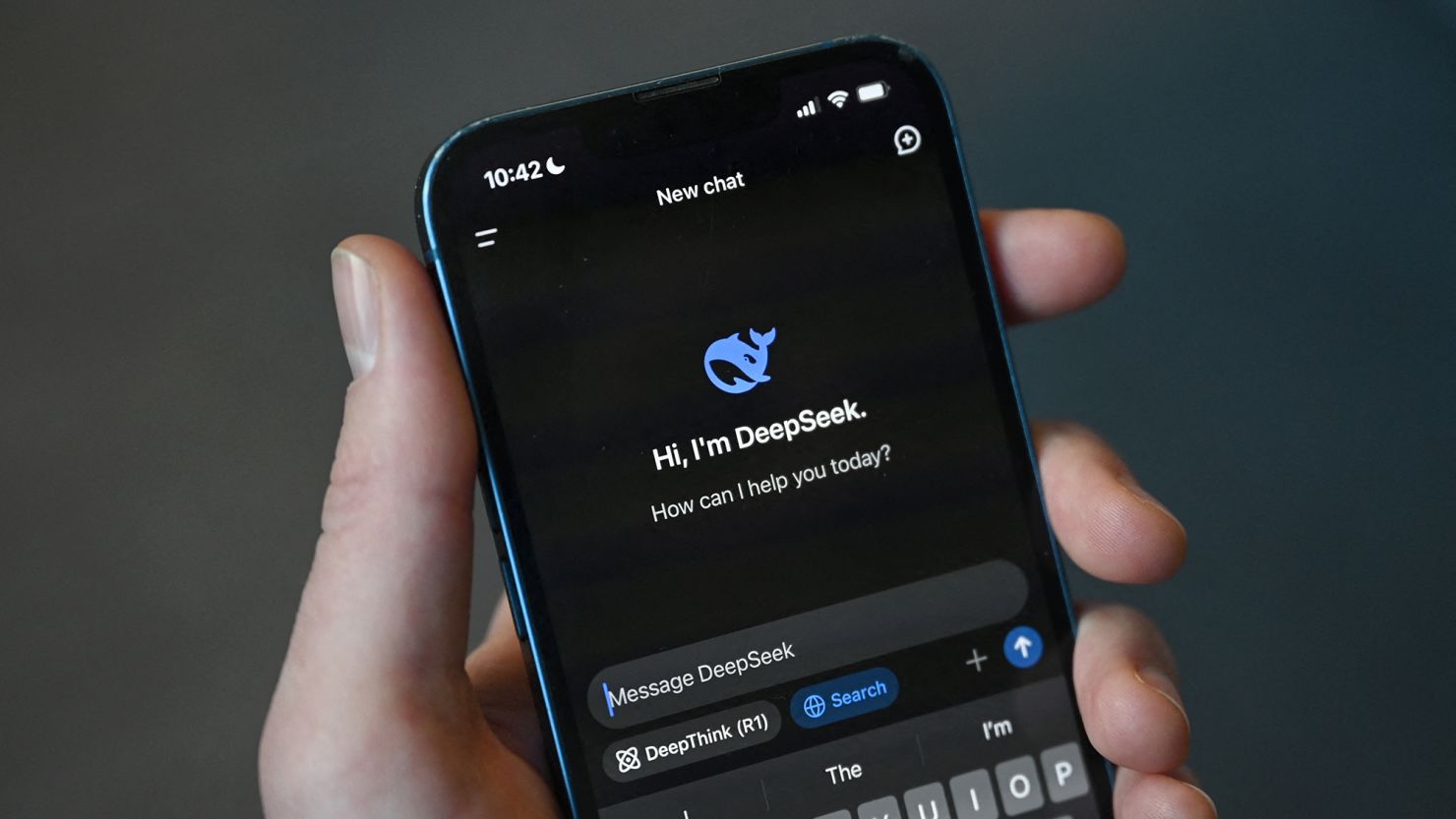
This photo illustration shows the DeepSeek app on a mobile phone in Beijing this month. Greg Baker/AFP/Getty ImagesHong KongCNN —
Previously little-known Chinese startup DeepSeek has dominated headlines and app charts in recent days thanks to its new AI chatbot, which sparked a global tech sell-off that wiped billions off Silicon Valley’s biggest companies and shattered assumptions of America’s dominance of the tech race.
But those signing up for the chatbot and its open-source technology are being confronted with the Chinese Communist Party’s brand of censorship and information control.
Ask DeepSeek’s newest AI model, unveiled last week, to do things like explain who is winning the AI race, summarize the latest executive orders from the White House or tell a joke and a user will get similar answers to the ones spewed out by American-made rivals OpenAI’s GPT-4, Meta’s Llama or Google’s Gemini.
In this image made from a video provided by the National Task Force for the West Philippine Sea (NTF-WPS), a Chinese coast guard vessel, left, fires a powerful water cannon on a Philippine bureau of fisheries vessel near a disputed shoal in the South China Sea Wednesday Dec. 4, 2024. (National Task Force for the West Philippine Sea via AP)Read More
2 of 2 |
In this image taken from a video provided by National Task Force for the West Philippine Sea (NTF-WPS), a Chinese coast guard vessel, right, fires a powerful water cannon on a Philippine bureau of fisheries vessel near a disputed shoal in the South China Sea Wednesday, Dec. 4, 2024. (NTF-WPS via AP)Read More
By DIDI TANGUpdated 6:55 AM GMT+7, December 6, 2024 AP
WASHINGTON (AP) — The U.S. severely lags behind China in shipbuilding capacity, lawmakers and experts have warned, as the Biden administration tries to build up the country’s ability to develop and produce weapons and other defense supplies to fend off war.
Speaking at a congressional hearing Thursday, Rep. John Moolenaar, the Republican chair of the House Select Committee on the Chinese Communist Party, said the country lacks the capacity to “deter and win a fight” with China and called for action.
“Bold policy changes and significant resources are now needed to restore deterrence and prevent a fight” with China, Moolenaar said.
TTCT – Bất chấp những lệnh cấm vận ngặt nghèo của Mỹ, tập đoàn công nghệ hàng đầu Trung Quốc Huawei vẫn đang phát triển mạnh mẽ…
Ảnh: CNBC
Nhà sáng lập Huawei Nhậm Chính Phi thường nói về cuộc chiến giữa tập đoàn này với Mỹ bằng ngôn ngữ quân sự. “Tới lúc cầm súng, lên ngựa và ra trận”, ông nói trong họp nội bộ hồi năm 2018. Thông điệp cho năm sau của ông là nhân viên Huawei sẽ cột mình vào xe tăng để kéo ra chiến trường.
Theo The Economist, kiểu ví von dữ dội này dễ hiểu: Huawei liên tục bị Mỹ nhắm tới suốt hơn 10 năm qua. Năm 2012, chính quyền Mỹ bắt đầu cáo buộc Trung Quốc dùng tập đoàn này cho mục đích tình báo.
Mỹ còn truy tố giám đốc tài chính Huawei, đồng thời là con gái ông Nhậm, bà Mạnh Vãn Chu (theo họ mẹ) năm 2018 vì vi phạm lệnh cấm vận với Iran.
Tới 2020, cuộc chiến của Mỹ trở thành tổng lực khi hầu hết các công ty nước này bị cấm kinh doanh với Huawei, các công ty quốc tế bị Mỹ cấm bán chip và thiết bị có sử dụng công nghệ Mỹ cho tập đoàn Trung Quốc. Mỹ thậm chí vận động các nước không sử dụng thiết bị Huawei trong hạ tầng viễn thông.
The post-Cold War era is over and a dangerous new era of great power competition has begun.
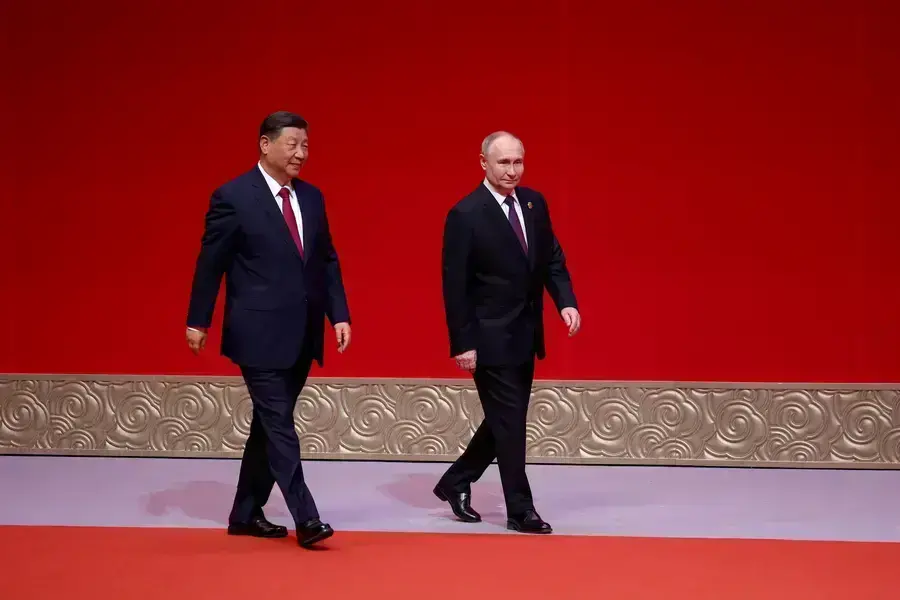
Russian President Vladimir Putin and Chinese President Xi Jinping attend the gala event celebrating 75th anniversary of China-Russia relations in Beijing, China, on May 16, 2024. Alexander Ryumin/Pool via REUTERS
David Sanger, the White House and national security correspondent for the New York Times, sits down with James M. Lindsay to discuss how the post-Cold War ended and why the new era of geopolitical rivalry began.
Here are four highlights from their conversation:
1.) The post-Cold War era is over. The United States no longer enjoys its unipolar moment. Following the collapse of the Soviet Union in 1991 and through the 2000s, the United States and the West made a series of misjudgments about where Russia and China were headed. They assumed that Russia and China would want to become more integrated into the U.S.-led world order. David acknowledged that Russian President Vladimir Putin stated explicitly in 2007 that he would do the contrary, while China’s ambitions were unclear initially. David said, “this was a failure of imagining a world in which these powers wanted to return to a past era of greatness and weren’t going to sit still for a unipolar world, run out of Washington under Washington values
TTCT – Cuối tháng 6-2022, một lệnh cấm ở quận Bắc Đới Hà được ban bố khiến nhiều người ngạc nhiên: xe Tesla bị cấm tới bờ biển khu vực nghỉ dưỡng ven biển ở tỉnh Hà Bắc này trong hai tháng.
Ảnh: CBS 58
Cảnh sát giao thông Bắc Đới Hà khi được hỏi chỉ nói lệnh cấm là vì “vấn đề quốc gia”, nhưng không cung cấp thêm thông tin.
Bắc Đới Hà là địa điểm cuộc gặp mặt hằng năm của giới lãnh đạo cao nhất Trung Quốc, và lệnh cấm được ban bố chỉ vài tuần sau khi xe Tesla bị cấm vào một số đường trung tâm ở Thành Đô trong một chuyến thăm của Chủ tịch Tập Cận Bình.
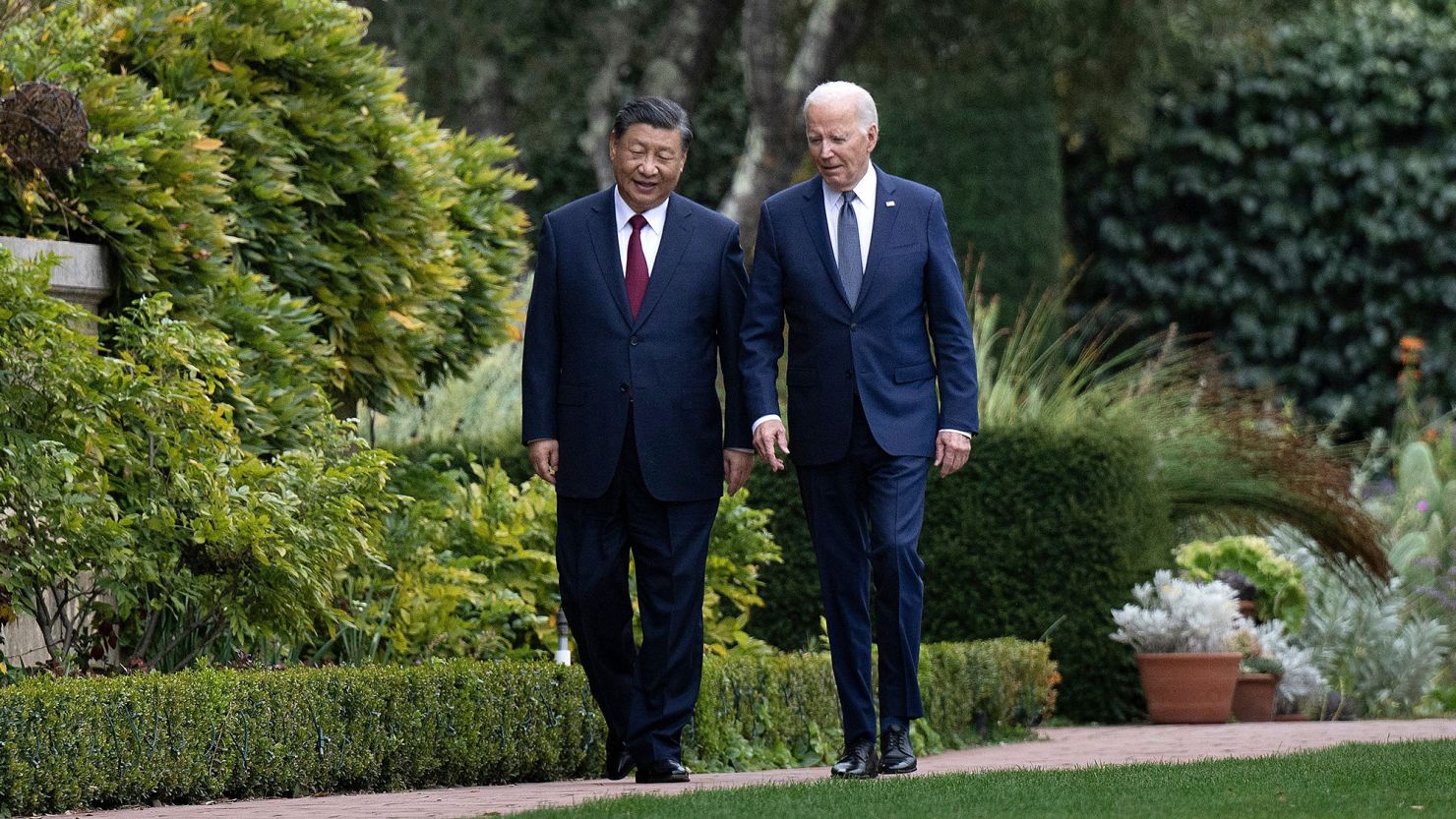
US President Joe Biden and Chinese President Xi Jinping walk together after a meeting during the Asia-Pacific Economic Cooperation (APEC) Leaders’ week in Woodside, California on November 15, 2023. Brendan Smialowski/AFP/Getty ImagesWashingtonCNN —
President Joe Biden spoke on the phone with Chinese President Xi Jinping on Tuesday, marking the first conversation between the leaders since their historic in-person summit in November and the latest in ongoing efforts by US and Chinese officials to defuse tensions between the two superpowers.
The canny marketing of imports from vodka to basketballs transformed the U.S.-China trade relationship.
MARCH 24, 2024, 6:00 AM
By Elizabeth O’Brien Ingleson, an assistant professor in the international history department at the London School of Economics and Political Science.
A historic image of four businessmen at a table with basketballs.
My FP: Follow topics and authors to get straight to what you like. Exclusively for FP subscribers. Subscribe Now | Log In
On Oct. 25, 1976, U.S. businessman Charles Abrams traveled to New York City’s South Street Seaport to welcome a ship loaded with Chinese vodka. This was, according to Abrams, the first time the liquor had been commercially imported from China since 1949.
In the span of three months, presidents of both the US and China have visited Hanoi. From the visits, numerous trade and investment deals were signed. Politically and economically, Vietnam stands to gain from closer ties with the US. As President Biden continues to de-risk from China, American businesses are shifting their operations and manufacturing from China to Vietnam. But camaraderie with Washington could jeopardise Hanoi’s relationship with Beijing and Moscow. Why are the superpowers courting Vietnam, and can the Southeast Asian country balance the competing wants of rival titans?
00:00 Introduction
02:45 Significance of Vietnam-US comprehensive strategic partnership
07:10 Vietnam and US-China relations
10:21 Evolution of Vietnam-US relations
18:35 Why does the US want to upgrade Vietnam-US ties?
23:51 State of Vietnam-China relations
30:06 Is China concerned about closer Vietnam-US relations?
32:51 Vietnam-Russia relations and the Russia-Ukraine war
36:40 Vietnam’s neutral stance and its benefits 43:26 What challenges will Vietnam face in balancing relations?


 Cờ Mỹ và Trung Quốc. Ảnh: Reuters







 CVD
CVD 